



KATHMANDU — Nepal has officially expanded its list of eight-thousanders from 8 to 14, marking one of the most ambitious reclassifications in modern mountaineering history. The updated Nepal Himal Peak Profile, released by the Department of Tourism, includes six newly recognized mountains above 8,000 meters—a bold national move that positions Nepal to dominate the global high-altitude landscape even more firmly.
These peaks, long regarded as sub-summits internationally, are now formally counted in Nepal’s national records. Securing global recognition from the International Mountaineering and Climbing Federation (UIAA) is the next crucial step—one that Nepal hopes to achieve at a decisive event hosted in Kathmandu in 2026.
Redefining the Eight-Thousanders
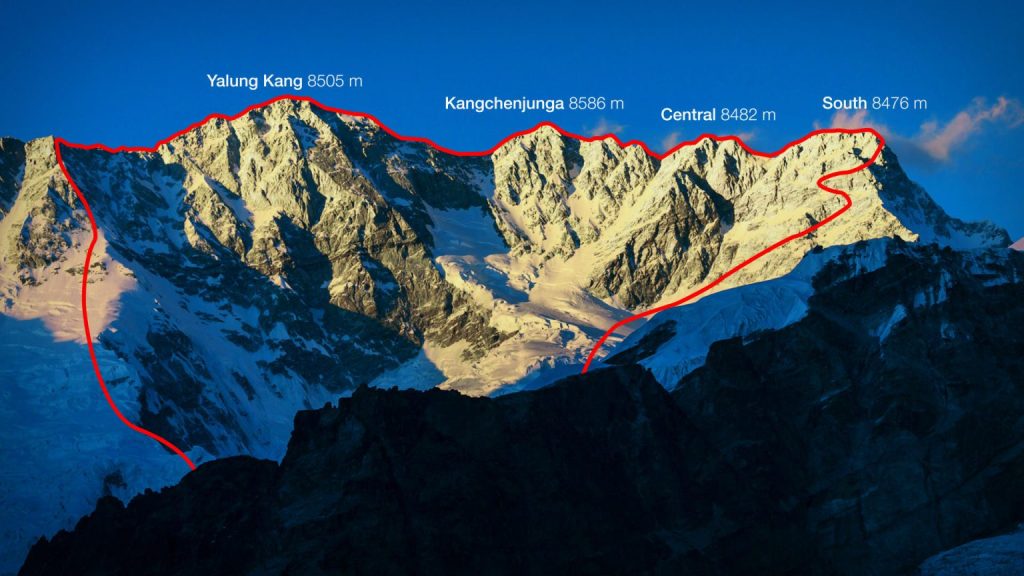
The central debate lies in topographic prominence, the widely accepted criterion for distinguishing an independent mountain from a sub-peak. While the international mountaineering community has not yet recognized these summits as independent peaks, Nepal argues that their geographic and mountaineering significance warrants elevation to full eight-thousander status.


The six peaks newly listed in the national register are:
Newly Recognized 8,000m Peaks in Nepal
- Yalung Khang (8,505m)
- Kanchenjunga South (8,476m)
- Kanchenjunga Central (8,473m)
- Lhotse Middle/Center (8,410m/8,413m)
- Lhotse Shar (8,400m)
- Yalung Khang West (8,077m)
These additions lie primarily along the Kanchenjunga and Lhotse massifs, two of the most iconic and technically demanding mountain ranges in the world.
The 2026 UIAA General Assembly in Kathmandu: A Historic Opportunity
Nepal now prepares for a defining moment:
UIAA General Assembly 2026
- Date: October 29–31, 2026
- Location: Kathmandu, Nepal
- Host: Nepal Mountaineering Association (NMA)
As the world’s leading mountaineering federations gather, Nepal’s proposal to officially recognize the six new eight-thousanders stands as a major agenda item.
If approved, this decision would synchronize Nepal’s national records with international standards—forever reshaping the global map of high-altitude climbing.
What Global Recognition Could Mean for Nepal
1. Strengthened Global Dominance in Mountaineering
With 14 eight-thousanders, Nepal would undeniably stand as the world’s ultimate high-altitude destination, attracting professional alpinists and peak collectors eager to update their summit lists.
2. Massive Economic Growth
A larger roster of recognized eight-thousanders would expand:
- Expedition permits
- Trekking and tourism revenue
- Seasonal climbing demand
This could translate into millions of dollars in annual income for the national treasury.
3. Empowering Himalayan Communities
More expeditions mean:
- Increased employment for guides, porters, and logistical staff
- Higher demand for lodging, food, and transport in mountain regions
- Sustainable local economic development
- New opportunities for youth in remote districts
Recognition of these peaks could help uplift some of Nepal’s most isolated Himalayan communities.
A Potential Turning Point for Global Mountaineering
The upcoming UIAA decision in 2026 may become a watershed moment, not just for Nepal but for the world’s entire mountaineering ecosystem. Approving these six peaks as official eight-thousanders would:
- Redefine the iconic list of the world’s highest mountains
- Increase global attention on Nepal’s Himalayan heritage
- Set a new benchmark for peak classification worldwide
- Invite a new era of adventure, exploration, and scientific study
As Nepal moves forward with confidence and strategic preparation, the world watches closely.
The mountains are ready. Now the recognition must follow.
See Nepal in every scroll: Follow us on Facebook, Instagram, and TikTok for stories that bring the country to life.


