


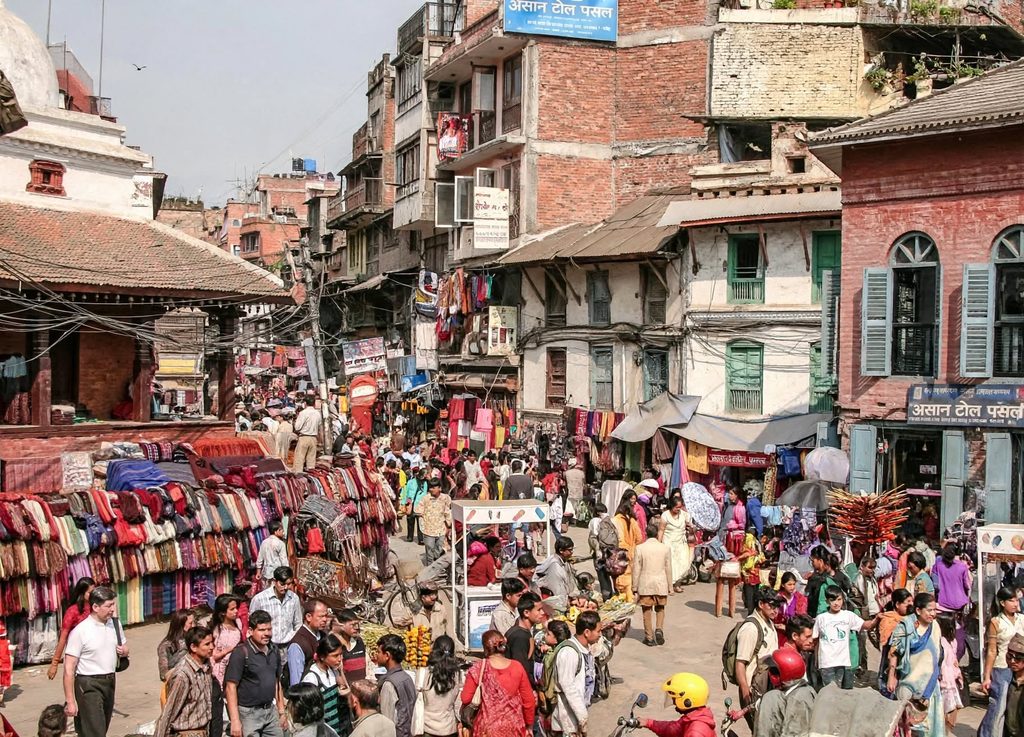
Few places in Kathmandu move quite like Asan and Indra Chowk. Six streets collide into a single, chaotic square, and from there, a thousand years of trade still plays out daily in narrow, brick-paved lanes. Successfully navigating the Asan and Indra Chowk market takes more than good intentions. It takes a strategy. This guide breaks down the history, layout, and timing you need to move through this market like someone who actually knows where they’re going.
Unlike Thamel, this market wasn’t built for tourists. It was built for the city itself, and it still functions that way every single morning. So, let’s map out exactly how to approach it.
Understanding What You’re Walking Into
Asan Bazaar, often called Asan Tole, sits at the intersection of six major streets in Kathmandu’s historic center, within easy walking distance of both Thamel and Kathmandu Durbar Square. From this central square, the market fans outward in every direction, with narrow lanes branching off toward Indra Chowk and New Road beyond it.


This isn’t a market designed with tourists in mind. It remains one of the few marketplaces in Kathmandu still used daily by local residents for grain, spices, textiles, and household goods, which is exactly what makes it such a rewarding, if occasionally overwhelming, place to explore.
A Thousand Years of Trade in One Square
Asan’s history stretches back over a thousand years, and its layout still reflects that deep commercial past. During the Malla period, this square became a critical stop along the India-to-Tibet salt trade route, where merchants exchanged salt for rice, grains, and metal goods passing through the valley.
That trading legacy never really disappeared. Many family-run shops here have operated across generations, preserving trading practices that predate modern Kathmandu by centuries. Understanding this history helps explain why the market feels less like a tourist bazaar and more like a living, working extension of the city’s daily rhythm.
Mapping Asan Tole: What’s Where
Rather than one uniform market, Asan functions as a cluster of specialized micro-markets, each concentrated around a particular corner or lane.
Asan Ajima and the Ghee-Oil Shops
At one corner of the square sits the Annapurna Ajima Temple, dedicated to the goddess of abundance. Nearby, a row of small shops known locally as ghyao-tel pasal have sold nothing but ghee, oil, molasses, and candles for roughly a century. These unassuming stalls, run by families known locally as Tel Sahus and Ghyao Sahus, represent some of the most enduring businesses anywhere in the valley.
The Spice and Conch Trade
Just off the square toward Indra Chowk sits the Shankha Pasal, or Conch Shop, credited as the very first shop to introduce the spice trade to Nepal. Spices remain one of Asan’s defining products today, with the aroma of roasted cumin, turmeric, and chili filling the surrounding lanes throughout the morning.
Textiles and the Grand Wool Center
Down Kamalachi Lane, the long-running Grand Wool Center reflects another pillar of Asan’s trading identity. Textile shops throughout the square sell everything from everyday fabric to pashmina, continuing a trade tradition tied closely to the valley’s historic Tibet connections.
Fresh Produce and Daily Goods
Local farmers converge on Asan’s main square each morning to sell fresh produce directly, alongside vendors selling grains, brass utensils, cosmetics, incense, and temple offerings. This is Asan at its most functional, a place where locals still do genuine daily shopping rather than souvenir hunting.
Moving Into Indra Chowk
Once you’ve worked through Asan’s core lanes, the natural flow of foot traffic carries you toward Indra Chowk, a market square just as historic, though with its own distinct character.
The Meaning Behind the Name
Indra Chowk takes its name from Indra, the Hindu god of rain and king of heaven. The square itself has functioned as a centuries-old market area, historically connected to the same India-Tibet trade routes that shaped Asan.
Seto Machhindranath Temple
One of Indra Chowk’s most visually striking landmarks is Seto Machhindranath Temple, known for its intricately carved wooden details. This site draws steady foot traffic from devotees throughout the day, adding a layer of ritual activity alongside the surrounding commerce.
Akash Bhairab Temple
Nearby stands Akash Bhairab Temple, guarded by gilded statues perched above its entrance. According to tradition, this site once served as the palace of King Yalambar, the first Kirat king of Nepal, and the temple’s central head is believed to hold his spirit, earning him the title “God of the Sky.” This same temple plays a central role each year during Indra Jatra, when the towering Akash Bhairab bust is publicly displayed and celebrated.
The Wedding Market
Indra Chowk also hosts a specialist market unlike anything found in Asan proper: rows of shops selling beads, bangles, and ornaments specifically crafted for traditional Nepali weddings. This corner of the market offers some of the most colorful, photogenic displays in the entire area.
Brass, Bronze, and Copper Wares
Beyond textiles and jewelry, Indra Chowk is well known for its metalwork, with numerous shops specializing in brass, bronze, and copper items, ranging from religious statues to everyday household goods.
The Navigation Strategy: Reading the Flow
Now for the part that actually matters most: how to move through this market without getting swallowed by it.
Go Early, Before the Chaos Peaks
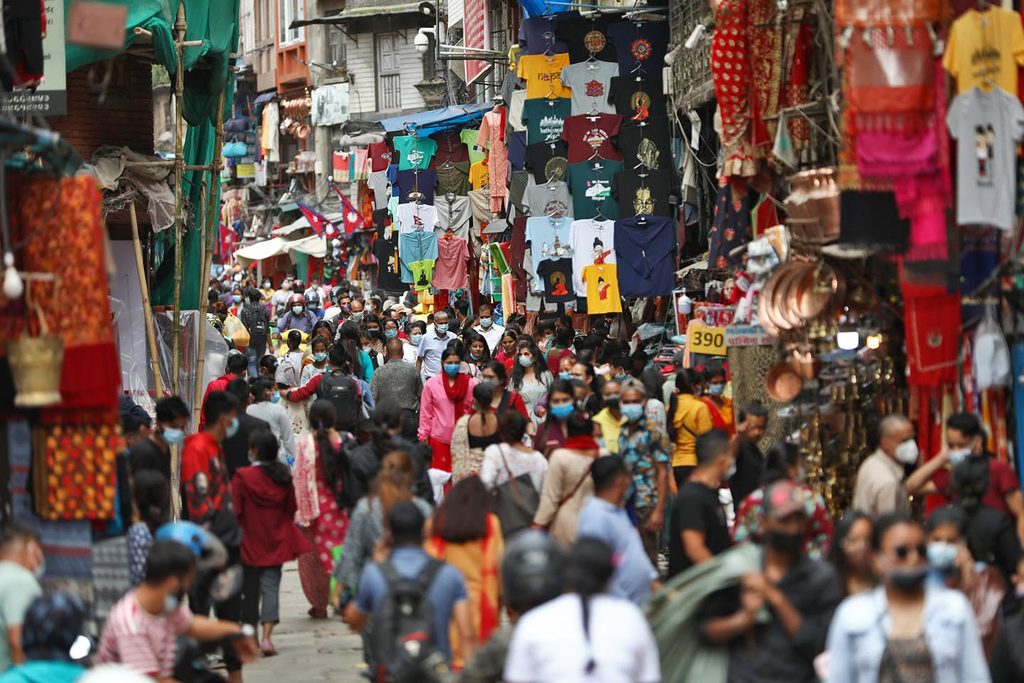
The single most important strategy is timing. Arrive in the early morning, ideally around sunrise to 8 or 9 AM, when local farmers are still setting up produce stalls and the crowds remain manageable. By midday, the same six-street intersection becomes a genuine tangle of pedestrians, bicycles, rickshaws, and vehicles all competing for the same narrow space.
Follow the Historic Trade Direction
Rather than darting between random lanes, follow the market’s natural historic flow, starting at Asan Tole’s central square and moving outward toward Indra Chowk, then continuing on toward New Road if you want to extend your walk. This mirrors the original trade route path and tends to match the direction most foot traffic naturally moves.
Respect the Six-Road Intersection
At Asan’s central junction, six roads converge into a single chaotic point. Rather than trying to push straight through, pause at the edge first, observe how pedestrians, cyclists, and vehicles are actually moving, and then merge into that flow rather than cutting directly across it.
Move With the Crowd, Not Against It
In the narrower lanes branching off both squares, foot traffic tends to settle into an informal one-directional flow during busy periods. Fighting against this current, especially in tight spaces shared with rickshaws and the occasional wandering cow, slows everyone down and makes navigation considerably harder.
Look Up as Well as Around
It’s easy to fix your eyes on the ground while dodging crowds, but doing so means missing some of Asan’s finest details. Carved wooden windows, temple rooftops, and centuries-old architectural details sit just above eye level throughout both market areas.
What to Buy Where
Knowing which corner specializes in what saves considerable time once you’re inside the market’s maze of lanes.
Head to the lanes near Annapurna Ajima Temple for ghee, oil, and traditional cooking staples. Visit the Shankha Pasal area for spices and conch-related religious items. Look toward Kamalachi Lane for textiles and wool products. Once you reach Indra Chowk, focus on its dedicated jewelry and bead shops for wedding ornaments, and its metalwork stalls for brass and copper items.
Sampling the Market’s Street Food
No walk through Asan and Indra Chowk feels complete without stopping for street food along the way. Vendors throughout both areas fry fresh sel roti, a ring-shaped sweet rice bread, alongside momo dumplings served hot straight from the pan. Yomari, a steamed rice-flour dumpling filled with molasses, also appears regularly among the market’s food stalls.
Practical Tips for a Smoother Visit
A few final details help make your morning through Asan and Indra Chowk go smoothly.
Wear Sturdy, Comfortable Shoes
The market’s brick and stone lanes are often uneven, and produce runoff can make certain sections slippery, particularly early in the morning. Solid, comfortable footwear makes a real difference here.
Keep Valuables Secure
Given the dense crowds, particularly around the main intersections, keep bags zipped and valuables close, ideally in a bag worn across your body rather than a loose backpack.
Bargain Where Appropriate
While fixed-price staples like spices and produce leave little room for negotiation, textile and jewelry vendors, particularly around Indra Chowk, often expect some friendly back-and-forth on price.
Ask Before Photographing Vendors
Many shopkeepers are happy to be photographed, especially in a market this photogenic, but a quick, polite request goes a long way toward keeping interactions positive.
Final Thoughts
Navigating the Asan and Indra Chowk market rewards those who treat it less like a sightseeing checklist and more like reading a current. Arrive early, follow the market’s natural historic flow from Asan’s central square toward Indra Chowk, and let each lane’s specialty guide your shopping rather than wandering aimlessly. Do that, and this thousand-year-old trading hub reveals itself not as chaos, but as one of the most authentic, rewarding mornings Kathmandu has to offer.
Frequently Asked Questions
What is the best time to visit Asan and Indra Chowk market?
Early morning, roughly between sunrise and 9 AM, offers the freshest produce and noticeably smaller crowds than midday.
What is the difference between Asan and Indra Chowk?
Asan is known for spices, grains, and textiles, while Indra Chowk specializes in wedding jewelry, beads, and brass and copper metalwork.
How old is the Asan Bazaar market?
Asan Bazaar’s history stretches back over a thousand years, tracing to its role on the historic India-Tibet salt trade route.
Is Asan Bazaar touristy like Thamel?
No, Asan remains primarily a local market, used daily by Kathmandu residents rather than being designed for tourist shopping.
What temples should I visit at Indra Chowk?
Seto Machhindranath Temple and Akash Bhairab Temple are the two main landmarks, both rich in carved detail and local legend.
What food can I try while walking through the market?
Look for sel roti, fried momo dumplings, and yomari, all commonly sold fresh from street stalls throughout both market areas.