


The sound reaches you before anything else does. Rushing water, loud and constant, echoing off the gorge walls of the Bhote Koshi. Cross the little suspension bridge, step onto the sand, and Kathmandu suddenly feels a very long way behind you, even though you left the city barely two hours ago. That gap between how remote it feels and how close it actually is explains why Sukute Beach has become the default weekend escape for anyone in the capital who needs a river, a tent, and a break from traffic.
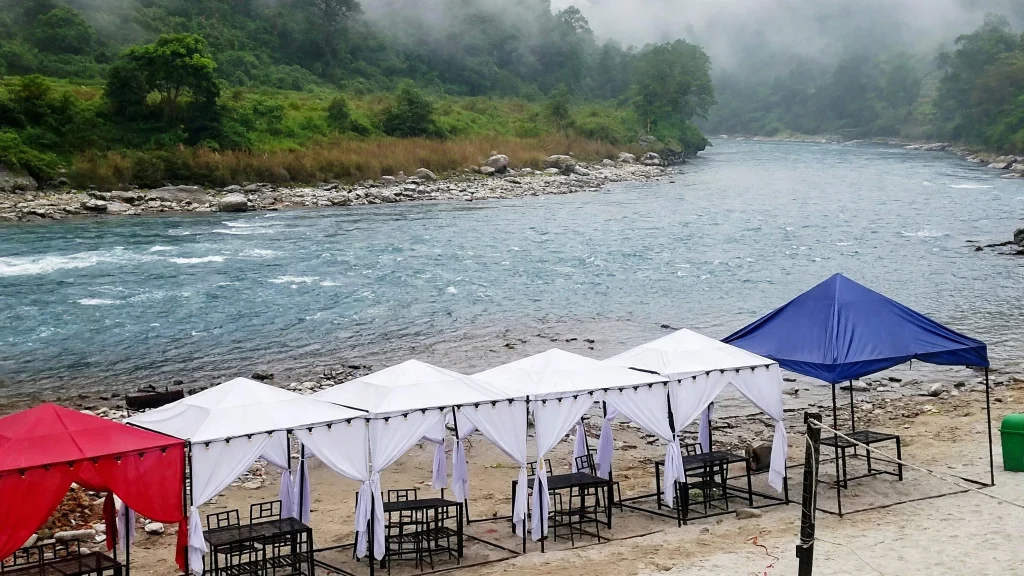
Here’s what most operator brochures gloss over: Sukute is not a beach in the ocean sense. It’s a wide strip of river sand on the banks of the Bhote Koshi, in Sindhupalchok district, and its whole appeal comes from that fast, cold Himalayan water beside it. People go for the rafting, stay for the campfire, and leave already planning the next trip.
Where Sukute Beach Is and How to Get There
Sukute sits roughly 69 km northeast of Kathmandu along the Araniko Highway, the same road that eventually climbs to the Tibet border. Driving time runs 2 to 3 hours depending on traffic and road conditions, which can shift dramatically in the rainy months. You pass through Bhaktapur, Banepa, Dhulikhel, and Dolalghat before the road drops down to the river.


Most people come by private vehicle or a package van. If you are on a tight budget, local buses heading toward Barhabise or the border will drop you near Sukute, and a shared jeep covers the last stretch. Renting a Hiace or a small bus for a group runs somewhere between NPR 12,000 and NPR 19,000 round trip for an overnight, as of early 2026, and that cost is usually separate from your accommodation package. Splitting it across eight or ten people makes it painless.
Timing your drive matters more than most first-timers expect. Dolalghat and the sections near the river are prone to landslides during heavy monsoon rain, so leaving Kathmandu early gives you a buffer if the road is slow. For a fuller picture of getting around the capital before you head out, our Kathmandu travel guide covers transport, neighborhoods, and where to stock up on supplies.
Rafting: What the Bhote Koshi Actually Delivers
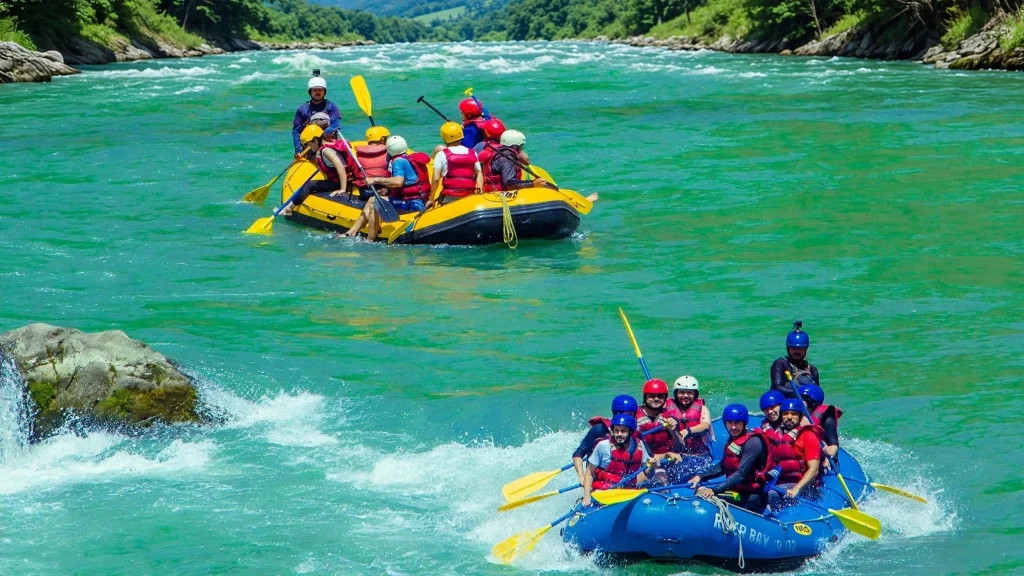
Rafting is the headline act, and the river earns its reputation. The Bhote Koshi is one of the steepest, most technical whitewater runs in Nepal, dropping fast through a tight gorge. Only experienced paddlers should tackle the river’s most aggressive Grade 4 to 5 rapids. Do not walk in assuming it’s a lazy float.
Most Sukute rafting packages use beginner-friendly Grade 3 sections, making them ideal for families and first-time rafters. Guides also provide a full safety briefing before every launch. You get a helmet, a paddle, and a life jacket as part of the deal, and a trained river guide runs the raft. First-timers do fine here. Kids old enough to hold a paddle and follow instructions usually handle the gentler runs without trouble.
Water level changes everything about the experience. During and just after the monsoon, from roughly June through early September, the river runs high, fast, and brown with sediment, which raises the intensity and the risk. Post-monsoon, from late September into November, tends to be the sweet spot: strong flow, clearer water, and comfortable weather. The Nepal Tourism Board maintains a useful overview of the country’s rafting and kayaking rivers if you want to compare Bhote Koshi against other options.
Camping and Where to Sleep
Sleeping beside the river is one of the biggest reasons people visit Sukute. Several resorts and camps line this stretch of the Bhote Koshi, and they range from basic tents pitched on the sand to permanent rooms with fans and, at the higher end, air conditioning.
Tent options usually come in a few sizes. There are small two to three person tents, larger group tents that sleep seven to ten, and open raft-style tents for people who want the sky overhead. As of 2025, tented accommodation ran around NPR 2,500 per person for domestic guests, a standard room closer to NPR 3,000, and an AC room around NPR 3,500. Prices shift with season and operator, so confirm before you book, and expect foreign-tourist rates to sit higher, with full overnight adventure packages from Kathmandu quoted near USD 200 per person when transport and activities are bundled in.
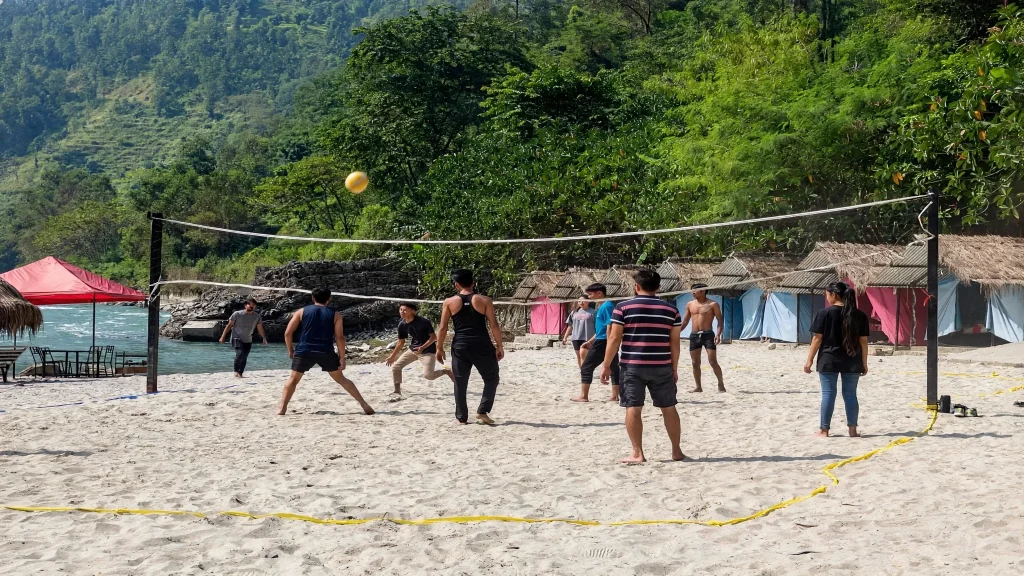
What you get for that is generous. Most packages fold in four meals: breakfast, lunch, an afternoon snack, and dinner. Resort amenities like a swimming pool, table tennis, beach volleyball, and a rope swing are typically free to use once you are checked in. A campfire with barbecue in the evening is the standard closer, and many places run a DJ session for groups who want to turn the night into a party.
Beyond Rafting: Everything Else to Do at Sukute Beach
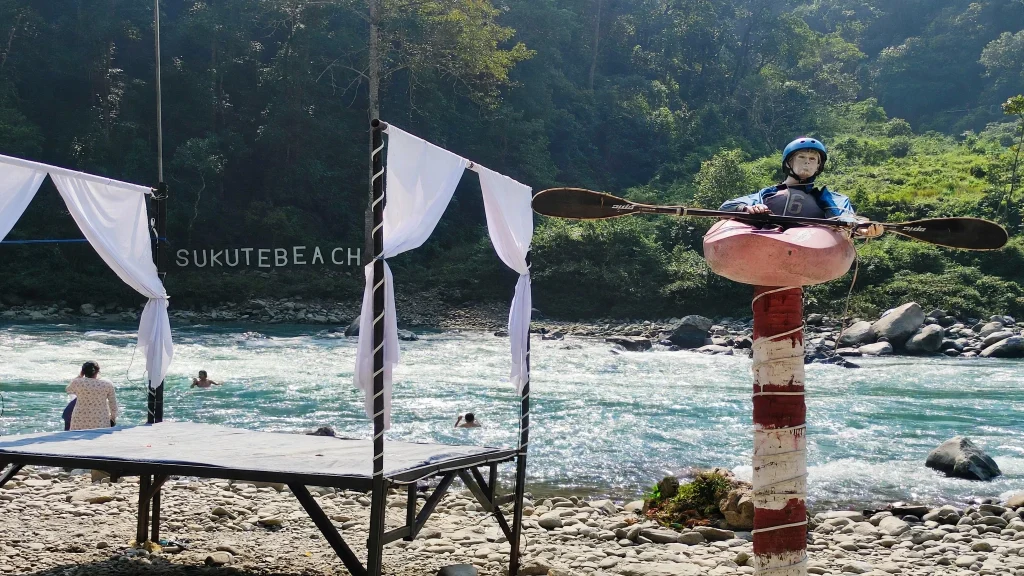
Rafting anchors the trip, but nobody spends the whole time on the water. Swimming in the calmer river pools is popular when the flow allows it, though the water stays cold year-round because it’s fed by snowmelt. Kayaking clinics run for people who want more control than a paddle raft gives. Short hikes into the surrounding hills reward you with views over the gorge, and the birdlife along the river makes casual birdwatching easy.
The wider Bhote Koshi valley is also Nepal’s adventure-sports corridor. A little further up the highway you’ll find the country’s famous bungee jump and a canyon swing, both launched from a suspension bridge over a deep gorge. Canyoning trips down waterfall-fed side streams operate seasonally too. If your idea of a weekend is stacking as many adrenaline hits as possible, this valley obliges.
For travelers watching every rupee, Sukute can be surprisingly affordable if you go with a group, camp rather than take a room, and arrange your own transport. Our budget travel in Nepal guide breaks down how to keep costs low without cutting the fun.
Best Time to Visit Sukute Beach
Season shapes the whole trip. Autumn, from late September through November, is widely considered the best window: the monsoon has cleared, days are warm, nights are cool, and the river runs at a confident, safe level. Spring, from February to May, is the second-best stretch, with rising temperatures and good rafting conditions.
Winter still works if you don’t mind cold water and chilly nights, and the crowds thin out. Monsoon, from June to mid-September, is the trickiest call. The river swells and the scenery turns lush and green, but landslides can block the highway and high water pushes rafting difficulty up. If you want to weigh Sukute against other destinations by season, our month-by-month guide to the best time to visit Nepal lays it all out. You can also check current road and travel advisories on the Nepal Tourism Board site before you go.
Practical Tips Before You Go
- Book ahead on weekends and public holidays. Sukute fills up fast with Kathmandu day-trippers, and the good camps sell out.
- Bring a change of clothes and a dry bag. You will get wet, and the sand gets everywhere.
- Pack a light jacket even in warm months. River nights turn cold quickly.
- Carry cash. Card facilities are unreliable outside the resorts, and ATMs are back in the towns you passed.
- Listen to the safety briefing. The Bhote Koshi is powerful water, not a swimming pool, and guides give instructions for a reason.
- Confirm what’s included. Some quotes cover meals and gear, others add transport and activities on top.
Frequently Asked Questions About Sukute Beach
How far is Sukute from Kathmandu?
Sukute is about 69 km from Kathmandu along the Araniko Highway, a drive of roughly 2 to 3 hours depending on traffic and road conditions. You travel through Bhaktapur, Banepa, Dhulikhel, and Dolalghat on the way.
Which river is Sukute on?
Sukute sits on the banks of the Bhote Koshi River in Sindhupalchok district. The Bhote Koshi is a fast, cold, snowmelt-fed Himalayan river known for some of the most technical whitewater in Nepal.
Is rafting at Sukute safe for beginners?
Yes, the stretches used for most Sukute packages are managed for beginners and families, with calmer Grade 3 sections, a full safety briefing, and trained guides. The river can hit Grade 4 to 5 in its harder sections, so those runs are meant for experienced rafters only.
How much does an overnight trip to Sukute cost?
As of 2025, tented accommodation for domestic guests ran around NPR 2,500 per person, rising to about NPR 3,000 for a standard room and NPR 3,500 for an AC room, usually including meals. Transport is typically extra. Foreign-tourist packages that bundle transport and activities are often quoted near USD 200 per person. Confirm current rates when you book.
What is the best time to visit Sukute?
Autumn, from late September through November, is the best time, with clear skies, warm days, and safe river levels. Spring, from February to May, is also excellent. Monsoon brings high water and landslide risk, and winter means cold water but fewer crowds.
What activities are available at Sukute besides rafting?
Beyond rafting you can try kayaking, swimming in calm pools, hiking, birdwatching, and biking. Resort amenities often include a pool, beach volleyball, table tennis, and a swing, plus evening campfires with barbecue. Bungee jumping and a canyon swing operate further up the Bhote Koshi valley.
Can you visit Sukute as a day trip?
Yes. Many operators offer a day package, priced around NPR 1,500 per person in recent seasons, that includes meals and some activities without an overnight stay. The overnight trip with camping and a campfire is the more popular choice, though.
Do I need to bring my own rafting gear?
No. Rafting packages include a helmet, paddle, and life jacket as complimentary gear, and a trained guide runs the raft. You should bring your own quick-dry clothes, a change of clothes, footwear that can get wet, and a dry bag for valuables.