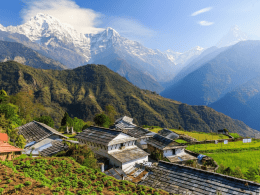



Most travel blogs tell you to skip Nepal entirely from June through September. The reality is more interesting than that. Smart monsoon travel Nepal safety comes down to where you go, how you move between places, and how much slack you build into your schedule. Get those three things right and you can travel through the rainy months without much drama. Get them wrong and you end up stranded on a blocked highway watching your flight home slip away.
Here is what most guides will not tell you plainly: the monsoon does not shut Nepal down. It reshapes it. Some regions get drenched while others, just a mountain ridge away, stay bone dry. The trick is knowing the difference before you book anything.
When the Monsoon Actually Hits Nepal
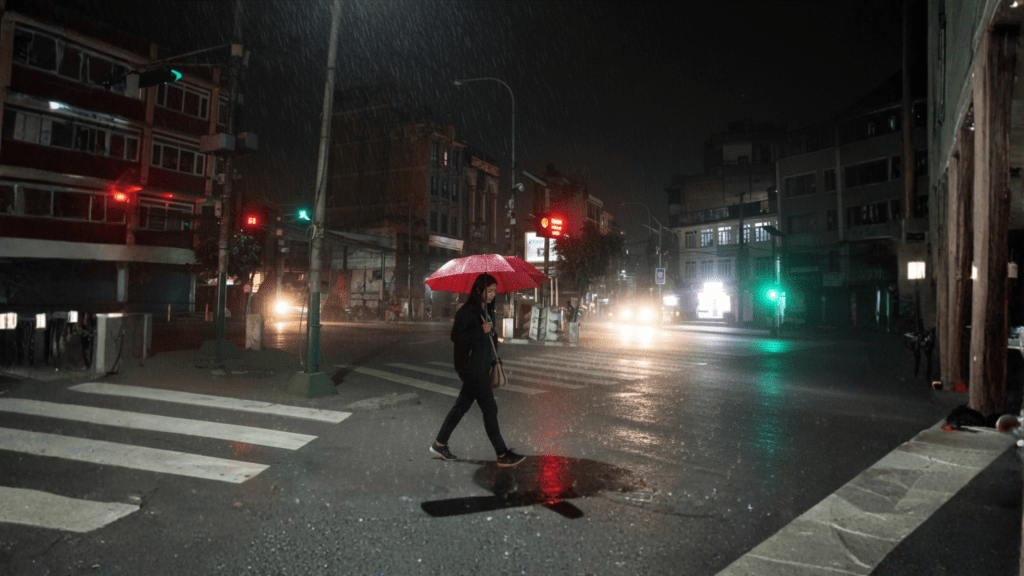
Nepal’s monsoon normally arrives in mid-June and runs through mid to late September, sometimes lingering into early October. Roughly 80 percent of the country’s annual rainfall, which averages around 1,600 mm, falls during this window. That is a lot of water in a short time.


But that national average hides huge local swings. Pokhara, the wettest major city, can collect close to 672 mm in June alone. Compare that to Jomsom in the Mustang rain shadow, which gets only about 255 to 295 mm across an entire year. Two places, same country, wildly different weather. This single fact is the foundation of any sensible monsoon plan.
Rainfall here also tends to come in the afternoon and overnight rather than as an all-day drizzle. Mornings are frequently clear. That pattern matters when you are timing flights, drives, and short hikes.
Monsoon Travel Nepal Safety: The Three Real Risks
Forget vague warnings about “bad weather.” During the rainy season, three specific things actually threaten your trip and, occasionally, your safety.
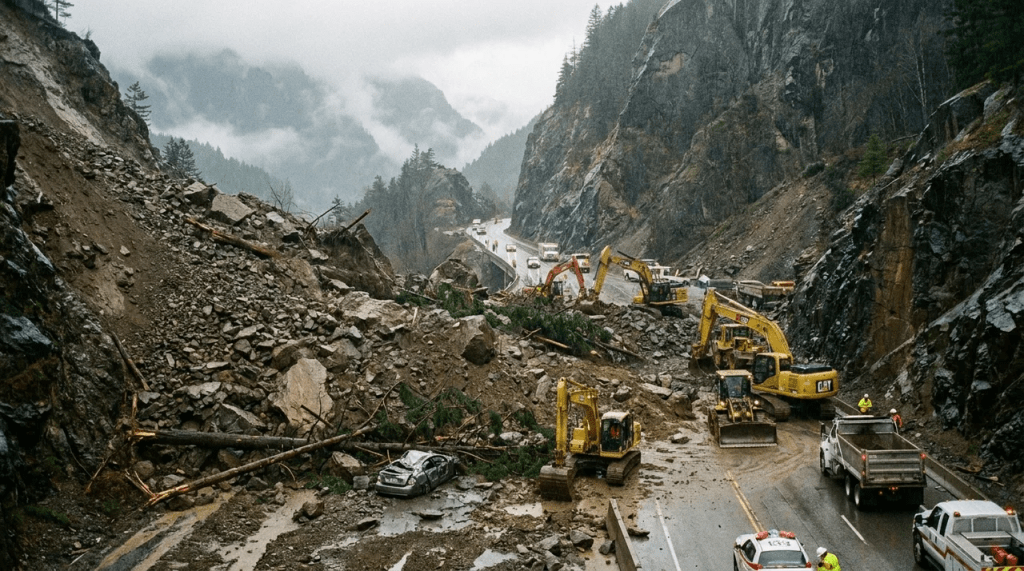
The first is landslides. Heavy rain saturates the steep hillsides that most Nepali roads are carved into, and slopes give way. Debris buries highways, sometimes for hours, sometimes for days. The September and October 2024 floods killed close to 200 people and took out three highways connecting Kathmandu to eastern Nepal. In early October 2025, another round of rain killed at least 47 people and triggered landslides across the country, including one that briefly cut the trail between Namche and Jorsalle in the Everest region.
The second risk is flooding in valleys and low-lying towns. Pokhara flooded badly in 2024. Rivers swell fast, and water can rise overnight in places that looked perfectly calm the evening before.
Third comes flight disruption. That one is almost guaranteed rather than occasional, and it deserves its own section.
Domestic Flights: Expect Delays, Plan Around Them
Here is where most first-time visitors go wrong. They book a tight itinerary with a mountain flight on the final day and assume it will run on time. During the monsoon, that is a gamble you will often lose.
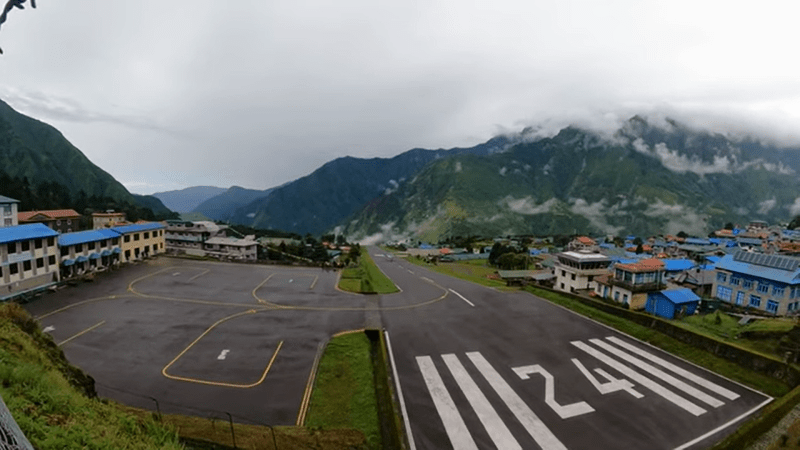
Flights to mountain airstrips are the most fragile. Lukla, the gateway to Everest, and Jomsom, in Mustang, sit in narrow valleys where low cloud, fog, and rain routinely close operations. Delays can stretch across several days when a weather system parks itself over the hills. Even Pokhara, Bharatpur, and Janakpur flights get suspended when visibility drops, and Tribhuvan International Airport in Kathmandu has closed temporarily during severe weather.
A few habits make this manageable:
- Book mountain flights for the morning, when skies are most likely to be clear.
- Never schedule a domestic flight on the same day as your international departure. Leave at least a one or two day buffer in Kathmandu.
- Buy travel insurance that explicitly covers domestic flight delays and trip interruption. Read the fine print on weather exclusions.
- Keep a flexible backup plan, such as a long but drivable road route, in case the plane simply cannot fly.
If a clear-sky mountain flight is the centerpiece of your trip, the monsoon is the wrong season for it. Be honest with yourself about that before you commit.
Highways and Road Travel During the Rains
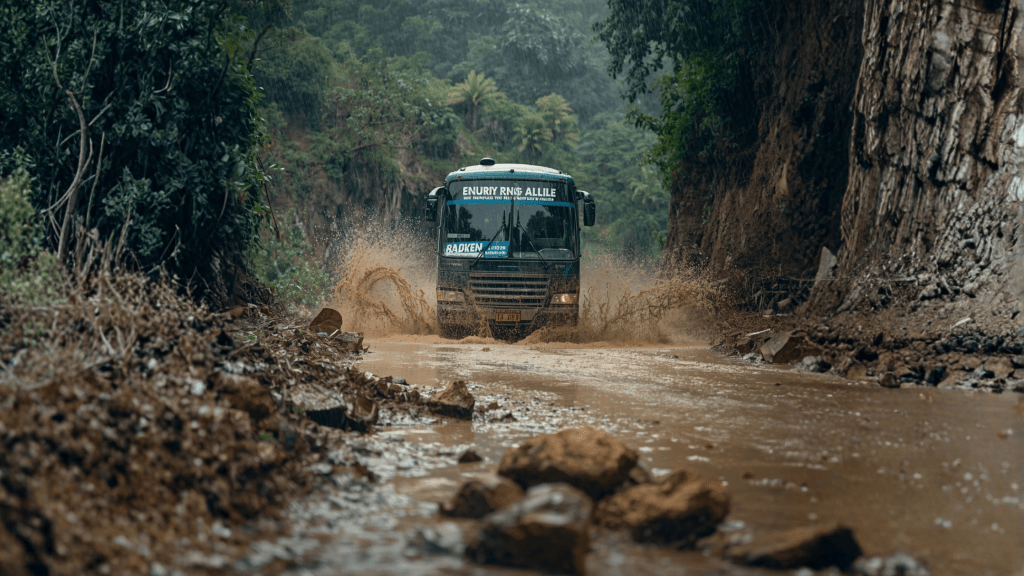
Nepal’s main arteries take a beating in the monsoon. The Prithvi Highway, the lifeline between Kathmandu and Pokhara, is prone to landslide closures during heavy rain. So are the Siddhartha, B.P., and Araniko Highways, all of which run alongside rivers and unstable slopes. In July 2025, floods and landslides blocked highways across the country, leaving hundreds of vehicles stranded.
Authorities discourage car travel on damaged highways at night during heavy rain and have at times banned buses from running after dark. That is not bureaucratic caution. Night driving on a wet mountain road with potholes, debris, and poor visibility is genuinely dangerous.
If you do travel by road in the rainy season, a few rules go a long way. Travel during daylight only. Give yourself buffer days so a six-hour drive that becomes a twelve-hour ordeal does not collapse your whole schedule. Check road conditions the morning you leave, not the week before. And pick reputable transport operators over the cheapest option, because vehicle maintenance matters more than ever when the roads are slick.
The Rain Shadow Secret: Where to Travel When Everyone Else Cancels
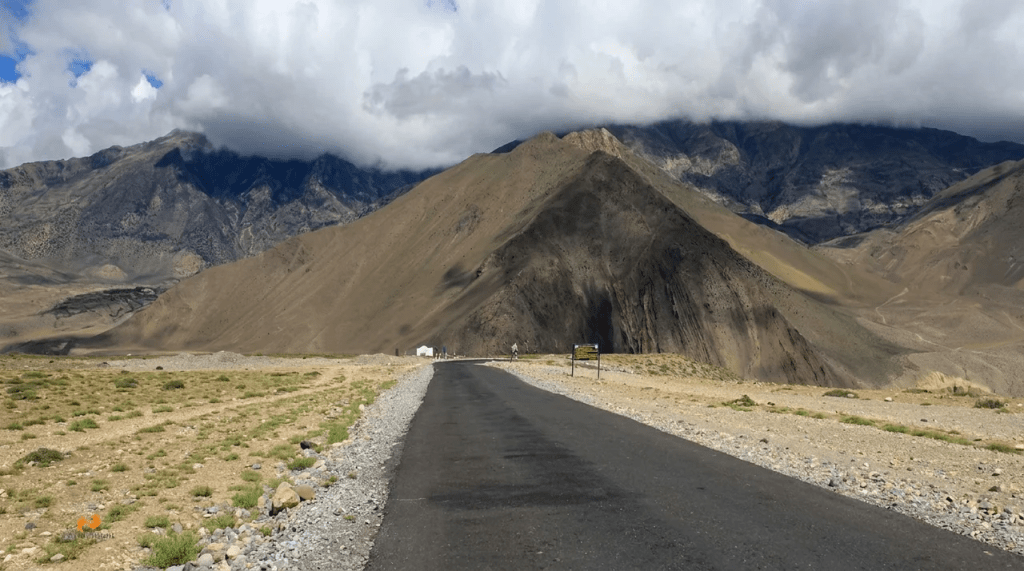
This is the part that changes everything. North of the main Himalayan range sits a band of high desert that the monsoon barely touches. Mustang, Dolpo, Manang, and parts of Jumla lie in what geographers call a rain shadow. The big peaks wring the moisture out of the incoming clouds, so the land beyond stays dry.
Consider the numbers. In June, Pokhara might gather 672 mm of rain while Jomsom, a short distance north as the crow flies, sees something closer to 69 mm. Upper Mustang and Dolpo enjoy clear skies, near-zero precipitation, and comfortable daytime temperatures around 15 to 25 degrees Celsius through the exact months when the rest of the country is soaked.
That is why these regions hit their tourism peak in June, July, and August. Trekkers who know this travel north and walk under blue skies while the southern lowlands flood. Upper Mustang also hosts the colorful Tiji Festival in late spring, adding a cultural draw to the dry-weather appeal. If you want to trek in the monsoon, this is the answer. For more on choosing routes, see our beginner’s trekking guide.
What Monsoon Travel Gets You in Return
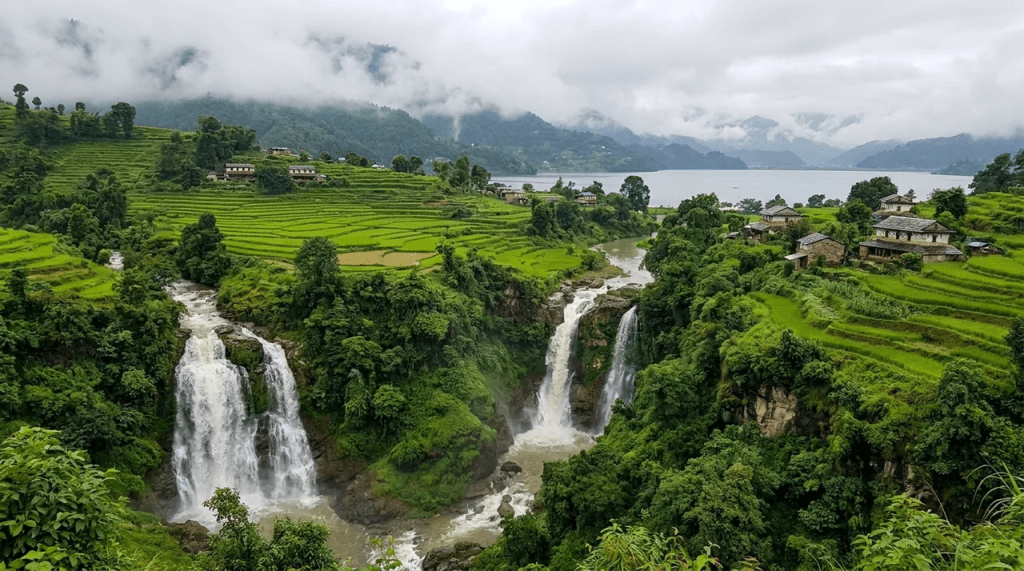
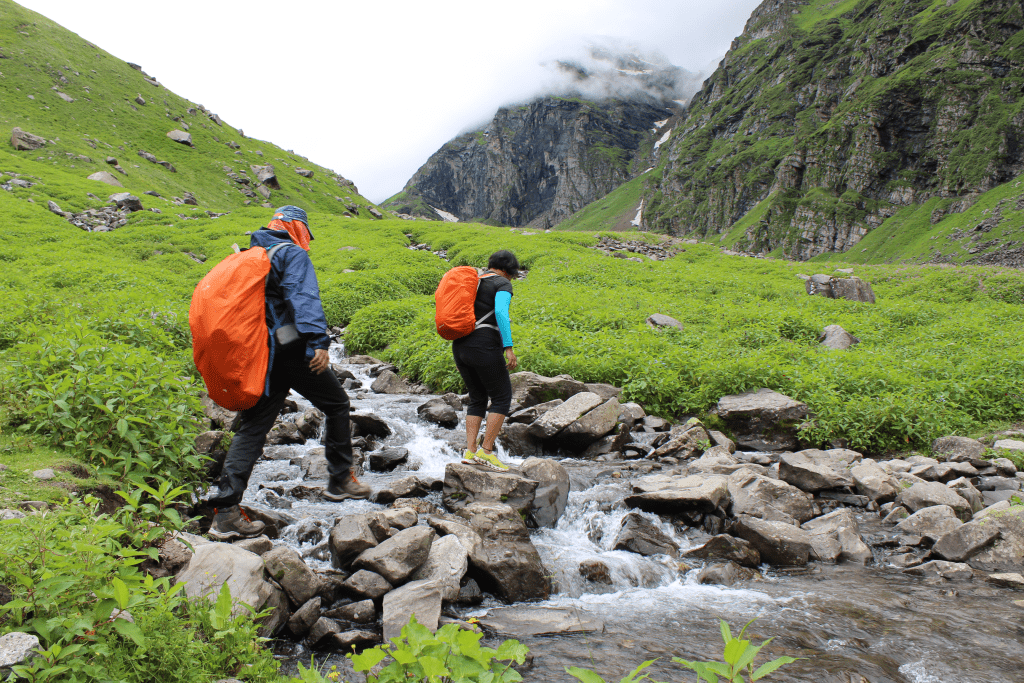
Travel in the off-season and you trade certainty for some real rewards. The hills turn a vivid, almost unreal green. Waterfalls run full. Tourist crowds thin out dramatically, so the temples of the Kathmandu Valley and the streets of Pokhara feel calmer and more personal. Prices on hotels and guides often soften too, since demand drops.
The monsoon also has a rhythm that grows on you. Clear, washed mornings give way to dramatic afternoon storms, then quiet evenings. If your plan tolerates flexibility, that rhythm becomes part of the experience rather than an obstacle. Cultural travel in cities, short valley hikes, and rain-shadow trekking all hold up well. Tight, flight-dependent mountain itineraries do not.
A Practical Monsoon Packing and Prep List
Preparation separates a soggy disappointment from a good trip. A few essentials carry real weight here:
- A genuinely waterproof jacket and a pack rain cover, not a flimsy poncho.
- Quick-dry clothing and at least one spare set sealed in a dry bag.
- Sturdy footwear with grip, since wet trails and streets get slick.
- Insect repellent, because mosquitoes are far more active in the lowlands now, especially in Chitwan and the Terai.
- A power bank, since outages happen during storms.
- Travel insurance covering flight delays, trip interruption, and medical evacuation.
Before you finalize dates, it helps to understand the full seasonal picture. Our guide to the best time to visit Nepal lays out how each month feels, and first-timers should also read our Nepal travel guide for beginners before committing.
For official conditions and advisories, check the Nepal Tourism Board and your government’s current travel advisory close to your departure date.
So, Should You Travel to Nepal in the Monsoon?
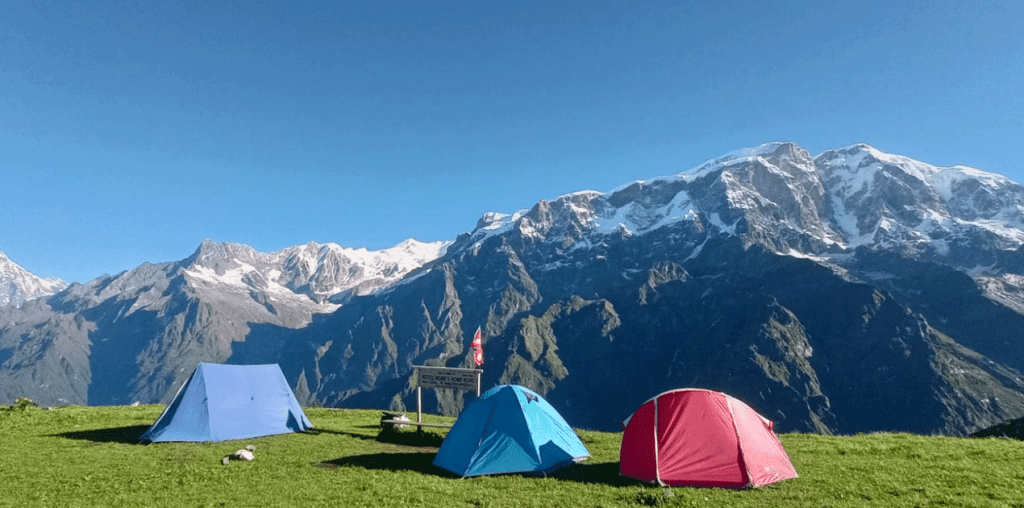
If your heart is set on guaranteed Everest views and a rigid two-week schedule, wait for autumn. If you are flexible, curious, and willing to plan around the rain rather than against it, the monsoon offers a quieter, greener, cheaper Nepal that most visitors never see. Aim for the rain-shadow north, keep buffer days everywhere, and treat domestic flights as hopeful rather than certain. Do that, and the rainy season stops being a warning and starts being an opportunity.
Frequently Asked Questions
Is it safe to travel to Nepal during the monsoon season?
It can be, with the right planning. The main hazards are landslides, flooding, and flight delays. Travel by daylight only, build in buffer days, choose rain-shadow regions like Mustang for trekking, and keep an eye on local weather and road reports. Avoid night road travel on mountain highways during heavy rain.
Which months are the Nepal monsoon?
The monsoon usually begins in mid-June and runs through mid to late September, occasionally stretching into early October. About 80 percent of Nepal’s annual rainfall arrives during these months.
Can you still trek in Nepal during the monsoon?
Yes, if you choose rain-shadow areas. Upper Mustang, Dolpo, and Manang stay largely dry because the Himalayas block the monsoon clouds. These regions actually hit their tourism peak in June, July, and August. Popular routes in the wetter south, by contrast, get muddy and leech-prone.
Will my domestic flights get canceled?
Delays and cancellations are common, especially to mountain airstrips like Lukla and Jomsom. Book morning flights, never connect a domestic flight to your international departure on the same day, and buy insurance that covers weather delays.
Which highways are most affected by monsoon landslides?
The Prithvi Highway between Kathmandu and Pokhara is a frequent trouble spot, along with the Siddhartha, B.P., and Araniko Highways. All run beside rivers and unstable slopes, and closures of several hours to several days happen during heavy rain.
Are there any upsides to visiting Nepal in the rainy season?
Plenty. The landscape turns lush and green, waterfalls run full, crowds thin out, and prices on accommodation and guides often drop. Cultural travel in Kathmandu and Pokhara and rain-shadow trekking both work well in this season.
What should I pack for monsoon travel in Nepal?
A truly waterproof jacket, a pack rain cover, quick-dry clothing in a dry bag, grippy footwear, insect repellent, a power bank, and comprehensive travel insurance. Skip the flimsy poncho and invest in gear that actually keeps water out.
How many buffer days should I add to a monsoon itinerary?
At least one or two extra days in Kathmandu before any international departure, plus a spare day around any mountain flight or long highway drive. Flexibility is the single most useful thing you can pack for the rainy season.