


Picture this: you’ve spent months planning your trek, bought all the gear, booked your flights, and finally landed in Kathmandu. You’re ready to go. Then someone at the teahouse tells you that you’re missing a permit. Not just any permit: the one that gets you past the checkpoint tomorrow morning. It’s a gut-punch moment that happens to more trekkers than you’d think. And it’s entirely avoidable.
Getting your Nepal trekking permits sorted before you hit the trail isn’t just a formality. It’s the difference between a smooth, stress-free adventure and a scramble back to Kathmandu mid-trip. This guide covers everything: which permits you need, where to get them, how much they cost in 2026, and a few things most other guides conveniently leave out.
Why Nepal Requires Trekking Permits
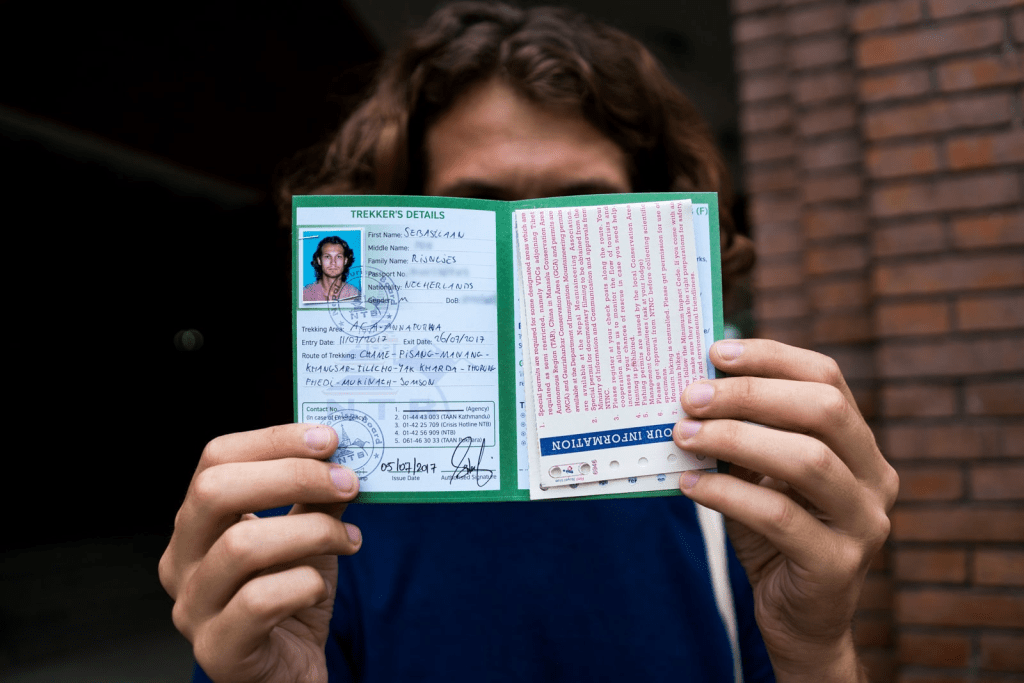
Nepal charges permit fees for good reason. The money goes toward conservation of sensitive ecosystems, trail maintenance, and funding rescue operations in remote areas. The Annapurna Conservation Area alone spans 7,629 square kilometers and protects snow leopards, red pandas, and over 1,200 plant species. Without permit revenue, that work stops.
There’s also a safety angle. Permit checkpoints are how authorities track who is on the trail. If you go missing, those records matter. Since April 1, 2023, Nepal has also made licensed guide requirements mandatory on most high-altitude treks. Solo independent trekking without a guide is no longer legal on those routes. More on that below.
The TIMS Card: What’s Changed in 2026
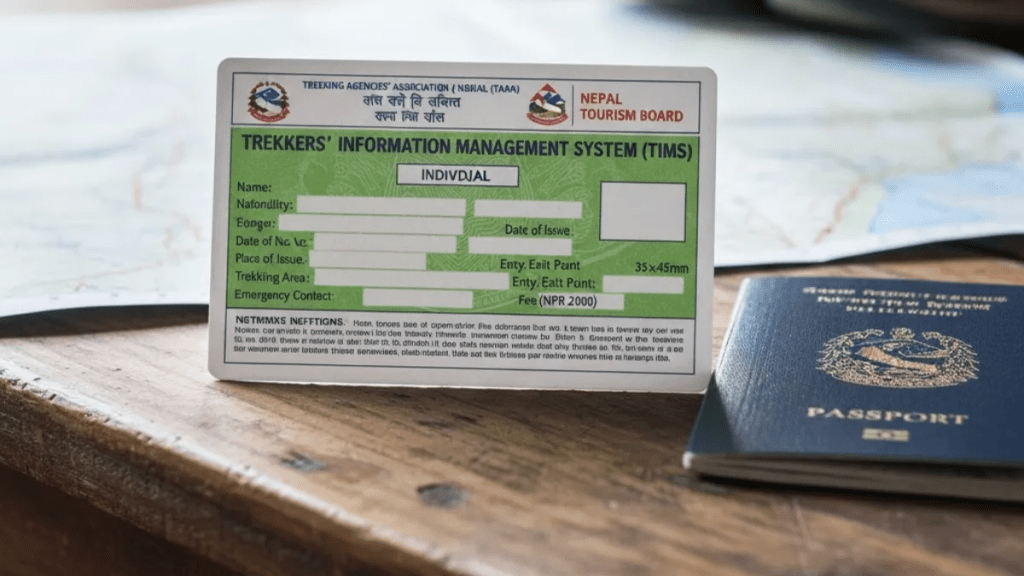
Here’s what most guides won’t tell you: the TIMS card situation is messy and widely misunderstood. The Trekkers’ Information Management System (TIMS) card was once required for virtually every trail in Nepal. That’s no longer the case.
As of 2026, the TIMS card is not required for trekking in the Annapurna region. Checkpoint staff in Annapurna verify your ACAP permit only. You will still need a TIMS card for routes in Langtang, Manaslu, Rara Lake, and far-western Nepal.
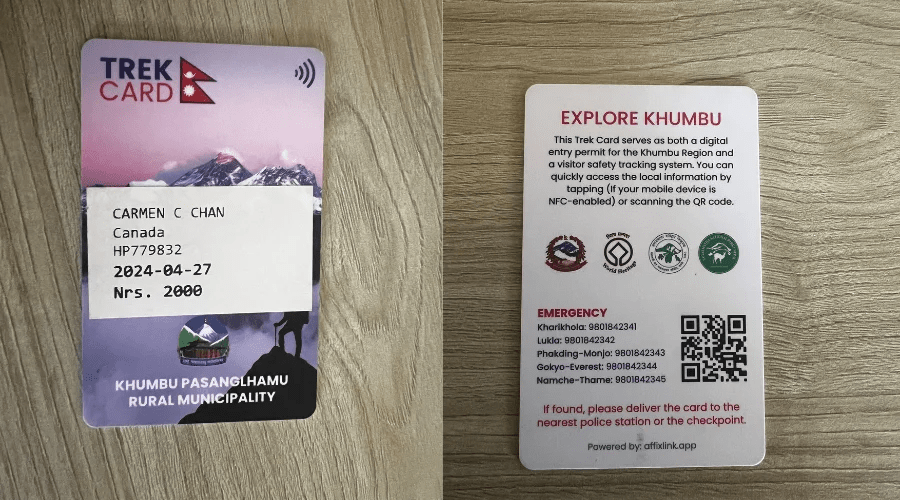
The TIMS card costs NPR 2,000 for individual trekkers and NPR 1,000 for those trekking through a registered agency. You pick it up at the Nepal Tourism Board (NTB) office or the Trekking Agencies Association of Nepal (TAAN) office in Kathmandu.
Annapurna Region Permits (ACAP)
Every trekker entering the Annapurna Conservation Area needs an ACAP permit. This includes the Annapurna Circuit, Annapurna Base Camp, Ghorepani Poon Hill, Mardi Himal, Nar Phu Valley, and any other route within the conservation area boundary.
ACAP Permit Fees 2026:
- Foreign nationals: NPR 3,000 (approximately USD 22)
- SAARC nationals: NPR 1,000
- Nepali citizens: free
- Children under 10: free
You can get the ACAP permit at the NTB/TAAN office in Kathmandu or at the ACAP office in Pokhara. One thing worth knowing: if you show up at certain checkpoints without your ACAP permit, you won’t just be turned back. You’ll be charged double on the spot. Bring the permit from the city. It’s cheaper and less stressful.
Online applications for ACAP are not available in 2026. You must appear in person with your passport, one passport photocopy, and two passport-sized photos (35mm x 45mm, white background).
Sagarmatha National Park Permit (Everest Region)
Heading to Everest Base Camp or anywhere in the Khumbu? You’ll need entry into Sagarmatha National Park. This is one of the pricier permits in Nepal, and the cost goes up slightly when you add the local municipality fee.
Sagarmatha National Park Permit Fees 2026:
- Foreign nationals: NPR 3,000 + 13% VAT (approximately USD 28 total)
- SAARC nationals: NPR 1,500
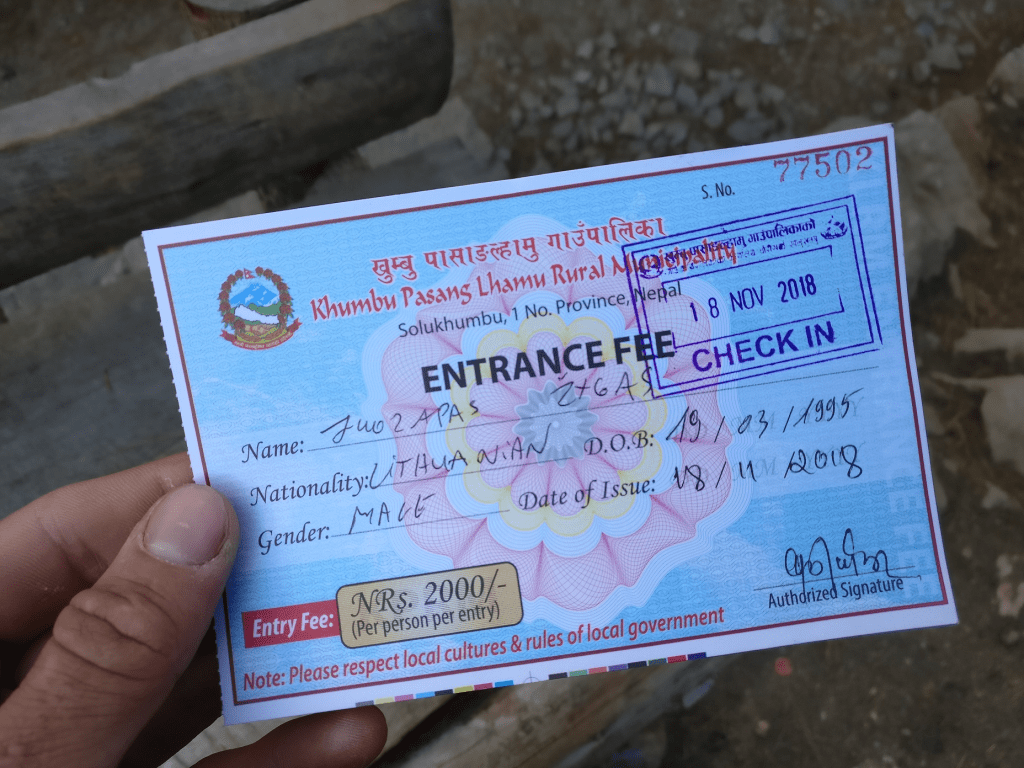
- Khumbu Pasang Lhamu Rural Municipality fee: NPR 2,000 to 3,000 (paid separately at the local checkpoint)
You can collect the national park permit at the Tourism Service Center in Kathmandu before flying to Lukla, or at the Monjo checkpoint near the park entrance. Most experienced guides recommend getting it in Kathmandu so you’re not fumbling with paperwork after a bumpy 35-minute flight.
Langtang and Other National Park Permits
The permit structure is broadly the same across Nepal’s other national parks:
- Langtang National Park: NPR 3,000 for foreigners. Note that a TIMS card is also required here. Budget for both.
- Makalu-Barun National Park: NPR 3,000 for foreigners. Required for the Makalu Base Camp trek.
- Shivapuri Nagarjun National Park: NPR 250 per person. This one covers day hikes from Kathmandu, including the popular Chisapani trail.
Conservation area permits follow a similar cost structure to ACAP. Manaslu Conservation Area Permit (MCAP) costs USD 30 per person for foreigners.
Restricted Area Permits: The Expensive Ones
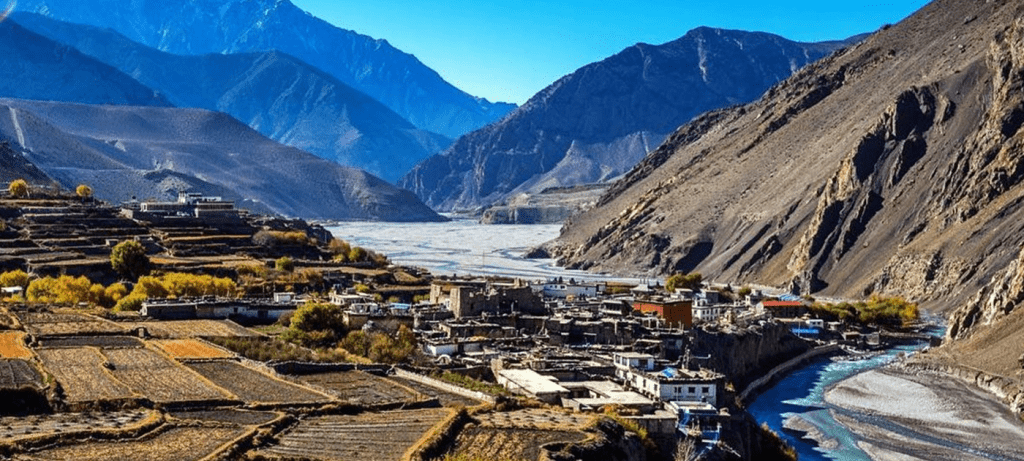
Some of Nepal’s most spectacular destinations sit inside restricted areas. These zones limit tourist numbers to protect culture and environment, and permits are priced accordingly. Here’s what you’re looking at in 2026:
Upper Mustang
Big news for 2025-2026: the old USD 500 flat-fee Upper Mustang permit has been replaced with a USD 50 per day fee. This is actually a better deal for anyone spending more than 10 days in the region. Upper Mustang also requires an ACAP permit and a TIMS card.
You cannot apply for a restricted area permit on your own. Applications must be submitted through a registered trekking agency, and the Department of Immigration in Kathmandu typically needs two to four weeks’ notice. Don’t leave this to the last minute.
Manaslu Circuit
The Manaslu Circuit requires a restricted area permit, a TIMS card, and the MCAP permit. The restricted area permit costs:
- USD 100 per person for the first 7 days (September to November, peak season)
- USD 15 per person per day beyond the first 7 days (peak season)
- USD 75 per person for the first 7 days (December to August)
- USD 10 per person per day beyond the first 7 days (off-season)
A minimum group size of two trekkers is required for Manaslu, and you must be accompanied by a licensed guide arranged through a registered agency.
Other Restricted Areas
Tsum Valley, Dolpo, Kangchenjunga, and certain Humla routes also fall under restricted area status. Fees vary. For up-to-date information, the Nepal Department of Immigration permit fee page has the official current rates.
The Mandatory Guide Rule
This is where most beginners get confused, so let’s be direct. Since April 2023, solo trekking without a licensed guide is officially prohibited on the following routes:
- All routes in Annapurna Conservation Area
- Everest Base Camp and all Sagarmatha National Park trails
- Langtang National Park routes
- Manaslu Circuit
- All restricted area treks
Lower-altitude trails near Pokhara or Kathmandu (like the Shivapuri day trails) generally don’t require a guide. But the truth is, if you’re trekking at altitude, you almost certainly need one.
A licensed porter-guide costs between USD 25 and USD 40 per day depending on the route. It sounds like an added expense, but a good guide doubles as a safety net, a translator, and someone who knows which teahouse actually has hot water.
Step-by-Step: How to Get Your Permits
Step 1: Know which permits you need
Start with your specific route. If you’re doing the Annapurna Base Camp trek, you need an ACAP permit. If you’re doing Everest Base Camp, you need the Sagarmatha National Park permit. Restricted areas require additional permits obtained through a registered agency.
Step 2: Gather your documents
You’ll need: your passport (original plus one photocopy of the photo page), two recent passport-sized photos (35mm x 45mm, white background), and for some permits, a copy of your travel insurance. Bring extras of everything.
Step 3: Visit the permit office in Kathmandu or Pokhara
In Kathmandu, you have two options:
- Nepal Tourism Board (NTB): Bhrikutimandap, Pradarshani Marg, Kathmandu. Phone: +977 1 4256909
- TAAN Office: Maligaon, Kathmandu. Phone: +977-1-4427473
In Pokhara, the ACAP office near the lakeside area handles Annapurna region permits. Standard permits are usually issued the same day. Restricted area permits take 5 to 7 working days minimum.
Step 4: Pay the fee and collect your permit
Payment is typically in Nepali rupees. Some offices accept USD. Keep receipts for all permits. Checkpoint staff will stamp your permit card at each control point along the trail.
Quick Reference: Permit Costs at a Glance
Here’s a summary of permit fees for foreign nationals in 2026:
- ACAP (Annapurna): NPR 3,000 (~USD 22)
- Sagarmatha National Park (Everest): NPR 3,000 + 13% VAT (~USD 28)
- Langtang National Park: NPR 3,000 (~USD 22)
- Makalu-Barun National Park: NPR 3,000 (~USD 22)
- MCAP (Manaslu Conservation Area): USD 30
- Manaslu Restricted Area Permit: USD 75-100 for first 7 days
- Upper Mustang Restricted Area: USD 50 per day
- TIMS card (where required): NPR 2,000 individual / NPR 1,000 through agency
For more on what to budget for your overall trip, check out our budget travel Nepal guide and our breakdown of Annapurna vs Everest Base Camp to figure out which route fits your plans and wallet.
Common Permit Mistakes to Avoid
This is where most people go wrong:
- Leaving permits until arrival at the trailhead. Some checkpoints do issue permits on-site, but at double the price. Always get your permits in the city first.
- Underestimating restricted area processing time. Manaslu and Upper Mustang permits need 2 to 4 weeks through your agency. Book your trek early.
- Forgetting extra passport photos. Bring at least four. Multiple offices require them, and running out in Kathmandu is annoying but avoidable.
- Assuming TIMS is still required everywhere. It’s not. But assuming it’s not required where it actually is, like Langtang, will get you turned back at the checkpoint.
- Trekking without a guide on mandatory-guide routes. Authorities at checkpoints are increasingly strict. This isn’t 2019 anymore.
For an overview of the routes themselves, see our complete trekking in Nepal guide for beginners.
Frequently Asked Questions
Do I need a TIMS card for the Annapurna Circuit in 2026?
No. As of current enforcement in 2026, TIMS cards are not checked on Annapurna region trails. Checkpoints verify your ACAP permit only. However, always carry your TIMS card if you have one, as regulations can change mid-season.
Can I get Nepal trekking permits online?
Not for most permits. ACAP and national park permits require in-person collection from the NTB, TAAN, or local area offices. Restricted area permit applications can be initiated through your registered trekking agency, but physical processing still occurs at the Department of Immigration.
How long does it take to get a permit in Kathmandu?
Standard permits like ACAP and national park entry permits are usually issued on the same day. Plan to visit the office in the morning to have your permits in hand by afternoon. Restricted area permits take 5 to 7 working days minimum, with some like Upper Mustang requiring agency submission 2 to 4 weeks in advance.
Do I need a guide to trek in Nepal in 2026?
Yes, if you’re trekking in any of Nepal’s major national parks or conservation areas at altitude, including Annapurna, Sagarmatha, Langtang, or any restricted area. Solo trekking without a licensed guide has been prohibited on these routes since April 2023. Guides must be licensed and arranged through a registered agency.
How much does the Upper Mustang permit cost in 2026?
USD 50 per person per day, replacing the old flat USD 500 fee. You’ll also need an ACAP permit and a TIMS card for Upper Mustang. All permits must be arranged through a registered trekking agency due to the restricted area classification.
Where exactly do I go to get a TIMS card in Kathmandu?
TIMS cards are issued at the Nepal Tourism Board office at Bhrikutimandap, Pradarshani Marg, Kathmandu, and at the TAAN office in Maligaon. Both offices are open Sunday through Friday during normal business hours. Bring your passport, a photocopy of the photo page, and two passport-sized photos.
Are trekking permits cheaper if I book through an agency?
Yes, for TIMS cards, the fee is NPR 1,000 through a registered agency as against NPR 2,000 if you apply by yourself. For most other permits, such as ACAP and entry into national parks, the price is the same regardless of how you book. If you are going into a restricted area, you have no option; permits must be obtained through a registered agency.
What happens if I trek without a permit?
Checkpoint staff can and do turn trekkers back. In some areas, you may be issued a fine or forced to purchase the permit on-site at a penalty rate. On restricted area routes, authorities can escort you off the trail entirely. It’s not worth the risk. For more on official Nepal Tourism Board permit requirements, check the NTB website before your trip.