



Most people assume the best Annapurna views demand either the punishing altitude of an Everest-style expedition or the crowded sunrise conga line at Poon Hill. That assumption falls apart the second you plant your boots on the ridge during the Khopra Danda trek. Here you get a Dhaulagiri that fills half the sky, an Annapurna South close enough to feel almost rude, and often not another foreign trekker in sight. It is one of the last routes in the region where you can still feel like you found something before everyone else did.
So why do so few people walk it? Honestly, marketing. The big agencies push the classics because they sell themselves, and this ridge sits just far enough off the standard Annapurna loops to get skipped. Their loss.
What the Khopra Danda trek actually is
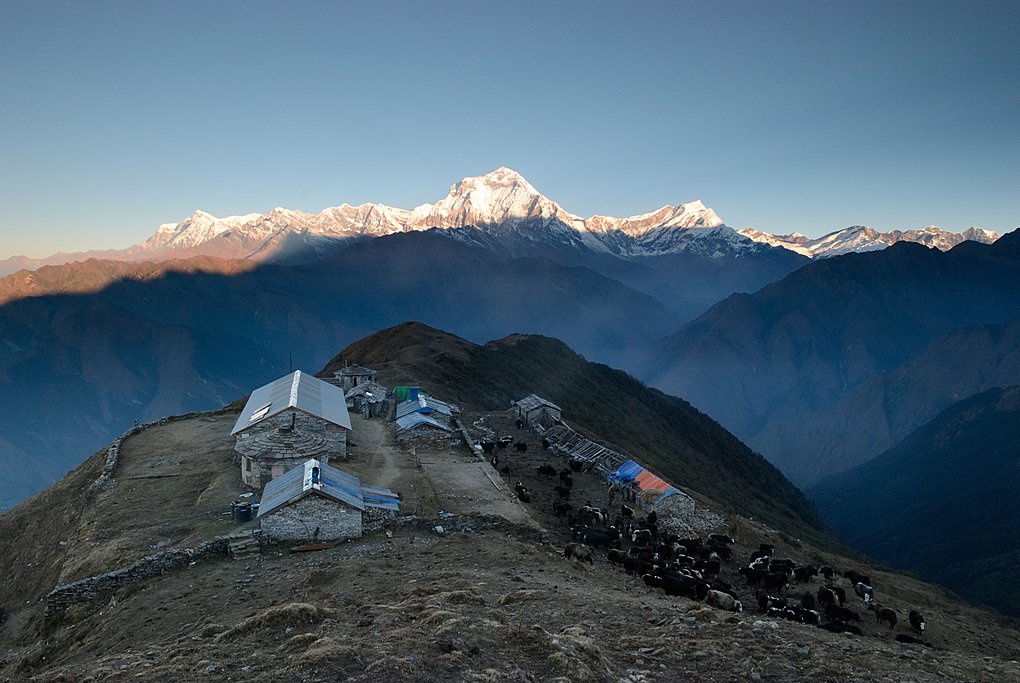
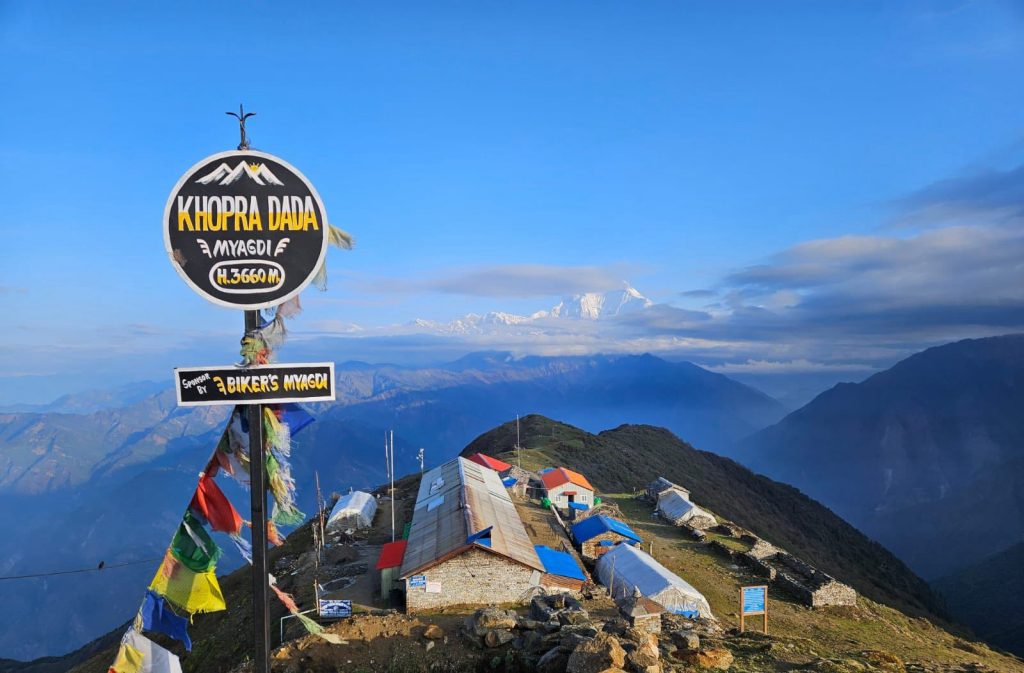
Khopra Danda, also called Khopra Ridge, is a moderate community-run trail on the southwestern edge of the Annapurna Conservation Area. It branches off the well-worn Ghorepani and Ghandruk paths and climbs to a lonely ridge at roughly 3,660 meters (about 12,008 feet). That is the headline number most itineraries quote as the trek’s high point.


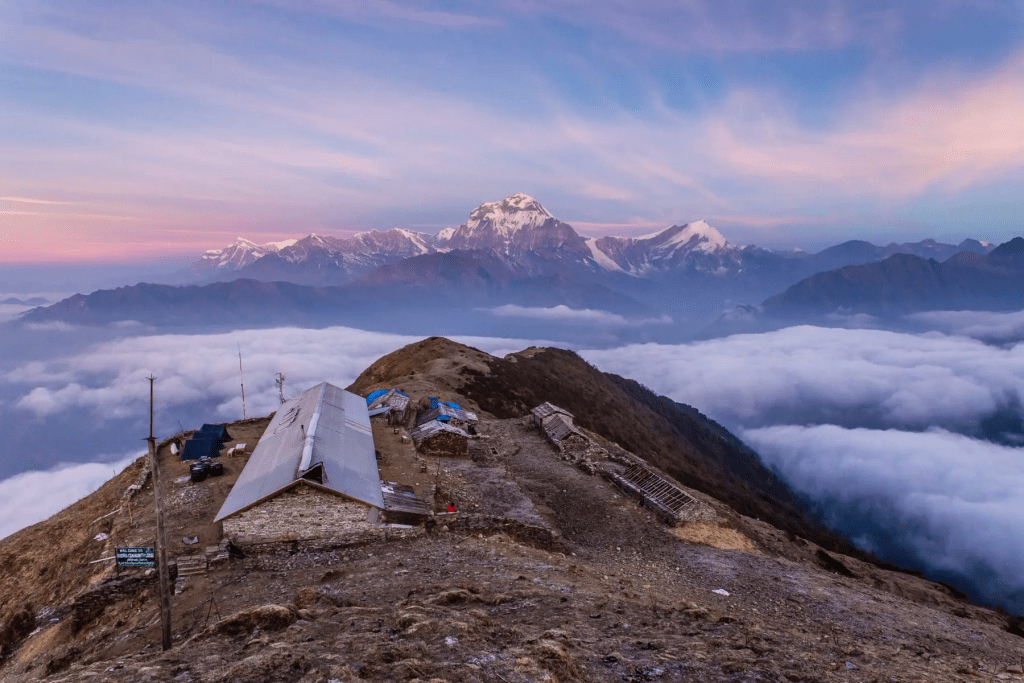
What makes the route special is not raw altitude. It is the angle. You are standing on a narrow spine of land with the Kali Gandaki gorge dropping away on one side and a wall of eight-thousanders rising on the other. Dhaulagiri, at 8,167 meters, sits directly across the valley. Nilgiri, Tukuche Peak, Annapurna South, and Dhampus Peak crowd the rest of the horizon.
Add the optional day hike to sacred Khayer Lake at around 4,660 meters (roughly 15,289 feet) and you get a proper high-alpine experience without ever needing technical gear. That side trip is a brutal push, though. More on that below.
How hard is it, really
Here is what most trek pages gloss over: the daily distances are short, but the climbs are mean. Sections like Tadapani up to Bayeli Kharka and on to the ridge throw steep, sustained ascents at you without the gradual acclimatization steps you get on longer routes. You gain a lot of vertical over relatively few kilometers.
For someone with normal fitness, four to six hours of walking a day is very doable. You do not need to be an athlete. You do need working knees and a willingness to grind uphill for a couple of hours at a stretch.
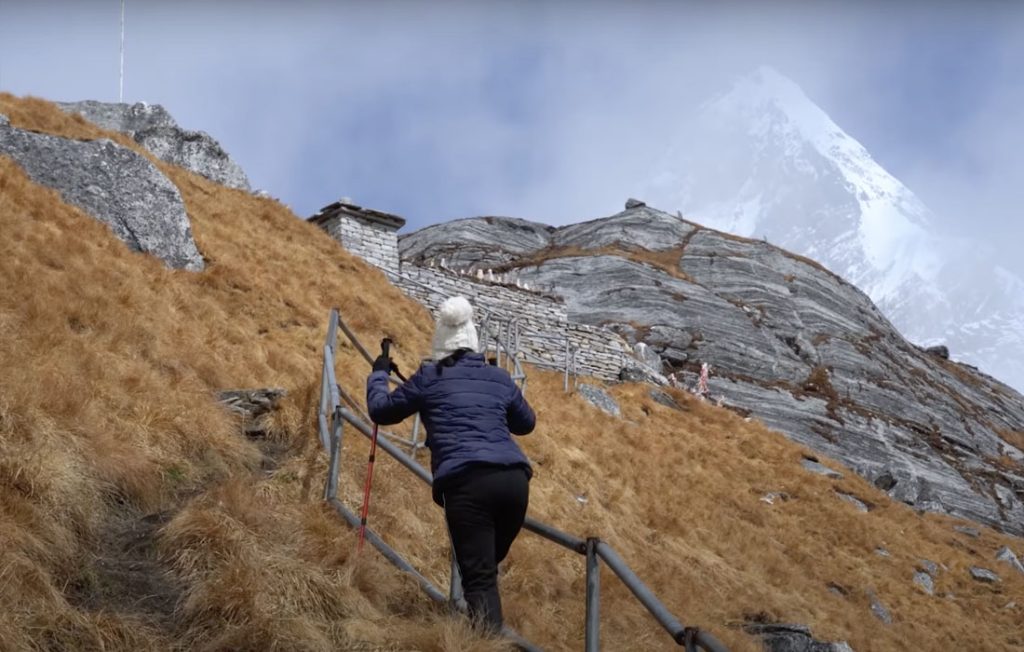
Compared to its neighbors, it slots in neatly. Tougher than the gentle Ghorepani Poon Hill loop. A touch more demanding than Mardi Himal because of those abrupt climbs. Far easier and far shorter than the full Annapurna Circuit or anything in the Everest region. If you want a fuller breakdown of how the region’s marquee treks stack up, our guide comparing Annapurna and Everest Base Camp is a useful companion read.
The Khayer Lake add-on is the one part I would flag hard. Climbing roughly 1,000 meters and back in a single day, starting near 3,660 meters, is no joke. People underestimate it constantly and pay for it with headaches. Go slow, drink more water than feels reasonable, and turn around if you feel worse than tired.
The route and a sample itinerary
Most trekkers start from Pokhara, driving out to Nayapul or up to Ghandruk to begin walking. Both trailheads are an easy morning’s drive from the lakeside city. A typical run takes five to seven days on the trail, though outfitters stretch or trim it depending on how many side valleys you want to fold in.
A common seven-day shape looks like this:
- Day 1: Drive Pokhara to Ghandruk, short walk into the Gurung village. Settle in, eat dal bhat, watch the light hit Annapurna South.
- Day 2: Ghandruk to Tadapani through mossy rhododendron forest.
- Day 3: Tadapani to Bayeli Kharka. The climbing starts in earnest here.
- Day 4: Bayeli to Khopra Danda. Short on distance, long on views once you top out on the ridge.
- Day 5: Optional Khayer Lake day hike and back, or a rest and acclimatization day.
- Day 6: Descend toward Swanta or Chistibung, dropping back into forest and farmland.
- Day 7: Continue down to Tatopani or a road head, then drive back to Pokhara.
Plenty of variations exist. Some link the ridge with Ghorepani and Poon Hill at the start for a warm-up sunrise. Others push deeper toward Narchyang and the Kali Gandaki. A good local operator will shape it around your fitness and how many nights you can spare.
Permits, costs, and the guide rule
Paperwork for this trek is refreshingly simple. You need the Annapurna Conservation Area Permit (ACAP), which costs NPR 3,000 per person for foreign nationals, roughly 23 US dollars at current exchange rates. SAARC nationals pay less. Kids under ten are usually free.
The old Trekkers’ Information Management System (TIMS) card is a murkier story. It officially runs about NPR 2,000 for foreigners, but enforcement across Annapurna trails has been inconsistent for a couple of years now, and checkpoints on the ground mostly ask for the ACAP. As of early 2025, TIMS was best treated as recommended for independent safety tracking rather than a hard requirement on this route. Rules shift, so confirm the current status when you arrive.
One thing that has firmed up: Nepal’s push toward requiring a licensed guide or registered agency for many trekking regions. As of 2025 this is the practical reality for most foreign trekkers in the Annapurna area, so budget for a guide even if you consider yourself a solo veteran. Check the latest official position through the Nepal Tourism Board before you lock plans. Our detailed Nepal trekking permits guide walks through the whole process step by step.
For a guided package covering roughly seven to ten days, expect somewhere between 450 and 700 US dollars per person. That typically bundles teahouse lodging, all meals on the trail, an English-speaking guide, and permits. Porters, tips, gear, and your Pokhara nights sit on top of that.
Where the money goes, and why it matters
Here is the part that genuinely sets this trail apart. Lodges along Khopra Ridge are community-owned rather than privately run. Money you spend on a bed and a plate of dal bhat feeds back into village schools, local health posts, and conservation work rather than into a distant owner’s pocket.
The Annapurna Conservation Area itself is managed by the National Trust for Nature Conservation, and you can read about their long-running work on the Annapurna Conservation Area Project page. It is one of the older and more respected community conservation models in the Himalayas, and walking this ridge is a small, direct way to support it.
When to go
Two windows stand out. Spring, from March through May, brings blooming rhododendron forests and generally stable skies. Autumn, from mid-September through November, delivers the crispest mountain views of the year after the monsoon washes the dust out of the air.
Winter is walkable but cold, and the Khayer Lake side trip can be snowed out. Monsoon, roughly June through August, means leeches, cloud-blocked views, and slick trails, though the forests turn impossibly green. If you can only go once, aim for late October or early November and thank me later.
Whichever season you pick, layer smart. Ridge nights get bitter even in warm months, and the temperature can swing from t-shirt warmth at midday to near freezing after dark. Pokhara makes a comfortable base to organize gear and rest before and after; our Pokhara travel guide covers where to stay and what to sort out in town.
Frequently asked questions
How many days do I need for the Khopra Danda trek?
Most people do it in five to seven days on the trail. Add a day if you want the Khayer Lake side hike done at a safe pace, and a couple more for travel to and from Pokhara.
What is the highest point of the trek?
The ridge itself sits at about 3,660 meters. An optional Khayer Lake day hike climbs to roughly 4,660 meters, which is the true physical high point of the trip.
Is it suitable for beginners?
Yes, with a caveat. Fit first-timers handle it well, but the steep, sustained climbs make it a step up from easy walks like Poon Hill. Do a few hill hikes at home first and you will enjoy it far more.
Do I need a guide?
As of 2025, a licensed guide or registered agency is the practical requirement for foreign trekkers across most of the Annapurna region. Beyond the rules, a guide genuinely helps on the less-marked ridge sections.
How much does it cost?
A guided seven to ten day package runs roughly 450 to 700 US dollars per person, covering lodging, meals, guide, and permits. The ACAP permit alone is NPR 3,000 for foreigners.
Are the teahouses comfortable?
They are basic and community-run, with simple rooms, shared bathrooms, and hearty local food. Do not expect hot showers on demand or heating at the higher lodges. Bring a good sleeping bag.
How crowded is the trail?
Delightfully quiet compared to Poon Hill or the main Annapurna routes. You will share it with a trickle of trekkers rather than a crowd, which is much of the appeal.
Can I combine it with other treks?
Absolutely. Many trekkers link it with Ghorepani and Poon Hill, or extend toward the Kali Gandaki and Tatopani. It stitches neatly into a longer Annapurna itinerary.


