



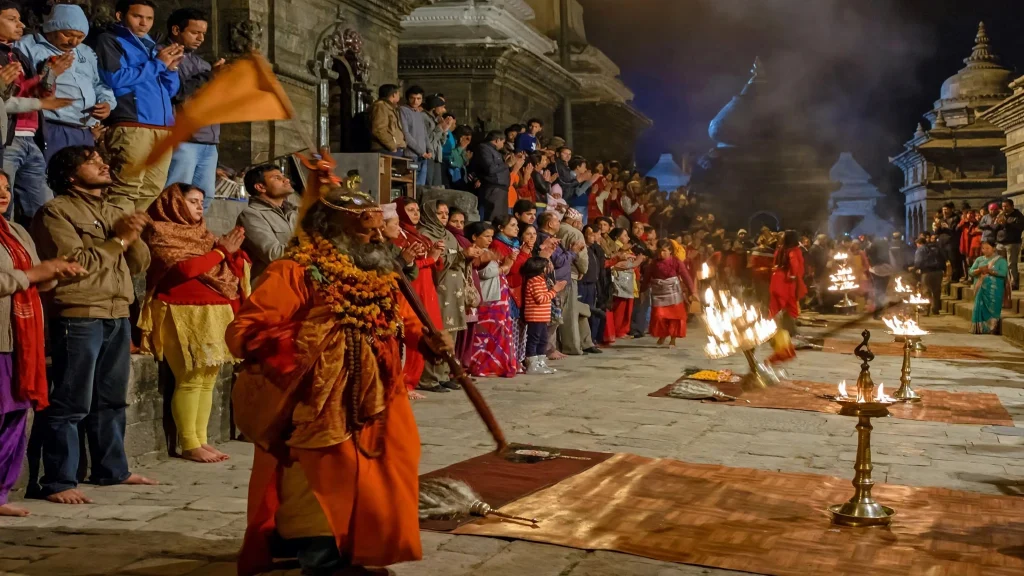
The Pashupatinath evening Aarati is one of Kathmandu’s most powerful sights. Every evening, priests light oil lamps beside the sacred Bagmati River. Chanting fills the air, bells ring, and hundreds gather to watch. However, this ceremony has its own rhythm, seating system, and cultural rules. Understanding them beforehand makes the experience far more meaningful. This guide covers exactly where to sit, what to wear, and how to prepare.
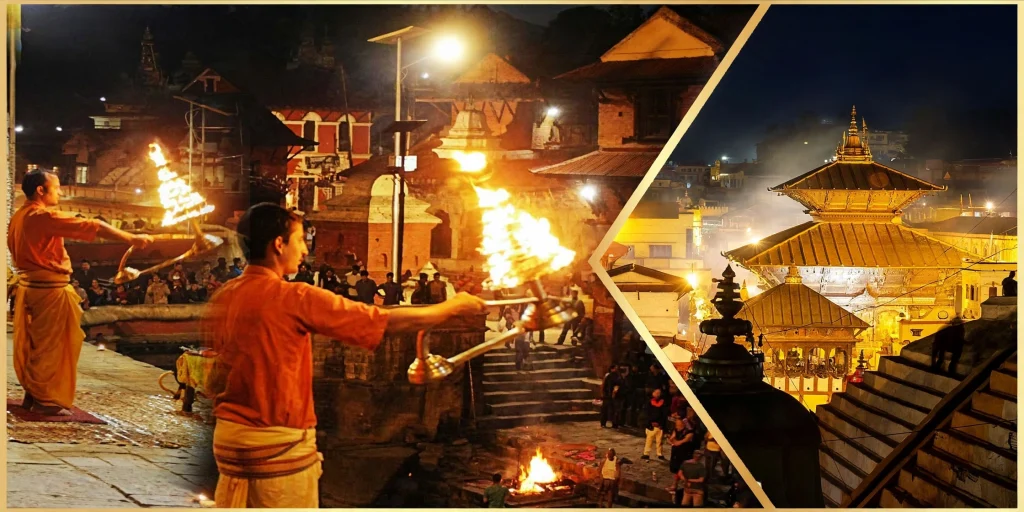
What Exactly Is the Pashupatinath Evening Aarati?
Aarati is a Hindu ritual of offering light to a deity. At Pashupatinath, this ceremony honors both Lord Shiva and the holy Bagmati River. Three priests typically lead the ritual from platforms on the temple’s western bank. They hold copper lamps filled with ghee, moving them in slow circular motions. Meanwhile, musicians play drums, cymbals, and flutes in the background. Devotees often sing bhajans, or devotional songs, throughout the ceremony. In Hindu philosophy, this fire represents wisdom overcoming darkness. As a result, the ritual carries deep spiritual weight beyond its visual beauty. For many visitors, it becomes the most memorable part of an entire Nepal trip.
When Does the Pashupatinath Evening Aarati Take Place?
Timing shifts slightly with the seasons, so it helps to plan ahead. During winter months, roughly November to February, the ceremony usually starts around 6:00 PM. In summer, from March through October, it tends to begin closer to 7:00 PM. The ceremony generally lasts between thirty minutes and one hour. Therefore, budgeting around ninety minutes for the full experience is wise. Since exact timing can shift slightly around major festivals, it’s worth double-checking locally on the day. Regardless of season, arriving early always makes a noticeable difference to your experience.


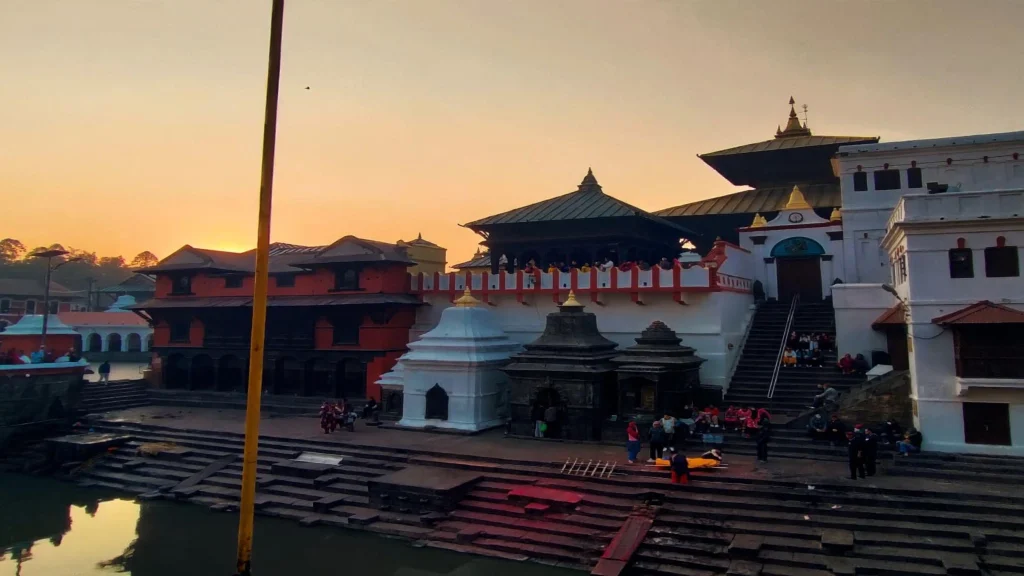
Where to Sit: Understanding the Seating Layout
Seating for the Pashupatinath evening Aarati happens across the river from the priests. The ritual itself takes place on the temple’s western bank. Meanwhile, public viewing happens on the eastern bank, facing directly across. This eastern side features wide stone steps, known locally as ghats. Most visitors consider this area the best and most immersive seating option.
The Eastern Ghats: The Front-Row Experience
These ancient stone steps sit directly opposite the priests. They offer the closest, most immersive view of the entire ceremony. Naturally, this area gets crowded quickly as evening approaches. To claim a good spot, arrive by around 4:45 PM. This gives you time to buy your ticket, settle in, and watch the temple prepare. It also helps to walk along the steps rather than settling immediately. A central position, roughly opposite the main platforms, usually offers the clearest sightline.
The Bridge: Best for Photography
A footbridge connects both banks near the ceremony site. Standing here gives photographers a slightly elevated, wider angle. You’ll capture the priests, the river, and the crowd in one frame. This spot works especially well if the ghats look too crowded already.
The Upper Terraces: A Quieter Alternative
Small shrines sit on the hillside behind the main seating area. From here, you can look down on the entire scene from a distance. This spot suits visitors who prefer a calmer, less crowded experience. Additionally, it works well if you simply want space to reflect quietly.
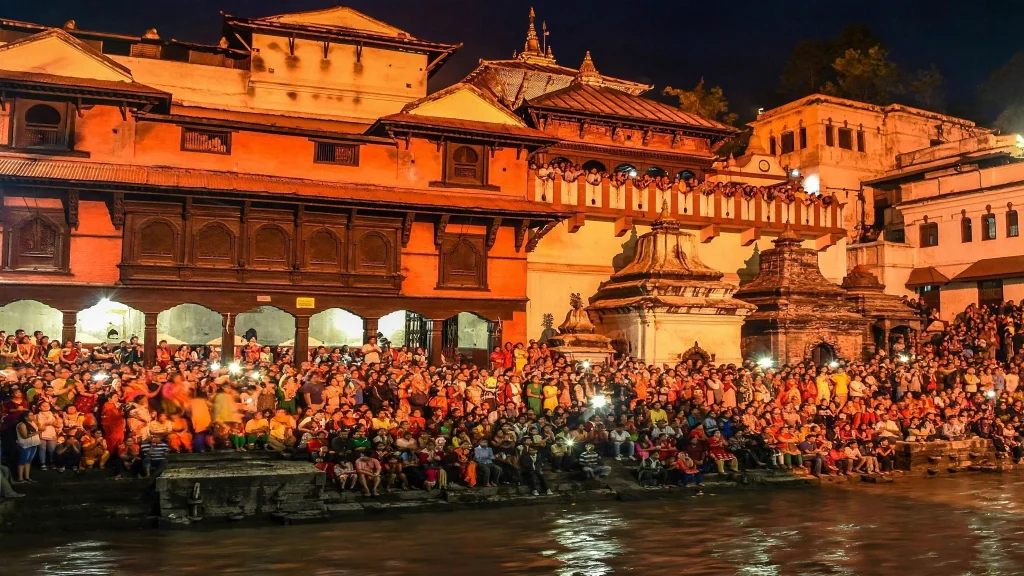
Accessibility Considerations for Seating
It’s worth noting that most seating involves steep stone steps. Consequently, this layout can be difficult for visitors with mobility issues. If steps aren’t manageable, head instead to the flatter area near the bridge. You’ll still get a clear, satisfying view of the ceremony from there. Wheelchair users or elderly travelers should plan to arrive extra early. This ensures enough time to find a comfortable, accessible spot before the crowds build.
Entry Rules and Ticket Requirements
Before settling into your seat, you’ll need to pass through the entrance gate. Foreign visitors currently pay an entry fee of NPR 1,000, roughly USD 8. Nepali and Indian citizens, meanwhile, enter completely free of charge. Children under ten years old also enter without any fee. Importantly, your ticket remains valid for the entire day. So, if you visited that morning, simply keep your ticket for evening re-entry. Tickets are sold at counters managed by the Pashupati Area Development Trust, near the main entrance.
Dress Code and Temple Etiquette
Pashupatinath remains an active place of worship, not just a tourist attraction. Therefore, modest dress is expected from every visitor. Cover your shoulders and knees before entering the complex. Avoid leather items, since Lord Shiva’s temple treats them as ritually impure. You’ll also need to remove your shoes before entering certain temple areas. Beyond clothing, general respect matters just as much. Avoid loud conversations near cremation ghats or active rituals. Never touch religious icons, offerings, or objects without permission. If you wish to photograph a sadhu or priest, always ask first.
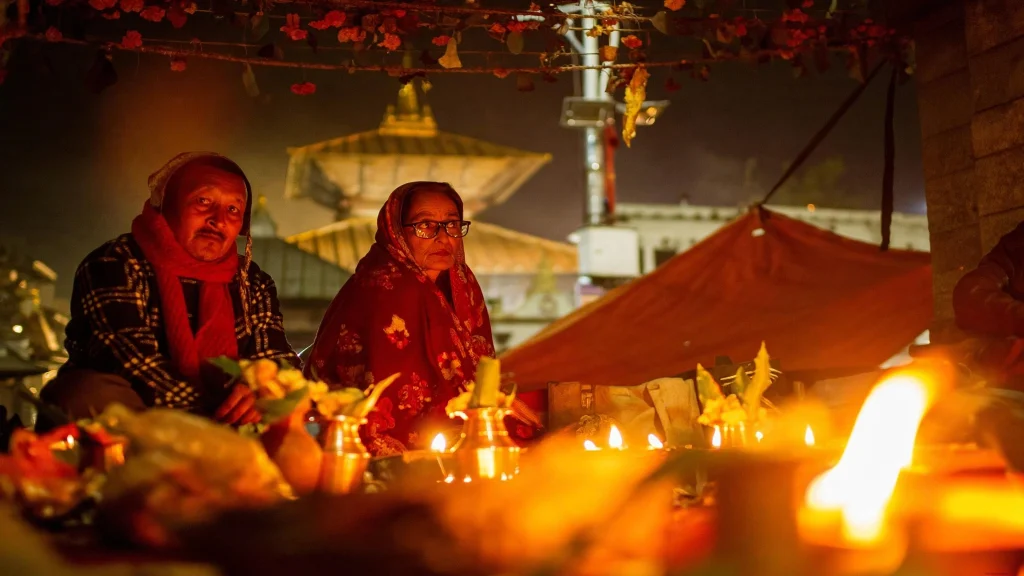
Can Non-Hindus Attend the Evening Aarati?
This is one of the most common questions travelers ask. The main inner sanctum, housing the sacred Shiva lingam, stays restricted to Hindus only. However, the evening Aarati itself is different. It takes place outdoors, along the riverbank, and remains open to everyone. Non-Hindu visitors can watch comfortably from the eastern ghats or bridge. In fact, many travelers describe this ceremony as their most moving experience in Kathmandu, regardless of faith.
Photography and Filming Rules
Photography is generally allowed while watching from the public viewing side. Still, a few important rules apply. Turn off your camera flash, since it disturbs priests and meditating devotees nearby. Drones are strictly banned throughout the complex. Authorities will confiscate any drone spotted in the area. Also, avoid photographing cremation ceremonies happening nearby without sensitivity. These are real, private moments of grief for grieving families. A respectful distance, both physically and visually, goes a long way here.
Best Days and Times to Visit
While the Pashupatinath evening Aarati happens daily, certain days feel especially significant. Mondays hold particular importance, since Hindus consider it Lord Shiva’s sacred day. Expect noticeably larger crowds on these evenings. Festivals amplify the atmosphere even further. During Maha Shivaratri, held in February or March, the site becomes extraordinarily crowded. Teej, celebrated by Hindu women in August or September, also draws large gatherings. Bala Chaturdashi, in November or December, features an overnight vigil with lamp offerings. For a quieter visit, aim for a weekday evening outside these major festival dates.
Getting There and Practical Tips
Pashupatinath sits in Gaushala, roughly five kilometers from Thamel. It’s also just about one kilometer from Tribhuvan International Airport. Taxis and local buses both run regularly to the temple area. If you’re staying in central Kathmandu, allow thirty to forty minutes for travel with traffic. Many tour operators also include this ceremony in half-day sightseeing packages. Beyond timing and seating, a few small tips make a real difference. Watch out for monkeys around the complex; they’re bold and occasionally grab loose food. Carry small notes for donations, offerings, or minor purchases nearby. Bring a light layer, since evenings along the river can turn cool quickly. Finally, silence your phone and stay quiet once the ceremony begins.
Final Thoughts on the Pashupatinath Evening Aarati
The Pashupatinath evening Aarati offers something rare: a living ritual, unfiltered and unstaged. Getting the seating right simply means arriving early and choosing wisely. Follow the dress code, respect the space, and keep your camera considerate. Do this, and you’ll walk away with more than just photos. You’ll carry a genuine sense of Kathmandu’s spiritual heartbeat. Whether you’re Hindu or simply curious, this evening ceremony rewards anyone willing to sit, watch, and be still.
Frequently Asked Questions
What time does the Pashupatinath evening Aarati start?
It usually begins around 6:00 PM in winter and closer to 7:00 PM in summer. Timing can shift slightly during festivals.
Where is the best seating for the Pashupatinath evening Aarati?
The eastern stone ghats, directly opposite the priests, offer the most immersive view. Arrive by 4:45 PM for a good spot.
Do I need a ticket for the evening Aarati at Pashupatinath?
Yes, foreigners pay NPR 1,000 for entry. Nepali and Indian citizens enter free, and tickets stay valid all day.
Can non-Hindus watch the Pashupatinath evening Aarati?
Yes, the evening Aarati takes place outdoors along the riverbank. It remains open to visitors of all faiths and backgrounds.
Is photography allowed during the evening Aarati?
Yes, photography is generally permitted from the public viewing side. However, flash photography and drones are strictly prohibited.
What should I wear to the Pashupatinath evening Aarati?
Dress modestly, covering shoulders and knees. Avoid leather items, and be ready to remove your shoes in certain areas.
How long does the Pashupatinath evening Aarati last? The ceremony typically runs between thirty minutes and one hour, depending on the season and any ongoing festivals.
Is the seating area accessible for visitors with mobility issues?
Most seating involves steep stone steps. Visitors with mobility concerns should use the flatter area near the footbridge instead.


