



Most travelers leave Kathmandu having eaten momos and dal bhat and very little else. What they miss is a cuisine that has been feeding the Kathmandu Valley for over a thousand years, one built on buffalo meat, fermented pickles, stone-ground lentils, and rituals that turn every meal into a small ceremony. Newari food is not a side note to Nepali cuisine. In many ways, it is the original.
Who Are the Newars, and Why Does It Matter for Food?
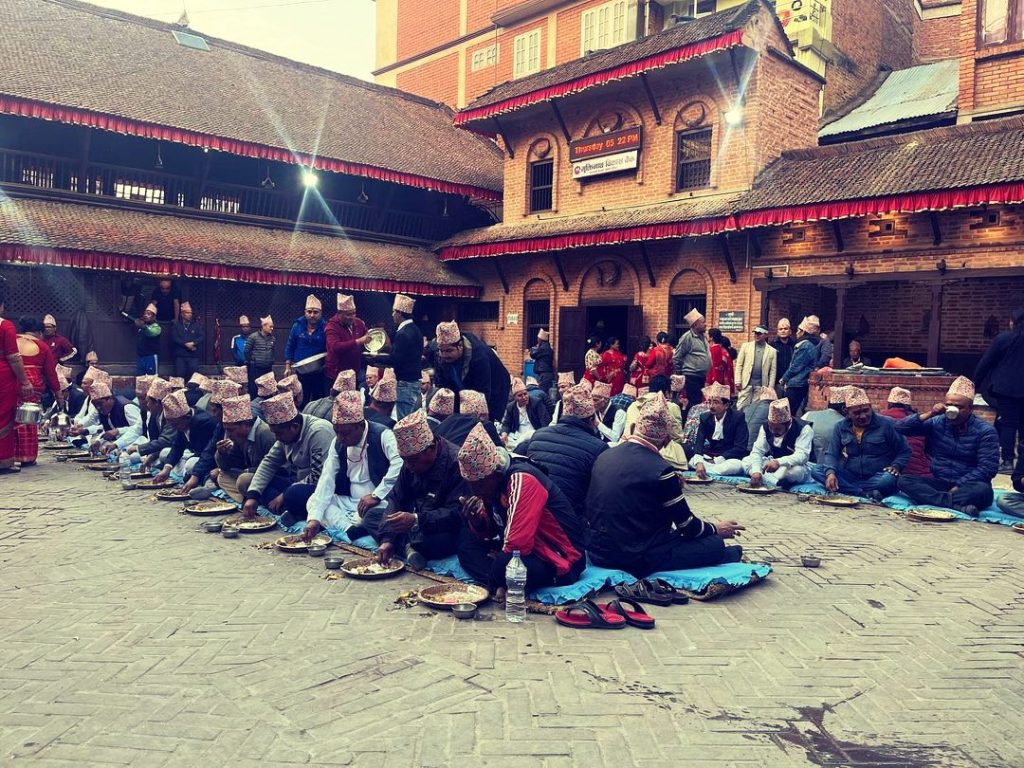
Yomari Punhi in November celebrates the rice harvest and, as a result, brings yomari production to its peak. Meanwhile, during Janai Purnima in August, people prepare kwati, a warming soup made from nine different sprouted beans. Similarly, Indra Jatra fills Kathmandu with energy, as communities organize large communal feasts and gather around shared platters.
Therefore, if your visit coincides with any of these festivals, choose a traditional neighborhood feast instead of a restaurant meal. By doing so, you will experience Newari food exactly as communities have intended it for generations. People sit together on floor mats, share dishes, and create a sense of connection that extends beyond the food itself. Ultimately, this immersive way of eating stays with you long after you leave the valley.
The Flavour Profile: What to Expect
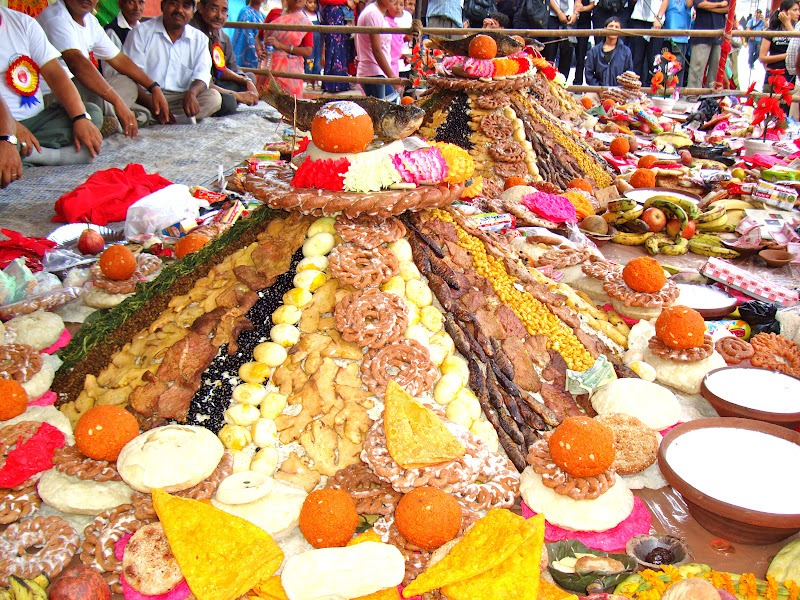
Newari food sits in a category quite different from the milder, rice-centered cooking most visitors associate with Nepal. A few things define it immediately.
Buffalo meat is the centerpiece protein, and it appears in multiple forms across a single meal: smoked and spiced, raw and marinated, grilled over an open flame, or even stuffed into tripe. As a result, a single platter can offer a remarkable range of textures and flavors.
Equally important, mustard oil is the cooking fat of choice, giving dishes a sharp, pungent edge that clearly distinguishes Newari cooking from the ghee-based richness of northern Indian cuisine. Because of this, the aroma itself becomes a defining part of the experience.
Meanwhile, spice levels run genuinely hot by default, though the intensity varies by dish and cook. In many cases, the heat is not just for intensity but to balance richness and enhance depth—making each bite feel both bold and purposeful.
Fermentation plays a major role. Pickled bamboo shoots, dried greens, fermented soybeans, and tangy tomato achaar appear constantly as counterpoints to the richness of the meat dishes. And beaten rice, called chiura, functions the way bread does in other cuisines: it is the neutral, absorbent base that balances everything around it.
Newari cuisine is recognized as one of the oldest food cultures in South Asia. The fertile alluvial soil of the Kathmandu Valley and the wealth accumulated through centuries of trade gave Newar cooks access to ingredients and techniques that most of the region simply did not have.
The Essential Dishes
These are the dishes to know before you sit down at a Newari restaurant. You will not find all of them everywhere, but a good Newari eatery will carry most of the list.
Samay Baji — Start Here
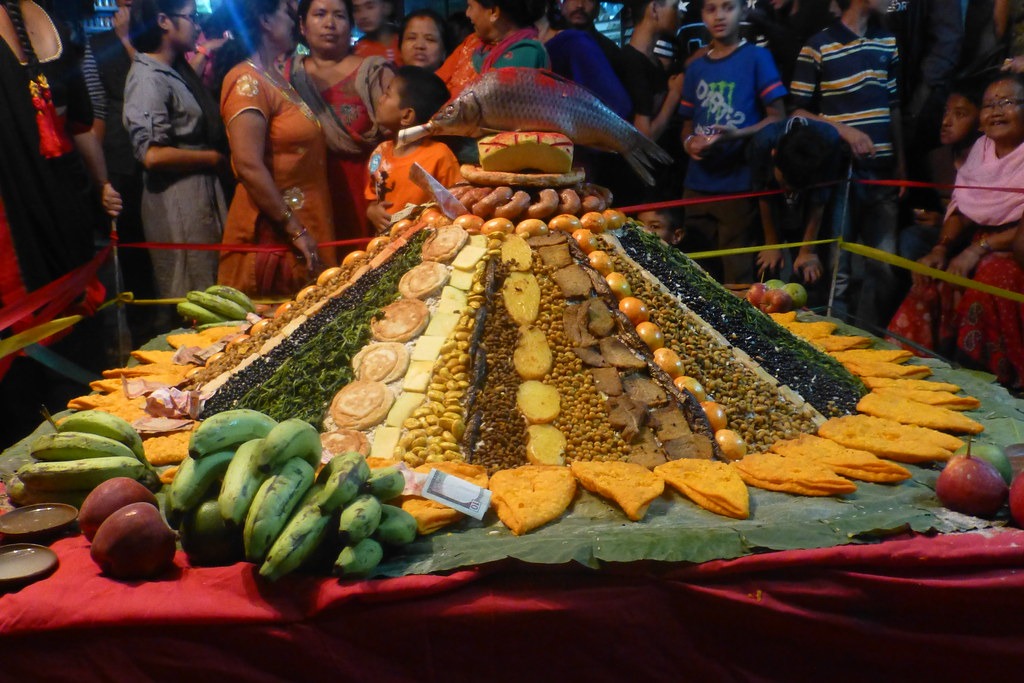
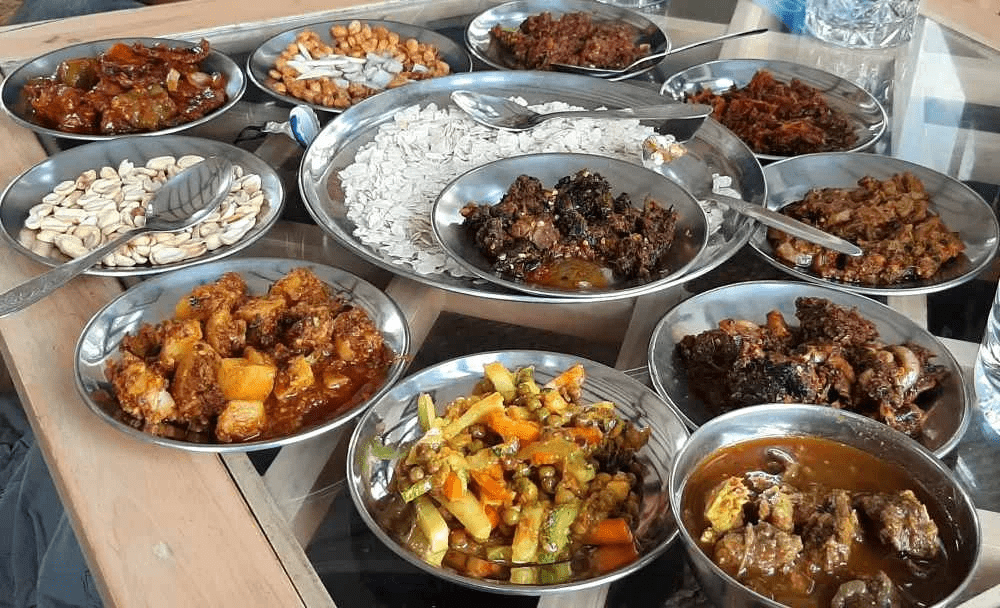
Samay baji is the gateway dish to Newari food and the most complete introduction to the cuisine in a single sitting. It is a ceremonial platter, traditionally served at every major life event in the Newar calendar, that brings together beaten rice, spiced buffalo, a lentil pancake, boiled egg, black soybeans, dried fish, and a rotating selection of pickles and vegetables. Everything arrives together on a brass or leaf plate and is meant to be eaten by mixing components with your hand.
The genius of samay baji is the way the flavors interact. The chiura absorbs the mustard-oil-laced juices from the meat. The pickles cut through the richness. The egg adds creaminess. It is not a complicated meal in concept, but in execution it demonstrates exactly why Newari food has endured in the form it has for so many generations.
Choila — Smoked Buffalo at Its Best
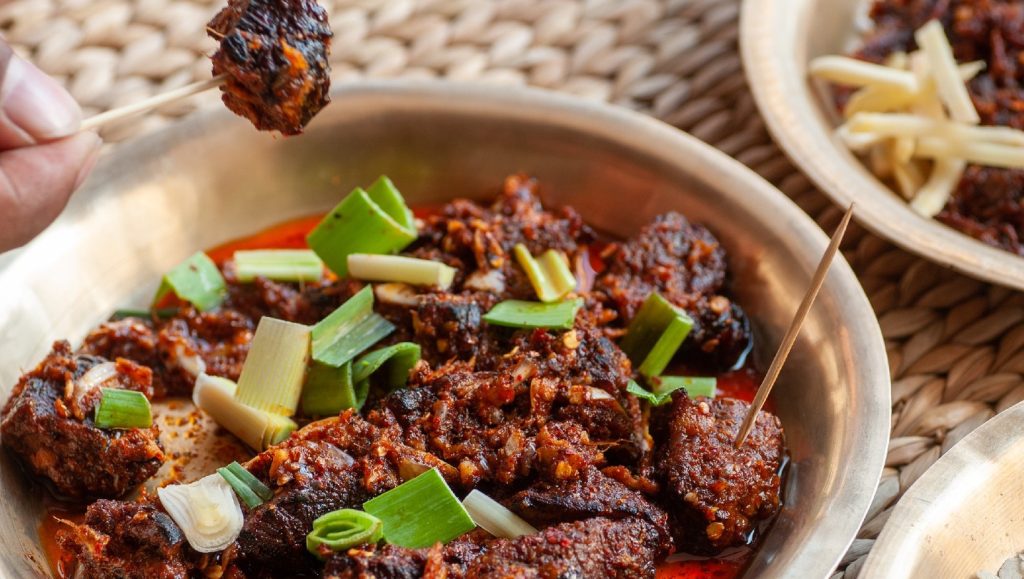
Choila is perhaps the most addictive dish in the Newari repertoire. Chefs roast or smoke buffalo meat over an open flame until the surface chars slightly.
They then tear it into pieces and toss it with mustard oil, fenugreek, garlic, ginger, turmeric, dried red chili, and a generous amount of spice. The result delivers a smoky, fiery, and deeply savory flavor. Restaurants typically serve it cold or at room temperature alongside beaten rice, and diners often pair it with aila, the traditional Newari spirit.
A closely related dish, kachila, features raw minced buffalo instead of cooked meat, marinated in similar spices. It offers an intense, slightly gamey flavor completely unlike anything most visitors have tried before. If you encounter it on the menu and enjoy bold flavors, order it without hesitation.
Bara — The Lentil Pancake You Will Keep Ordering
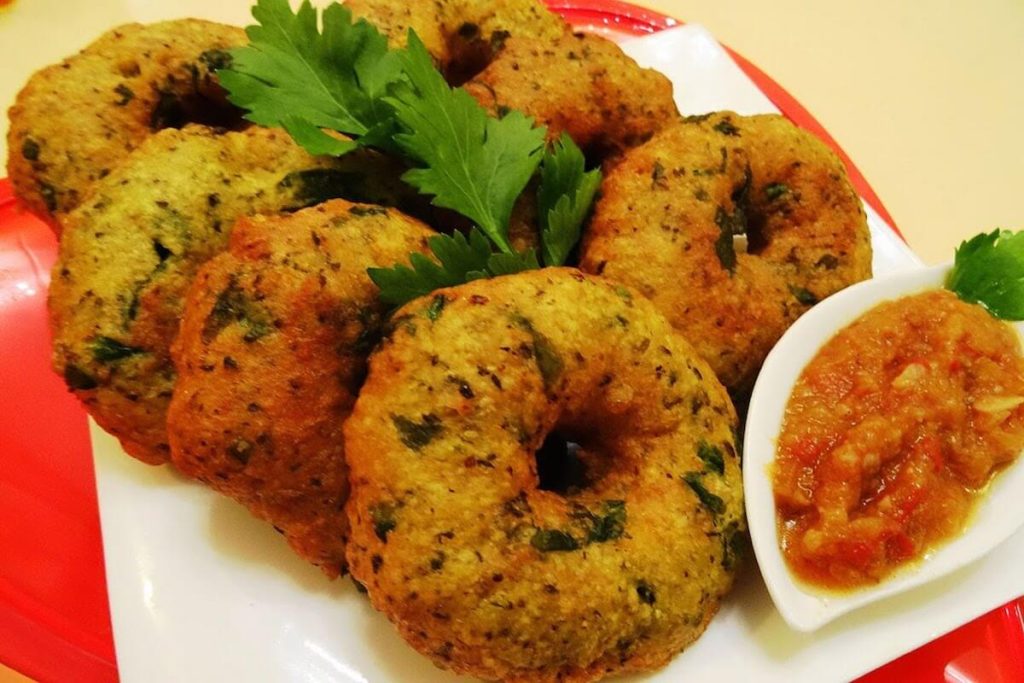
Bara are thick, savory pancakes made from ground black lentils that are soaked overnight, blended to a batter, and fried until the outside is crisp and the inside remains soft and slightly spongy. On their own they are good. With a fried egg cooked directly into the center, they become excellent. With a spoon of spiced minced buffalo on top, they become the kind of thing you find yourself thinking about for weeks after leaving Nepal.
Bara are a staple of Newari street food and appear at almost every bhatti and neighborhood eatery in the old parts of Kathmandu, Patan, and Bhaktapur. They are eaten as a snack, a side dish, and occasionally as a light meal. The price is low, and the quality, at a good spot, is remarkably high.
Chatamari — Newari Pizza
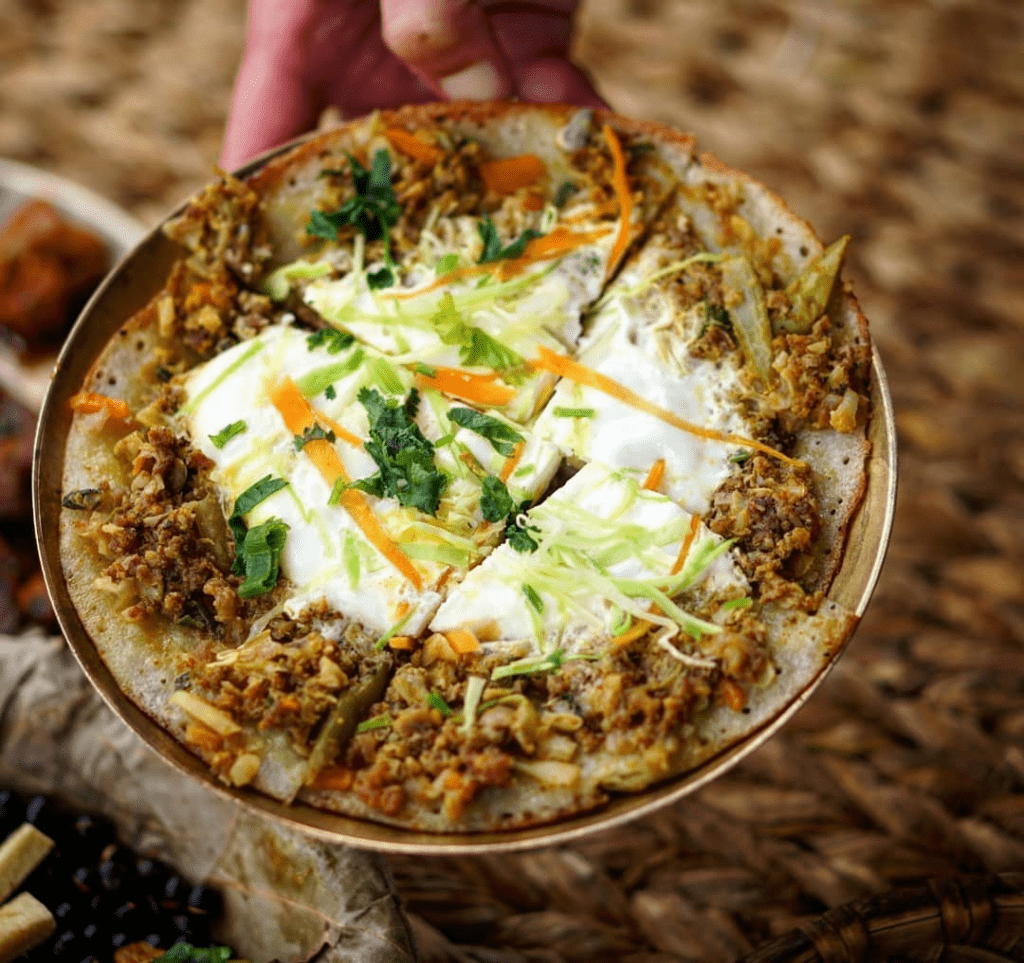
The nickname is a bit reductive, but it captures the visual: chatamari is a thin, round rice flour crepe topped with eggs, minced meat, and spiced vegetables, eaten flat off the pan. The base is delicate and slightly chewy, and the toppings are added while the crepe is still cooking so that the egg sets and the meat chars lightly at the edges. Plain chatamari, without toppings, is lighter and works well as a vessel for dipping into accompanying achaar.
It originated as a food offered to deities during religious festivals but has since become a beloved everyday snack. You will find chatamari at street stalls around Kathmandu Durbar Square and in most dedicated Newari restaurants.
Yomari — The Sweet Worth Seeking Out
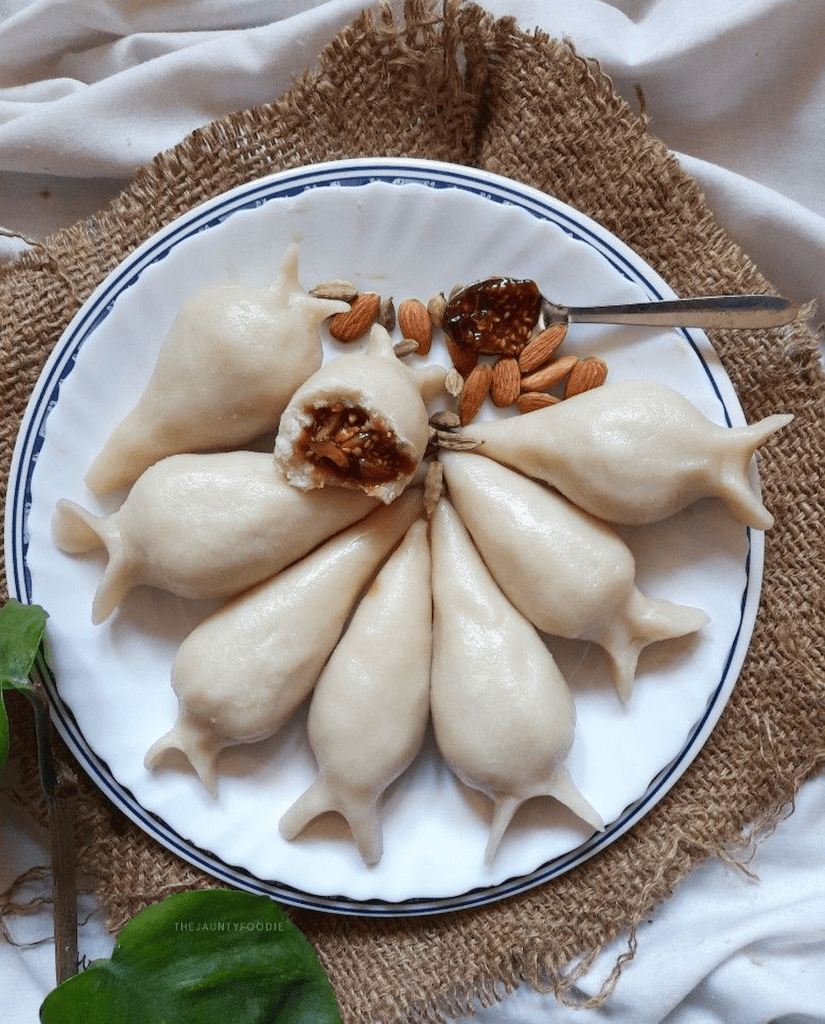
Yomari are steamed rice flour dumplings filled with a mixture of chaku (hardened molasses) and sesame seeds or freshly grated coconut. The dough is made from freshly ground rice flour and shaped by hand into a distinctive teardrop form before steaming. When you bite in, the outer shell gives way to a warm, sweet, slightly nutty filling that is unlike any other dessert in Nepal.
Yomari are most abundant during Yomari Punhi, a Newari festival celebrating the rice harvest in November or December, when families make them at home and entire neighborhoods smell of steaming rice dough. Outside of the festival season they appear in dedicated Newari restaurants year-round, though the homemade versions made during the festival genuinely surpass anything served commercially.
Juju Dhau — The King of Yogurt
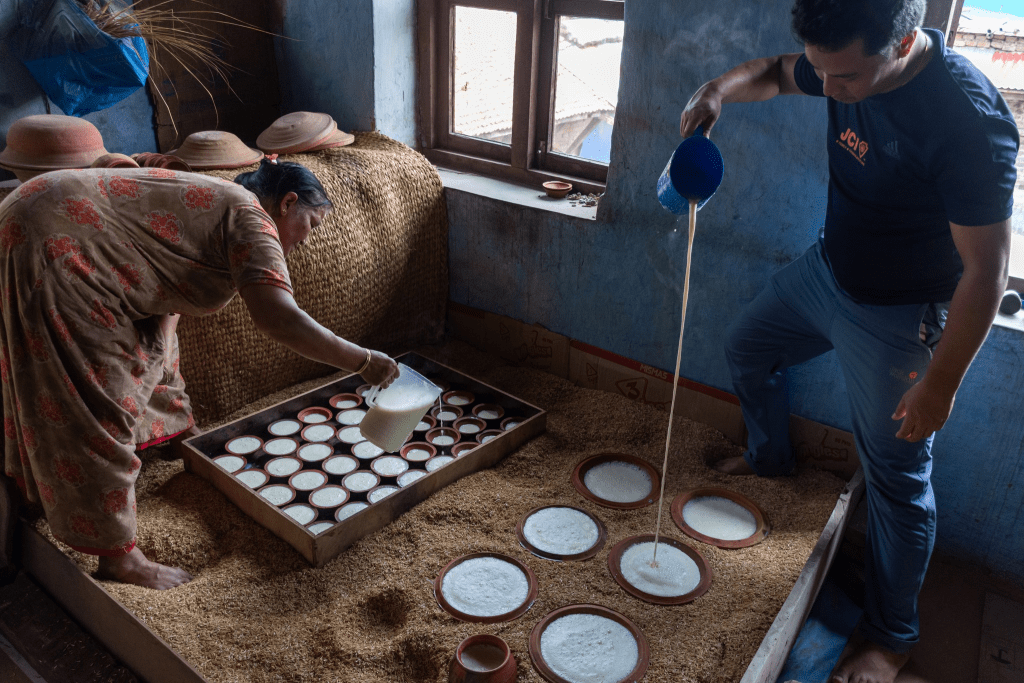
The title is not hyperbole. Juju dhau, which translates directly as “king curd,” is a thick, sweet, set yogurt made in clay pots that give it a subtle earthy undertone found in no other preparation. It comes from Bhaktapur, where dairy farmers have been making it using the same technique for generations, and the pot is part of the product: the clay draws moisture from the curd as it sets, resulting in a texture that is creamier and denser than anything sold in a plastic tub.
Juju dhau is served as a dessert at the end of a Newari feast and sold in small clay cups from shops in Bhaktapur’s Durbar Square. It is one of those foods that seems simple until you taste a good one, after which the comparison to ordinary yogurt becomes almost embarrassing.
Aloo Tama — The Dish That Will Surprise You
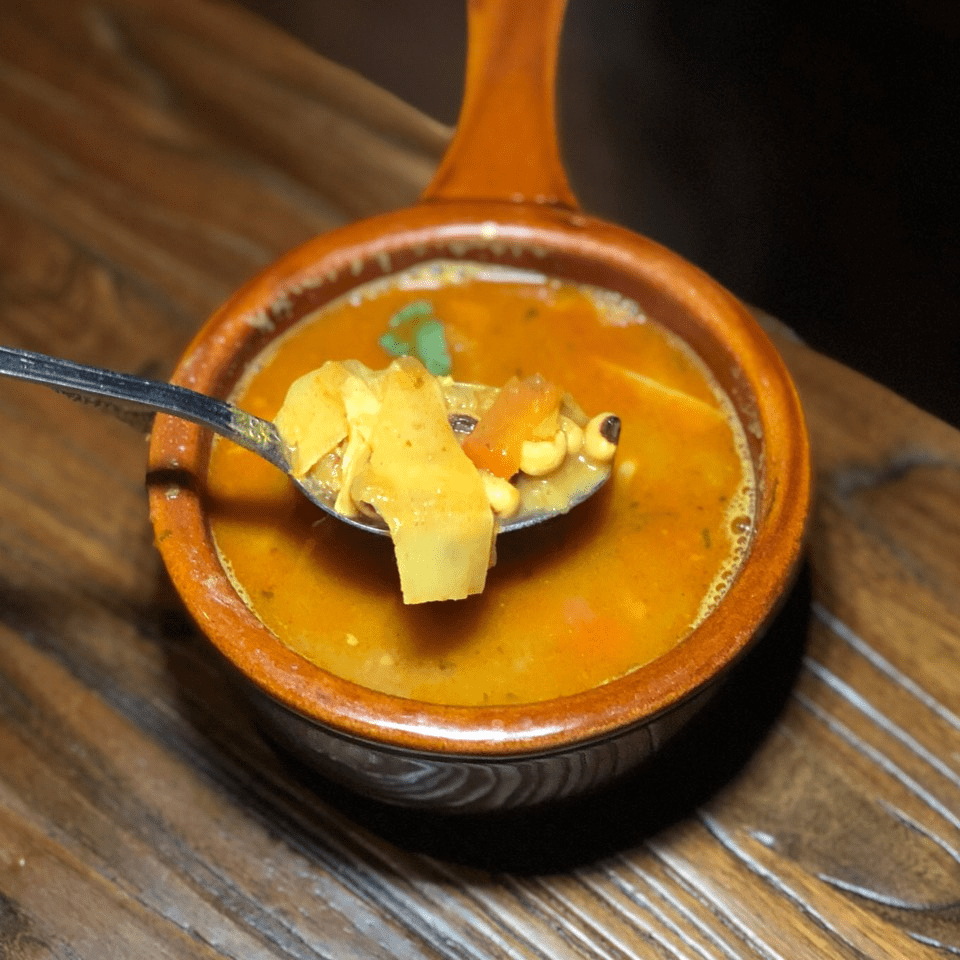
Aloo tama is a curry of potato and bamboo shoots, cooked together with black-eyed peas, turmeric, and mustard oil. The bamboo shoots are fermented, which gives the curry a distinct sour, funky depth that takes a moment to place on first encounter. It sounds unassuming and looks unassuming, but the combination of earthy potato, tangy bamboo, and warm spice is genuinely hard to put down. It appears regularly as a side dish in the samay baji set and is considered a classic of the Newari table.
The Drinks: Aila and Chhyang
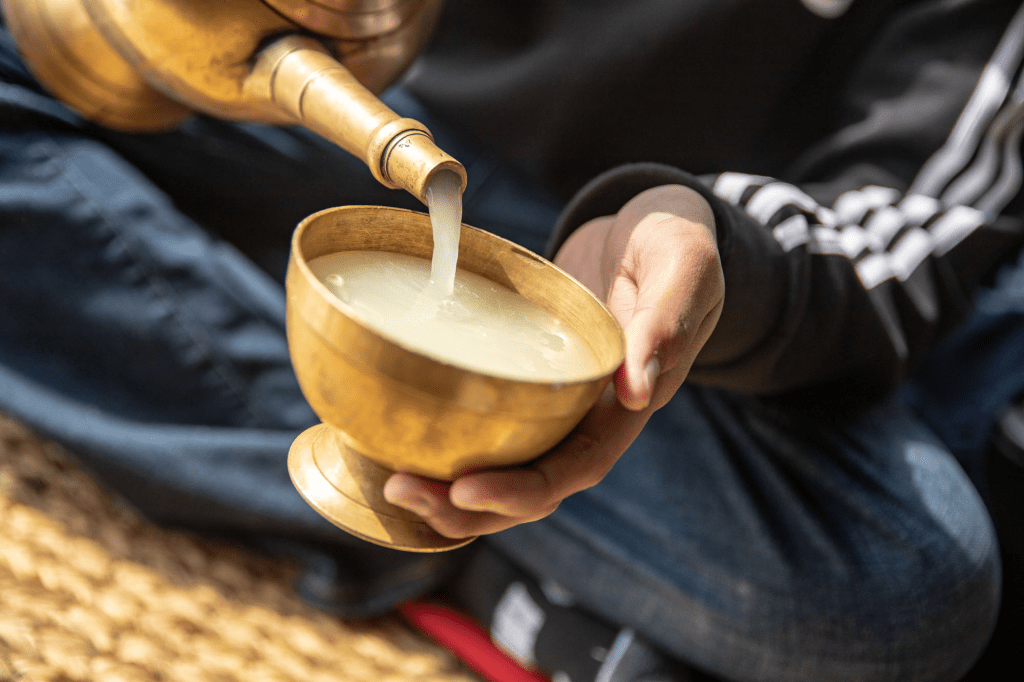
Newari food culture includes its own traditional beverages. Understanding them significantly enriches the meal.
For instance, Aila is a clear, grain-distilled spirit. It is traditionally produced at home by Newar families. The process is passed down through generations.
As a result, the drink feels deeply rooted in heritage. It is potent yet clean-tasting. Traditionally, it is served warm in small clay cups called salicha.
Notably, CNN once listed aila among the 50 most delicious drinks in the world. So, if you encounter a freshly made batch at a good Newari restaurant, it is easy to understand why.
Chhyang is a fermented rice beer, milder and slightly cloudy, with a gentle tang and low alcohol content. It is the everyday drinking accompaniment to a Newari meal and pairs particularly well with the richer meat dishes. Both aila and chhyang are available at most traditional Newari eateries in Kathmandu.
Where to Eat Newari Food in Kathmandu
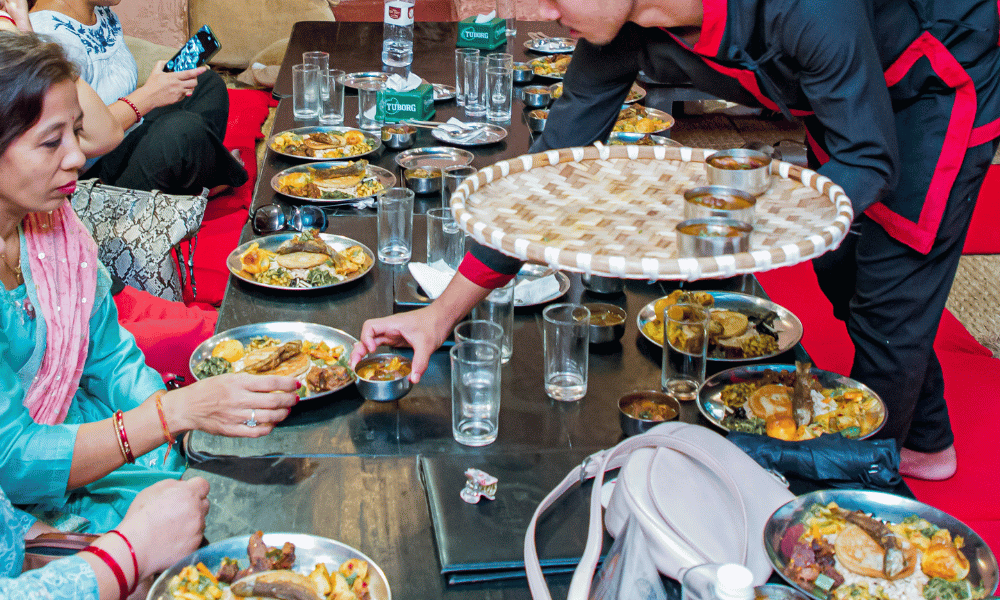
The best Newari food in Kathmandu is almost never found in tourist restaurants. It lives in neighbourhood bhattis, in the old quarters of the city, and in the towns on the valley rim. Here are the places worth going out of your way for.
| Restaurant | Location | Why Go |
|---|---|---|
| Newa Lahana | Kirtipur, Bhaktapur, Tokha & Kamaladi | With multiple branches, this restaurant is consistently praised for authentic flavors and a traditional setting featuring low seating and brass utensils. The Kirtipur branch offers the richest cultural atmosphere. |
| Bhojan Griha | Dillibazar, Kathmandu | Set in a restored historic building, offering evening classical music for a theatrical Newari dining experience. |
| Harati Newari Restaurant | Naya Bazaar, Kathmandu | Operating since 1995, this neighborhood institution serves an extensive menu of rare, authentic Newari dishes at reasonable prices. |
| Sa Sa Twa | Kirtipur | Spacious, lively, and particularly good for groups. Floor seating available. Strong on samay baji, buff choila, and chyang. Popular with locals and visiting Nepalis alike. |
| Nandini Food Court | Patan Durbar Square area, Lalitpur | A one-woman operation famous for its samay baji and sweet yomari. Tiny, no-frills, and completely genuine. One of the most recommended spots among food-focused travellers. |
| Paleti Bhanchha Ghar | JP Road, Thamel, Kathmandu | The most accessible option for travelers staying in Thamel. A solid introduction to the cuisine without needing to venture far from the tourist center. |
Practical tip: Newari food is most abundant and most authentic in the old towns of the Kathmandu Valley. If you are making a day trip to Bhaktapur, build your visit around a samay baji lunch at a local bhatti and finish with juju dhau from the clay pot sellers near the Durbar Square. The combination costs less than NPR 500 and represents some of the best eating in all of Nepal.
Newari Food and the Festival Calendar
One of the most fascinating aspects of Newari cuisine is how tightly it is woven into the religious and festival calendar. During Dashain, buffalo meat dishes take center stage as households sacrifice and cook together. Tihar brings sel roti, the sweet ring-shaped rice bread fried to a golden crunch, which appears in virtually every Newar home during the festival days.
Yomari Punhi in November celebrates the rice harvest and brings yomari production to its peak. During Janai Purnima in August, people prepare kwati, a warming soup made from nine different sprouted beans. Likewise, Indra Jatra fills Kathmandu with energy, as communities organize large communal feasts and gather around shared platters.
If your visit coincides with any of these festivals, choose a traditional neighborhood feast instead of a restaurant meal. You will experience Newari food exactly as communities have intended it for generations. People sit together on floor mats, share dishes, and create a sense of connection that extends beyond the food itself. This immersive way of eating stays with you long after you leave the valley.
A Note for Vegetarians
Newari food is meat-forward by tradition, but vegetarian visitors are not without options. Bara can be made plain or with egg only. Chatamari is excellent without meat toppings. Aloo tama is fully vegetarian. Juju dhau and yomari are vegetarian and vegan, respectively. A thoughtful Newari restaurant will put together a vegetarian samay baji set on request, substituting the buffalo components with extra lentil dishes, soybeans, and achaar. Ask specifically when you arrive rather than assuming the menu makes this clear.
Frequently Asked Questions
Is Newari food spicy?
Yes—most Newari dishes use mustard oil, dried red chili, and raw garlic generously. Choila and kachila are especially hot. If you prefer milder flavors, start with bara, chatamari, juju dhau, or yomari, and gradually move toward the spicier meat dishes.
Where is the best place to eat Newari food in Kathmandu?
For the most authentic experience, explore the old quarters of Kathmandu, Patan, and Bhaktapur. In Kathmandu, locals recommend Newa Lahana in Kamaladi and Harati Newari in Naya Bazaar. For full cultural immersion, visit Kirtipur, home to Sa Sa Twa and Newa Lahana’s original branch.
What is the difference between Newari food and regular Nepali food?
Standard Nepali cuisine centers on dal bhat—lentil soup, rice, and vegetable curry—typically eaten twice daily. By contrast, Newari food is more elaborate, meat-heavy, and tied to ritual and festival. It uses buffalo as the main meat, incorporates fermented and pickled ingredients, and is served on ceremonial platters rather than individual bowls. Though they share geography, the two traditions have little else in common.
Can I find Newari food outside Kathmandu?
Newari food is rooted in the Kathmandu Valley but also appears in some hill towns with Newar populations. Bandipur, a heritage town between Kathmandu and Pokhara, has a few restaurants serving traditional dishes. Outside these areas, it becomes much harder to find.
How much does a Newari meal cost in Kathmandu?
A samay baji set at a local bhatti costs NPR 250–400. At a mid-range restaurant with atmosphere and a full menu, expect NPR 600–1,200 per person, excluding drinks. Aila is served separately, typically costing NPR 150–300 per serving.
Keep exploring Nepal’s food: What is Dal Bhat? Nepal’s national dish → | Thakali food: the mountain cuisine you need to know → | Best places to eat in Kathmandu → | Bhaktapur day trip guide →
