



Fillings, Flavors, and the Famous Nepali Momo Sauce Explained
Table of Contents
- Read Also
- The baseline flavor: why momo tastes “approachable”
- Wrapper texture: soft, thin, and neutral
- Filling flavors: subtle differences that matter
- Why momo isn’t spicy on its own (by design)
- The real flavor driver: momo achar
- How different momo styles change the taste
- How locals actually eat momo (and why it matters)
- Why momo flavor works so well for foreigners
- Common misconceptions about momo taste
- What a “great momo” tastes like (the benchmark)
- Final takeaway
- Questions Answered
- Next Up
For first-time eaters, the most common question is simple: what do momos actually taste like?
The honest answer is that momo is intentionally gentle at its core; and expressive around the edges. The dumpling itself is designed to be comforting and familiar. The sauce, fillings, and serving style are where Nepal adds its personality.


This article breaks down momo flavor the way locals experience it, with careful distinctions that hold up across verified sources and everyday practice in Nepal.
The baseline flavor: why momo tastes “approachable”
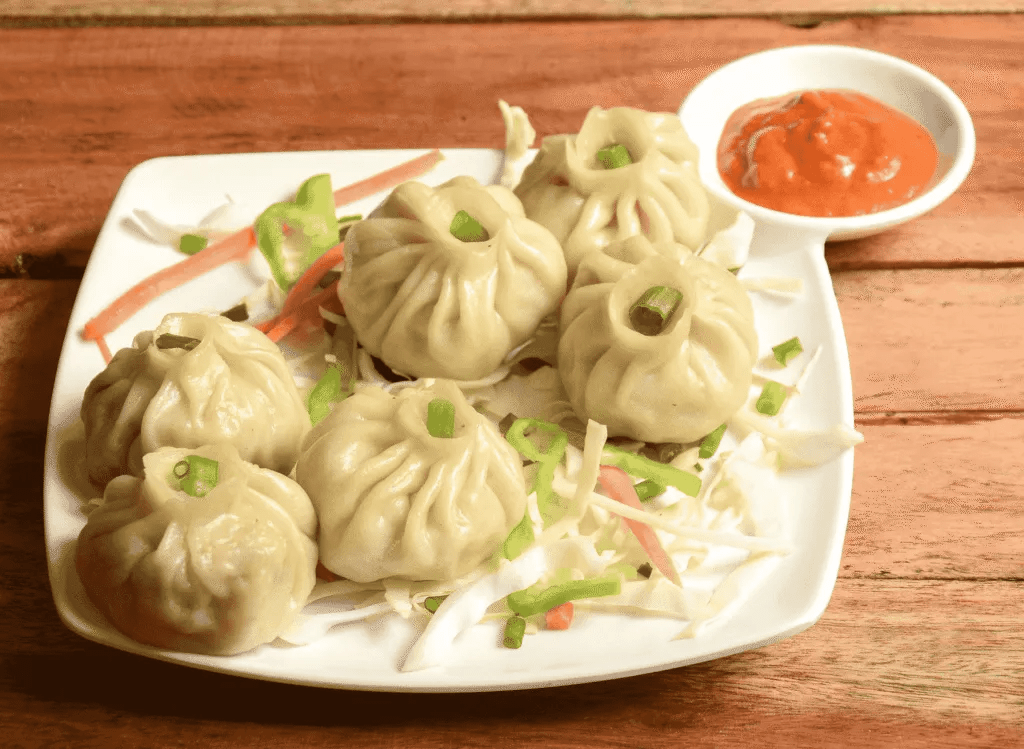
A plain steamed momo, eaten without sauce, tastes:
- Mild
- Savory
- Soft and wheat-forward on the outside
- Juicy and aromatic on the inside
This is not an accident.
Nepali momo fillings are usually seasoned with aromatics (onion, garlic, ginger) and light spices (cumin, coriander, pepper), not heavy chili heat. The goal is balance and moisture, not intensity.
This makes momo:
- Easy for foreigners to enjoy on the first bite
- Comfortable as an everyday food
- Flexible enough to pair with strong sauces
Wrapper texture: soft, thin, and neutral
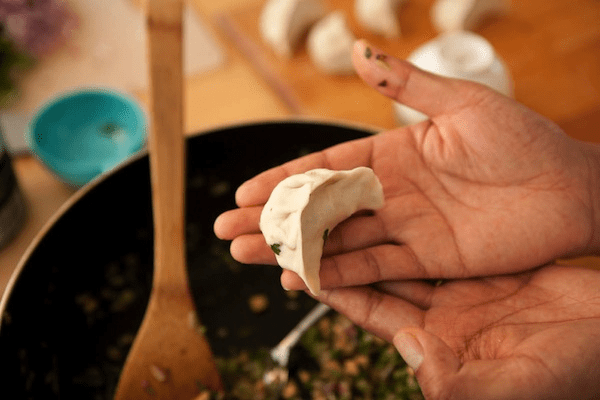
The wrapper plays a quiet but important role.
In Nepal, momo wrappers are typically:
- Thin but sturdy
- Soft and elastic when steamed
- Neutral in flavor
A good wrapper should:
- Hold the filling without tearing
- Absorb a little sauce without falling apart
- Disappear into the bite rather than dominate it
If the wrapper tastes strongly of flour or feels chewy, the momo is usually considered poorly made.
Filling flavors: subtle differences that matter
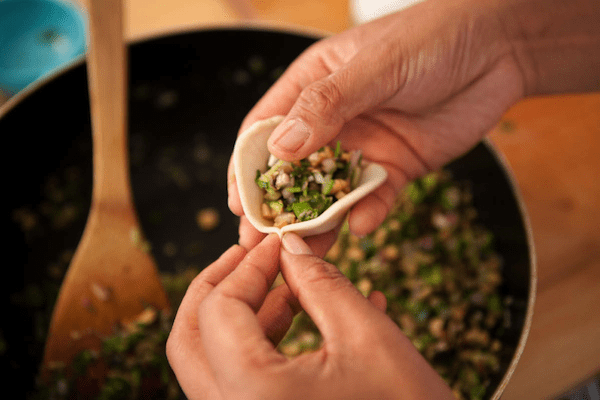
Chicken momo
Chicken momo is the most common “first momo” for visitors.
Flavor profile:
- Light
- Juicy
- Mildly savory
- Balanced aromatics
Chicken momo lets the sauce shine without competing with it.
Buff (water buffalo) momo
Buff momo is very common in Nepal and tastes noticeably different.
Flavor profile:
- Richer than chicken
- Slightly deeper, meatier taste
- Still mild in spice
Many locals prefer buff momo because it holds up especially well against strong achar.
Vegetable momo
Vegetable momo is not an afterthought in Nepal.
Flavor profile:
- Fresh and light
- Often cabbage-forward
- Slight sweetness from vegetables
When paired with strong achar, veg momo can taste just as satisfying as meat versions.
Why momo isn’t spicy on its own (by design)
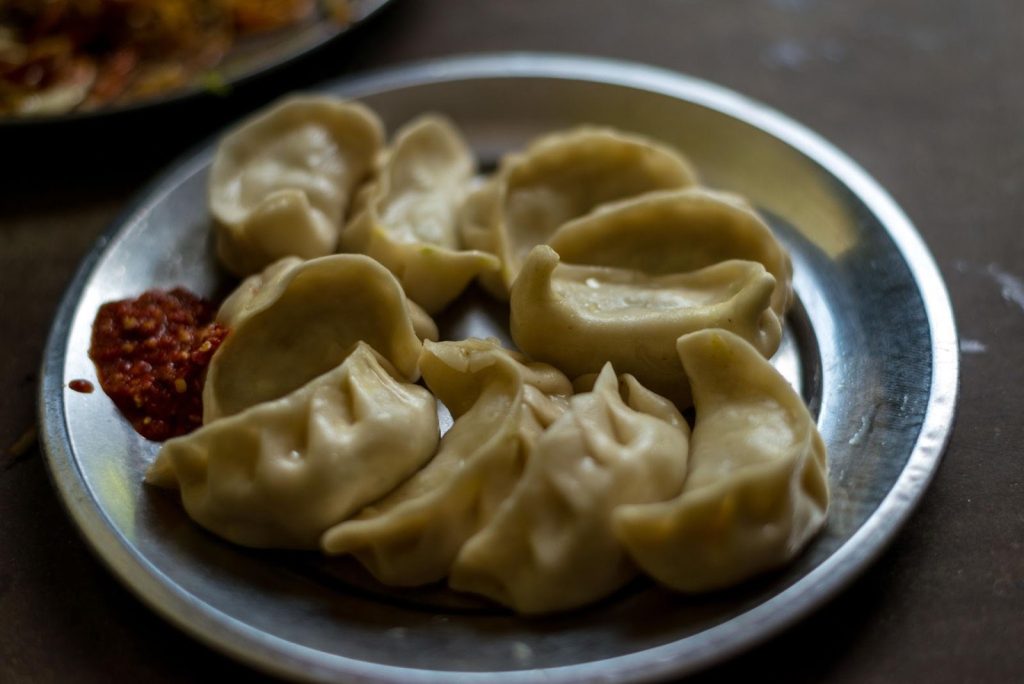
Visitors sometimes expect momo itself to be spicy. Traditionally, it isn’t.
The reasoning is practical:
- Dumplings are eaten in quantity
- Strong internal spice would overwhelm quickly
- Spice is better controlled through sauce
This separation allows each eater to control heat level by how much achar they use.
The real flavor driver: momo achar
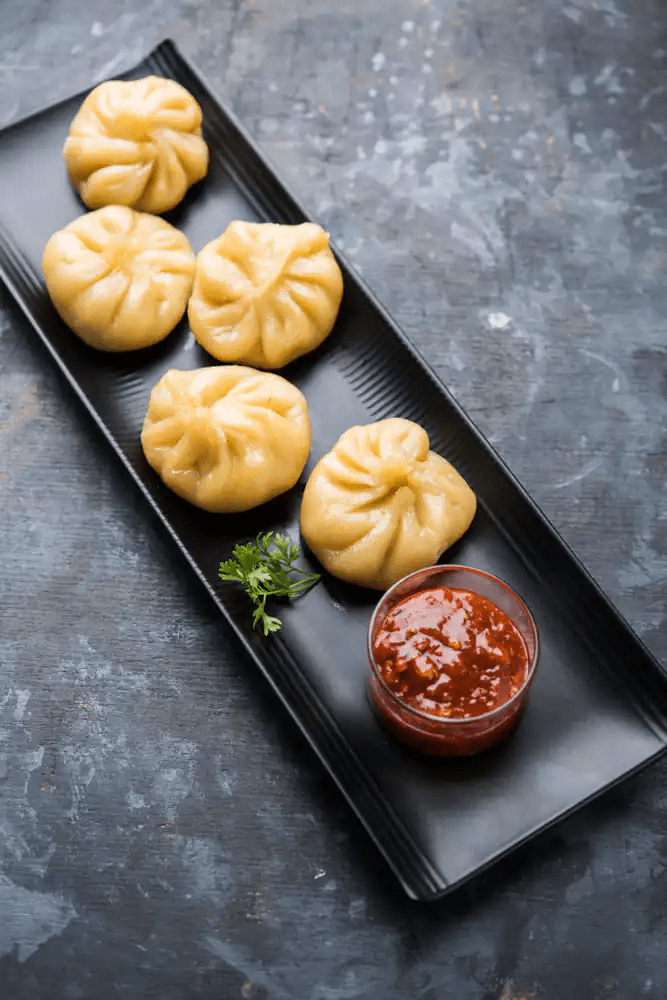
If momo is the body, achar is the soul.
Most Nepali momo achars are built around:
- Tomatoes (often roasted)
- Sesame seeds (toasted)
- Garlic and ginger
- Chilies
- Salt and acidity (lime or tomato)
Some versions include:
- Cumin or mustard seeds
- Cilantro
- Timur (Nepali Sichuan pepper), depending on region
What achar tastes like
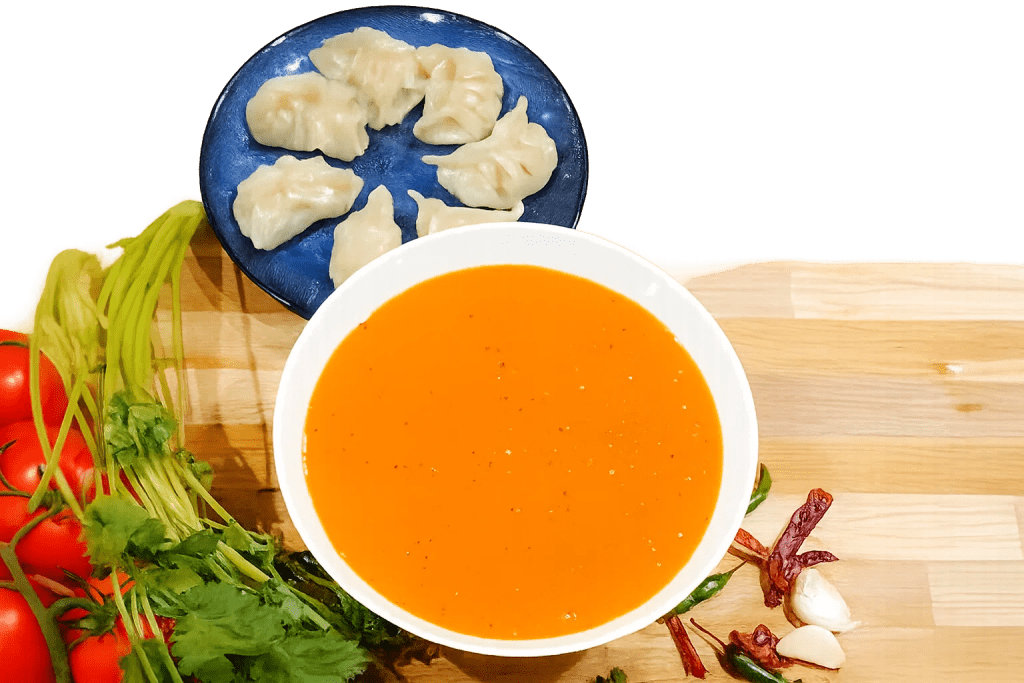
A good momo achar is:
- Tangy first
- Spicy second
- Nutty underneath
- Lingering, not harsh
This is why two momo places can feel completely different even if the dumplings are similar. Locals often remember momo shops by their achar, not their wrappers.
How different momo styles change the taste
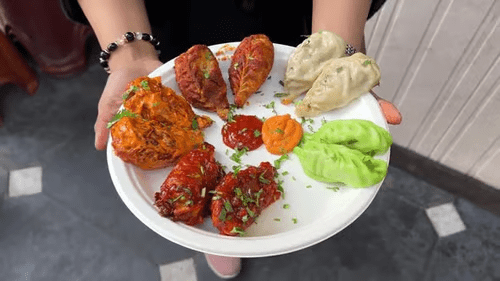
Steamed momo
- Cleanest flavor
- Soft texture
- Best for tasting filling + sauce clearly
This is the reference point for momo taste.
Fried momo
- Crisp outer layer
- Slightly richer mouthfeel
- Sauce feels sharper against the crunch
Fried momo tastes heavier but more indulgent.
Jhol momo
- Served in a warm, spiced liquid sauce
- Softer, more rounded flavors
- Often feels like comfort food
Jhol momo changes the experience entirely. Instead of dipping, the sauce surrounds the momo, softening heat and blending flavors.
How locals actually eat momo (and why it matters)
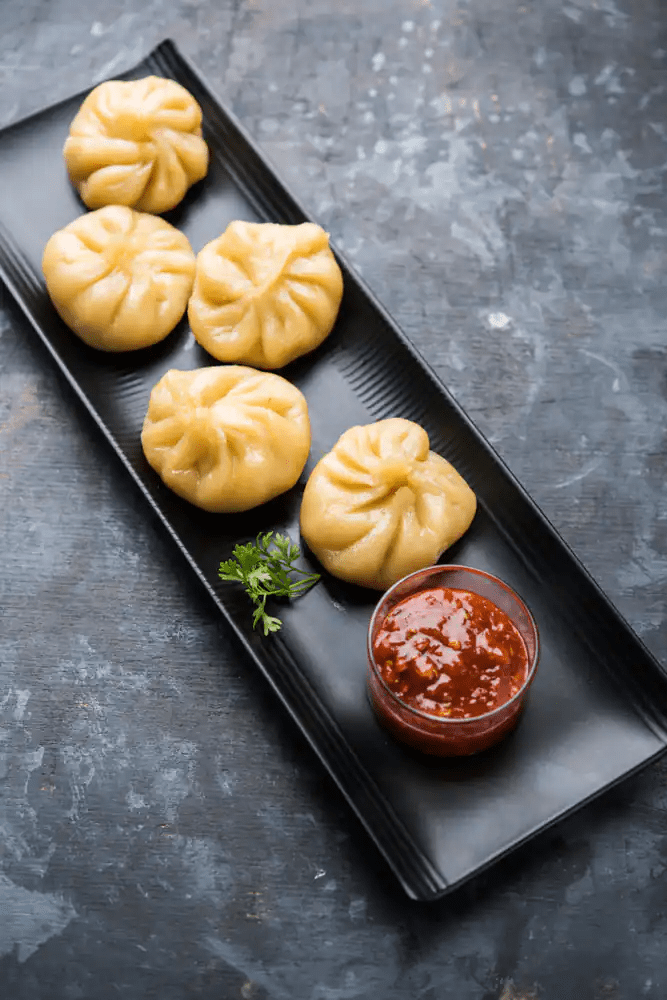
Taste is shaped by behavior.
In Nepal:
- Momo is usually shared
- People compare sauces
- Plates are reordered if conversation continues
This means momo is eaten slowly, in multiple bites, with changing sauce levels. The flavor experience is layered, not rushed.
A common pattern:
- First bite: light dip
- Second bite: heavier dip
- Later momos: full commitment to the sauce
Why momo flavor works so well for foreigners

Momo succeeds internationally for a few clear reasons:
- Familiar dumpling shape
- Non-aggressive base flavor
- Adjustable spice through sauce
- Comforting texture
For Americans and Europeans, momo feels new without being intimidating.
For Indians, momo feels familiar but cleaner and more sauce-focused.
Common misconceptions about momo taste
“Momos are very spicy”
Not by default. The spice is optional and controlled through achar.
“All momos taste the same”
The wrapper and filling may be similar, but achar varies dramatically.
“Veg momos are bland”
Only if the sauce is weak. With strong achar, veg momo is fully satisfying.
What a “great momo” tastes like (the benchmark)
A great momo delivers:
- Soft wrapper that doesn’t fight back
- Juicy filling with clean aromatics
- Achar that wakes up the palate
- Heat that builds gradually, not instantly
When all three align, momo becomes addictive rather than heavy.
Final takeaway
Momo doesn’t try to impress with complexity inside the dumpling. Instead, it builds flavor through contrast: mild and bold, soft and spicy, simple and expressive.
That balance is exactly why momo works so well as:
- Street food
- Comfort food
- A traveler’s introduction to Nepali cuisine
If you want to understand momo’s taste properly, don’t ask whether it’s spicy. Ask whether the achar is good. That’s where the real story is.


