


Photography by Sazeen Mani Paudel A NepalVue Artisan Heritage Feature
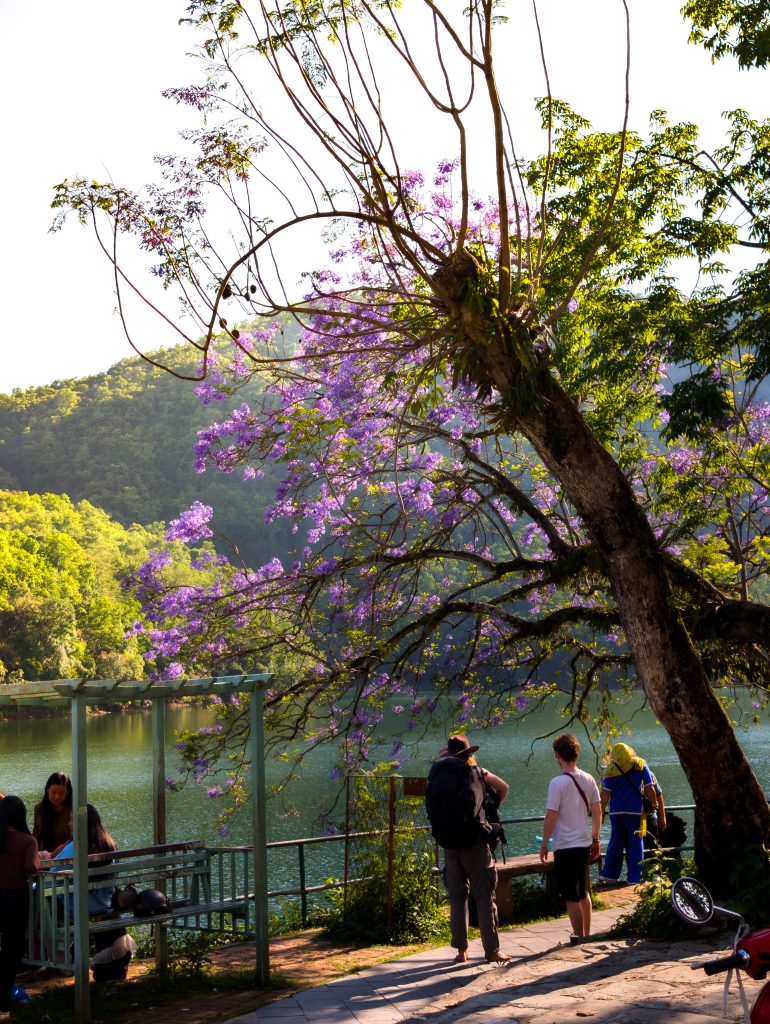
For many, the arrival of spring in Nepal is synonymous with the purple-lined avenues of Kathmandu. While the purple-lined avenues of Kathmandu often define spring in Nepal, a quieter and more magical transformation is unfolding further west on the shores of Phewa Lake. This season, the “Jacaranda Pokhara” edition looks beyond the capital to prove that Kathmandu is no longer the only destination for those seeking the breathtaking beauty of the jacaranda’s bloom.
Focusing on the serene Gaurighat Park in Lakeside, this feature captures how the region’s offbeat locations offer a cinematic alternative to the city’s bustling streets.


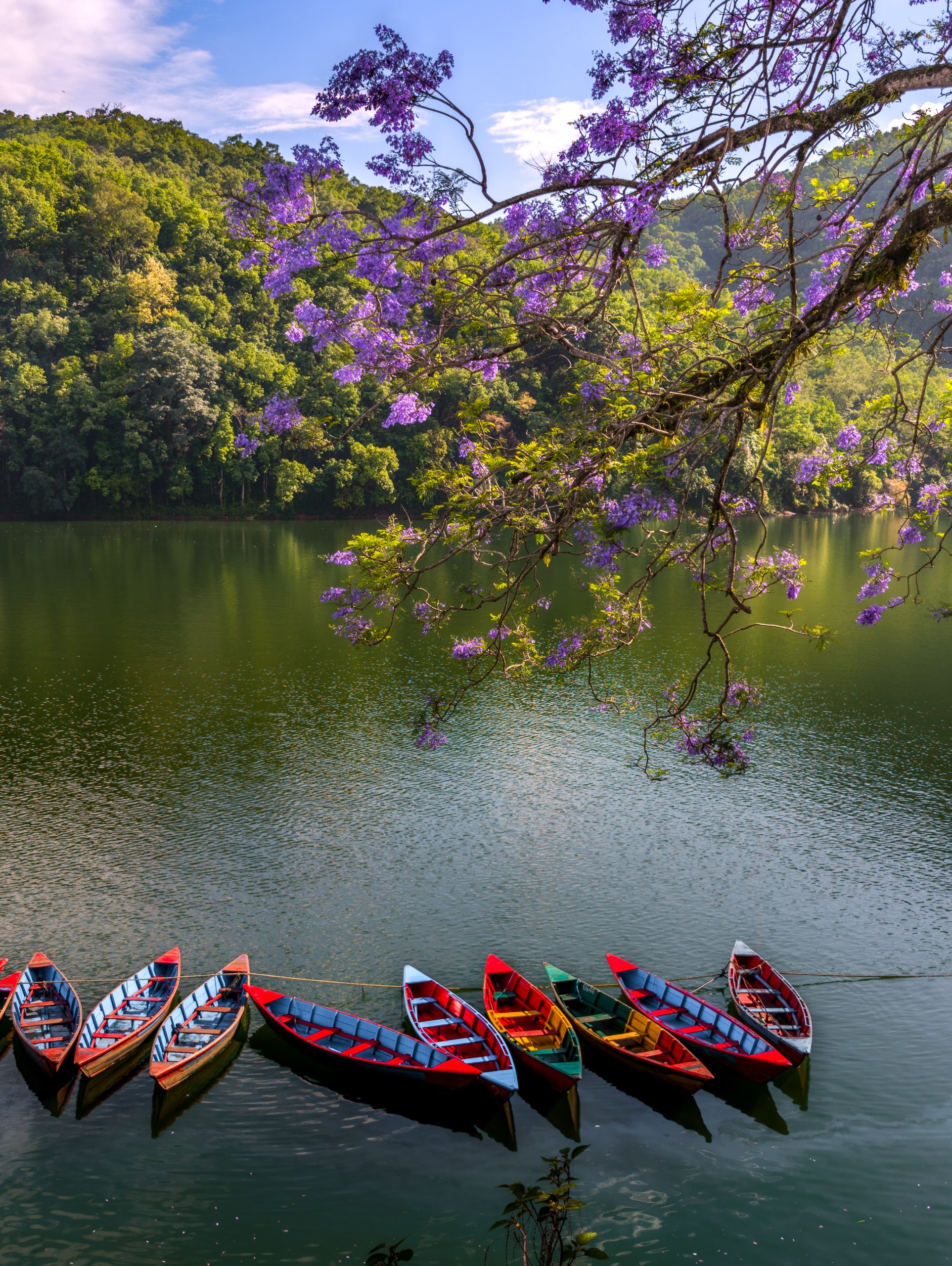
The Gaurighat Serenity
Nestled within Gaurighat Park in Lakeside, Pokhara, the atmosphere is a far cry from the bustling city streets. Here, the jacarandas don’t just line roads; they frame the mountains.
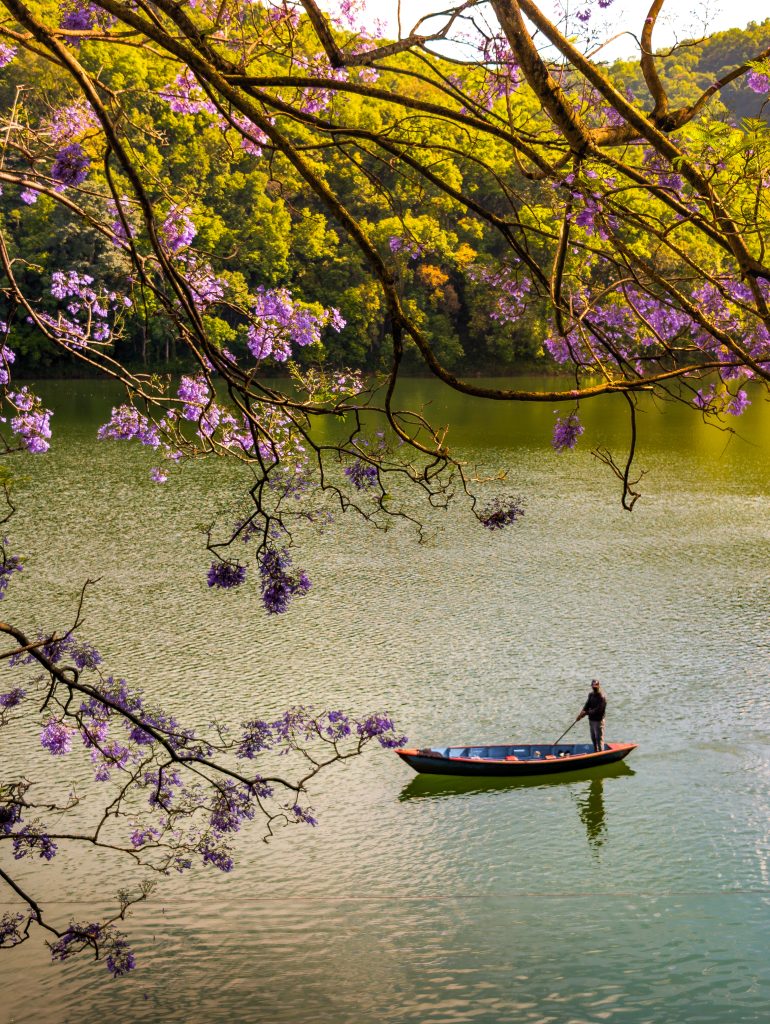
In this photo-feature, captured by Sazeen Mani Paudel, we explore the intersection of Pokhara’s iconic emerald waters and the soft lavender canopy that currently shades the park.
A Different Shade of Spring
While the capital’s blooms often compete with urban chaos, Gaurighat offers a cinematic stillness. The vibrant purple clusters hang heavy over the lake, casting reflections that dance alongside the traditional colorful doongas. It is a reminder that the most authentic Himalayan stories are often found in these offbeat, regional corners.
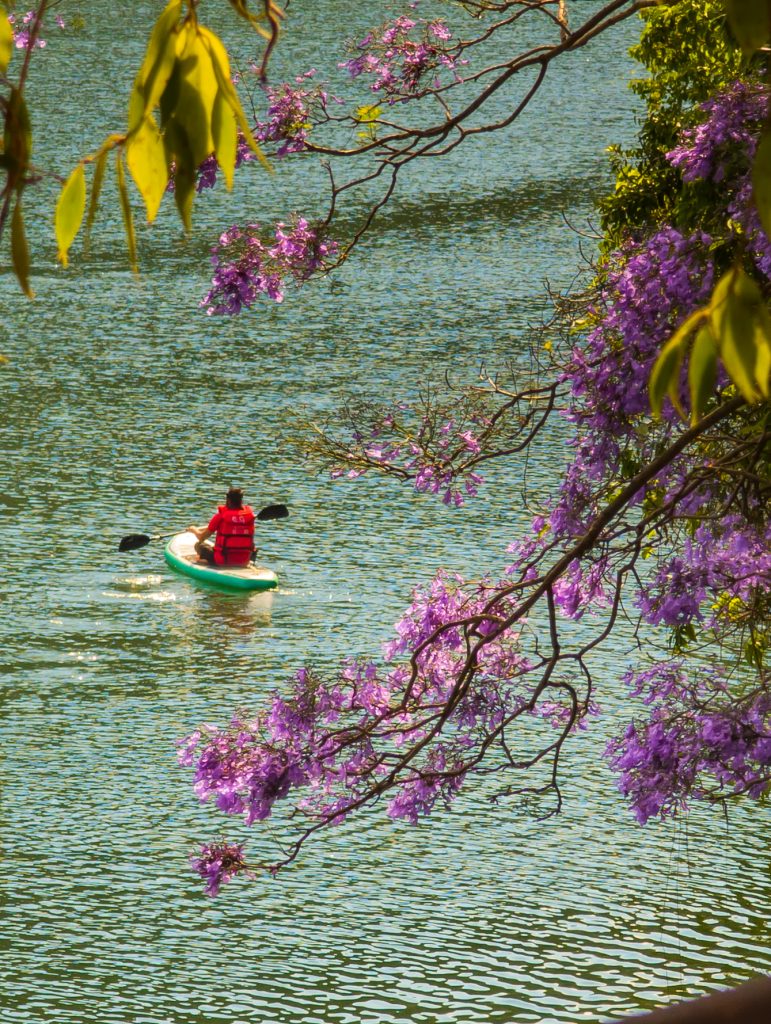
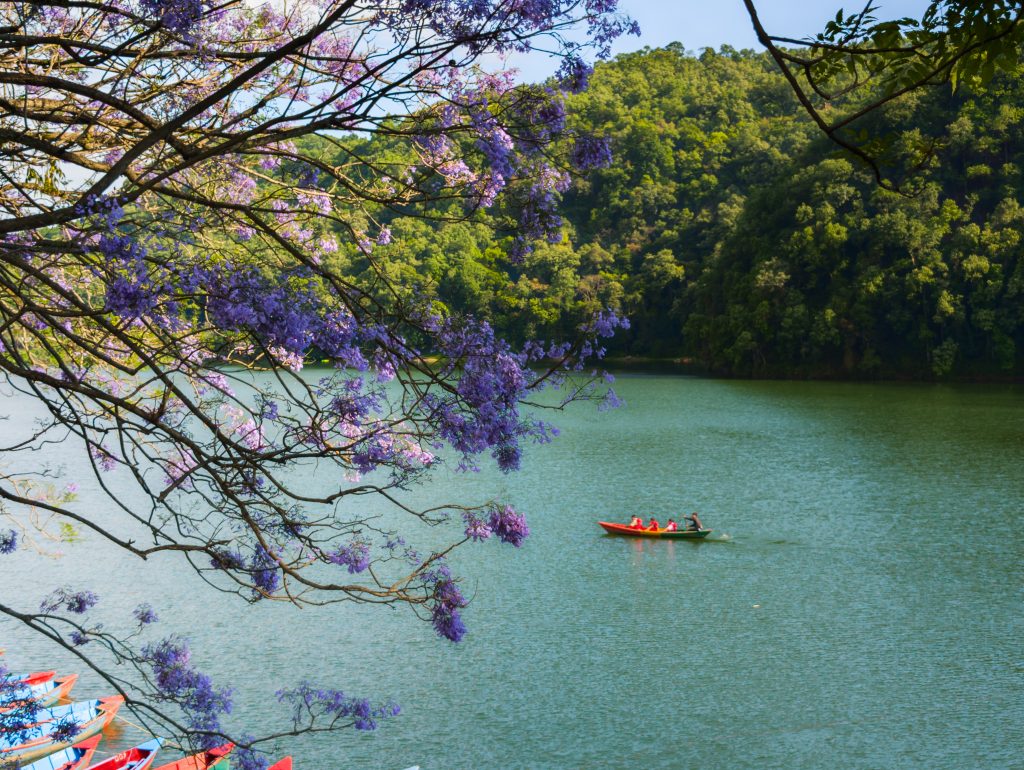
The Photographer’s Perspective: Sazeen Poudel
Featured in our Photographer Spotlight, Sazeen captures the “Purple Season” not just as a botanical event, but as a feeling. His work in Gaurighat Park highlights the minimalist beauty of the region—where the light color palette of the sky and blossoms meets the deep heritage of Pokhara’s lakeside culture.
Move over Kathmandu: Pokhara now owns the Jacaranda season.
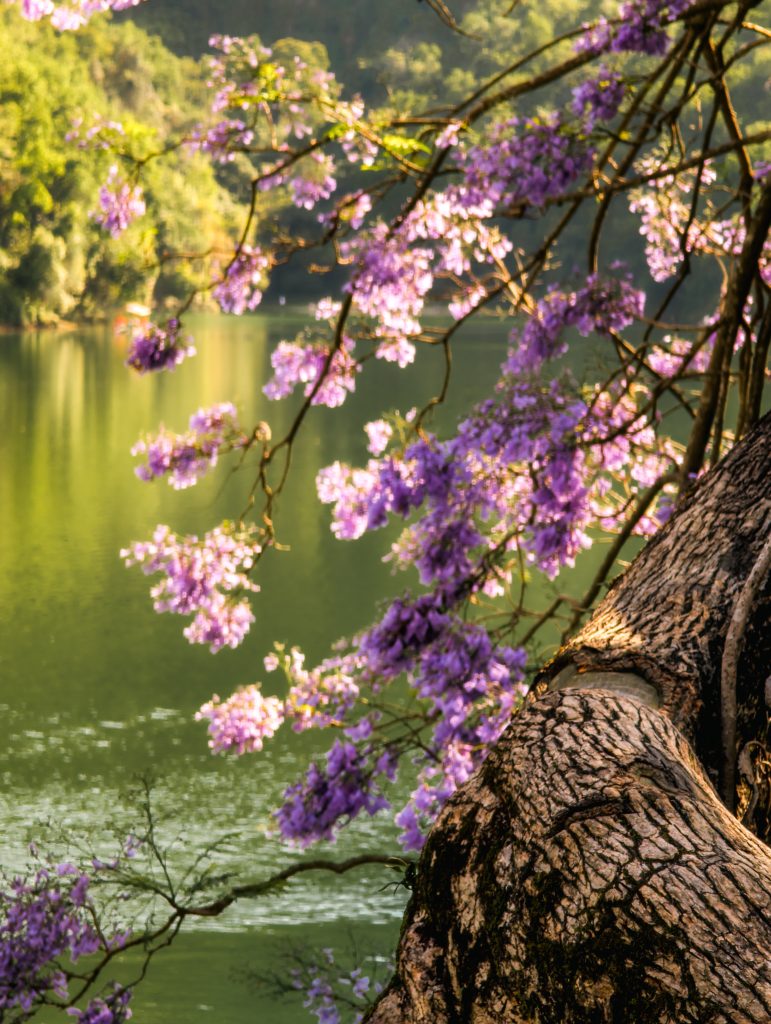
Quick Guide: Jacaranda Hunting in Pokhara
- Primary Location: Gaurighat Park, Lakeside.
- Best Time: Early morning (approx. 6:30 AM – 8:00 AM) for soft, cinematic lighting and views of the snow-capped peaks.
- What to Bring: A camera with a good depth-of-field to capture the blossoms against the distant Annapurna range.