



If you are travelling to Nepal, you will eat Dal Bhat. Not because you have to—but because once you try it, you will want to. This unassuming plate of lentil soup and rice is Nepal’s national dish, its daily fuel, and arguably its most honest expression of culture. Here is everything you need to know before your first bowl.
The Basics: What Does Dal Bhat Mean?
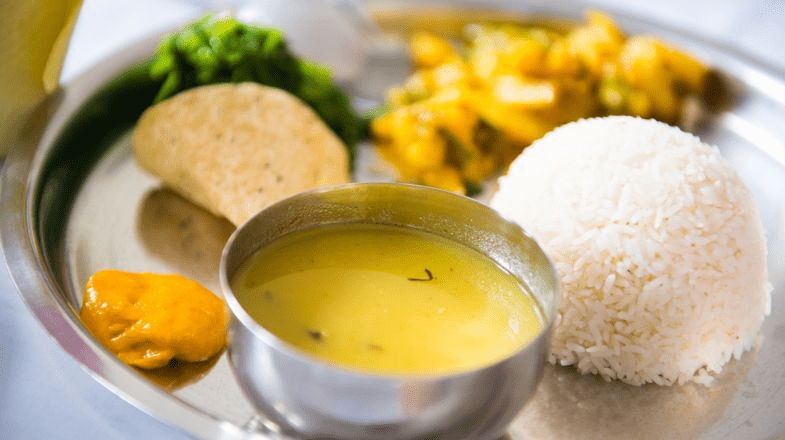
The name is straightforward. Dal (दाल) means lentil soup. Bhat (भात) means steamed rice. Put them together and you have the foundation of almost every Nepali meal, every day, across the entire country—from the subtropical Terai plains to the high-altitude villages of the Himalayas.
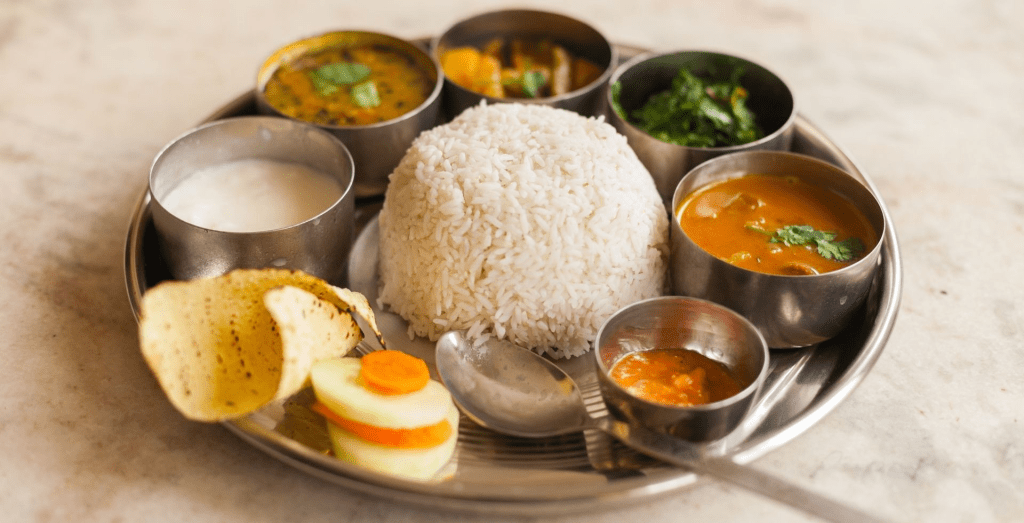
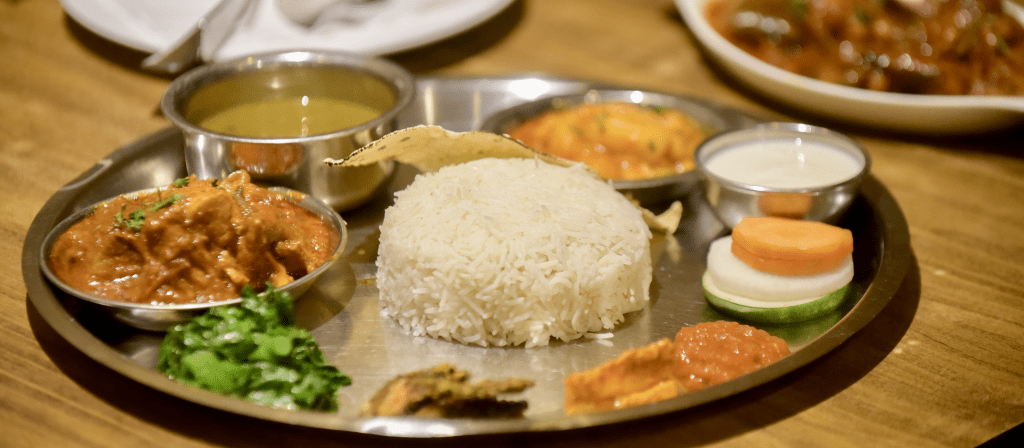
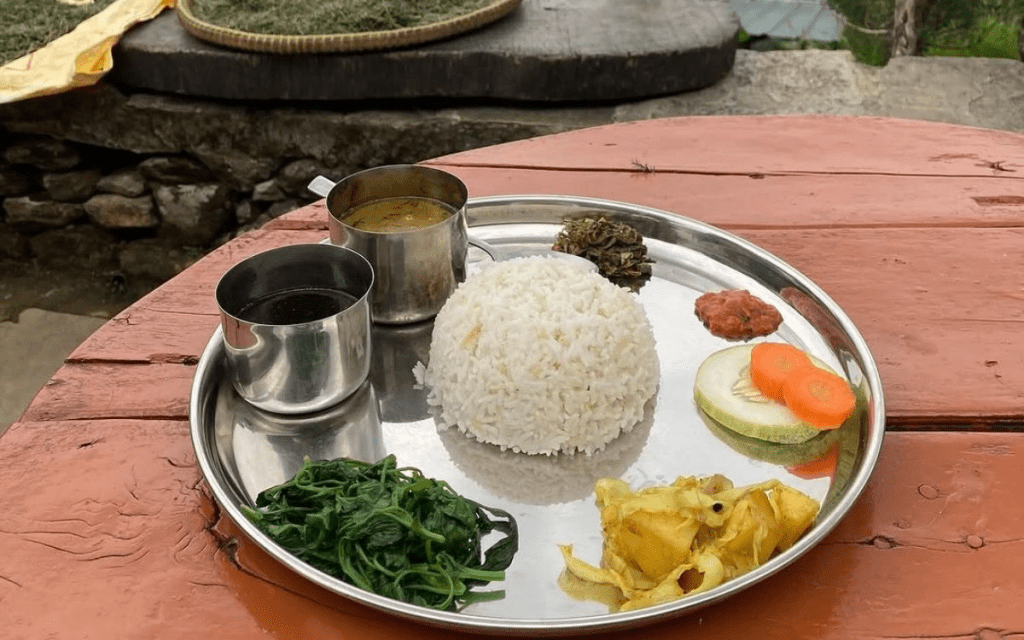
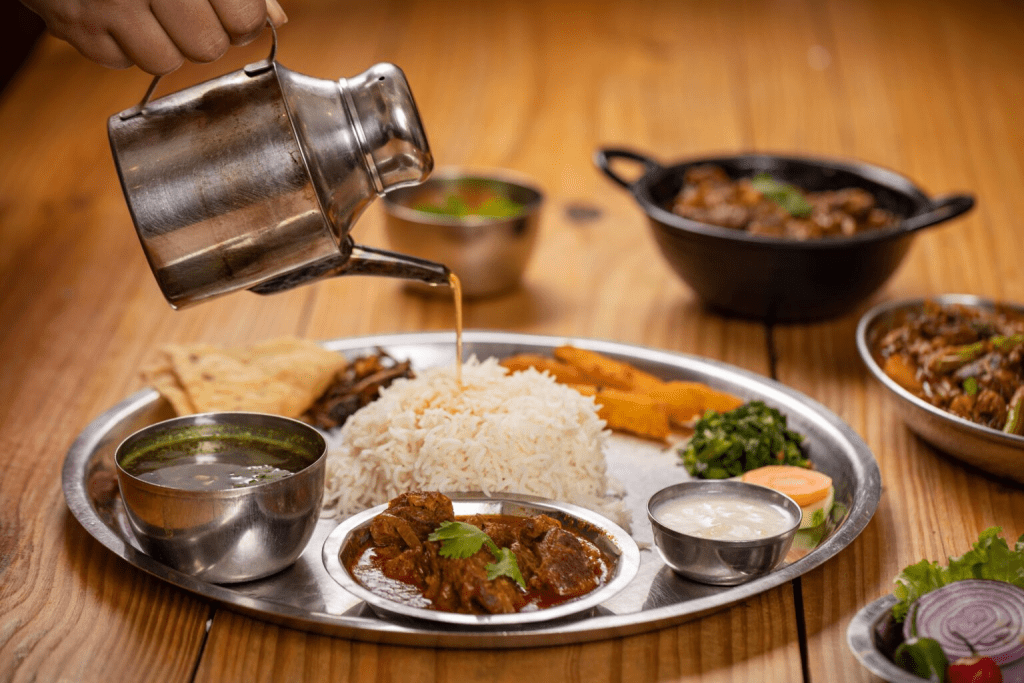
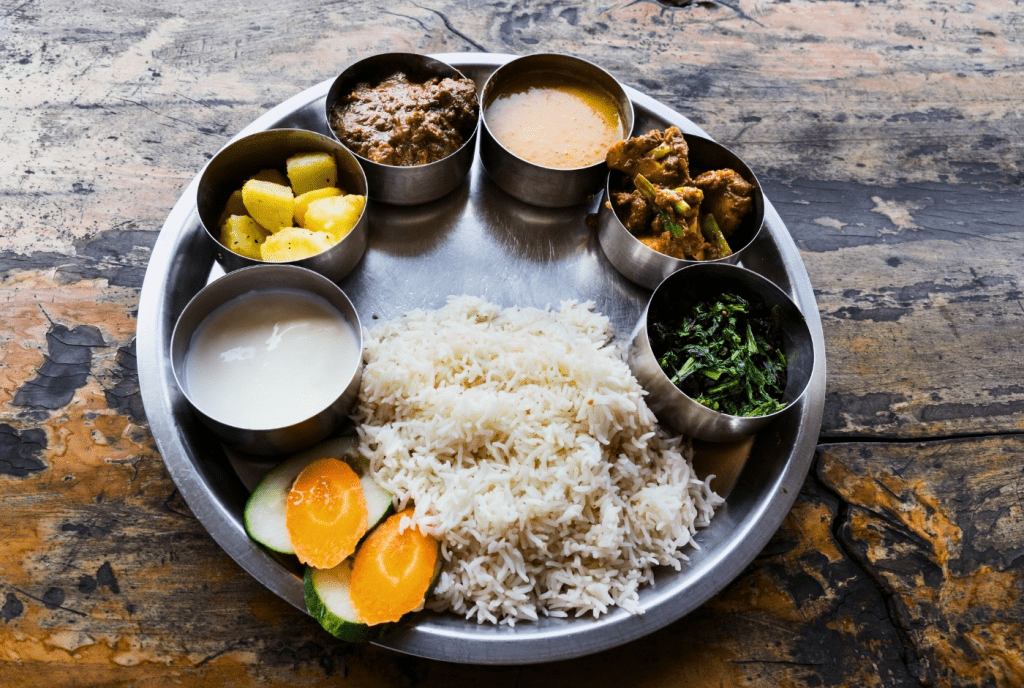
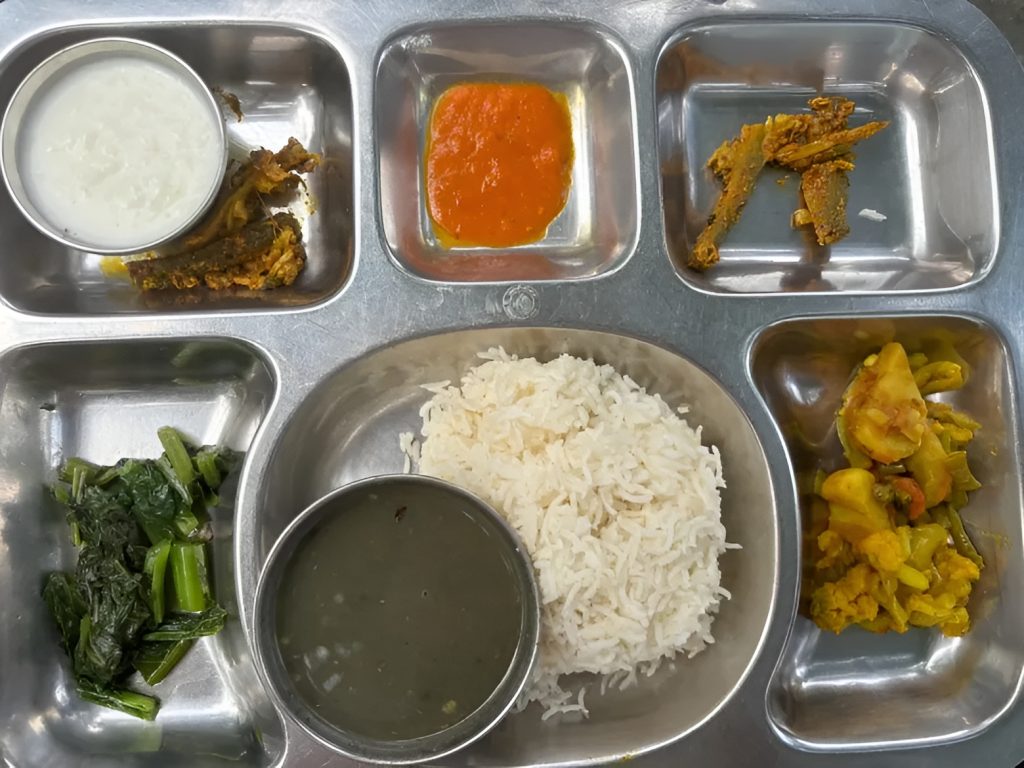
But calling it just “lentils and rice” is like calling a thali a bowl of leftovers. A proper Dal Bhat arrives as a full spread: a generous mound of steamed rice at the center, a ladle of warm lentil soup poured over the top, and a rotating cast of sides arranged around the edges—seasonal vegetable curry, tangy pickle, sometimes a wedge of papad, and on lucky days, a small portion of meat.


Most importantly, in many restaurants and tea houses across Nepal, Dal Bhat comes with unlimited refills. The rice and dal keep coming until you hold up your hand and say enough.
What Is on a Dal Bhat Thali?
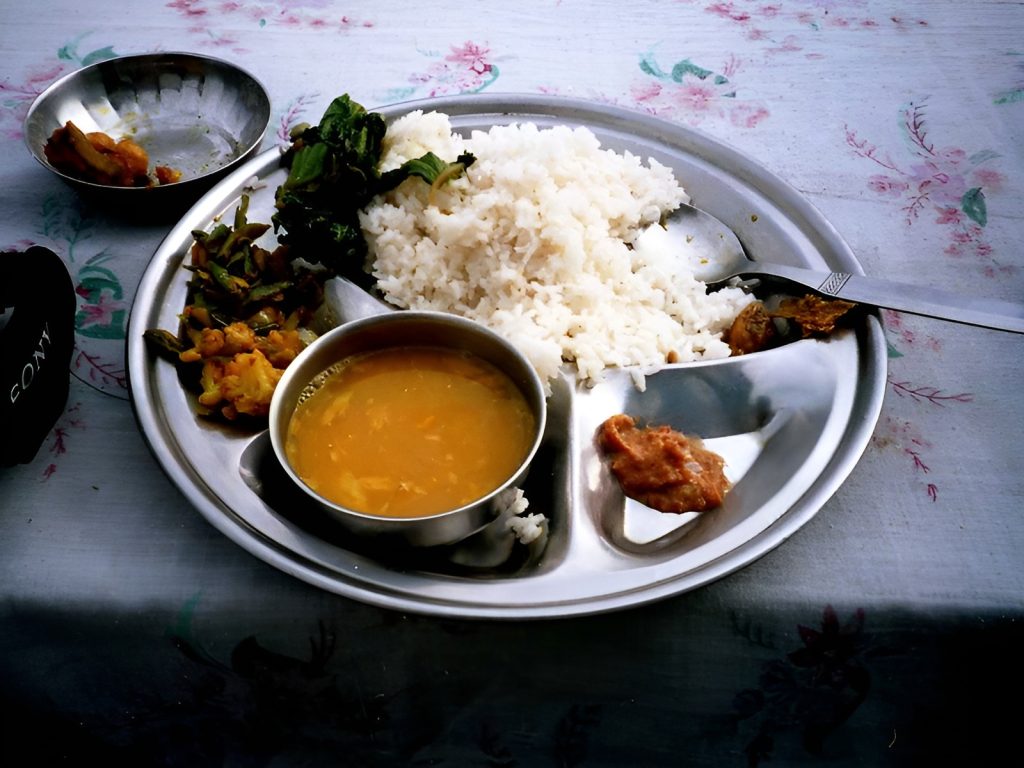
Dal Bhat is served on a thali—a large round tray, usually stainless steel, with small bowls arranged around the central rice. Each component plays a specific role in the meal:
Bhat—Steamed Rice: The base. Plain, fluffy, and plentiful. In high-altitude areas above 2,000 m, you may find dhindo (buckwheat or millet porridge) served instead, as rice doesn’t grow well at elevation.
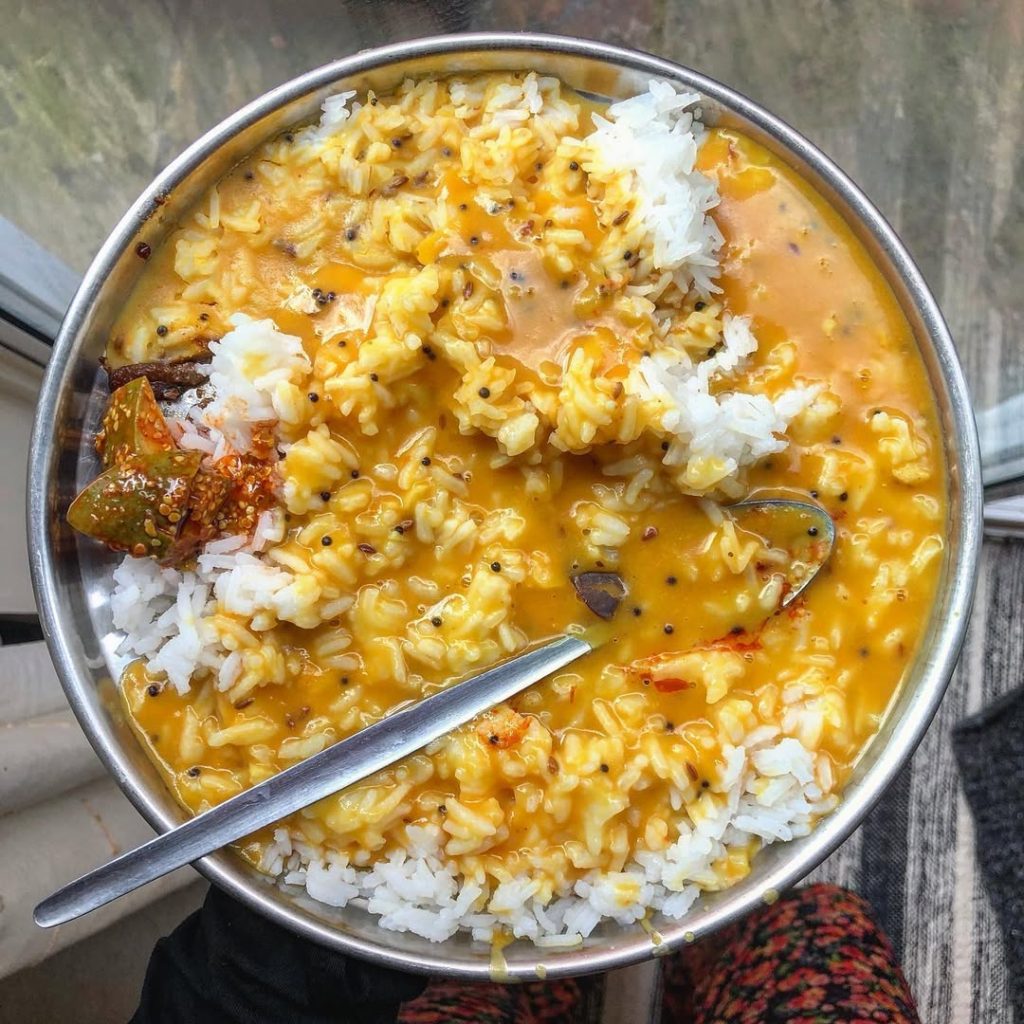
Dal—Lentil Soup: Simmered yellow or red lentils seasoned with turmeric, cumin, garlic, ginger, and chili. Thin and soupy—poured directly over the rice rather than eaten separately.
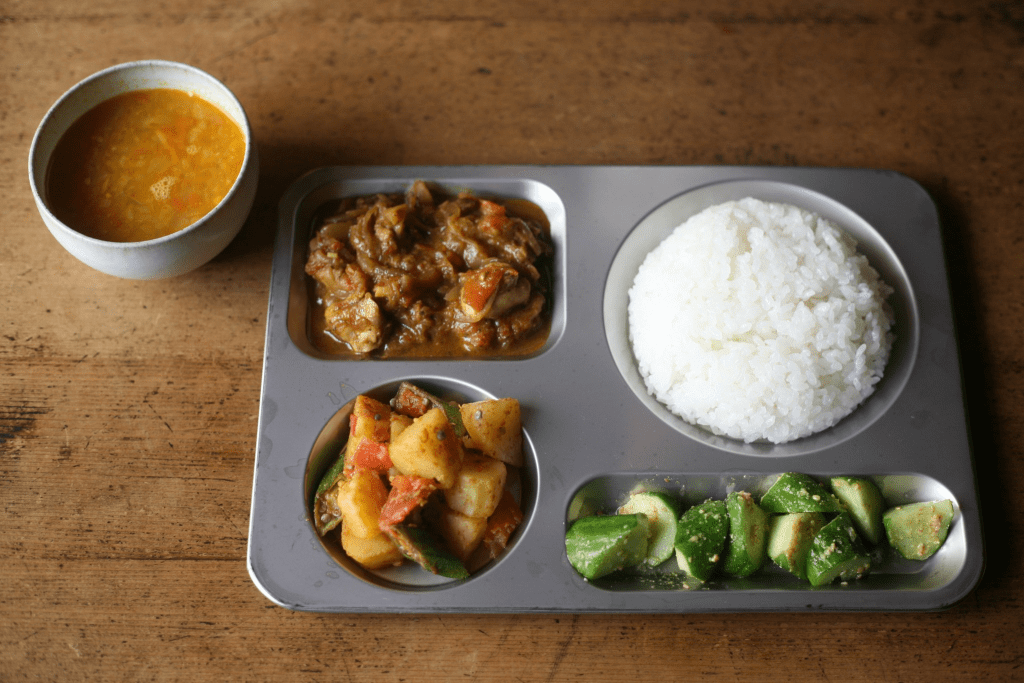
Tarkari—Vegetable Curry: A seasonal vegetable curry spiced with mustard oil, cumin, and garam masala. Common vegetables include potato, cauliflower, spinach, pumpkin, and eggplant.
Achar—Pickle: A tangy, spiced condiment made from tomato, mango, radish, or chilli. It cuts through the richness of the dal and adds a hit of brightness to each bite.
Meat or Saag (optional): In non-vegetarian versions, buffalo, goat, or chicken curry is served on the side. Saag (sautéed greens) appears frequently in the hills. Both are seasonal and regional.
Papad & Curd (sometimes): Crispy lentil wafers and a small bowl of yogurt often round out a fuller restaurant thali, adding crunch and a cooling contrast to the spiced components.
How to Eat Dal Bhat the Nepali Way
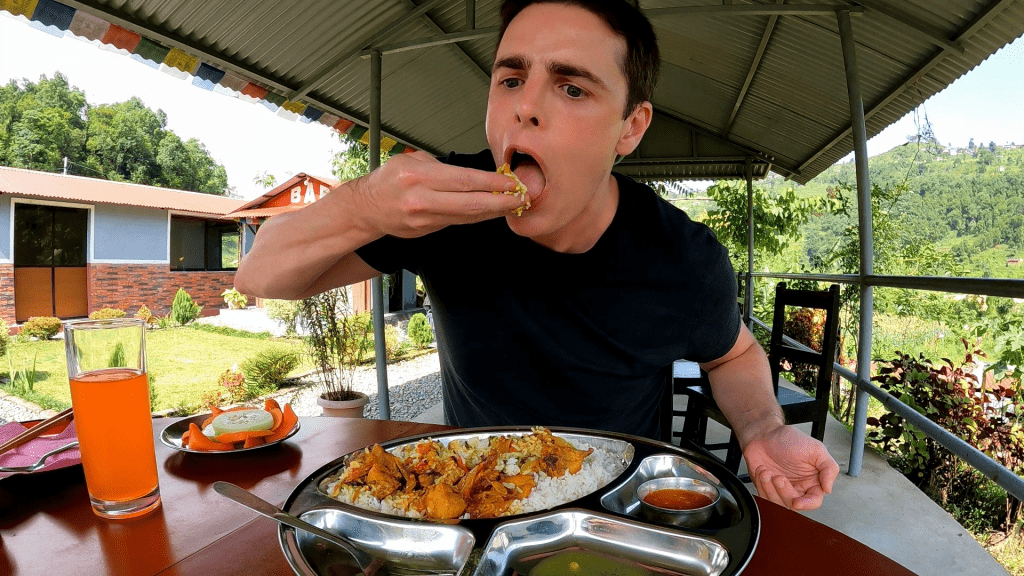
The traditional method is to eat with your right hand—scoop a small portion of rice, mix in some dal and tarkari with your fingers, then press it lightly into a ball before eating. The mixing is not incidental; it is the point. The flavors come together in your hand in a way that a spoon simply cannot replicate.
“Dal Bhat Power, 24 Hour”—the phrase you will see painted on tea houses across every trekking route in Nepal. It is not just a slogan. Trekkers genuinely measure difficult days by how many servings of Dal Bhat it took to get through them.
If you are not comfortable eating with your hands, a spoon is always available, and no one will judge you for using it. But if you are curious, give the traditional method a try at least once—it changes the experience entirely.
Dal Bhat Across Nepal’s Regions
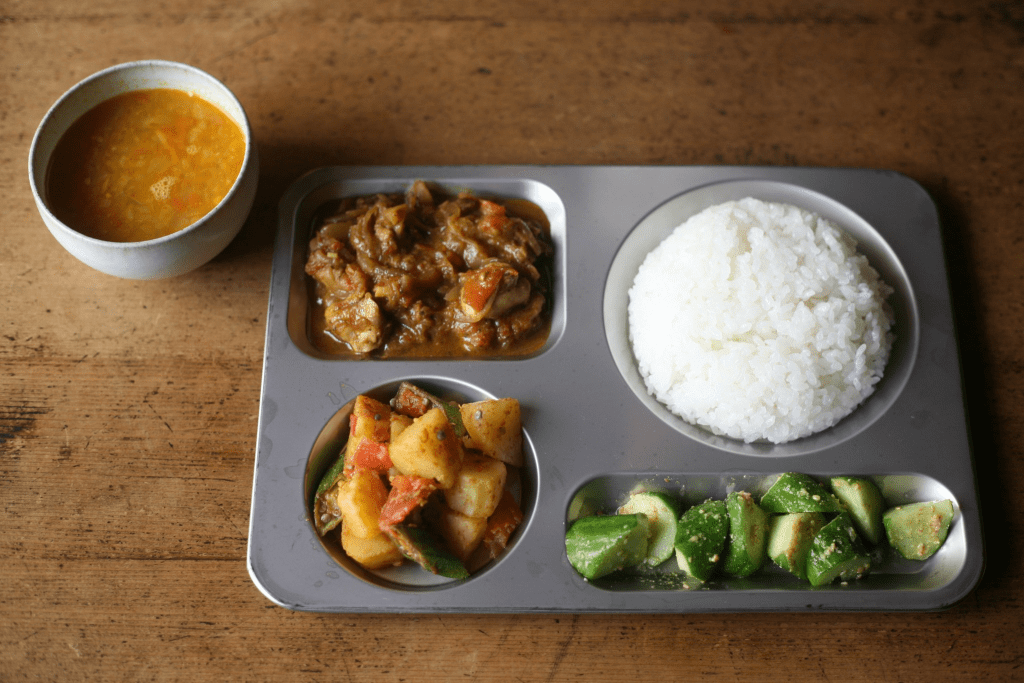
One of the most intriguing things about Nepal’s national dish is how dramatically it changes depending on where you eat it. The core elements—rice, lentil soup, and vegetable curry—remain constant, but the spicing, texture, and accompanying dishes shift with geography and ethnicity.
| Region | What to Expect |
|---|---|
| Terai (Southern Plains) | Richer, thicker dal with a wider variety of lentils. More vegetables—okra, eggplant, and bitter gourd. Often spicier and heavier with mustard oil. |
| Kathmandu Valley | Newari-influenced spreads with more side dishes, sometimes including chatamari (rice crepe) or aloo tama (potato and bamboo shoot curry) alongside the thali. |
| Hill Regions | Lighter, more aromatic dal with cumin and coriander. Simpler tarkari using whatever greens are in season. Often served with home-pressed mustard oil. |
| High Himalaya (Trekking Routes) | Tea house dal bhat: hearty, warming, and always with unlimited refills. Dhindo may replace rice above 3,000 m. This is the version most international travelers encounter first. |
| Thakali Style | Considered by many to be the finest expression of dal bhat—a more elaborate spread with sautéed greens, chutneys, spiced meat, and a distinctive buckwheat element. Originally from the Mustang region. Read our guide to Thakali cuisine.→ |
Why Dal Bhat Matters Beyond the Plate
Nepal is a country of extraordinary diversity—more than 125 ethnic groups, 123 languages, and terrain ranging from 60 meters above sea level to the roof of the world. What unifies all of them daily, twice a day, is this plate.
Dal Bhat is eaten in the morning around 10am and again in the evening around 7pm. These are not snack times—they are the two anchoring meals of the Nepali day. The hours between are bridged with chiura (beaten rice), sel roti, or tea, but Dal Bhat is the meal that the day is organized around.
It is also a profound act of hospitality. When a Nepali host offers you their Dal Bhat, they are sharing the most essential thing they have. Refusing a refill is politely declining generosity. Accepting it—and eating with visible satisfaction—communicates respect in a way that transcends language.
During festivals like Tihar and Dashain, dal bhat is elevated with special dishes—meat curries, desserts, and rare seasonal ingredients that only appear at celebration time. Even in its festive form, the familiar thali remains at the center.
Is Dal Bhat Good for Trekkers?
Exceptionally. The combination of complex carbohydrates from rice, plant protein from lentils, vitamins from seasonal vegetables, and anti-inflammatory spices like turmeric and ginger makes Dal Bhat one of the most nutritionally complete single meals in any Asian cuisine.
✓ Complete protein (lentils + rice) ✓ Slow-release carbohydrates ✓ High fibre ✓ Anti-inflammatory spices ✓ Easily digestible at altitude
Himalayan Sherpas—among the world’s most elite high-altitude athletes—have fueled their climbs on Dal Bhat for generations. The fact that teahouses on the Everest Base Camp trek and Annapurna Circuit serve unlimited refills is not a coincidence—it is an acknowledgement that trekkers need exactly what Dal Bhat provides: calorie-dense, easily digestible, sustainable energy.
One practical note: at high altitude, digestion slows. Dal Bhat’s warm, liquid-forward format is gentler on the stomach than heavier protein meals, which is another reason it dominates menus above 3,000 meters.
Where to Eat the Best Dal Bhat in Nepal
The best Dal Bhat is almost never in the most expensive restaurant. Here is where to look:
Local bhattis (roadside eateries)—the unsung heroes of Nepali food. A simple room, a few benches, a gas burner, and a cook who has been making the same dal recipe for twenty years. These are where you eat.
Trekking tea houses—the classic setting. Particularly good in the Annapurna and Langtang regions, where teahouse owners take genuine pride in their dal. Always ask for the homemade achar.
Thakali restaurants in Kathmandu—if you want the full, elaborated version of dal bhat without trekking for a week to get it, a Thakali restaurant in Kathmandu is your answer. Look in Thamel and Durbarmarg.
Homestays—eating Dal Bhat in a Nepali home, made by someone who grew up cooking it, is a different experience entirely from any restaurant. Many homestays in Nepal include home-cooked meals as part of the stay. This is the version worth seeking out.
Frequently Asked Questions
Is Dal Bhat vegetarian?
The core dish—dal and rice with vegetable tarkari—is always vegetarian and often vegan (depending on whether ghee or oil is used). Meat is a side option, not a default component.
How much does Dal Bhat cost in Nepal?
In a local bhatti, Dal Bhat costs between NPR 150 and 300 (roughly $1–2.50 USD). In a mid-range restaurant in Kathmandu or Pokhara, expect NPR 400–700. On trekking routes, prices rise with altitude—NPR 600–900 is standard above 3,000 m, though unlimited refills make this exceptional value.
Can I eat Dal Bhat every day?
Nepali people do this and have done so for their entire lives. On a trek of 10–14 days, most travelers find themselves actively looking forward to it each evening. The variety comes from the rotating tarkari and achar, which change with season and region.
What is the difference between Dal Bhat and Dal Bhat Tarkari?
“Dal Bhat Tarkari” simply specifies that vegetable curry (tarkari) is included—which it almost always is. In practice, the terms are interchangeable in everyday usage.
Is Dal Bhat spicy?
It has warmth from ginger, cumin, and chili but is not aggressively spicy by default. The heat level varies significantly by region and cook—Terai-style dal tends to be spicier than hill-region versions. The achar (pickle) is usually where the real heat lives.
Keep exploring Nepali food: What is Momo? Nepal’s favourite dumpling → | Complete guide to Nepali cuisine → | Best places to eat in Kathmandu →


