


Most waterfalls in Nepal are at their weakest when the tourist brochures photograph them. The dramatic shots you see online were usually taken in October, when the skies are clear and the flow has already dropped to a polite trickle. Namaste Falls Nepal works the other way around. Come here in August, at the loud, wet, dripping peak of the monsoon, and an 80-meter wall of water turns into something that genuinely vibrates the ground under your boots.
That contradiction is exactly why photographers who know what they are doing point their cameras east in the rainy season. Here is what most travel guides will not tell you about shooting this waterfall when the rivers are full.
Where Namaste Falls Actually Is
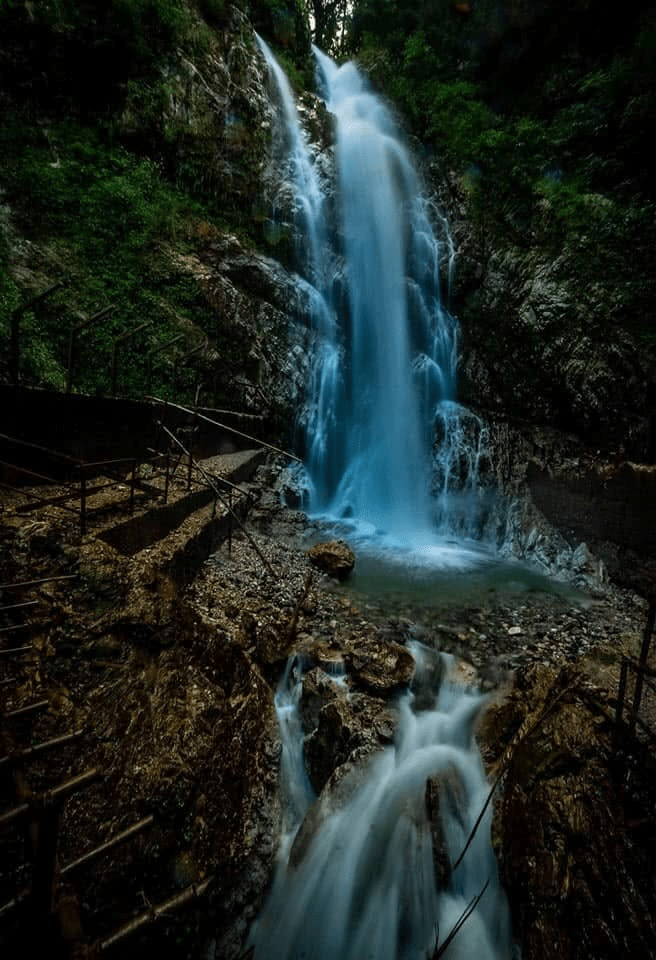
Namaste Jharna, as locals call it, sits in the Bhedetar area of Dhankuta District, in Koshi Province in the far east of the country. It is a long way from the Everest and Annapurna circuits that dominate most itineraries, and that distance is part of the appeal. You will not be elbowing other tripods out of the frame here.


Bhedetar itself is a small hill station perched at about 1,420 meters, on the ridge where the warm plains of the Terai start climbing into the eastern hills. Dharan, the nearest city of any size, lies roughly 17 km downhill. From the edge of Bhedetar, the falls are a short ride and then a walk down to the gorge where the water lands.
The name comes from the shape. As the river drops over the rocky face, the cascade splits and rejoins in a way that resembles two palms pressed together in the traditional Nepali greeting. Catch it in the right light and you will understand why the name stuck.
Why August Is the Photographer’s Secret Season
Here is where most people go wrong. They assume monsoon means a washed-out, gray, unshootable mess. Sometimes it is. But the waterfall specialists keep coming back in July, August, and early September for a reason: the flow is at its absolute maximum, and maximum flow is the whole point of photographing a waterfall.
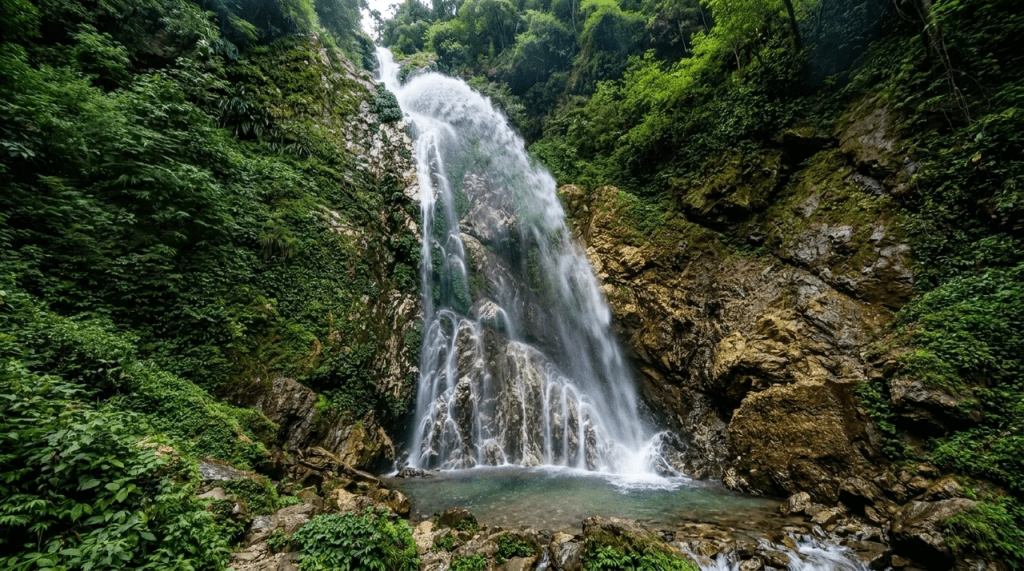
August water at Namaste Falls is not a thin ribbon. It is a thundering column thick enough to throw spray dozens of meters into the surrounding forest. The sound reaches you well before the falls come into view. Long-exposure shots that look flat and stringy in the dry season turn into dense, silky sheets of white during the rains.
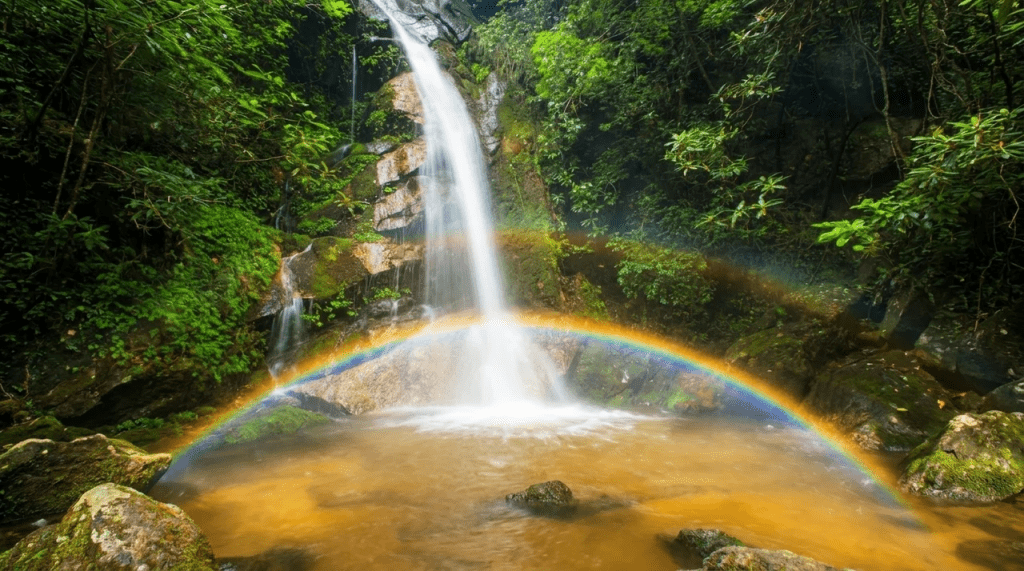
The falls are also famous for rainbows, and this is not a coincidence. Heavy spray plus angled sunlight equals refraction, and Namaste produces these more reliably than almost anywhere else in eastern Nepal. Mid-morning and late afternoon, when the sun cuts in low across the gorge, are your best windows. Patience matters. A rainbow that vanishes in the shade at 10:40 can reappear in full color by 11:15.
Reading the rain, not fighting it
Monsoon weather in the eastern hills follows a rough rhythm. Mornings often start clear or lightly clouded, and the heavy downpours tend to build through the afternoon and overnight. Shoot early. Arriving when the site opens gives you the calmest light, the fewest people, and the best odds of a dry hour before the clouds roll back in. Plan your day around that morning window, because it applies perfectly to a waterfall shoot.
Getting There From Kathmandu and Biratnagar
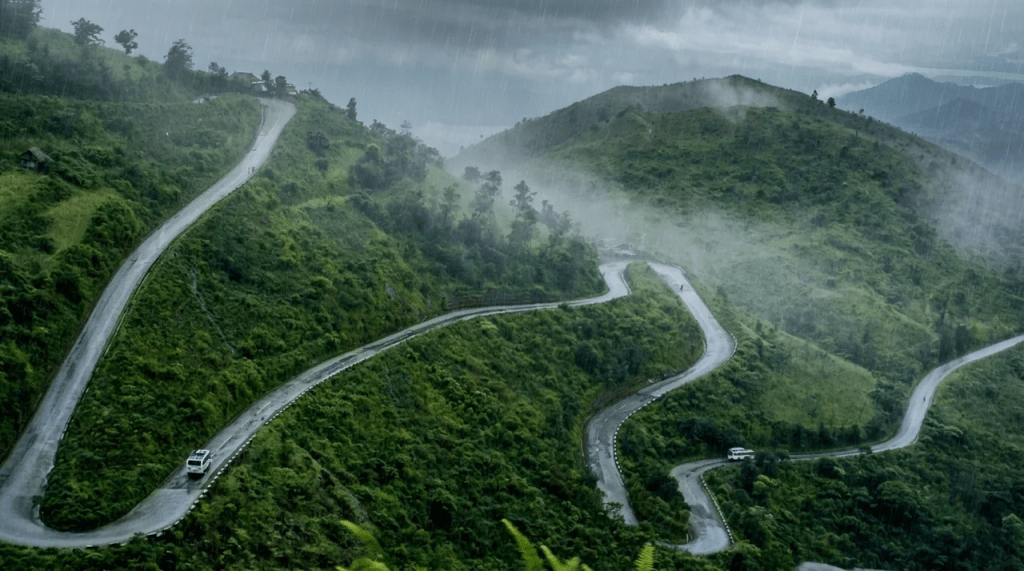
Nobody pretends this is a quick trip. From Kathmandu, the road to Dharan runs around 550 km and eats most of a day, sometimes more if landslides have closed sections of highway, which they do during the rains. Flying is the saner option. A flight from Kathmandu to Biratnagar takes roughly 35 minutes, and from Biratnagar it is about 40 km north to Dharan by taxi or bus, usually under an hour on a good day.
From Dharan, you catch a bus heading toward Dhankuta or Rajarani and get off at Bhedetar. Allow around 90 minutes for that leg. Buses run regularly, but in peak monsoon the schedule bends to the weather, so build in slack. Once at Bhedetar, a short local ride plus a roughly 15-minute walk gets you down to the falls. Some visitors prefer to trek the last couple of kilometers on foot, which is pleasant when the trail is not a mudslide.
A word on road safety, because it is real here. Monsoon landslides on eastern highways are common and occasionally deadly. Check conditions before you travel and do not push a journey through an active downpour. Our honest breakdown of flights, highways, and landslide safety in monsoon Nepal is worth reading before you commit to dates.
Visiting Namaste Falls Nepal: Hours, Fees, and What to Expect
The falls are generally open to visitors during daylight, with one local listing citing roughly 8 AM to 5 PM. Hours can shift seasonally and are not always strictly posted, so treat that as a guide rather than gospel and aim to arrive in the morning regardless.
There is a small entry fee for the falls area. As of early 2025, reports described it as modest, the kind of token charge common at managed natural sites in Nepal, but a precise current figure was not consistently published across sources. Carry small notes of Nepali rupees and confirm the amount at the entrance. It will not break your budget either way.
At the base, the water collects in a pool, and on calmer days people swim. In peak August flow, think hard before you do. The volume and force during the monsoon turn an inviting pool into something with serious undertow and falling debris from above. Photograph it, respect it, and keep a safe distance from the impact zone.
What to pack for an August shoot
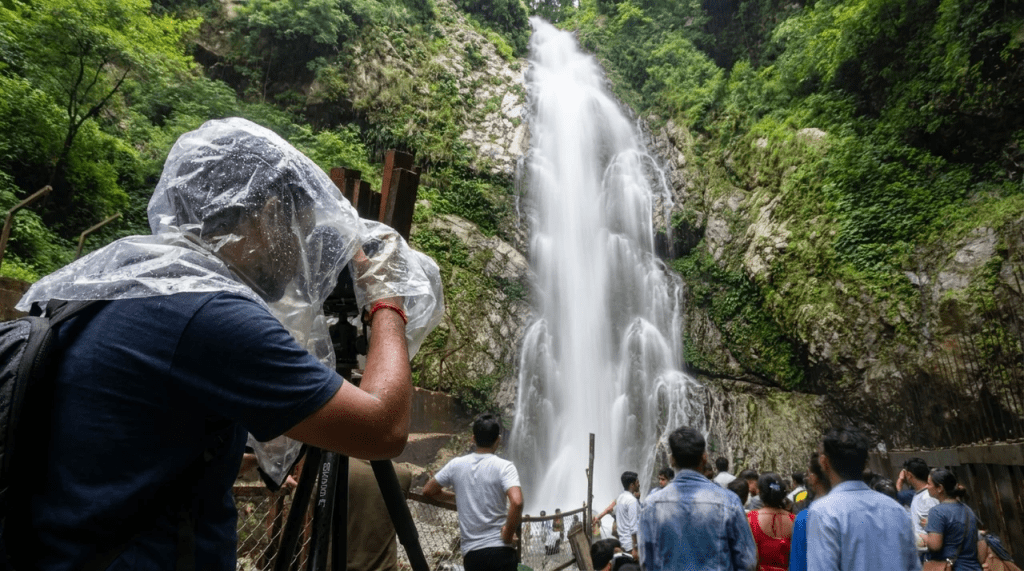
- Rain protection for your gear. A proper rain cover or even a sturdy bag liner. Spray reaches far, and a fine mist will coat your front element within minutes.
- Microfiber cloths, plenty of them. You will be wiping the lens constantly. One cloth is never enough at a waterfall this wet.
- A tripod with grippy feet. The rocks are slick and mossy. Stable footing for both you and the camera is non-negotiable.
- Neutral density filters. To get those long, silky exposures in daylight without blowing out the highlights.
- Quick-dry clothing and real footwear. Trekking shoes with grip, not sandals. You will get wet, so dress for it.
- A dry bag for phones, batteries, and anything that hates water.
Getting the Shot: Composition and Timing
Photographers tend to make the same mistake here, which is standing too close and shooting straight on. A waterfall this tall rewards distance and context. Step back and frame the full 80-meter drop with the surrounding forest, and the scale finally reads in the image. Then move in for detail shots of the spray, the moss, and the rainbow fragments.
Long exposures are the obvious move, and they work beautifully in monsoon volume. Drop your shutter to a second or longer with an ND filter and the falling water smooths into that classic veil. But do not throw away the fast frames. At 1/1000 of a second you can freeze the chaos: individual droplets, the violent texture where the column hits the pool, the burst of mist on impact. Both versions tell a true story about August water.
For rainbows, position yourself with the sun behind you and the spray in front. Walk the area. The angle that produces color shifts as the sun moves, so a spot that shows nothing at one moment can light up twenty minutes later. Bracket your exposures, because the bright sky and the dark wet rock are a brutal dynamic range to balance in a single frame.
Where to Stay and How to Build the Trip
Most visitors base themselves in Dharan, which has the widest range of guesthouses and hotels, or stay up in Bhedetar for the cooler air and the ridge views. Bhedetar is a genuine hill station with a handful of simple lodges and tea shops, and waking up in the clouds there beats commuting from the plains. Either way, you are well placed for a dawn start at the falls.
Smart travelers fold Namaste Falls into a wider eastern Nepal loop rather than treating it as a one-shot day trip. The region around it is quietly spectacular in the rains, all rolling tea country and mist. If you are planning the timing of a broader trip, our month-by-month breakdown of the best time to visit Nepal will help you slot the falls into the right season.
For the bigger picture on traveling through Nepal during the rains, including what genuinely works and what to skip, the complete guide to Nepal’s monsoon season covers the realities most itineraries gloss over. Official seasonal advisories and travel updates are also worth a glance on the Nepal Tourism Board site before you set off. If you want the geographic and historical background on the hill station itself, the Bhedetar overview on Wikipedia is a useful starting point.
Frequently Asked Questions
How tall is Namaste Falls?
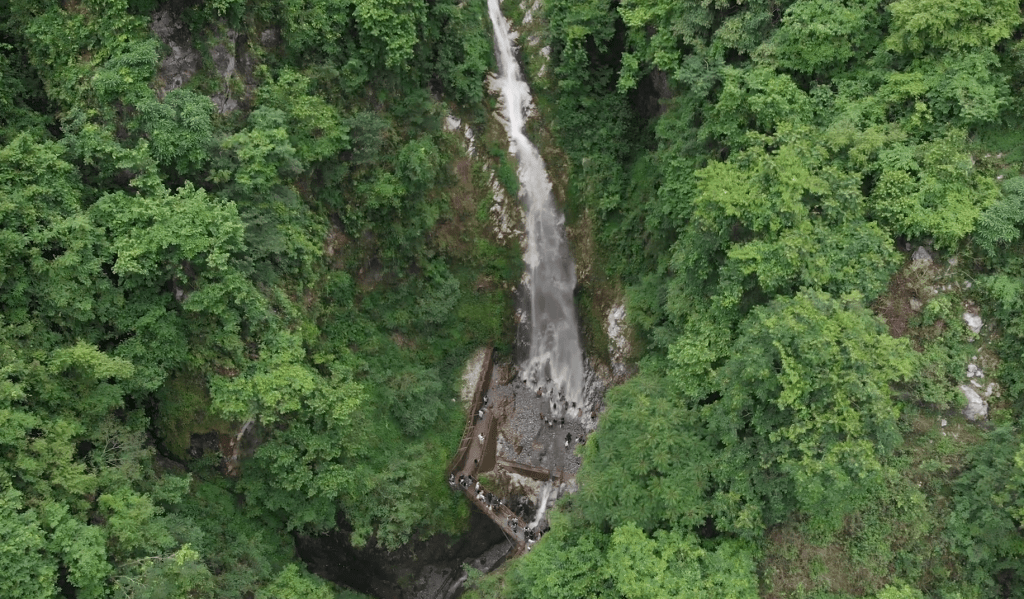
It drops roughly 80 meters down a rocky cliff face, which makes it one of the more impressive plunge waterfalls in eastern Nepal. The full height only reads in a photo if you step back far enough to include the surrounding forest for scale.
Is August a good time to visit Namaste Falls?
For raw power and photography, yes. August sits in the heart of the monsoon, when water volume peaks and the falls roar at their loudest. The trade-offs are slippery trails, possible road closures, and heavy afternoon rain, so plan around morning weather windows and travel carefully.
How do I get to Namaste Falls from Kathmandu?
The fastest route is a flight from Kathmandu to Biratnagar, about 35 minutes, then roughly 40 km by road to Dharan, and a bus or jeep up to Bhedetar. Driving the whole way from Kathmandu covers around 550 km and takes most of a day, with monsoon landslides a real risk on the highway.
Is there an entry fee?
There is a small charge to enter the falls area. As of early 2025 it was described as modest, but a precise current figure was not consistently published, so carry small rupee notes and confirm at the gate.
Can you swim at Namaste Falls?
There is a pool at the base where swimming is possible on calm days. During peak August flow, the force and volume make it genuinely dangerous, with strong undertow and debris falling from above. Enjoy it from a safe distance in monsoon.
Are the rainbows really that common?
Yes, and that reputation is well earned. Heavy spray combined with low-angle sunlight produces frequent rainbows, especially in mid-morning and late afternoon. They come and go as the sun shifts, so give yourself time rather than expecting one on arrival.
What camera gear do I need?
A weather-sealed body helps, but the essentials are rain protection, a tripod with grippy feet, a stack of microfiber cloths, and neutral density filters for long exposures. A dry bag for batteries and phones is smart given how much spray reaches the shooting positions.
How long should I budget at the falls?
Give yourself at least two to three hours on site. You want time for the walk down, to wait out shifting light and rainbows, and to shoot both long exposures and fast frames. Combined with travel from Dharan or Bhedetar, it makes for a comfortable half-day outing.