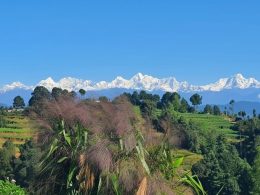



Most travel guides tell you to skip eastern Nepal in July. The reality flips that advice on its head. Monsoon is the exact moment Mai Pokhari Nepal stops looking like a tidy postcard and starts looking like something out of a half-remembered dream. Fog rolls across the water by mid-morning, the moss on the old trees glows an almost electric green, and the crowds that pack the spring rhododendron season are simply gone.
Here is what most guides will not tell you: the photographers who chase mist for a living have quietly started putting this place at the top of their rainy-season lists. They are not coming for blue skies. They are coming for the absence of them.
What Makes Mai Pokhari So Special
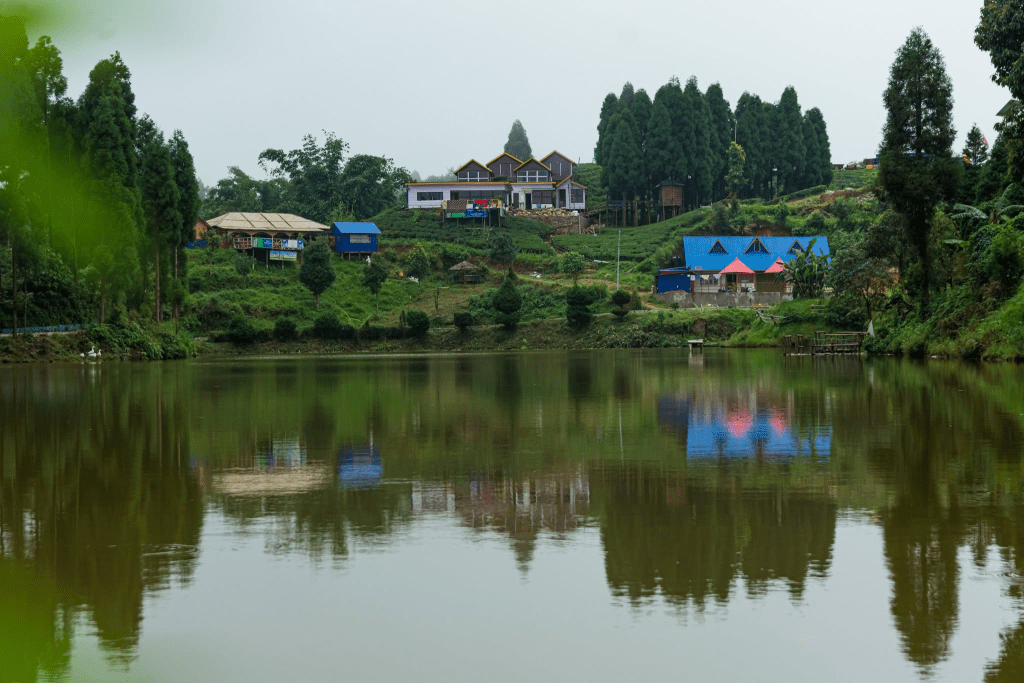
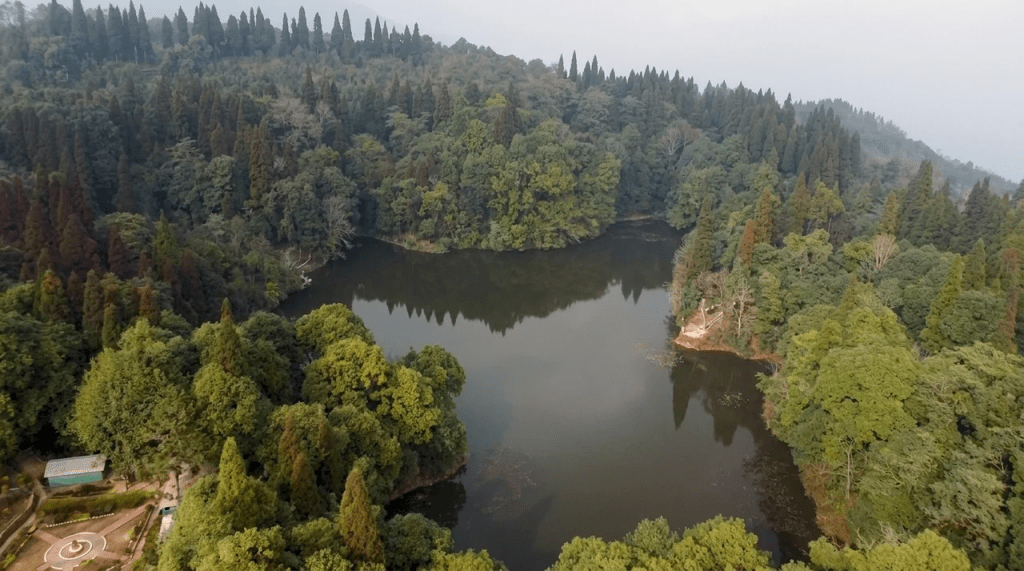
Tucked into the hills about 20 kilometers north of Ilam Bazaar, at roughly 2,100 meters of elevation, Mai Pokhari is a small, star-shaped pond with an outsized reputation. It earned international recognition on October 28, 2008, when it was designated a Ramsar site, a Wetland of International Importance. That is not a label handed out lightly.


The lake itself is modest in size, with a circumference of roughly one kilometer, and it is fed by springs and rainfall rather than any river. Locals will tell you the pond has nine corners, each one a tribute to a different deity. Walk the shoreline trail and you will pass small shrines tucked between the trees, because this is a sacred place long before it is a scenic one.
Goddess Bhagawati is said to reside here, and the wetland draws pilgrims from Hindu, Buddhist, and Kirat traditions alike. You feel that overlap immediately. Prayer flags hang near temple bells, and the whole place carries a hush that has nothing to do with the weather.
Why July Is the Secret Season
Spring and autumn get all the love, and for good reason. March through May brings the rhododendron blooms and gentle temperatures around 15 to 25 degrees Celsius. September through November serves up crisp air and long views. If you want guaranteed sunshine and dry trails, those are your windows, and our month-by-month guide to the best time to visit Nepal breaks down exactly why.
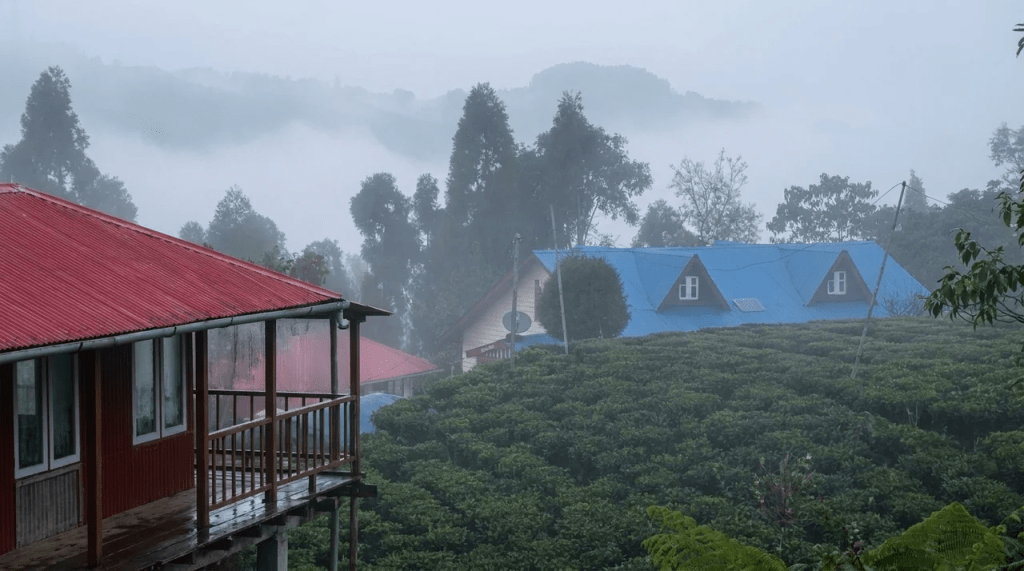
But July is a different animal entirely. The monsoon transforms the forest around the pond into a dripping, breathing thing. Old-growth trees wear thick coats of moss and lichen, the kind that only thrives in constant moisture. Mist does not just appear in the morning. It lingers, lifts, and settles again all day, rearranging the scene every twenty minutes.
For a photographer, that is gold. Flat, diffuse light means no harsh shadows and no blown-out highlights. Reflections on the still water turn glassy in the rare windless moments. And because almost no one visits in peak monsoon, you often have the entire shoreline to yourself.
Getting to Mai Pokhari
Reaching this corner of Nepal takes some effort, which is part of why it stays quiet. From Kathmandu, the fastest route is to fly to Bhadrapur, a trip of about one hour, then continue by road to Ilam. That drive takes another three to four hours through tea country. If you prefer to keep your feet on the ground the whole way, direct buses from Kathmandu to Ilam run roughly 12 to 16 hours, mostly overnight.
Once you are in Ilam, the final leg is short. Mai Pokhari sits about 20 kilometers north, and a jeep or taxi covers the uphill road in 30 to 40 minutes when conditions are good. Shared tempos and local buses also make the run, taking closer to an hour. Here is the monsoon caveat that matters: that uphill road can get slick and slow after heavy rain, so build in buffer time and do not assume a tight schedule will hold.
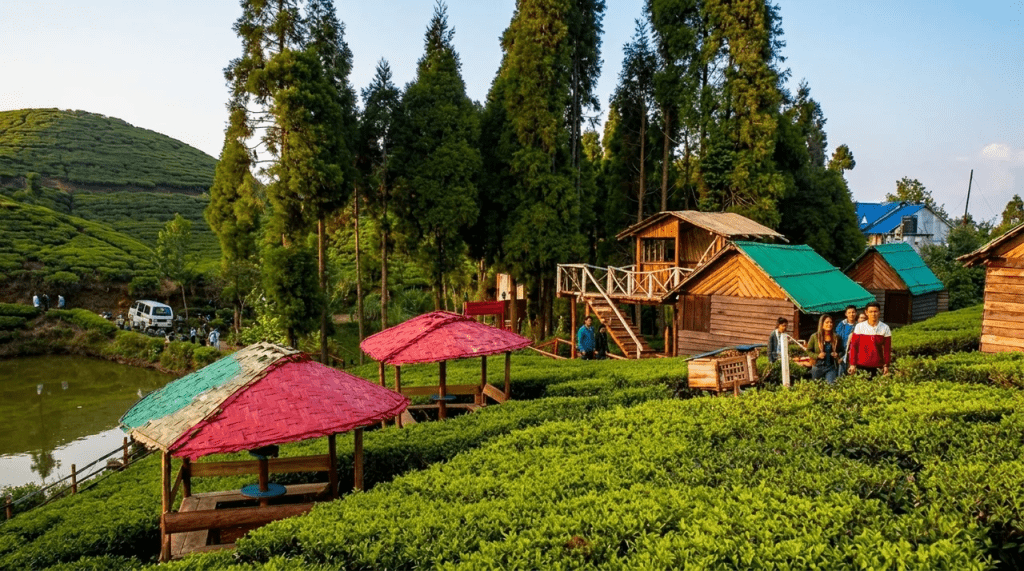
Riding a motorbike up is popular in dry weather. In July, think twice. Wet hairpin bends on a mountain road are not where you want to test your luck.
A Quick Word on Logistics
- Carry small cash. Card payments are not reliable once you leave the larger towns.
- Start early. Mornings tend to be clearer before the afternoon downpours build.
- Pack a dry bag for your camera gear. Humidity alone will fog your lens if you are not careful.
- Check road conditions in Ilam the day before. Locals know which stretches are washing out.
The Botanical Garden and the Wildlife
Wrapped around the lake is the Mai Pokhari Botanical Garden, and it is worth slowing down for. The garden includes an orchid house, a rock garden, a greenhouse, and plant collections gathered from across eastern Nepal. In monsoon, the orchids and ferns are at their most lush, which makes the small entrance worth it. As of early 2025, any garden fee was modest and collected at the gate, though exact amounts shift, so carry a bit extra just in case.
The biodiversity here is genuinely remarkable for such a compact area. Down in the shallows lives the Himalayan newt, known locally as “thakthake,” a creature you will not easily find elsewhere in Nepal. Birdlife is the real headline, though. The surrounding forest supports a huge range of species, and serious birders treat the rim trail as a slow, patient hunt rather than a walk.
You may also share the forest with the leopard cat, the Eurasian otter, and the endemic variegated mountain lizard, though sightings of the larger animals take luck and quiet. If wetland wildlife fascinates you, Nepal does it on a grander scale in the lowlands too, as our complete Chitwan National Park safari guide lays out.
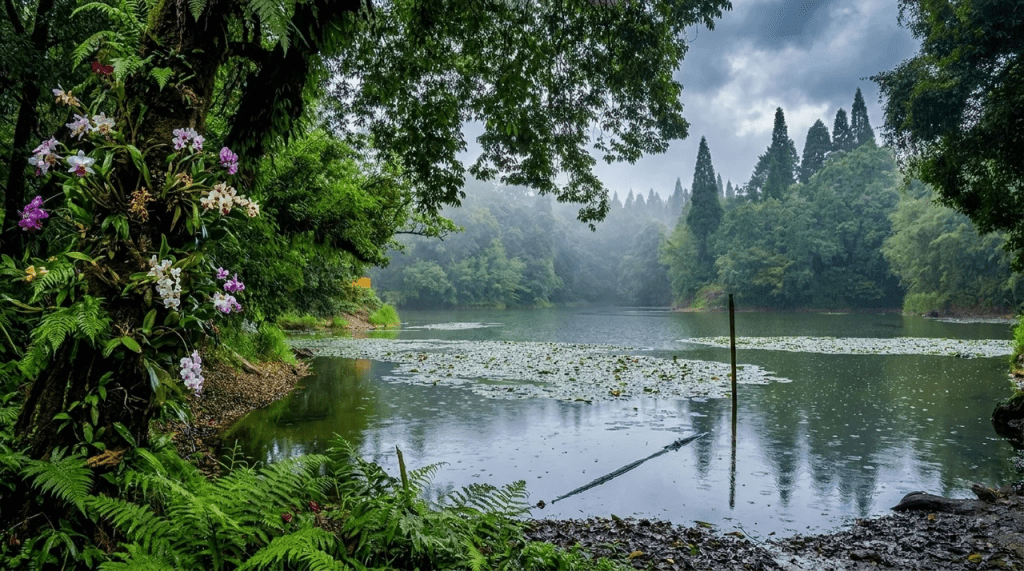
Photographing Mai Pokhari in the Mist
Let me be specific, because this is where most people go wrong. They show up at noon, see fog, and assume the shoot is ruined. The opposite is true. Mist is your subject, not your obstacle.
Walk the shoreline anti-clockwise. The shrines and the best reflections line up that way, and the light tends to fall more kindly on the water. Look for the moments when the fog thins just enough to reveal a single tree or a shrine, then thickens again. That layering, where near objects are sharp and far ones dissolve, is what gives monsoon photographs their depth.
A few practical notes for the conditions:
- Bring a microfiber cloth and keep wiping the front element. Condensation is constant.
- Underexpose slightly. Fog tricks meters into overexposing, which washes out the mood.
- A polarizer helps cut glare off wet leaves and deepens the greens.
- Tripods earn their weight here. Low light plus still water means slower shutter speeds.
- Protect against rain with a simple plastic cover or even a shower cap over the body.
If you photograph the pilgrims and local people, ask first. Most are happy to pose when you approach with a smile, and the portraits you get will be far warmer for it.
Where to Stay and What to Eat
You do not need a fancy hotel up here, and there is not really one to find. Simple lodges and homestays sit near the lake and in nearby villages like Shree Antu and Gajurmukhi. A homestay is the move. You get home-cooked dal bhat, a warm bed, and hosts who can point you toward the quiet trails the day-trippers miss.
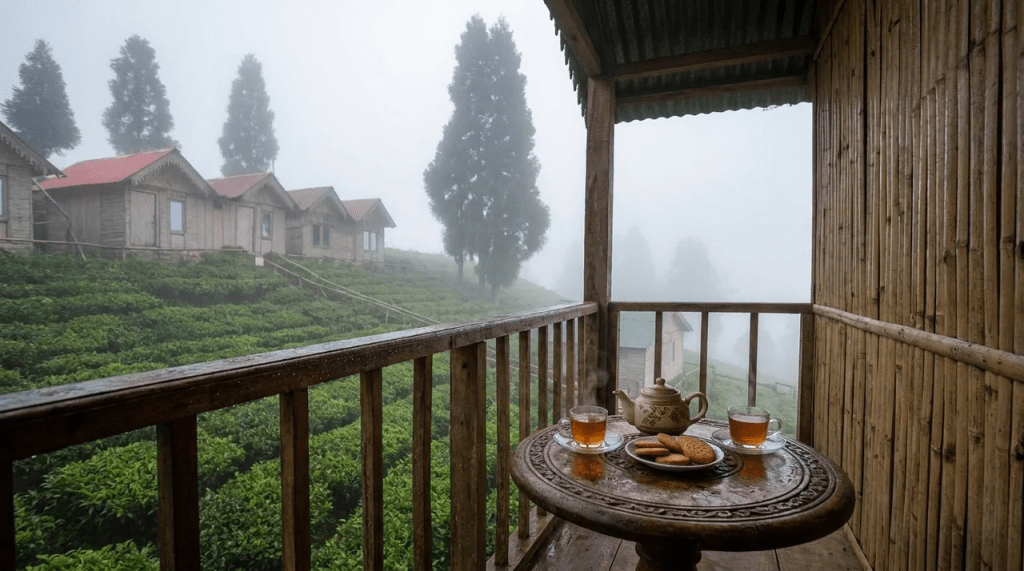
Expect basic comfort rather than luxury. Hot water may come from a bucket, and electricity can flicker during storms. That tradeoff buys you something rare, which is waking up inside the cloud forest instead of driving into it.
Food leans hearty and local. Beyond dal bhat, look for fresh local vegetables, churpi (the hard yak cheese travelers love to gnaw on for hours), and of course Ilam tea, grown in the gardens you passed on the way up. A cup of that tea, sipped on a porch while fog drifts past, is a small perfect thing.
Planning Around the Monsoon
Traveling in eastern Nepal during the rains rewards the flexible and punishes the rigid. Landslides can close roads with little warning, flights to Bhadrapur occasionally cancel for weather, and a perfect blue afternoon is genuinely rare. None of that should scare you off. It just means you plan loosely and keep a spare day in your pocket.
For the bigger picture of what monsoon travel actually feels like across the country, our guide to Nepal’s monsoon season is worth a read before you commit to dates. And for official tourism information and current advisories, the Nepal Tourism Board is the reliable source.
The deeper context on the wetland’s protected status, its ecology, and its religious history is well documented on the Mai Pokhari Ramsar site overview, which is a useful primer before you go.
Frequently Asked Questions
Is it safe to visit Mai Pokhari in July?
Yes, with sensible planning. The main risks are slippery trails and the chance of road delays from rain or minor landslides. Travel during daylight, hire a local driver who knows the road, and keep your itinerary flexible. The lake area itself is calm and safe to walk.
How far is Mai Pokhari from Ilam?
It sits about 20 kilometers north of Ilam Bazaar. By jeep or taxi the drive takes 30 to 40 minutes in good conditions, or closer to an hour by shared tempo or local bus. Allow extra time during monsoon when the uphill road slows down.
Why is Mai Pokhari important enough to be a Ramsar site?
It was designated a Wetland of International Importance on October 28, 2008, because of its rare mid-hill wetland ecosystem and its biodiversity. The pond supports the Himalayan newt, hundreds of bird species, and several mammals, all within a compact, spring-fed basin at 2,100 meters.
What wildlife can I actually expect to see?
Birds are the most reliable sighting, and the forest supports a wide range of them. With patience you might spot the Himalayan newt in the shallows. Larger animals like the leopard cat and Eurasian otter live here too, but seeing them takes quiet, luck, and time.
Do I need a permit to visit Mai Pokhari?
No special trekking permit is required to visit the lake itself, since it is not inside a restricted trekking zone. The Mai Pokhari Botanical Garden may collect a small entrance fee at the gate. Carry a little cash to cover it.
Where should I stay near Mai Pokhari?
Homestays and simple lodges near the lake and in surrounding villages are your best bet. They are affordable, comfortable in a basic way, and offer home-cooked meals. Staying overnight lets you catch the early morning light before any day visitors arrive.
Is monsoon really good for photography here?
It can be the best season for atmospheric shots. Fog, glowing moss, soft diffuse light, and empty trails create conditions you cannot get in the dry months. The catch is that you trade away guaranteed sunshine and dry footing, so come prepared for wet gear and changing light.
How many days should I plan for Mai Pokhari?
Two days and one night is the sweet spot. A day trip from Ilam is possible, but staying overnight gives you both an afternoon and an early morning at the lake, which doubles your chances of catching the mist at its most photogenic.