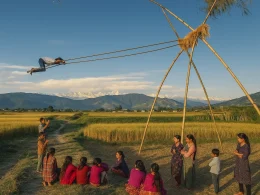



What can a language tell you when it is related to nothing else on earth? Kusunda, spoken by the Kusunda people of central and western Nepal, is a language isolate: linguists have found no convincing relatives for it anywhere. That makes every recorded sentence evidence about a past that has left almost no other trace. It also makes the documentation work urgent, because fluent speakers are now counted on one hand. This article explains what the Kusunda language is, what researchers and Kusunda speakers have established about it, what remains disputed, and how the recording and teaching work is actually organized.
What a language isolate means
Most languages sit in families. Nepali belongs to Indo-Aryan, within the larger Indo-European family. Tamang, Gurung, Newar, Limbu and dozens of others in Nepal belong to Tibeto-Burman. Membership is established through systematic sound correspondences and shared grammatical structure, not loose resemblance between a few words.
A language isolate fails that test against every candidate. Kusunda is one. Basque in Europe is the best known example elsewhere, and Burushaski in northern Pakistan is a regional parallel.


Isolation matters because it implies depth. A language with no demonstrable relatives has either outlived them all or arrived from somewhere whose other languages are gone. Either way, it is a surviving branch of something older than the region’s current linguistic map.
The classification arguments
Kusunda was once loosely grouped with Tibeto-Burman, largely on geographic grounds. The American linguist David E. Watters argued against that, concluding the language is distinct genealogically, lexically, grammatically and phonologically.
Other proposals have linked Kusunda to Munda, to Yeniseian in Siberia, to Burushaski and Caucasian languages, to Nihali in India, and, in Merritt Ruhlen’s work, to an Indo-Pacific grouping including the Andamanese languages. None commands consensus. Long-range proposals of this kind are contested across the field, and the small Kusunda data set makes them especially hard to test.
Readers should treat the isolate label as the current best assessment rather than a closed question. It is what the evidence supports now.
The grammar that makes Kusunda unusual
Two features stand out, and both separate Kusunda from its neighbors.
First, Kusunda has no ergativity. Ergative marking, where the subject of a transitive verb takes a special case ending, is widespread in the region: Nepali uses it, and so do many Tibeto-Burman languages of Nepal. Kusunda instead works with nominative, genitive and accusative cases. In a linguistic area where ergativity is close to a default, its absence is conspicuous.
Second, negation behaves strangely. In a 2014 analysis, Mark Donohue, Bhoj Raj Gautam and Madhav Prasad Pokharel argued that Kusunda has no unambiguous negator for declarative verbal clauses. A suffix -u marks irrealis, roughly meaning an unrealized situation, and can be read either way depending on context. Commands and prohibitions do distinguish polarity, using -go and -nin respectively, and non-verbal negation has its own forms.
A language that seems to lack a plain word for “not” in ordinary statements is the kind of claim that attracts scrutiny, and it has. Treat it as an active research question rather than settled description.
| Form | Meaning |
|---|---|
| tsi | I (first person singular, nominative) |
| nu | you (second person singular) |
| gina | he, she (third person) |
| tok | we (first person plural) |
| nok | you (second person plural) |
Pronouns matter here more than they might elsewhere. Core pronouns are among the most resistant vocabulary to borrowing, so if Kusunda had close relatives, this is where the resemblance would survive. It does not appear.
How the documentation happened
Kusunda was known to outside scholarship from the nineteenth century onward, but working material stayed scarce for well over a century. For long stretches the language was presumed gone.
A turning point came in 2004. Three Kusunda people, Gyani Maiya Sen, Prem Bahadur Shahi and Kamala Singh, traveled to Kathmandu for citizenship paperwork. Researchers at Tribhuvan University established that Gyani Maiya Sen spoke the language fluently, and that several relatives did too. Documentation restarted from there.
Watters produced a mid-sized grammar and vocabulary in 2005, with further work the following year. Uday Raj Aaley, a Nepali researcher who has worked closely with Kusunda speakers for years, compiled a dictionary running past a thousand words, and with Timotheus A. Bodt published a set of 250 concepts in 2020. Aaley also facilitates the teaching program.
Numbers of speakers have moved in both directions as understanding improved. Around 2005, seven or eight fluent speakers were known. Rajamama Kusunda’s death on 19 April 2018 again raised the presumption of extinction. Gyani Maiya Sen-Kusunda, born in 1937 in Dang District, died on 25 January 2020. Her sister Kamala Sen-Khatri, also in Dang, has since been widely described as the last fully fluent speaker.
Census figures, and why they are hard to read
Nepal’s 2011 census recorded 273 Kusunda people. Figures reported from the 2021 census give roughly 253 people identifying as Kusunda, with a far smaller number reporting Kusunda as a mother tongue.
Census mother-tongue data should be read carefully. People report identity and language for many reasons, including pride and the hope of official recognition, and a reported speaker is not necessarily a fluent one. Partial knowledge, a few hundred words and some set phrases, is common and real but does not show up as a separate category.-
The teaching program
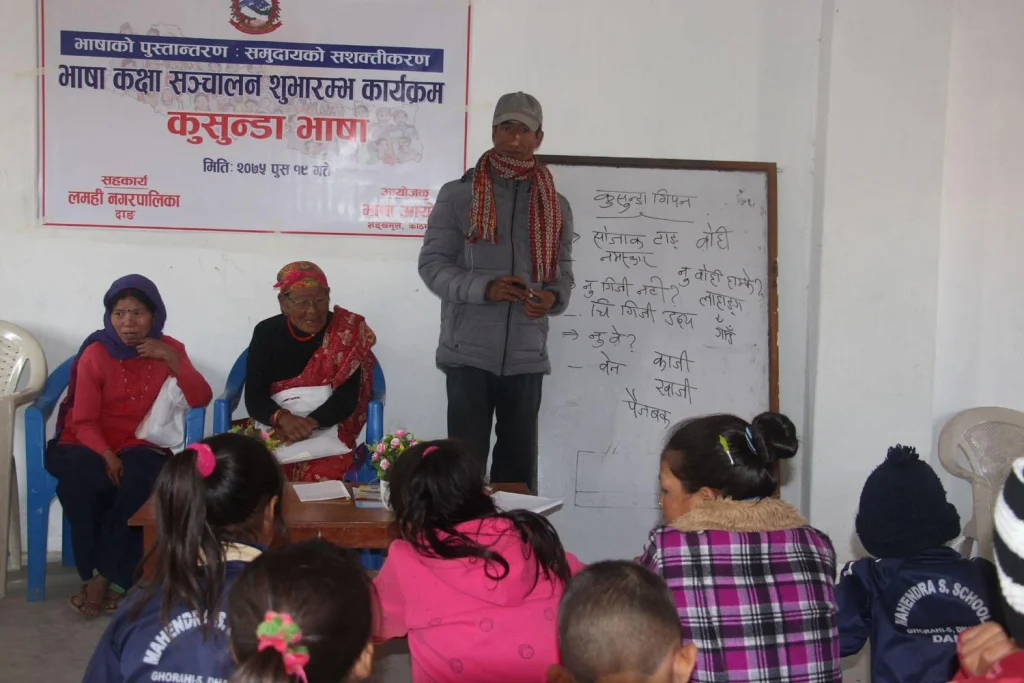
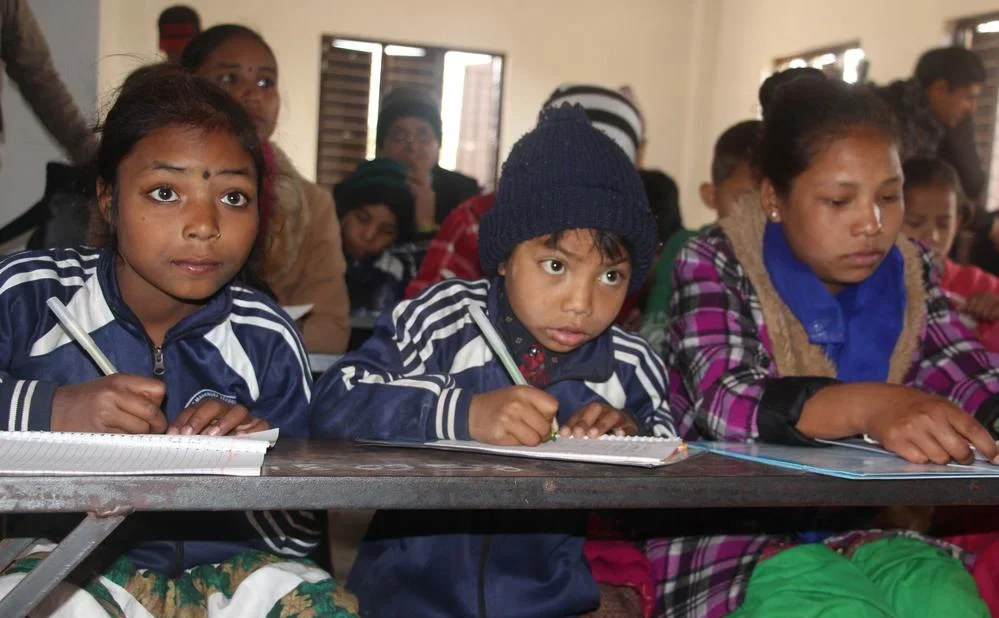
Nepal’s Language Commission has run Kusunda classes in phases, with Gyani Maiya Sen and Kamala Sen-Khatri serving as source persons and Uday Raj Aaley facilitating. Three phases have been completed. Roughly twenty students attended, most of them Kusunda.
Among them is Hima Kusunda, from Pyuthan District, who was twenty and in Class 12 when Nepali Times reported on the program. She and her sister are the only members of their family who know any of the language. Her assessment was measured rather than triumphant: the classes extended the life of the language, she said, but more is needed.
She also made a point that gets lost in coverage focused on word counts. Government support, she said, has made Kusunda people less embarrassed about their identity, and she noted that her father faced harassment she has not. Stigma, not just demography, shaped how the language was transmitted.
Kusunda organizations exist and speak for themselves. The Kusunda Development Society, led by Dhan Bahadur Kusunda, has publicly disputed origin stories attached to the community by outsiders, including a widely repeated account linking Kusunda ancestry to figures from the Ramayana. Those stories circulate in travel writing; they are not the community’s own account of itself.
What revitalization can and cannot do
Honest framing matters here. A language with one fully fluent elderly speaker and a classroom program is not on a path back to daily household use, and no one running the program claims otherwise.
What such programs realistically achieve is worth stating plainly:
- A durable record. Recordings, a dictionary and a grammar outlive any individual speaker, and allow later work even after fluent speech ends.
- Partial competence across a new generation. Greetings, kinship terms, songs and everyday phrases used by people who did not grow up with the language.
- A recognized identity. Official standing changes how a community is treated and how young people relate to their own background.
- A basis for later expansion. Several languages worldwide have been rebuilt into limited community use from archival material, though the results differ sharply from uninterrupted transmission.
Language loss in Nepal is not a Kusunda-specific story. Nepal counts well over a hundred languages, and many of the smaller ones face the same pressure: economic migration, schooling in Nepali and English, and marriage outside the community. Kusunda is unusual only in how far the process has run and in how much is at stake scientifically when it finishes.
Visiting, and why that is the wrong question
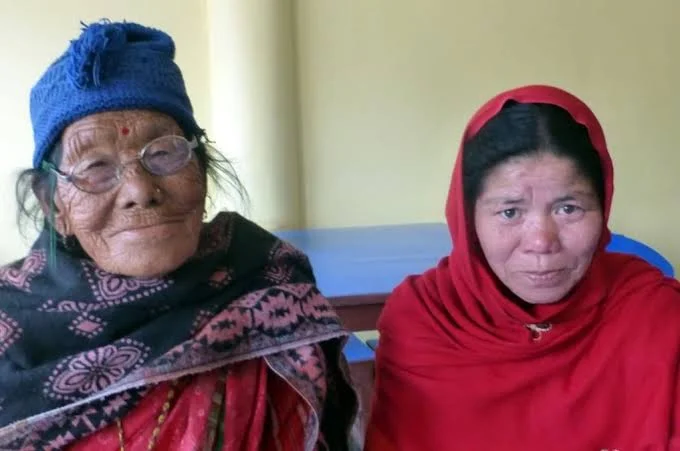
Travelers occasionally ask how to meet Kusunda speakers. It is worth saying directly that the remaining speakers are elderly private individuals, not an attraction, and turning up unannounced to hear a dying language spoken is not neutral behavior.
Readers genuinely interested in supporting this work have better options. Nepal’s Language Commission and academic documentation projects do the recording. Kusunda organizations represent the community’s own position. Where a practice or story is treated as private within the community, the appropriate response is to leave it alone rather than to seek it out.
For background on Nepal’s wider language landscape, see our overview of the many languages spoken in Nepal and our guide to Nepal’s ethnic groups. Our report on the Raute and forest rights covers a different community navigating state policy on its own terms, and Tharu festivals of the Terai looks at living tradition in the lowlands.
Frequently asked questions
How many people still speak Kusunda?
One fully fluent speaker, Kamala Sen-Khatri of Dang District, is widely reported. A small number of people have partial knowledge, and census mother-tongue figures from 2021 are higher but hard to interpret, since reported knowledge is not the same as fluency.
Why is Kusunda called a language isolate?
Because no systematic relationship to any other language family has been demonstrated. It was once grouped with Tibeto-Burman, but David E. Watters argued it is distinct on genealogical, lexical, grammatical and phonological grounds.
Is Kusunda related to Burushaski or Yeniseian?
Those links have been proposed but not established. Long-range proposals of this kind are contested generally, and Kusunda’s limited data makes them particularly difficult to test.
Who are the Kusunda people?
A small community historically associated with forested parts of central and western Nepal, including Dang and Pyuthan. The 2011 census recorded 273 people, and figures reported from 2021 are similar in scale. They are recognized by the Nepali state and have their own representative organizations.
What does Kusunda grammar look like?
It lacks ergative marking, which is unusual in Nepal, and uses nominative, genitive and accusative cases. Negation in ordinary statements is debated: researchers have argued there is no unambiguous negator in declarative verbal clauses.
Is anyone teaching the language?
Yes. Nepal’s Language Commission has run classes in three completed phases with around twenty students, facilitated by researcher Uday Raj Aaley, with Gyani Maiya Sen and Kamala Sen-Khatri as source persons.
Can Kusunda realistically be saved?
Full restoration to daily household use is not a realistic expectation from the current position. A thorough record and partial competence in a new generation are achievable, and both are being pursued.
Can visitors meet Kusunda speakers?
This is not something to arrange. Remaining speakers are elderly private individuals. Readers who want to help should support documentation work and community organizations rather than seek personal access.
Sources used
Reporting on the teaching program and community voices draws on Nepali Times, The last of the Kusunda, and on Global Voices, What does it take to revitalize a dying language?
NepalVue reports on Nepal’s living cultures with care and specifics rather than stereotypes. If this was useful, save it, share it with someone who would find it interesting, and follow NepalVue for more from across the country.