


The historic hill town of Kirtipur holds a deeply rooted place in the Kathmandu Valley. Known for its cobblestone streets, ancient temples, and heroic history, Kirtipur is also famous for its living traditions. Among these spiritual practices, the masked demon guardians called Lakheys stand out as ultimate symbols of protection.
In Newar mythology, Lakheys are carnivorous demons from the ancient forests. Over centuries, these wild spirits transformed into divine guardians of human settlements. In Kirtipur, these sacred masked dancers perform during major festivals to drive away evil spirits, protect children, and bring peace. Understanding the main Lakheys of Kirtipur reveals how mythology, community identity, and spiritual beliefs unite to safeguard an ancient town.
The Sacred Origins of Kirtipur’s Lakhey Guardians
Long ago, Kirtipur relied on supernatural protection against harm, disease, and dark energies. According to local lore, only two primary Lakheys originally guarded the town boundaries. These two legendary figures are well known as the Defaga Lakhey and the Kotajha Lakhey.


Positioned at opposite ends of the settlement, they formed an invisible spiritual wall. Defaga Lakhey guarded the eastern border, while Kotajha Lakhey secured the western entrance. Together, they kept the entire hilltop valley safe from outside threats.
- Defaga Lakhey: Eastern Border | Male Energy | Fierce & Powerful
- Kotajha Lakhey: Western Border | Female Energy | Peaceful & Happy
The Divine Power within the Mask and Ghangali
A Lakhey is far more than a costumed festival performer. In Newar culture, the performer undergoes a profound spiritual transformation upon wearing the sacred wooden mask, known locally as khawpa.
Heavy bronze waist bells, called ghangali, echo rhythmically with every energetic step. Local belief holds that genuine demonic and divine energy resides within these sacred artifacts. When the dancer puts on the mask and fastens the ghangali, the protective spirit takes control, guiding every movement.
Defaga Lakhey and Kotajha Lakhey: The Original Duo
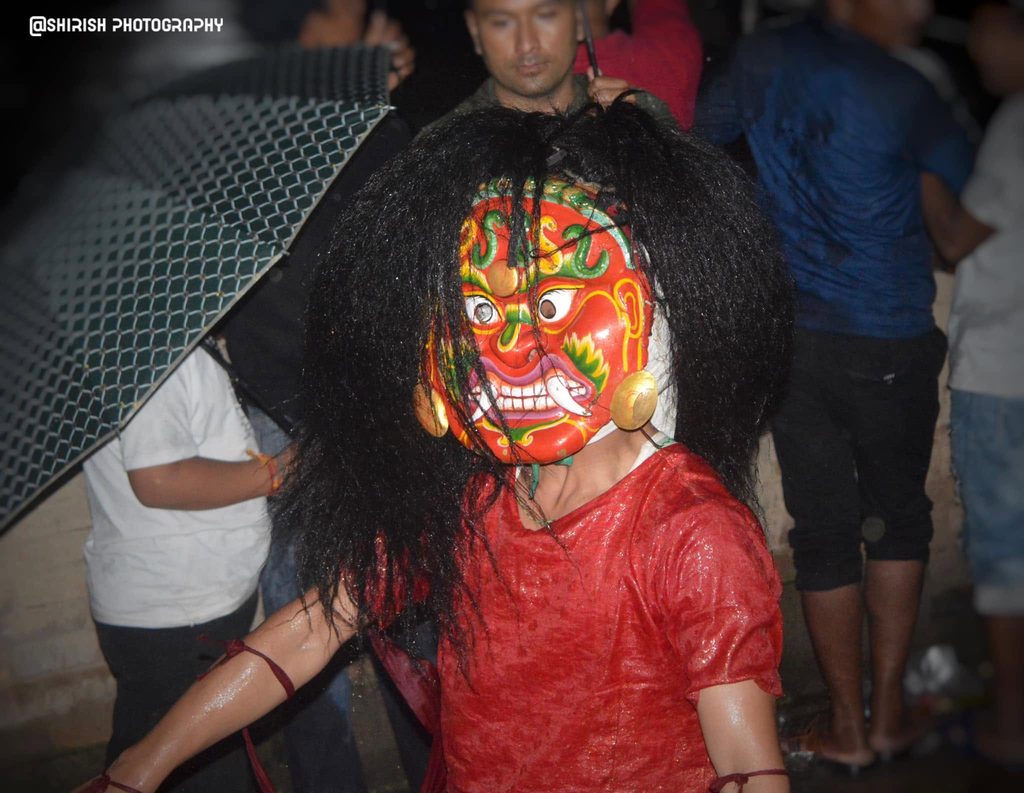
The dual nature of the original guardians reflects the Newar concept of balance between male and female energies. Both entities work together to ensure peace across Kirtipur’s ancient quarters.
Defaga Lakhey: The Fierce Male Guardian
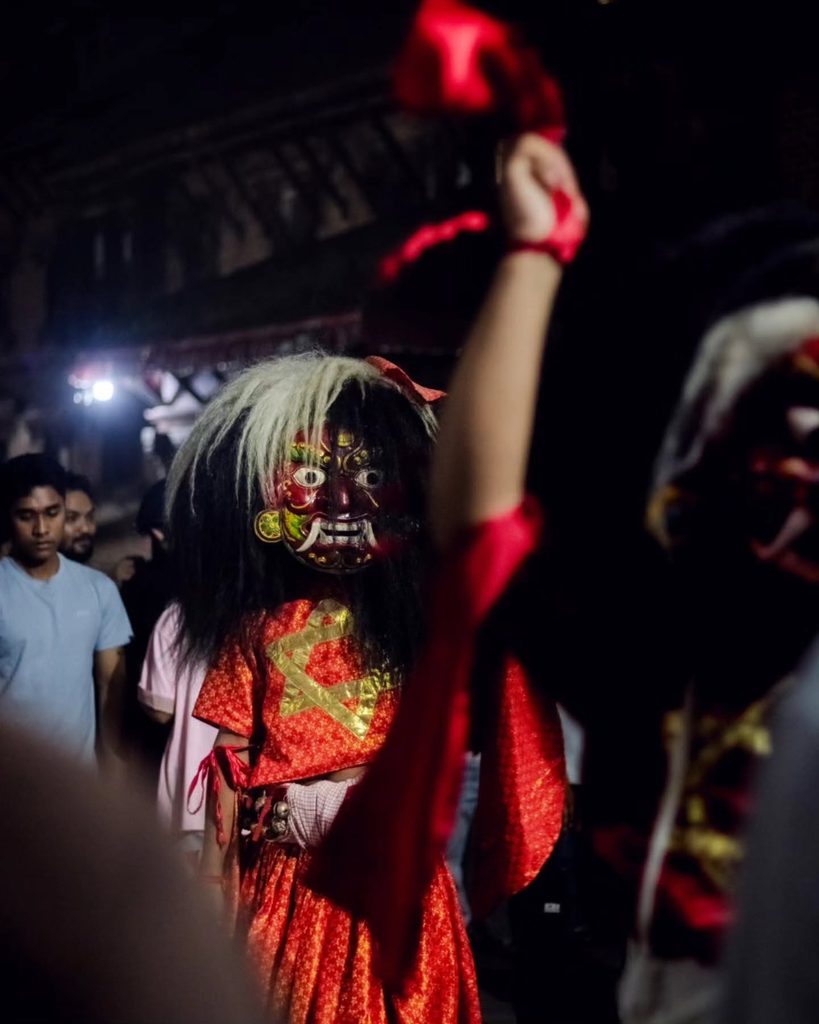
Defaga Lakhey represents the oldest and most powerful male demon guardian in Kirtipur. Known for immense strength and a fiery demeanor, he demands absolute respect from the community.
Before any Lakhey dance begins anywhere in town, performers must worship Defaga Lakhey first. Local legends warn that neglecting his rituals causes severe misfortune or dangerous flames across the community. His wild dance movements showcase unbridled energy meant to intimidate evil forces.
Kotajha Lakhey: The Peaceful Female Spirit
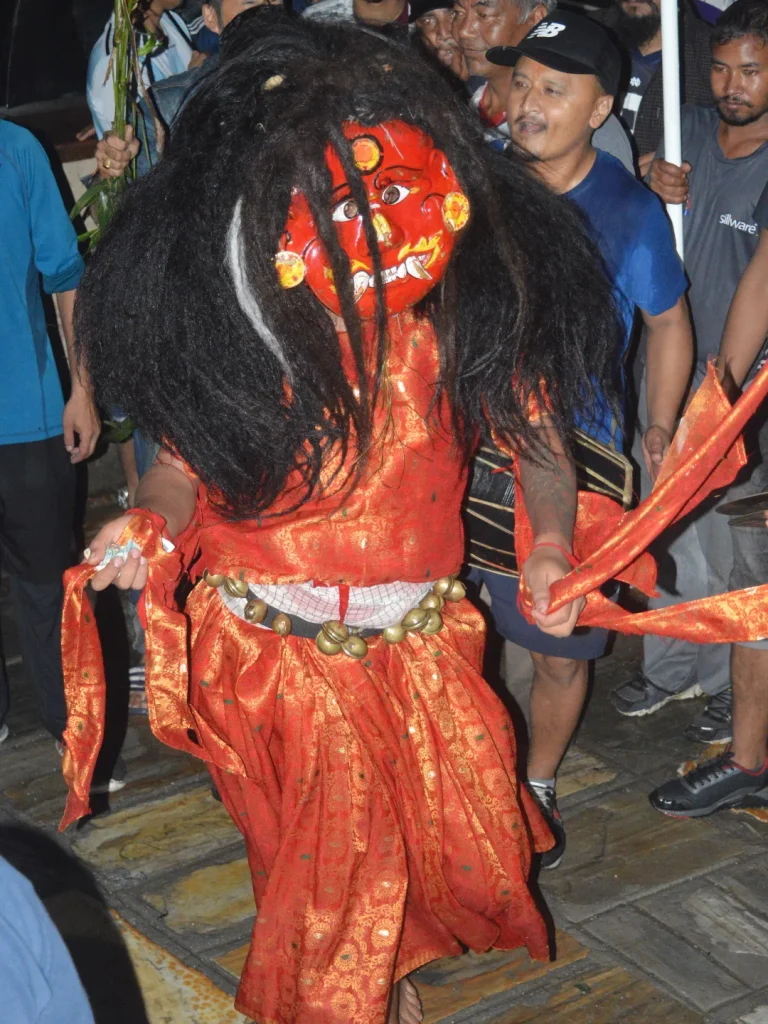
In contrast, Kotajha Lakhey represents the female energy among the main Lakheys of Kirtipur. Guarding the western side, she possesses a calm, peaceful, and cheerful nature.
While Defaga Lakhey embodies intense protective power, Kotajha Lakhey brings joy and harmony. Her dance is graceful yet potent, keeping household spirits balanced and protecting families from illness.
The Evolution of Community Lakheys in Kirtipur
As centuries passed, Kirtipur expanded into distinct neighborhoods called toles. Each quarter desired its own local demon guardian to bless street crossways and community gatherings. Consequently, different guthis (traditional Newar social trusts) formed new Lakhey traditions.
The First Wave: Thambahal and Kutujhol
The first community-led expansion brought forth the Thambahal Lakhey and the Kutujhol Lakhey. Local youth and elders established these groups to lead festivities during Gai Jatra (Sa Paru) and Indra Jatra (Yenya). They honored the traditions established by the original two guardians while building neighborhood pride.
Neighborhood Growth: Gachey, Manatol, Baghbhairav, and Tananii Following the success of earlier groups, several other neighborhoods created their own Lakheys. These include:
- Gachey Lakhey: A prominent guardian from the Gachey quarter known for dynamic footwork.
- Manatol Lakhey: Formed by the Manatol community to protect local streets.
- Baghbhairav Lakhey: Associated with the sacred temple zone of Bagh Bhairab, the supreme deity of Kirtipur.
- Tananii Lakhey: Representing the vibrant Tananii neighborhood during annual city carnivals.
Each neighborhood Lakhey features unique mask features, distinct color schemes, and tailored drum rhythms. Nevertheless, all pay homage to the senior male guardian, Defaga Lakhey.
Cultural Significance of Lakheys in Newar Heritage
In Newar heritage, the Lakhey tradition represents the transformation of wild nature into civilized protection. Instead of destroying the demon, ancient ancestors invited the demon into the community as a guardian.
Frequently Asked Questions (FAQs)
What is a Lakhey in Newar culture?
A Lakhey is a masked demon guardian in Newar mythology. Originally wild, carnivorous forest spirits, Lakheys were transformed through sacred rituals into protective entities that shield communities, drive away evil forces, and bring peace and health during major festivals.
Who are the two original Lakhey guardians of Kirtipur?
The two original guardians are the Defaga Lakhey and the Kotajha Lakhey. Together, they form a spiritual boundary around Kirtipur—Defaga Lakhey guards the eastern entrance with fierce male energy, while Kotajha Lakhey protects the western border with peaceful female energy.
Why must Defaga Lakhey be worshipped before any Lakhey performance begins?
Defaga Lakhey is the oldest and most powerful male guardian in Kirtipur. Out of respect for his immense power, performers must worship him first. Local tradition warns that failing to perform these initial rituals can bring bad luck or fire to the community.
How do the Defaga and Kotajha Lakheys differ in their nature and dances?
- Defaga Lakhey: Represents male energy, intense power, and a fiery demeanor. His dance steps are wild, energetic, and aggressive to intimidate evil spirits.
- Kotajha Lakhey: Represents female energy, harmony, and happiness. Her dance is graceful and cheerful, aimed at blessing households and protecting families from disease.
What are khawpa and ghangali, and why are they important?
Khawpa refers to the sacred wooden mask, and ghangali are the heavy bronze waist bells worn by the dancer. In Newar tradition, these are not just costume pieces; they hold genuine spiritual energy. When the dancer wears them, the protective spirit takes control of their movements.
Why are there so many neighborhood (tole) Lakheys in Kirtipur today?
As Kirtipur expanded over time, individual neighborhoods (toles) wanted their own local guardians to bless their streets and lead celebrations during festivals like Gai Jatra and Indra Jatra. Traditional social trusts (guthis) formed new groups, starting with Thambahal and Kutujhol, and expanding to Gachey, Manatol, Baghbhairav, and Tananii.
Which major festivals feature the Lakhey dances in Kirtipur?
Lakheys perform primarily during key Newar festivals such as Gai Jatra (Sa Paru) and Indra Jatra (Yenya), as well as during annual city carnivals and major religious gatherings.