



Ask most guidebooks what Nepal eats during Dashain and you get one answer: goat curry. That answer is not wrong, but it describes maybe half the country. Dashain food in Nepal shifts sharply as you move from a Bahun kitchen in Gorkha to a Newar courtyard in Patan, a Tamang village above Dhading, or a Tharu household in Bardiya. Some families cook mutton for three days straight. Some eat no meat at all. Others barely mark Dashain and save their biggest cooking for Tihar, or for a festival outsiders have never heard of. This guide explains what actually appears on festival tables across Nepal in October and November, and why the variation matters more than any single menu.
The 2026 Calendar, and Why It Shapes the Cooking
Dashain in 2026 runs from Ghatasthapana on October 11 to Kojagrat Purnima on October 25. Vijaya Dashami, the tika day when most households gather, falls on Wednesday, October 21. Tihar follows about two and a half weeks later, from November 7 to November 11, with Laxmi Puja on November 8 and Bhai Tika on November 11.
Those dates matter to a traveler because the cooking is not evenly spread. Most of the serious eating clusters on three or four days: Maha Ashtami and Maha Navami, when many households that keep the practice slaughter or buy meat, Vijaya Dashami itself, and Bhai Tika. In between, kitchens go relatively quiet. If you arrive in Kathmandu on October 14, you will find the city emptying and restaurants closing rather than groaning tables.


Day arrangements shift with the lunar calendar. In 2083 BS most patros place Kukur Tihar and Laxmi Puja together on November 8, with Gai Tihar on its own day after. Check a current Nepali calendar before planning around any single day.
What Most Hill Hindu Households Cook for Dashain
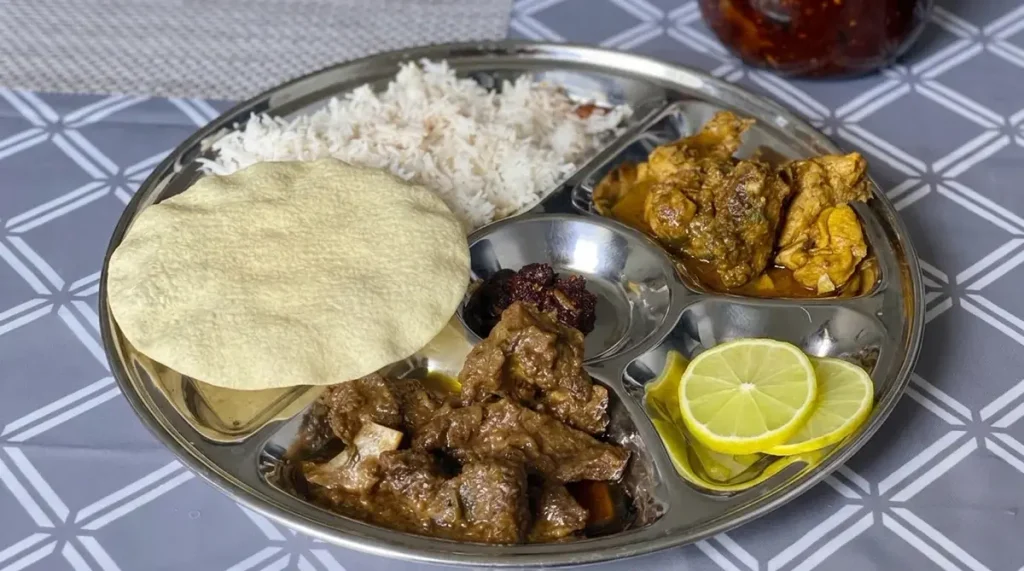
Among Bahun and Chhetri families across the hills, and among many other Hindu households, the shape of the Dashain meal is fairly consistent. Rice, a meat curry, black lentils, a seasonal green, and achar. Simple on paper, but the details carry weight.
Khasi ko masu and the Navami connection
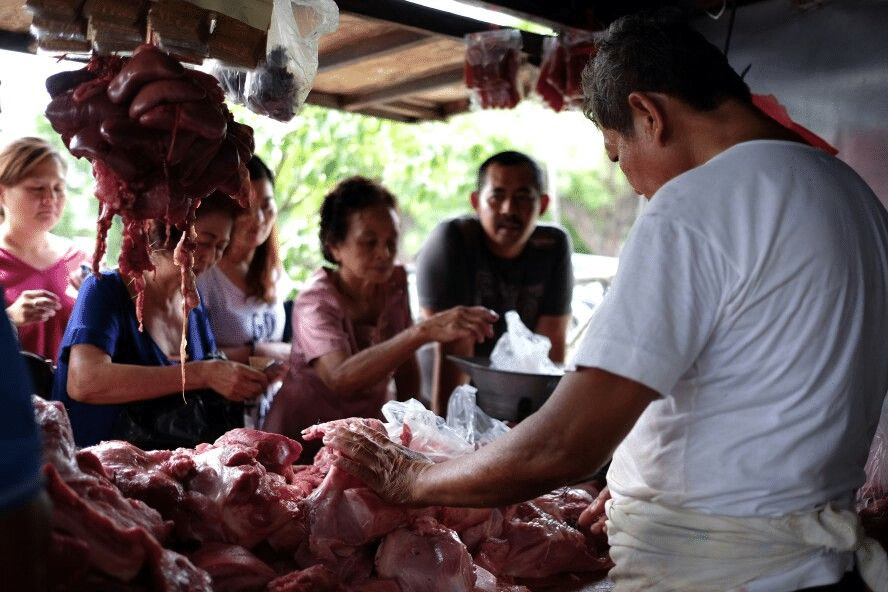
Goat curry, khasi ko masu, is the centerpiece for families that eat meat. Many households buy a share of an animal collectively with neighbors or relatives, which is why butcher lanes in Kathmandu, Pokhara and Butwal are chaotic in the three days before Dashami. Prices climb steeply in that window. Expect goat meat to run well above its ordinary rate during festival week, and expect that rate to vary by town.
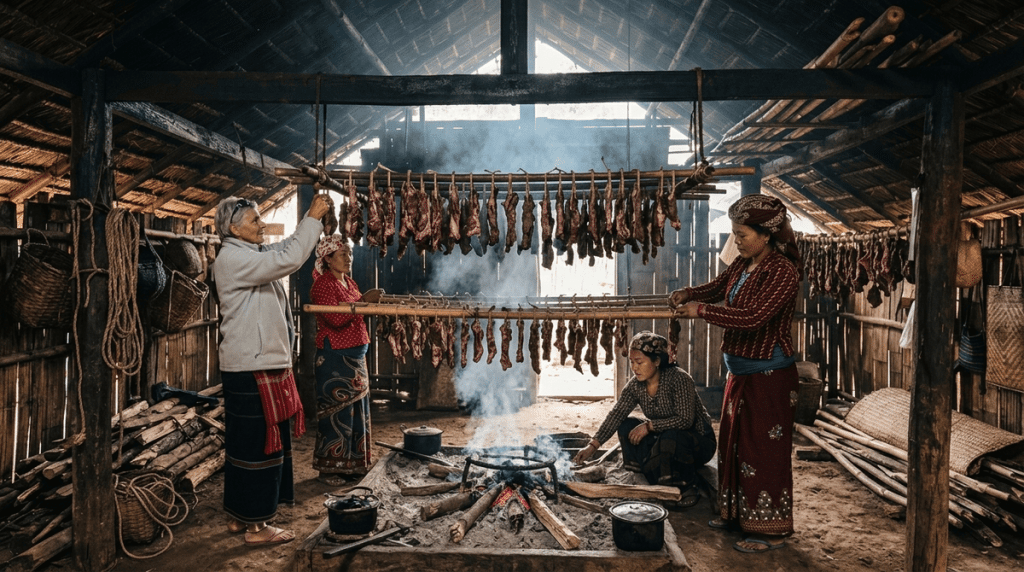
Not every cut goes into curry. Sukuti, dried and spiced meat, gets made from the surplus and eaten for weeks afterward. Bhutan, a fried preparation of liver, lungs and other organ meat, appears as a snack alongside drinks. Some families make a lighter pakku, slow cooked with minimal spice, for elders and children.
The vegetarian half of the picture
Plenty of households keep Dashain entirely vegetarian. Widows in many traditional families avoid meat, as do observant Vaishnav households and a growing number of urban families making the choice for their own reasons. In those kitchens, Dashami lunch means kheer, rice pudding cooked with cardamom and ghee, alongside aloo ko achar, black eyed peas, and seasonal vegetables. Kheer is common in meat eating households too, served after the tika.
Never assume your host eats meat. A polite question before you bring a gift of food avoids an awkward moment.
Sel Roti, and Why It Belongs to Tihar More Than Dashain
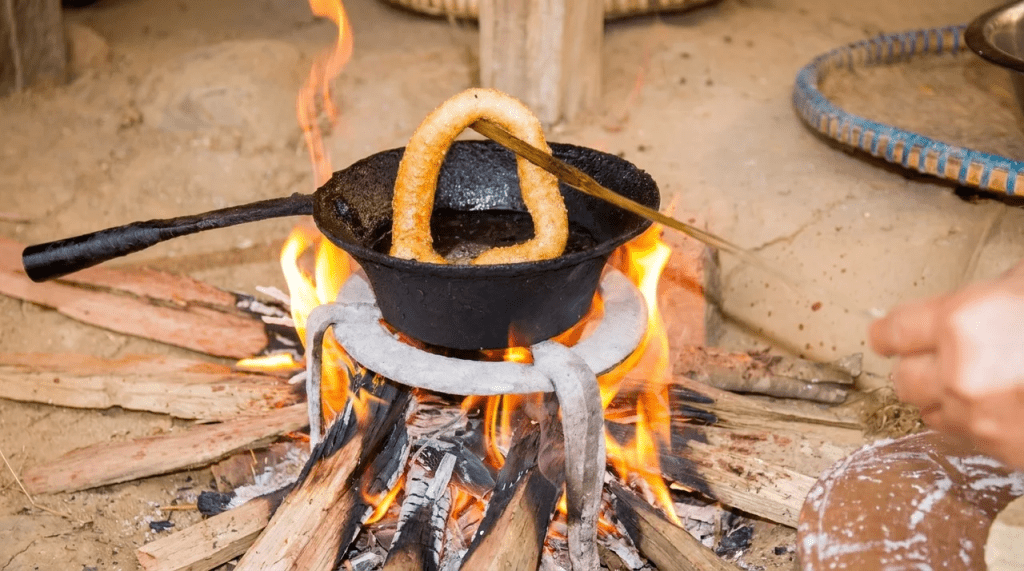
Sel roti is the ring shaped rice bread that shows up on almost every Nepali festival photo essay. It is made from rice flour, sugar, ghee and often a little banana or yogurt, then poured in a circle into hot oil. Getting the ring even takes practice, and older women in a household are usually the ones who can do it without breaking the circle.
Travelers often associate it with Dashain. Its strongest association is with Tihar, especially the Laxmi Puja and Bhai Tika days, when it is made in quantity, given to visiting relatives, and offered to deusi and bhailo groups. Families in the eastern hills, among the Limbu and Rai in particular, also make it for weddings and for Sakela. Our full explainer on how sel roti is made and where it comes from covers the technique in more detail.
Newar Kitchens: A Different Festival Entirely
For Newar families, the five days of Tihar are Swanti, and the emotional center is not Bhai Tika but Mha Puja, the worship of the self, which also marks the Nepal Sambat new year. In 2026 that falls on November 10, opening Nepal Sambat 1147.
Food at Mha Puja is ritual first and meal second. Sagan, the ceremonial set of boiled egg, fish, meat, lentil cake and rice wine, is presented to each family member in a fixed order. Samay baji, the platter of beaten rice, choila, black soybeans, ginger, garlic and other items, is both offering and food. Eating it correctly has its own etiquette, which we cover in our guide to samay baji and how to eat it respectfully.
Newar Dashain cooking is also distinct. Kuchi bhwey, a feast served on banana leaf with several varieties of lentil, gundruk, soybeans and yogurt, appears at some households. For broader context on the cuisine, see our Newari culture and cuisine guide.
Himalayan and Buddhist Communities
Among several Himalayan communities, Dashain is a minor event or not observed at all. Sherpa, Thakali, Manangi and many Tamang and Gurung households treat Lhosar as their major annual feast, not Dashain. Where they do cook for the October period, the food follows their own kitchens rather than the hill Hindu template.
Pork features heavily in many Tamang households, marinated with ginger, garlic and timur, then slow cooked. Khapse, crisp fried dough pieces, and homemade raksi or chhaang accompany it. Gundruk and fermented greens sit alongside. For Thakali families, the festival plate leans on their well known dal bhat set, with buckwheat, dried mutton and tomato achar.
Framing these as variations on a Dashain menu misses the point. They are separate traditions that happen to share a season. Our overview of Nepal’s ethnic groups and their traditions gives more background on who observes what.
The Terai: Tharu and Madhesi Tables
In the Terai, festival food follows the plains and the rivers. Tharu households cook ghonghi, freshwater snails simmered with spices and eaten by sucking the meat from the shell, a dish few visitors expect and many end up liking. Andik bhaat, a sticky rice preparation, and telpaur roti, a fried bread, appear alongside. Sidhara, a pungent sun dried cake of taro stems and small dried fish, gets pounded into chutney. As the weather cools, bhakka, a steamed rice cake, becomes an everyday comfort.
Madhesi households across the eastern and central Terai orient their biggest cooking toward Chhath rather than Dashain. Thekua, a wheat and jaggery biscuit fried in ghee, is prepared in large batches as prasad. Fruit offerings, sugarcane and rice based sweets form the core of the ritual food. Treating that cooking as a footnote to Dashain gets the priorities backward for a large share of Nepal’s population.
Comparison: Festival Food Across Communities
| Community context | Main festival focus | Typical festival dishes | Meat practice |
|---|---|---|---|
| Bahun and Chhetri, hills | Dashain, Vijaya Dashami | Khasi ko masu, kheer, aloo ko achar, sukuti | Goat common, many vegetarian households |
| Newar, Kathmandu Valley | Mha Puja and Swanti | Samay baji, sagan, kuchi bhwey, choila | Buffalo, duck, goat, fish depending on caste and household |
| Tamang, Gurung, hill Buddhist | Lhosar, Tihar in parts | Marinated pork, khapse, gundruk, sel roti | Pork common, buffalo in some households |
| Sherpa, Thakali, Manangi | Lhosar | Thukpa, dried mutton, buckwheat dishes, khapse | Yak, mutton, varies by altitude and access |
| Tharu, western Terai | Maghi and local observances | Ghonghi, andik bhaat, sidhara, bhakka | Fish, snail, pork and goat depending on household |
| Madhesi, eastern and central Terai | Chhath | Thekua, fruit prasad, rice sweets | Largely vegetarian during Chhath observance |
What a Traveler Can Realistically Eat
Here is where most visitors go wrong. Festival food in Nepal is home food. It is cooked for family, offered to deities, and shared with relatives who have traveled back to a village. Restaurants are not the primary venue, and many close outright for several days around Dashami and Bhai Tika.
Your realistic options fall into a few categories.
- An invitation. The best festival meal you will eat in Nepal is one you are invited to. Guides, homestay hosts and Nepali colleagues often extend invitations during this period. Accept if offered, bring fruit or sweets, and eat with your right hand if you are comfortable doing so.
- Homestays. Community homestays in places like Panauti, Bandipur and the Chitwan buffer zone often cook their own festival food for guests. Booking one over Dashain or Tihar gets you closer to a real household table than any restaurant will.
- Newari restaurants in the Valley. Some stay open through the period and serve samay baji and choila year round. Availability during festival days varies, so call ahead rather than assuming.
- Street sweets and bakeries. Sel roti, lakhamari and jeri swari appear at bakeries and street stalls around Tihar in particular. Our Nepali street food guide covers what to look for.
One practical warning about meat. Slaughter volumes spike during Dashain week, refrigeration is inconsistent, and meat sometimes sits longer than it should. If you have a sensitive stomach, this is not the week to try roadside organ meat. Cooked-to-order, hot, and from a place with turnover is the rule.
Drinks, and the Part Nobody Writes About
Alcohol has an uneven place in festival cooking. In many Janajati households, homemade raksi and jaand or chhaang are part of the ritual itself, offered to deities and to guests. In many Bahun and Chhetri households, especially observant ones, alcohol is kept away from the puja space entirely and may not be served at all.
Read the room. Offering to bring a bottle to a host you do not know well can land badly. Bringing fruit, sweets or good quality tea never does.
Cooking Labor and Who Does It
Worth saying plainly: festival cooking in most Nepali households falls on women, and it is heavy work. Days of preparation, large quantities, guests arriving at unpredictable hours. If you are a guest, offering to help is usually declined, but the offer is noticed. Eating what you are served without commentary, and not asking for substitutions in someone’s home, is basic courtesy.
Frequently Asked Questions
Is Dashain food always non-vegetarian?
No. Many households keep Dashain entirely vegetarian, whether by tradition, personal belief or family circumstance. Kheer, aloo ko achar and seasonal vegetables form a complete festival meal in those kitchens. Assuming meat is universal is one of the most common mistakes visitors make.
What is the single most representative Dashain dish?
There is not one, and that is the honest answer. If you forced a choice for hill Hindu households, khasi ko masu with rice. For Newar households, samay baji. For a Tharu family, ghonghi. Nepal does not have a single national festival plate.
Can I find festival food in restaurants?
Partly. Newari restaurants in the Kathmandu Valley serve samay baji and choila year round, and bakeries sell sel roti and sweets around Tihar. Many restaurants close for several days around Vijaya Dashami and Bhai Tika, so check before you travel and keep a backup plan.
When is sel roti actually made?
Most heavily during Tihar, and in many eastern hill households for weddings and other occasions too. It appears during Dashain in some families, but its strongest association is with the Tihar days, particularly Laxmi Puja and Bhai Tika.
What should I bring if I am invited to a Dashain meal?
Fruit, a box of sweets, or good tea. Avoid alcohol unless you know the household drinks. Do not bring meat. Arrive when you said you would, and expect to be fed more than you want.
Is it rude to decline food at a Nepali festival meal?
Declining outright can disappoint a host, but dietary limits are understood. Say clearly and early that you do not eat a given item rather than leaving it on your plate. Accepting a small portion of something and finishing it reads better than refusing the plate.
Do Buddhist communities in Nepal cook for Dashain?
It varies. Many Himalayan Buddhist households observe Dashain lightly or not at all, and reserve their major feasting for Lhosar. Others, particularly Tamang and Gurung families with close ties to hill Hindu neighbors, mark both. Traditions vary by community and region.
Is food more expensive during Dashain and Tihar?
Meat prices rise noticeably in the days before Vijaya Dashami, and transport costs push up produce prices in parts of the hills. Restaurant prices in tourist areas generally hold steady, but supply of specific items can get thin when suppliers close.
Before You Go
If you are traveling in Nepal this October and November, read our full Dashain guide and Tihar guide alongside this one. For background on the wider cuisine, the traditional Nepali dishes overview is a useful starting point. Reporting from The Kathmandu Post on community by community festival cooking is worth reading in full.
Save this guide before you travel, and pass it to anyone heading to Nepal during festival season. Follow NepalVue for more on the country’s food, culture and regions beyond the usual trekking routes.


