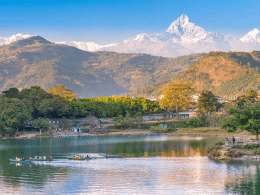



Some places earn their reputation slowly. Baraha Pokhari in Khotang is one of them. The lake sits on flat ground, ringed by forest and hills on every side. It has no visible inlet. It has no visible outlet either. Nevertheless, the water level barely shifts across twelve months. Locals have noticed that for generations, and it forms the core of the site’s mystique.
Consequently, the Government of Nepal listed Baraha Pokhari among the country’s 100 tourism destinations. That decision put a remote Khotang lake on the national map.
This guide covers what Baraha Pokhari actually is. It also covers how to reach it, when to go, and one problem nobody promotes.


Where Baraha Pokhari Is
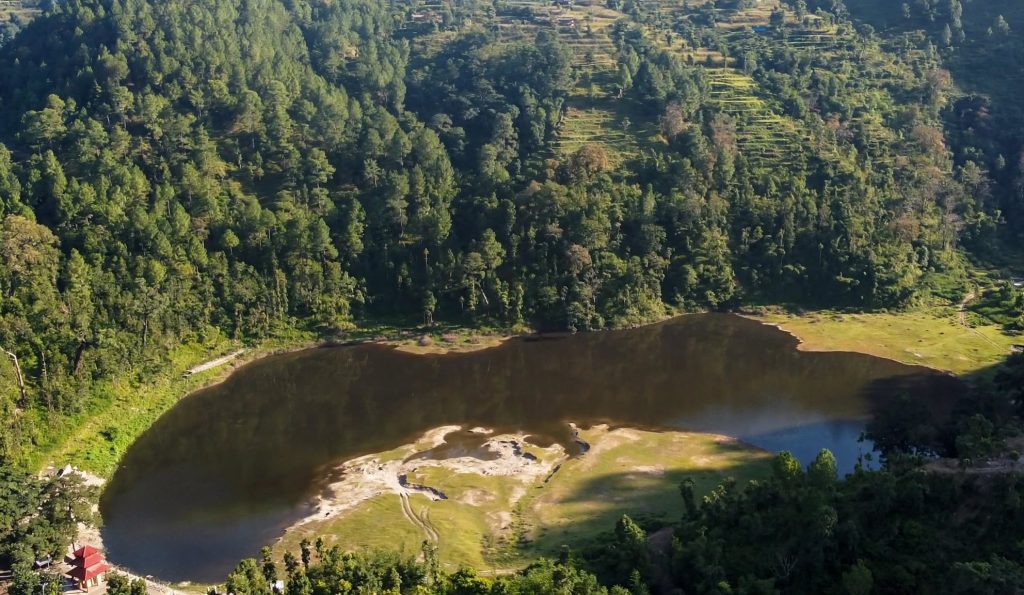
The lake lies in Barahapokhari Rural Municipality, ward 1, in Khotang district of Koshi Province.
The rural municipality itself is named after the lake. It was formed in March 2017 by merging six former VDCs: Pauwasera, Phaktang, Barahapokhari, Mauwabote, Saunechaur and Suntale. Its seat is Baghkhor Bhanjyang.
Positionally, the lake sits roughly 16 kos south of Diktel Bazaar, the district’s main commercial centre. Local government figures put the road distance from Diktel at around 67 km.
A note on elevation. Published figures disagree sharply. Some sources say about 1,700 metres, while others say about 1,015 metres. No authoritative survey figure is easy to find. Treat any single number with caution until the municipality publishes one.
The Lake Itself: What Makes It Unusual
Three things set Baraha Pokhari apart.
No visible inlet or outlet. Water enters and leaves through no stream anyone can point to. This is the detail that draws hydrology-minded visitors and fuels local belief alike.
A stable water level. The lake’s volume looks the same in Baisakh as in Mangsir. In a country where monsoon transforms almost every water body, that consistency stands out.
Green water year round. The colour comes from the surrounding forest and the lake’s depth profile. Devotees, however, read it as a mark of sanctity. Bathing here is believed to grant moksha.
On size, be careful. Reported dimensions vary widely. One news report gives 330 metres long by 210 metres wide. Another source gives 800 metres by 500 metres. A figure of “five square kilometres” also circulates, but it contradicts both measurements. Until a proper survey exists, describe the lake as a substantial mid-hill pond rather than quoting a number.
The Red Fish: What Is Actually Known
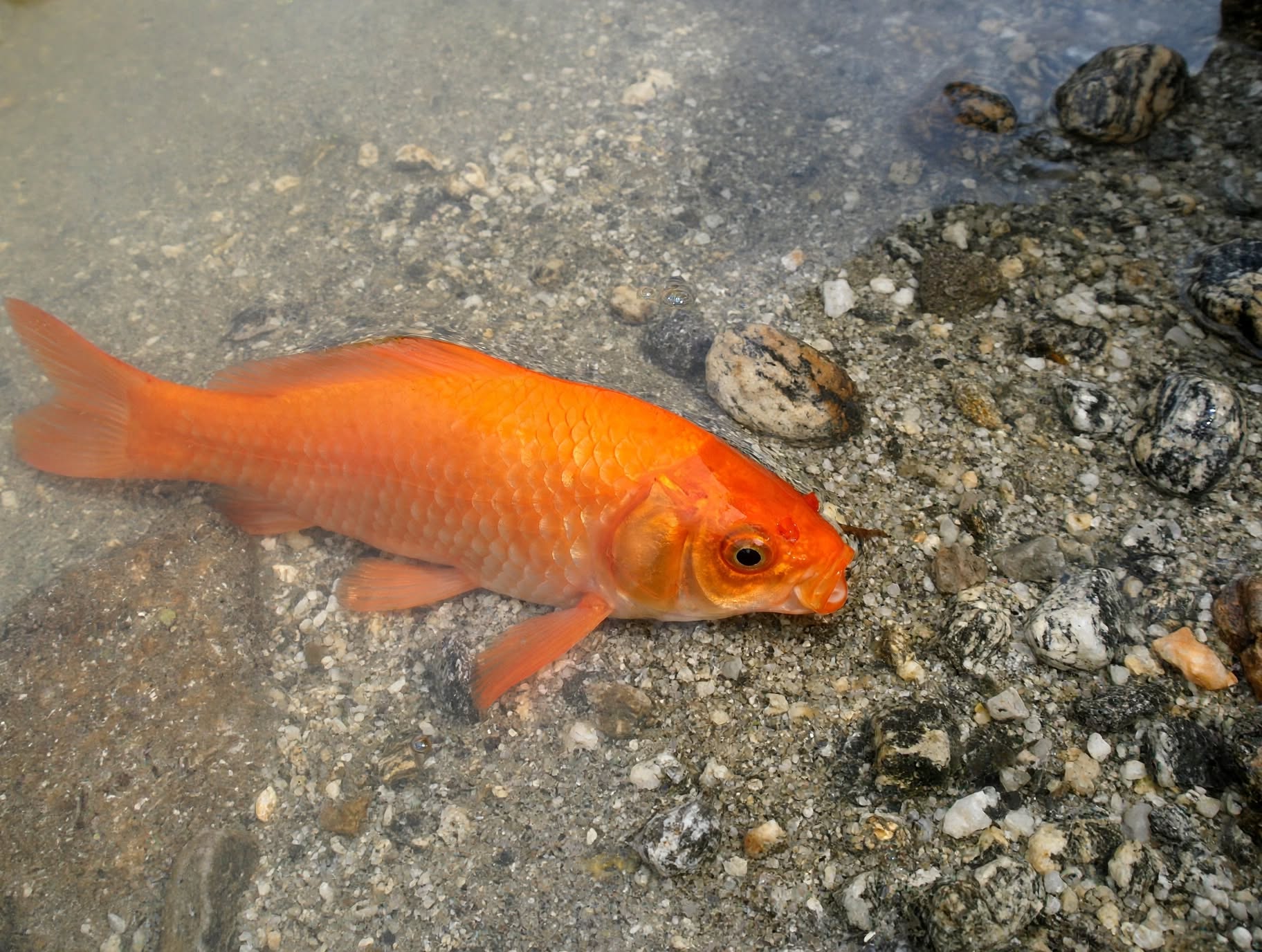
Deep in Nepal’s Baraha Pokhari, local stories speak of a striking red fish found in the lake’s waters. Some reports have even described it as globally endangered. But how much do we actually know about it?
The claim is intriguing. Yet before calling the fish globally endangered, or endemic to Baraha Pokhari; there is an important question: what does the scientific record actually say?
Here is what does not exist. No published species name. No scientific study. No IUCN assessment. No survey by any fisheries body that is publicly available.
Furthermore, Hongma Pokhari in the same district also reports red fish in its waters. Therefore, describing the Baraha Pokhari fish as endemic goes beyond the evidence.
This is not a reason to dismiss it. On the contrary, it is a genuine research gap. A properly documented survey would strengthen the lake’s conservation case considerably.
The Legend of the Twelve Sunken Houses
Baraha Pokhari’s folklore is more specific than most retellings suggest.
According to the local legend, a fish once emerged from the hearth of a house. The household roasted it and ate it. Afterwards, water burst out from that spot. It rose until it had submerged twelve houses of a Magar settlement. What remained was the lake.
The story carries a clear moral shape. A sacred creature is consumed, and the settlement pays for it. Variations of this pattern appear in Kirat and Magar oral tradition across the eastern hills.
A second explanation exists for the name. Some accounts link Baraha to Varaha, the boar incarnation of Vishnu who rescued the earth from the demon Hiranyakashipu. That reading gives the site straightforward Hindu significance.
Both stories circulate together. Consequently, the lake sits at a meeting point of Kirat, Magar and Hindu traditions. That layering is arguably more interesting than either story alone.
Barahmai and Shankheshwar: The Temples
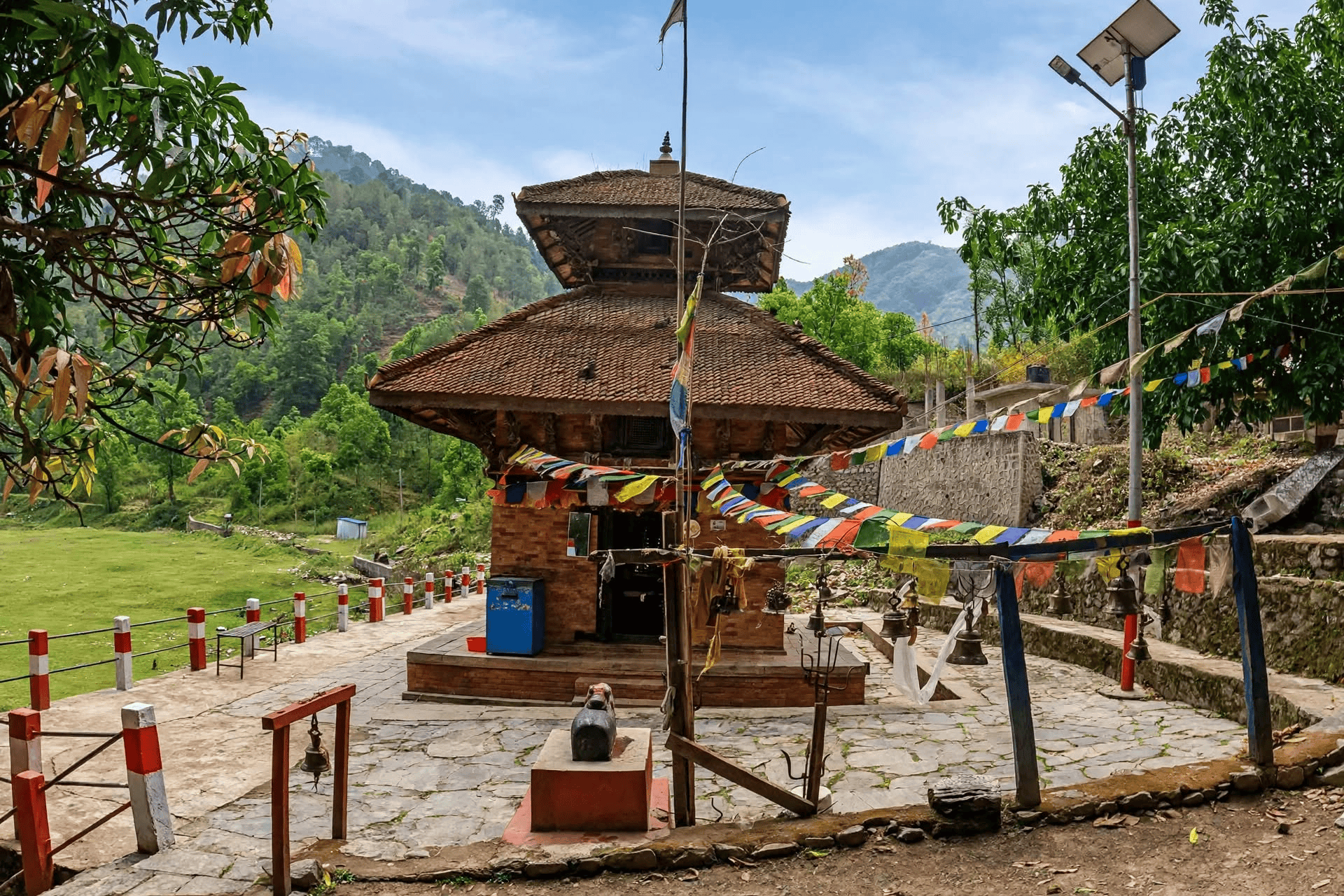
Two shrines stand on the southern side of the lake.
Barahmai and Shankheshwar Mahadev are the focus of worship here. Devotees believe that praying at both fulfils what a visitor has wished for. That belief drives most of the pilgrimage traffic.
Both temples were rebuilt with public money. In fiscal year 2073/74, roughly Rs 6 million came from the constituency development fund of the then MP Bishal Bhattarai. The same budget funded boats for the lake.
Rituals: Pigeons, Bathing and Seed Offerings
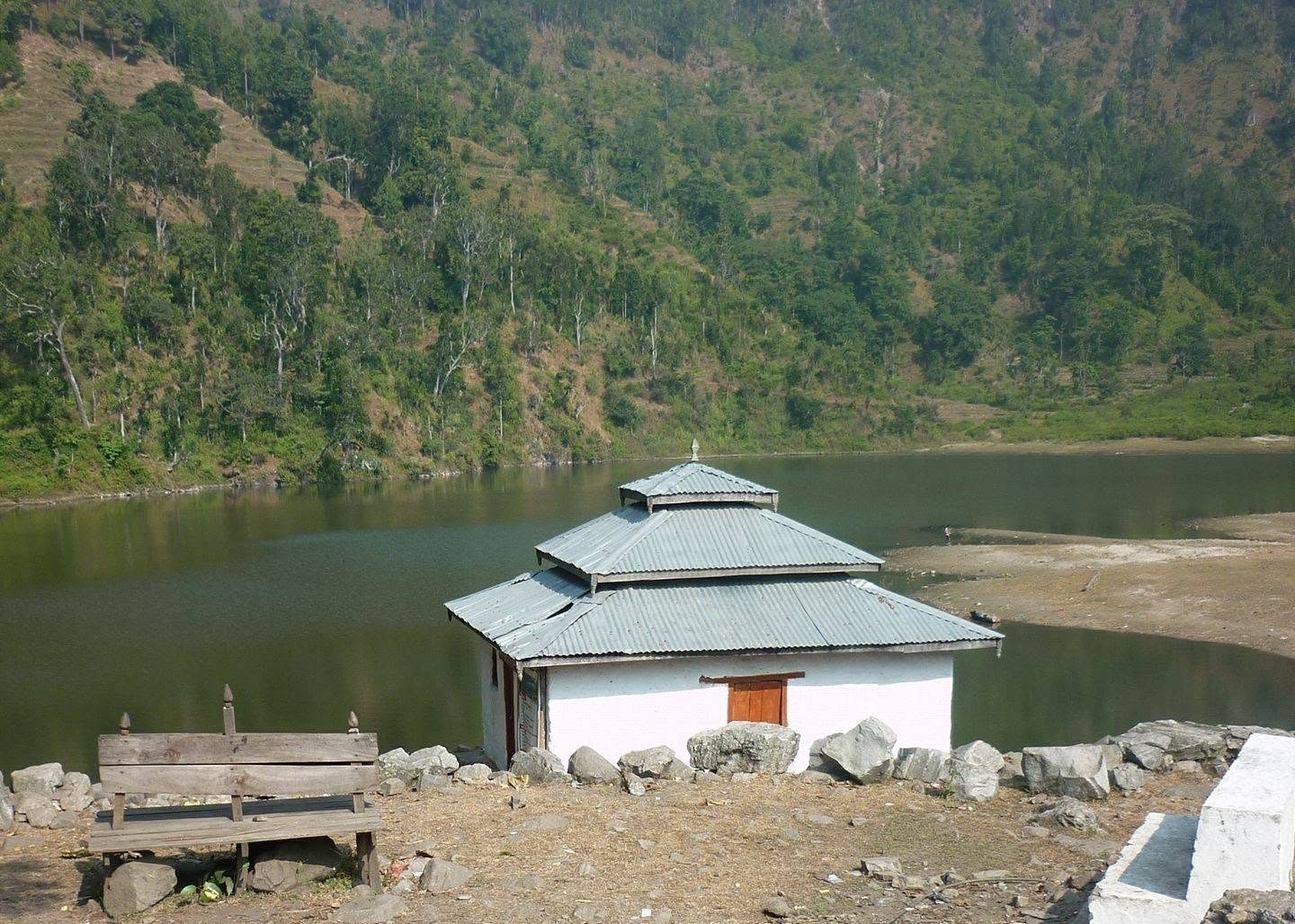
The ritual life at Baraha Pokhari is distinctive, and worth knowing before you arrive.
Flying pigeons for peace. Visitors release a pair of temple pigeons. The act is understood as a prayer for peace in one’s life.
Ritual bathing. Devotees bathe in the lake for purity before worship. Many also believe the bath brings moksha.
Prayers for children. Couples who have not conceived after long marriage come here specifically. Worship at the site is believed to grant children.
Scattering shatbeej. On Ram Navami, Shivaratri, Balachaturdashi and Maghe Sankranti, devotees scatter seed offerings into and around the lake. This is the specific practice on those days, rather than general puja.
The Haribodhini Ekadashi Mela
The lake’s biggest event falls on Haribodhini Ekadashi, in Kartik.
Get the duration right, because most write-ups do not. The mela itself runs for around a week. Separately, Barahapokhari and Jantedhunga rural municipalities have declared two-day public holidays for it. Those are two different things.
The crowd has a particular character. Dhami and jhankri, or traditional shamans, gather here in large numbers during the mela. For anyone interested in Kirat and hill ritual practice, that makes Haribodhini Ekadashi the single best time to visit.
Smaller gatherings occur on Ram Navami, Shivaratri, Balachaturdashi and Maghe Sankranti.
How to Reach Baraha Pokhari
Access is genuinely remote, though improving. Three main approaches exist.
From Diktel Bazaar (Khotang). On foot, this takes about two days. The route runs Diktel, Temma, Chuichumma Boflu, Chhitapokhari, Chipring, Indreyanipokhari, then Khotang Bazaar. After crossing the Sawa Khola, the lake is roughly three hours further.
From Udayapur. Travel via Buwanjorghat and Kulabadh, on the Sunkoshi at the Khotang–Udayapur border. This is the river-side approach.
From Bhojpur. Go via Panchdhare, then cross Chisapani to reach the lake.
Road access to Barahapokhari Rural Municipality has expanded since these routes were documented. Therefore, check current conditions locally before assuming a two-day walk is still necessary. Monsoon damage regularly changes what is drivable.
Where to Stay and What to Eat
Accommodation is simple but adequate. Local-style hotels and lodges operate around the lake, so finding a bed is not usually a problem.
The food is the better story. Alongside standard meals, guesthouses serve sel roti, sibaltarul and ghartarul. The latter two are wild yams, dug locally and cooked plainly. They are seasonal rather than always available.
If you want to eat well here, ask what came out of the ground that week.
Boats and Visitor Numbers
Three boats operate on the lake for visitors. Fees collected from boat rides go to the lake management committee, which spends them on upkeep. It is a small but functional community tourism model.
As for footfall, local residents estimated around 300 domestic and foreign visitors daily as of 2019. That figure is a local estimate rather than an official count, and it is now several years old.
The Problem Nobody Promotes: Siltation
Any honest guide to Baraha Pokhari has to include this.
Monsoon floods wash stone, soil and sand down from the slopes above the lake. That debris, known locally as gegar, has been accumulating for years. According to the local ward chair, Dhak Bahadur Karki, roughly half the lake has been buried by it.
The consequence is visible. The lake’s shape has changed, and its appearance has degraded from the edges inward.
This matters for two reasons. First, it affects what visitors actually see. Second, it undermines the very features that earned the national listing. A lake celebrated for a constant water level cannot absorb indefinite sediment loading.
Any serious conservation plan would need upstream check dams and catchment management. So far, publicly reported investment has gone into temples and boats instead.
Combining Baraha Pokhari With Other Khotang Sites
Baraha Pokhari works better as part of a wider Khotang circuit than as a standalone trip.
Halesi Mahadev is the district’s biggest draw. The cave shrine is sacred to Hindus, Buddhists and Kirat communities alike.
Temke Danda, on the Khotang–Bhojpur border, sits at about 3,010 metres. A view tower is under construction there.
Hongma Pokhari, in Jantedhunga Rural Municipality, is another lake with reported red fish.
Other local destinations include Jantedhunga, Kepilasgadhi, Maiyung, Chilimdhunga, Rupakot and Bahanepokhari. Khotang’s local governments have been developing infrastructure across these sites, and New Year visitor numbers have risen accordingly.
Practical Tips
Go in Kartik for culture. Haribodhini Ekadashi delivers the full ritual spectacle.
Go in spring for weather. Baisakh brings clear skies and manageable trails.
Avoid peak monsoon. Trails deteriorate, and flood debris makes the lakeside less appealing.
Carry cash. ATMs are not a realistic assumption in this part of Khotang.
Book nothing in advance. Local lodges do not generally take online reservations. Arrive and ask.
Respect the water. People bathe here as an act of worship. Treat the lake as a shrine rather than a swimming spot.
Ask before photographing rituals. Dhami and jhankri practice during the mela is not a performance for visitors.
Conclusion
Baraha Pokhari Khotang is a real destination rather than a manufactured one. A lake with no visible inlet or outlet, a legend about twelve sunken houses, and a shaman-heavy mela in Kartik are not things you can invent for a brochure.
However, the site is also under-documented and under-protected. Its fish has no published science behind it. Its size figures contradict each other. Half of it is filling with silt.
That combination is the honest pitch. Baraha Pokhari deserves visitors, research and a catchment plan. Go, but go with your eyes open.
Frequently Asked Questions
Where is Baraha Pokhari located?
In Barahapokhari Rural Municipality ward 1, Khotang district, Koshi Province, Nepal. It sits about 16 kos south of Diktel Bazaar.
Why is Baraha Pokhari famous?
It has no visible inlet or outlet, yet its water level stays constant year round. The Government of Nepal listed it among 100 national tourism destinations.
Is there really a rare red fish in Baraha Pokhari?
Local residents and media report red fish there. However, no species name, scientific study or IUCN assessment has been published.
When is the Baraha Pokhari mela?
On Haribodhini Ekadashi, in Kartik. The fair runs about a week, and local governments declare two-day public holidays for it.
How do I get to Baraha Pokhari?
Approaches run from Diktel Bazaar on foot, from Udayapur via Buwanjorghat on the Sunkoshi, or from Bhojpur via Panchdhare. Check current road conditions locally.
How long does the trek from Diktel take?
Roughly two days on foot by the documented route. Road access has since improved in parts, so verify before you plan.
Is accommodation available at Baraha Pokhari?
Yes. Local-style hotels operate around the lake, serving sel roti and wild yams such as sibaltarul and ghartarul.
What is the legend behind the lake?
A fish emerged from a household hearth and was roasted and eaten. Water then burst forth and submerged twelve houses of a Magar settlement.
Can you boat on the lake?
Yes. Three boats operate, and the fees fund the lake management committee.