



Most people assume Nepal’s holiest Shiva sites all cluster around Kathmandu. Reality tells a different story. Tucked into the green hills of Khotang in eastern Nepal, roughly 220 kilometers from the capital, sits a limestone cave that pilgrims have walked for days to reach for centuries. Halesi Mahadev is often called the “Pashupatinath of the East,” and locals will tell you that reaching it means more precisely because it is not easy.
Here is what most guides won’t tell you: this is one of the very few places on earth where Hindus and Buddhists worship inside the same cave, at the same shrine, for completely different reasons. That overlap is the whole point of visiting.
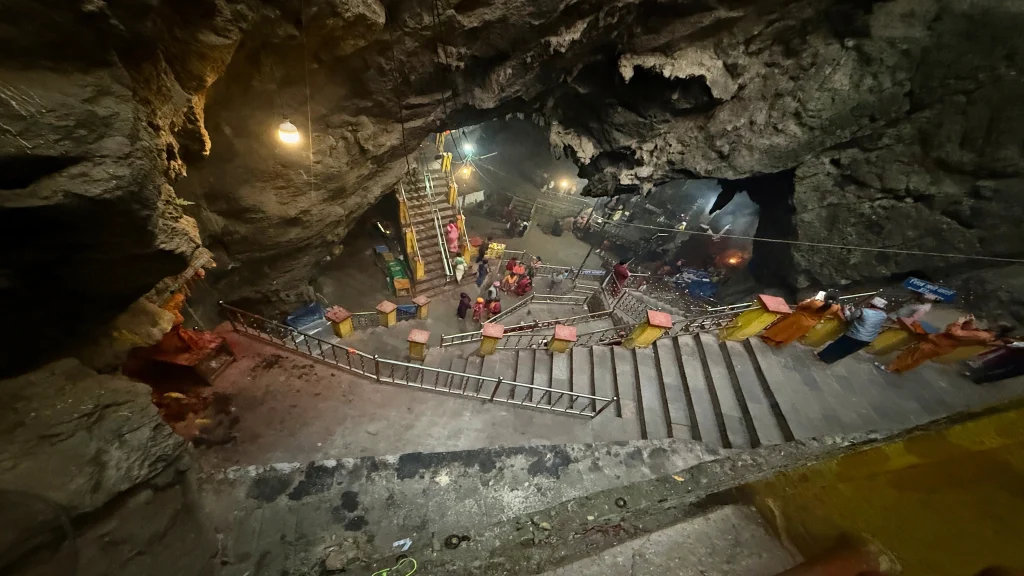


Where Halesi Mahadev sits and why it matters
The temple lies in Khotang District, cradled between two sacred rivers, the Dudh Koshi and the Sun Koshi. Elevation runs somewhere between 3,100 and 4,700 feet depending on which viewpoint you stand on, so this is hill country, not high Himalaya. Diktel Bazaar, the district headquarters, sits about 26 kilometers to the east.
For Hindus, Halesi ranks among the most important Shiva shrines in the country. Buddhists know the same site as Maratika, a name that carries enormous weight in Tibetan Buddhism. Rai communities of the region hold it sacred too, weaving it into their own Kirat traditions. Three faiths, one cave. Few pilgrimage sites in South Asia can claim that kind of shared devotion.
The main cavern is genuinely large, close to 190 feet wide in places, and drops around 67 feet below ground level. Inside sits a Shiva Linga roughly two feet tall, the focus of Hindu worship here.
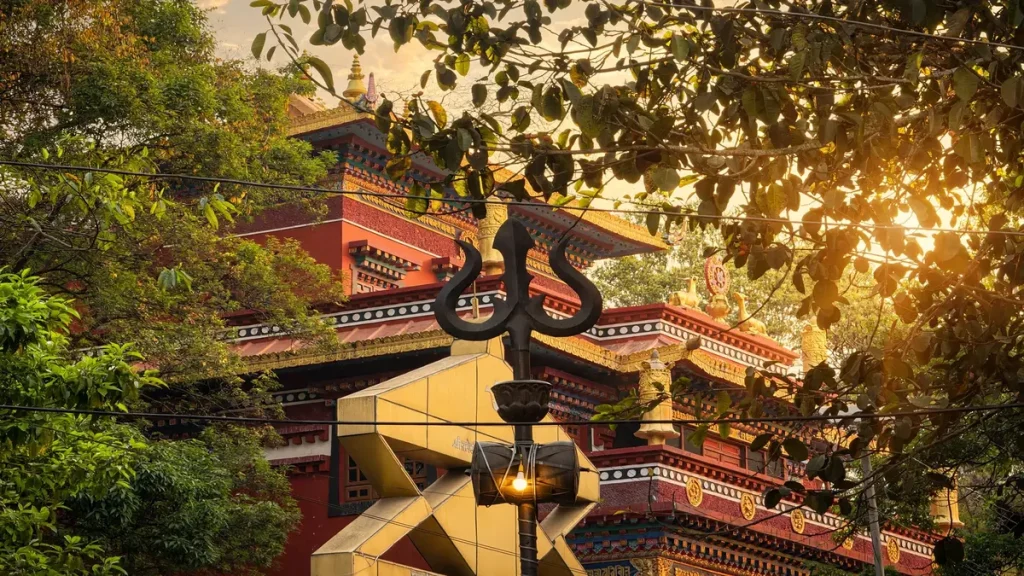
The legend behind the caves
Ask a local priest why the cave is holy and you will get two answers, both fascinating.
Hindu tradition says Lord Shiva hid inside these caves to escape the demon Bhasmasur, a creature who had received a terrifying boon: anyone whose head he touched would burn to ash. Shiva fled and sheltered in Halesi. That story, passed down for thousands of years, is why devotees consider the cave a direct refuge of Mahadev himself.
Buddhists tell it differently. To them, this is the cave where Guru Padmasambhava, the master who carried Buddhism into Tibet, meditated alongside his consort Mandarava and attained the siddhi of long life, or immortality. Maratika is a pilgrimage destination for practitioners from across the Himalaya and Tibet who come specifically for long-life practices. When you see Tibetan prayer flags fluttering above a Shiva shrine, this legend is why.
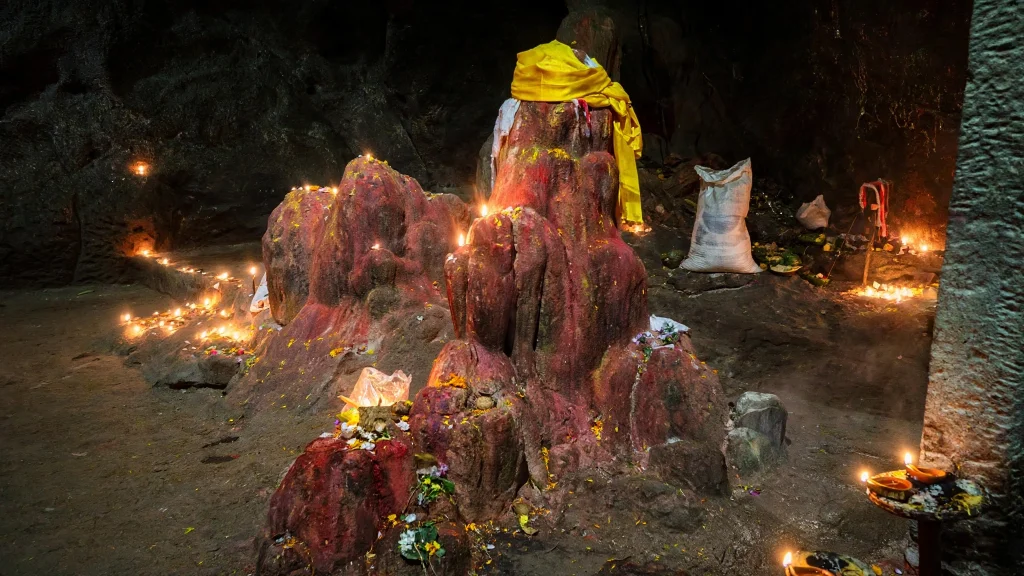
Inside the caves: what you actually see
There is not just one cave. Three main caverns anchor the site, and pilgrims often describe them as the three heads or three eyes of Shiva. Each has its own character.
Entering the first cave, you meet the image known as Mahadev Haleswar, the primary Shiva shrine. A second cave holds a representation of Nandi, the sacred bull that serves as Shiva’s mount. Smaller openings and passages branch off, and part of the experience is the slightly disorienting scramble through narrow gaps in the rock.
One passage in particular gets talked about a lot. Devotees believe that squeezing through a tight opening in the rock can cleanse sin, and watching pilgrims of all ages attempt it is half the fun. Natural rock formations inside are read as images of deities, a stalactite here interpreted as Shiva, a curve of stone there as Parvati.
Bring a small flashlight. Sections of the cave are dim, the floor is uneven, and you will want to see where you are stepping.
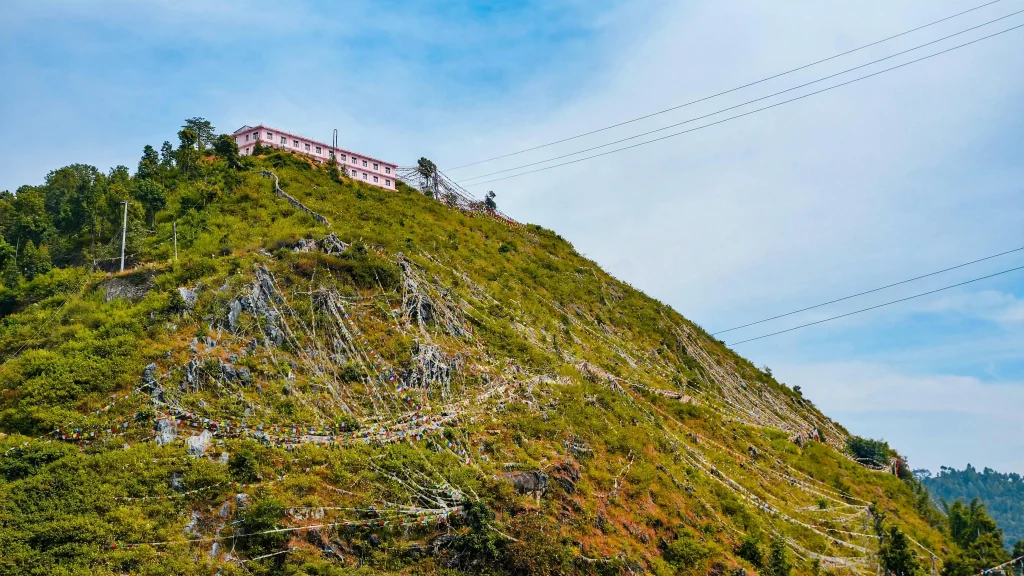
How to get to Halesi Mahadev
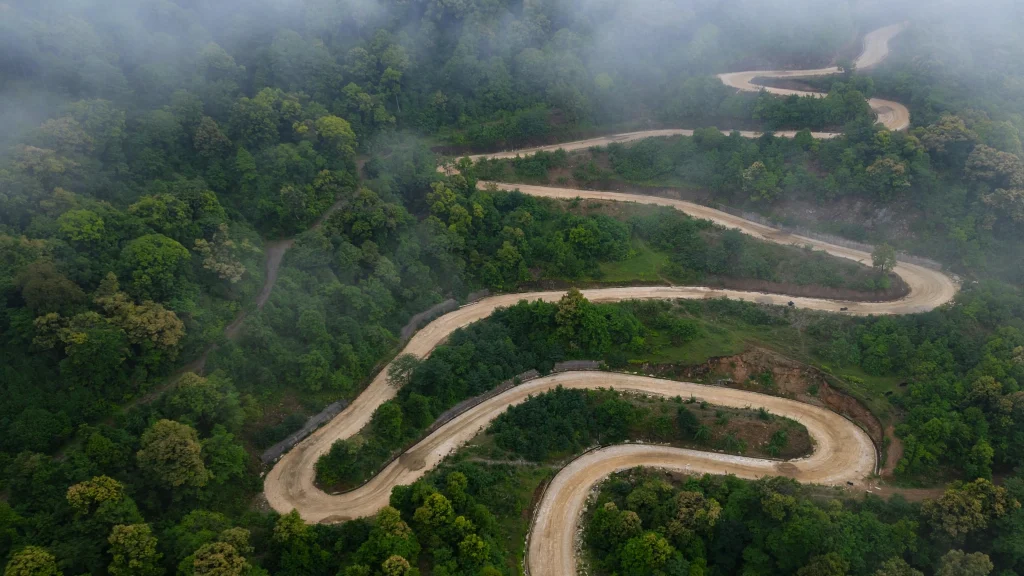
Getting to Halesi Mahadev is an adventure in itself, and that is not marketing spin. Budget realistic time.
By road is how most people travel. A private jeep or bus from Kathmandu takes roughly 8 to 9 hours, sometimes longer in poor conditions, covering around 220 kilometers along a route that runs through Dhulikhel, Nepalthok, Khurkot, Ghurmi, and Okhaldhunga before the final climb to Halesi. Public transport works too but adds transfers: local buses run from Kathmandu to Katari, and from there you switch to onward transport toward Halesi via Ghurmi.
A quick warning about the monsoon. From roughly June through September, the hill roads of eastern Nepal are prone to landslides and washouts, and an 8-hour drive can stretch dramatically or get cut off entirely. If you are traveling in the rainy months, build in buffer days and check road conditions before committing.
By air shortens the misery if your budget allows. Flights operate from Kathmandu to Lamidanda, the nearest airstrip, and from there a jeep ride of about 2 to 3 hours brings you to the temple. Helicopter charters are also available for pilgrims short on time and long on funds.
When to go
Spring, from March to May, and autumn, from September to November, are the sweet spots. Skies stay clearer, temperatures are mild, and the cave scramble is far more pleasant when the ground isn’t slick with rain. Autumn in particular rewards you with crisp air and, on good days, distant snow peaks on the horizon.
Daytime temperatures in the good seasons hover comfortably, though nights in the hills can drop close to freezing in the colder months, so pack a warm layer. If you want the site at full spiritual intensity, time your visit to a major festival, but know that you will be sharing the caves with thousands of others.
Festivals at Halesi
Halesi comes alive during festivals, and the calendar here is unusually rich because three religious traditions all celebrate.
- Maha Shivaratri (February or March): the biggest night for Shiva devotees, when the caves fill with worshippers, oil lamps, and all-night vigils.
- Bala Chaturdashi (late November or December): a festival of remembrance drawing large crowds.
- Ram Navami (spring): remarkably, this is one of the most important gatherings at Halesi, celebrated over about four days by Hindus, Buddhists, and Rai communities together.
- Teej, Udhauli, and Ubhauli: additional festivals that bring seasonal color and, in the case of Udhauli and Ubhauli, distinctly Kirat Rai celebrations.
For a wider view of how these dates fall across the year, our Nepal festivals calendar guide lays out the full annual rhythm.
Where to stay and what to eat
Do not expect resorts. Accommodation around Halesi is simple and pilgrim-focused: basic guesthouses, small lodges, and hotels clustered near the temple. Some monasteries in the area also host travelers, which can be a memorable option if you want to be close to the spiritual pulse of the place. Rooms are usually clean and functional, with the essentials covered, and many now offer hot showers and patchy Wi-Fi.
Food follows the same honest simplicity. Dal bhat, the Nepali staple of rice, lentils, and vegetables, is your reliable everyday meal, refillable and filling. During big festivals, temporary stalls appear selling snacks, tea, and offerings. Carry some cash in small denominations, since card payments are not something you can count on out here.
Practical tips before you go
A few things worth knowing that save hassle on the ground.
- There is generally no formal entrance ticket to worship at the caves, though small donations to caretakers and the temple trust are customary and appreciated. As of early 2025 there was no standardized visitor fee, so treat any figure you hear as a donation rather than a fixed charge.
- Remove your shoes before entering the shrine areas, as at any Hindu temple.
- Dress modestly. Shoulders and knees covered keeps you respectful in a place that is first and foremost a site of active worship.
- Photography is usually fine in the outer areas, but ask before shooting inside shrine chambers or during rituals.
- Carry water, a flashlight, and sturdy shoes with grip for the cave floors.
If Halesi lights a spark for pilgrimage travel, Nepal has more of it. The high desert shrine of Muktinath offers a completely different landscape, and the sacred sites woven through the Kathmandu Valley make an easy contrast to Halesi’s remote hush. For official visitor information and travel updates across the country, the Nepal Tourism Board is the authoritative source.
Frequently asked questions
Where exactly is Halesi Mahadev Temple?
It sits in Khotang District in eastern Nepal, about 220 kilometers east of Kathmandu, between the Dudh Koshi and Sun Koshi rivers and around 26 kilometers west of Diktel Bazaar.
How long does it take to reach Halesi from Kathmandu?
By road, plan on roughly 8 to 9 hours by private jeep, and longer by public bus with transfers through Katari and Ghurmi. Flying to Lamidanda and driving 2 to 3 hours is the faster alternative.
Why is Halesi sacred to both Hindus and Buddhists?
Hindus revere it as the cave where Shiva hid from the demon Bhasmasur. Buddhists know it as Maratika, where Guru Padmasambhava and Mandarava attained long life. Both traditions worship at the same site.
How many caves are there at Halesi?
Three main caves form the heart of the site, often described as the three heads of Shiva, along with several smaller openings and passages that pilgrims explore.
What is the best time to visit?
Spring (March to May) and autumn (September to November) offer the clearest, mildest weather. Major festivals like Maha Shivaratri and Ram Navami are spiritually intense but very crowded, and the monsoon months carry real landslide risk on the access roads.
Is there an entrance fee?
There is generally no fixed entry ticket for worship. Small donations to the temple and caretakers are customary. As of early 2025, no standardized visitor fee was in place.
Where can I stay near Halesi Mahadev?
Simple guesthouses, lodges, and small hotels sit near the temple, and some local monasteries host travelers. Facilities are basic but comfortable, so set expectations accordingly.
Do I need a guide to visit Halesi?
A guide is not required, but a local one adds a lot of context to the legends and helps with the cave passages and festival logistics, especially if it is your first visit to eastern Nepal.


