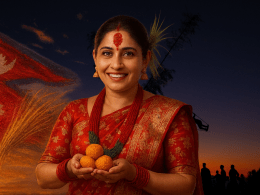



Nepal holds many rich cultural traditions. However, few traditions captivate the world like Kumari: The Living Goddess of Nepal. This living deity embodies pure divine energy. She bridges the gap between the earthly realm and the divine realm.
Devotees worship a young, prepubescent girl as a manifestation of Goddess Taleju. This sacred custom blends Hindu and Buddhist beliefs seamlessly. Consequently, it stands as a unique symbol of spiritual harmony.
In this comprehensive guide, you will explore every aspect of this sacred tradition. You will learn about her history, selection, daily routine, and modern life.
Historical Roots of Kumari: The Living Goddess of Nepal
The tradition of Kumari: The Living Goddess of Nepal spans several centuries. Indeed, its origins tie closely to the ancient Malla dynasty.
The Legend of King Jaya Prakash Malla
Popular legend links the custom to King Jaya Prakash Malla. He ruled Kathmandu during the eighteenth century.
According to legend, the king played dice with Goddess Taleju every night. The goddess warned him to keep their meetings secret. However, the king made an improper advance toward her one night.
Angered by his disrespect, Goddess Taleju vanished instantly. Later, she appeared in the king’s dream. She commanded him to choose a pure Newar girl. She promised to reside inside that young child. Thus, the official Royal Kumari tradition began in Kathmandu.
Historical Evolution Across the Valley
Earlier historical records suggest similar worship existed even before King Jaya Prakash Malla. For instance, King Gunakamadeva practiced child goddess worship in the tenth century.
Furthermore, when King Prithvi Narayan Shah conquered Kathmandu in 1768, he respected the tradition. He knelt before the living goddess to receive her blessing. Therefore, the custom survived political shifts and royal changes intact.
The Divine Role and Spiritual Significance
The word Kumari derives from the Sanskrit word Kaumari. It translates directly to “virgin” or “unmarried girl.”
Cosmic Power and Divine Protection
Believers view the living deity as the living embodiment of Shakti. Shakti represents the primary cosmic feminine power.
She protects the realm from evil forces, disease, and misfortune. Moreover, she grants prosperity and peace to those who seek her favor.
Uniting Hinduism and Buddhism
Nepal demonstrates deep religious harmony through this tradition. The child comes exclusively from a Newar Buddhist family. Yet, Hindu priests conduct her primary consecration rituals.
Both Hindu and Buddhist devotees pray to her with equal devotion. Consequently, she symbolizes the spiritual unity of the Kathmandu Valley.
Types of Kumaris Across the Kathmandu Valley
Most people know about the Royal Kumari of Kathmandu. However, several other Kumaris exist throughout Nepal.
- Kathmandu Royal Kumari: Resides in Kumari Ghar, Durbar Square. She holds the highest spiritual rank and stays in the palace.
- Patan Kumari: Resides in Haka Bahal, Patan. She follows strict rituals but can live with her family.
- Bhaktapur Khwopa Kumari: Resides in Bhaktapur Durbar Square. She serves local town festivals and rituals.
- Bungamati Kumari: Resides in Bungamati Village. Her duties tie directly to the Rato Machhendranath festival.
The Royal Kumari of Kathmandu
The Royal Kumari holds the highest spiritual status among all living goddesses. She resides inside the historic Kumari Ghar in Kathmandu Durbar Square.
Her selection process remains the most rigorous. Furthermore, state leaders visit her annually for divine blessings.
The Local Kumaris
Local Kumaris serve surrounding cities and historical Newar towns. For example, Patan, Bhaktapur, Bungamati, and Chabahil maintain their own living goddesses.
These young girls perform essential duties during local festivals. Unlike the Royal Kumari, some local Kumaris may live with their families. Nevertheless, they still follow strict rituals and purity regulations.
The Rigorous Selection Process: Choosing the Living Goddess
Finding a new living goddess is an elaborate process. Senior Buddhist priests, royal astrologers, and temple guardians conduct the search.
Lineage and Family Heritage
First, candidates must belong to specific Newar Buddhist castes. Specifically, they must come from the Shakya or Vajracharya families.
These families represent traditional goldsmiths and silversmiths. Furthermore, the candidate’s family history must show clean lineage for generations.
The 32 Auspicious Physical Attributes
Priests examine every candidate for thirty-two physical signs of perfection. These traits indicate divine presence.
- Eyelashes: Long and dense, like those of a cow.
- Chest: Broad and strong, like a young lion.
- Thighs: Firm and slender, like those of a deer.
- Voice: Soft, clear, and resonant, like a sparrow or duck.
- Neck: Smoothly curved, resembling a conch shell.
- Teeth: A full set of forty intact baby teeth without gaps.
- Skin: Flawless skin without scars, spots, or blemishes.
- Hair: Dark, straight, and never cut since birth.
Astrological Chart Alignment
After physical checks, astrologers compare the girl’s horoscope with national charts. Her astrological signs must align perfectly with the nation’s welfare. Any planetary conflict eliminates the child immediately.
The Final Test of Courage
The final test occurs during the festival of Dashain on the night of Kalratri. Priests place the young girl inside a dark room at midnight.
Severed heads of sacrificed animals surround her. Masked dancers make terrifying noises outside the room.
A normal child would cry in fear. However, the true living deity remains calm and detached. If she shows no fear, she passes the test.
Finally, she must pick out personal belongings of the previous goddess from a pile. Once she completes these tasks, priests install her as the new living goddess.
Life Inside the Kumari Ghar: Daily Routines and Sacred Protocol
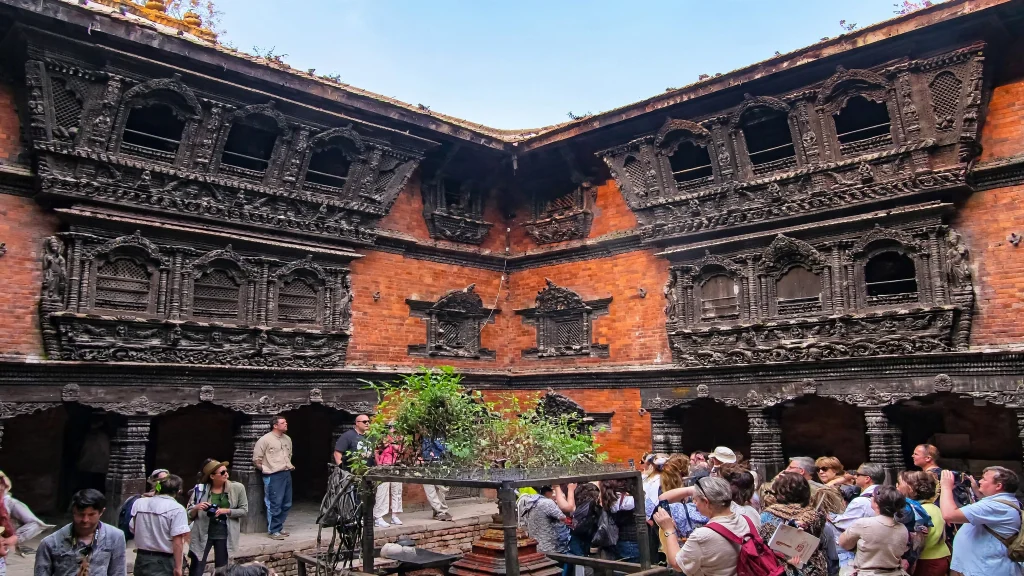
After consecration, the girl leaves her home. She moves into the sacred Kumari Ghar palace.
- 5:00 AM: Morning prayers, ritual washing, and spiritual cleansing.
- 9:00 AM: Dressing in red silk robes and painting the sacred third eye.
- 12:00 PM: Brief appearance at the courtyard window for devotees.
- 3:00 PM: Private educational lessons and quiet playtime.
- 6:00 PM: Evening worship rituals and granting private blessings.
Daily Rituals and Special Attire
Each morning, caretakers wash the child with holy water. They dress her in traditional red silk garments. Red represents divine power and auspiciousness.
Next, attendants paint a sacred third eye upon her forehead using red sindoor, yellow pigment, and black khol. This third eye symbolizes supernatural vision and spiritual wisdom. They also apply heavy black eyeliner to accentuate her eyes.
Strict Purity Rules
The living goddess must follow strict purity protocols every day.
- She must consume only pure vegetarian food prepared by caretakers.
- Her feet must never touch the bare ground outside her residence.
- She must not bleed or suffer physical injuries.
- She speaks directly only to her caretakers and immediate family.
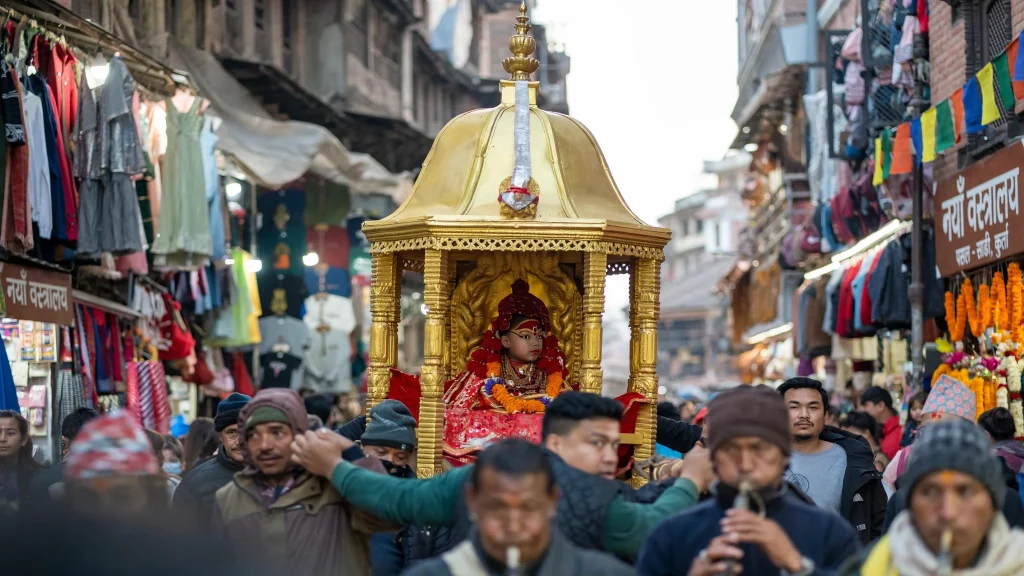
Carriers carry her in a carved wooden palanquin whenever she leaves her residence. Alternatively, her attendants carry her tenderly in their arms.
Sacred Festivals and Public Appearances
The living deity rarely leaves her palace. However, she appears during major religious festivals throughout the year.
Indra Jatra: The Great Chariot Festival
Indra Jatra is the most significant event for the Royal Kumari. Thousands of local citizens and international tourists gather in Kathmandu.
Priests place the goddess on a massive, three-tiered wooden chariot. Devotees pull the chariot through narrow medieval streets.
During this grand event, the President of Nepal visits her chariot. The leader bows low to receive her blessing and a red mark. This gesture legitimizes the state’s authority for another year.
Reading the Goddess’s Reactions
Devotees watch her movements closely during public audiences. They believe her subtle reactions predict future events:
- Laughter or smiling: Imminent severe illness or sudden death.
- Weeping or crying: Major sorrow or public tragedy.
- Picking at food: Financial loss or national hardship.
- Silent and calm demeanor: Peace, health, and prosperity for all.
Modern Reforms: Education, Rights, and Social Evolution
In past decades, critics questioned the child rights aspect of this custom. Critics argued that isolation harmed the girl’s growth.
Supreme Court Rulings and Human Rights
In 2008, the Supreme Court of Nepal issued a landmark ruling. The court stated that the living goddess deserves standard child rights.
Specifically, the court mandated formal education, healthcare, and recreational freedom. Consequently, the tradition evolved to protect the child’s future.
Education Inside the Palace
Today, private tutors teach the young deity inside the palace. She studies standard school subjects, including English, math, and science.
Furthermore, she uses computers, watches television, and plays games with selected playmates. Thus, modern education blends smoothly with ancient religious vows.
Retirement and Return to Normal Life
A girl’s reign as a living goddess is temporary. She returns to normal human status upon reaching puberty.
Causes for Retirement
Three primary conditions end a goddess’s reign:
- First Menstruation: This is the most common reason for retirement.
- Accidental Blood Loss: A deep cut or wound invalidates her divine purity.
- Loss of a Milk Tooth: This specific rule applies to certain local Kumaris.
People believe Goddess Taleju leaves the child’s body when blood exits her frame. Consequently, priests begin searching for a new candidate immediately.
Transition Ceremony and Life After Retirement
Priests conduct an elaborate farewell ceremony called Gubhaju Puja. They wipe away the third eye from her forehead.
She takes off her red sacred garments and wears regular clothes. Then, she returns home to live with her family.
Debunking Myths About Ex-Kumaris
An old superstition claimed that men who marry ex-Kumaris die young. However, this is entirely a myth.
Today, former Kumaris graduate from universities, pursue successful careers, and marry happily. Moreover, the Nepali government provides retired Kumaris with a lifelong monthly state pension. This pension ensures financial security throughout their adult lives.
Visitor Guide: Etiquette and Respect at Kumari Ghar
Visiting the Kumari Ghar offers an unforgettable cultural experience. However, tourists must follow strict rules of etiquette.
Location and Visiting Hours
Kumari Ghar sits on the southern edge of Kathmandu Durbar Square. Visitors can enter the brick courtyard freely during the day.
The living goddess often glances down from her carved wooden window between 9:00 AM and 11:00 AM. She also appears occasionally in the late afternoon.
Essential Rules for Visitors
- No Photography: You must never take photographs of the goddess. Photography when she appears at the window is strictly forbidden.
- Remove Footwear: Remove leather items and shoes when entering sacred inner chambers.
- Maintain Silence: Keep your voice low out of respect for the sanctuary.
- Dress Modestly: Wear clothing that covers your shoulders and knees.
Conclusion: Honoring Kumari: The Living Goddess of Nepal
The tradition of Kumari: The Living Goddess of Nepal remains one of the world’s most captivating cultural heritages. It bridges ancient mythology with vibrant, living faith. Furthermore, it demonstrates how deep spiritual customs adapt to modern human rights standards.
As Nepal moves forward, this sacred tradition continues to inspire wonder. It stands as a timeless symbol of devotion, protection, and cultural identity.
Frequently Asked Questions (FAQ)
What is Kumari: The Living Goddess of Nepal?
She is a young girl worshipped as the earthly incarnation of Goddess Taleju in Nepal.
Why is a young child chosen as a living goddess?
A prepubescent child represents absolute purity. Devotees believe divine energy resides only in a pure, unblemished body.
How is a new living goddess selected?
Priests evaluate candidates from the Newar Shakya caste based on thirty-two physical signs, horoscopes, and courage tests.
Why do Kumaris step down after puberty?
Believers hold that Goddess Taleju departs the child’s body when she loses blood through menstruation or injury.
Can tourists see the living goddess in Kathmandu?
Yes, tourists can view her briefly from the courtyard window of Kumari Ghar. However, taking photos is strictly prohibited.
Do ex-Kumaris get an education and get married?
Yes, ex-Kumaris receive modern education, attend universities, build professional careers, and marry freely in modern society.