



September is arguably one of the richest months on Nepal’s entire festival calendar. As the monsoon fades and skies begin to clear, the country moves through a dense stretch of religious and cultural celebrations. Understanding the major festivals in September 2026 in Nepal helps travelers time their trip perfectly, whether they want to see Kathmandu’s streets awash in red saris or witness centuries-old chariot processions.
Since most Nepali festivals follow the lunar Bikram Sambat calendar, exact dates shift slightly from year to year. So, let’s walk through everything confirmed for September 2026, festival by festival, in the order they’ll actually unfold.
Why September Is Such a Big Festival Month in Nepal
Before diving into specific dates, it helps to understand why this particular month carries so much cultural weight. September falls within the Nepali month of Bhadra, transitioning into Ashwin, a period traditionally associated with the end of the monsoon and the start of the harvest season.


This seasonal shift carries deep symbolic meaning. Many festivals in September 2026 in Nepal center on gratitude, either for rainfall, for harvests, or for family bonds strengthened over the preceding months. It’s also a season heavily associated with women’s festivals, ancestral remembrance, and preparations for the country’s two biggest celebrations, Dashain and Tihar, which follow shortly after.
Gaura Parva: September 4, 2026
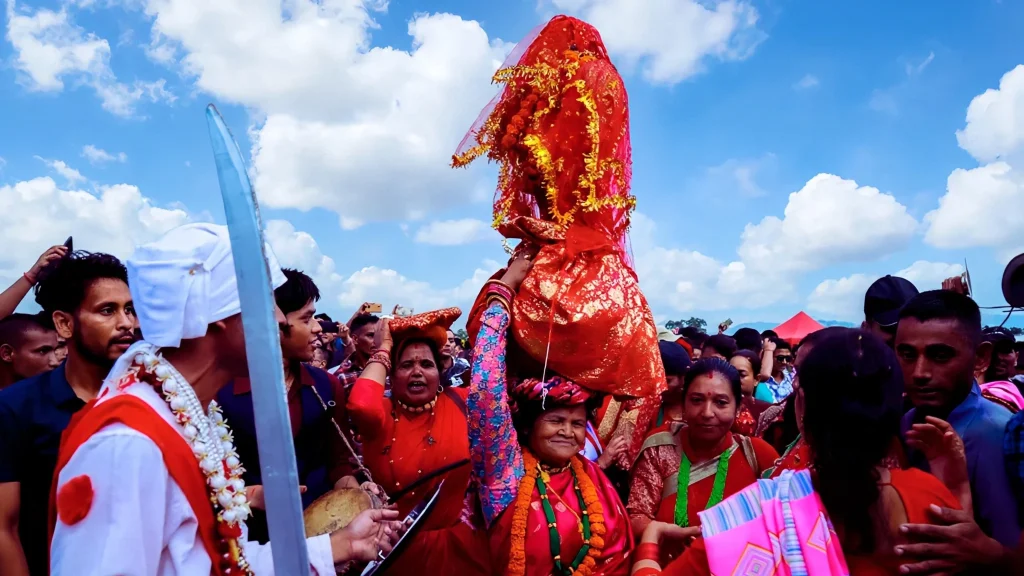
Falling on the same day as Krishna Janmashtami, Gaura Parva is a major cultural and religious festival celebrated primarily in Nepal’s Sudurpashchim and Karnali provinces, with especially strong observance in districts like Doti, Achham, Darchula, Baitadi, and Dadeldhura.
What Gaura Parva Celebrates
The festival commemorates the sacred marriage of Goddess Gaura, also known as Gauri or Parvati, to Lord Shiva. This union symbolizes marital devotion and divine love, themes that shape nearly every ritual performed throughout the celebration.
How It’s Observed
Gaura Parva typically unfolds over several days, beginning with the preparation of Biruda, a sacred mixture of soaked seeds and grains. Married women observe fasting, take ritual baths, and worship a handcrafted idol of Goddess Gaura before returning home to bless their husbands with the Biruda mixture for health and longevity.
The Role of Deuda Dance
No Gaura Parva celebration feels complete without Deuda, the traditional circular folk dance performed alongside communal singing. Villages come alive with this dance late into the evening, turning the festival into as much a community gathering as a religious observance.
Why It Matters
Beyond its religious roots, Gaura Parva has become a defining cultural marker for the people of far-western Nepal, closely tied to the historical identity of the Khas kingdom. For travelers passing through Sudurpashchim or Karnali in early September, it offers a rare, authentic glimpse into a tradition rarely seen by outsiders.
Krishna Janmashtami and Gaura Parva: September 4, 2026
The month opens with two significant celebrations landing on the same day. Krishna Janmashtami marks the birth of Lord Krishna and is celebrated nationwide, with especially vibrant festivities at Patan’s Krishna Mandir. Devotees gather for night-long prayers, devotional singing, and temple visits honoring one of Hinduism’s most beloved deities.
On the same date, Gaura Parva unfolds primarily in far-western Nepal, particularly in districts like Doti and Achham. This three-day festival honors Goddess Gaura, celebrating themes of marital devotion and community bonding through fasting, ritual, and traditional Deuda dance performances.
Gokarna Aunshi: Nepal’s Father’s Day
Shortly before the Teej festivities begin, Nepal observes Gokarna Aunshi, more widely known as Father’s Day. Falling in mid-September, families gather to honor their fathers, whether living or deceased, through rituals and offerings, often at temples such as Gokarna Mahadev in Kathmandu. Sons and daughters offer tika and seek blessings, and those whose fathers have passed away perform special remembrance rites.
Teej: The Great Festival of Nepali Women
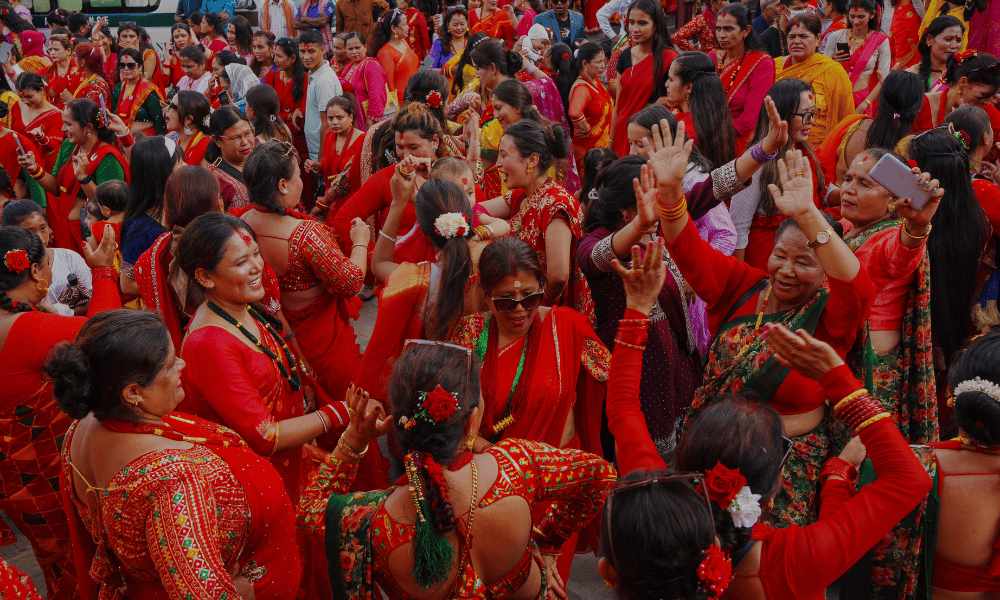
Few celebrations capture September in Nepal quite like Teej. Running from September 13 through September 15, 2026, this three-day festival stands as one of the most visually striking events on the entire calendar.
Day One: Dar Khane Din
The festival opens on September 13 with Dar Khane Din, a day of feasting before the fasting begins. Women gather with friends and family to share elaborate meals, since many will observe a strict fast the following day.
Day Two: Haritalika Teej
The main event, Haritalika Teej, falls on September 14. Married women dress in vivid red saris, apply mehendi, and visit Shiva temples, most famously Pashupatinath, to pray for their husbands’ health and long life. Unmarried women observe the fast as well, hoping for a favorable future marriage. Many women continue this custom without drinking water throughout the day, while others practice a lighter version that still includes singing and dancing.
Day Three: Rishi Panchami
The festival concludes on September 15 with Rishi Panchami, a ritual purification day. Women bathe using sacred plant leaves, cleanse themselves in rivers, and offer prayers seeking forgiveness for any transgressions from the previous year.
Why Teej Matters Beyond Religion
Beyond its religious dimension, Teej carries deep social significance as a celebration of sisterhood and female solidarity. For travelers, it offers a striking visual spectacle, with Kathmandu’s streets filled with women in red, singing and dancing their way toward temples throughout the city.
Ganesh Chaturthi: September 14, 2026
Interestingly, Ganesh Chaturthi falls on the very same day as Haritalika Teej this year. This festival honors Lord Ganesh, the elephant-headed god of wisdom and remover of obstacles. Devotees visit Ganesh temples, offer sweets, and perform pujas seeking blessings for new beginnings, business success, and the removal of life’s obstacles.
Vishwakarma Puja and Kanya Sankranti: September 17, 2026
A few days later, on September 17, Nepal observes Vishwakarma Puja, dedicated to Vishwakarma, the divine architect and god of craftsmanship. Factories, workshops, and construction sites across the country pause operations so workers and machinery can be blessed for safety and continued productivity. This day coincides with Kanya Sankranti, marking the sun’s transition into the astrological sign of Virgo.
Radha Ashtami: September 19, 2026
On September 19, Radha Ashtami celebrates the birth of Radha, Lord Krishna’s beloved consort. This day holds particular significance at Krishna temples, where devotees offer prayers celebrating divine love and devotion.
Parsva Ekadashi: September 22, 2026
Falling within the Hindu lunar calendar’s cycle of Ekadashi observances, Parsva Ekadashi arrives on September 22. Devotees of Lord Vishnu observe fasting on this day, one of several Ekadashi fasts occurring throughout the year, each carrying its own specific religious significance.
Indra Jatra: Kathmandu’s Biggest Street Festival
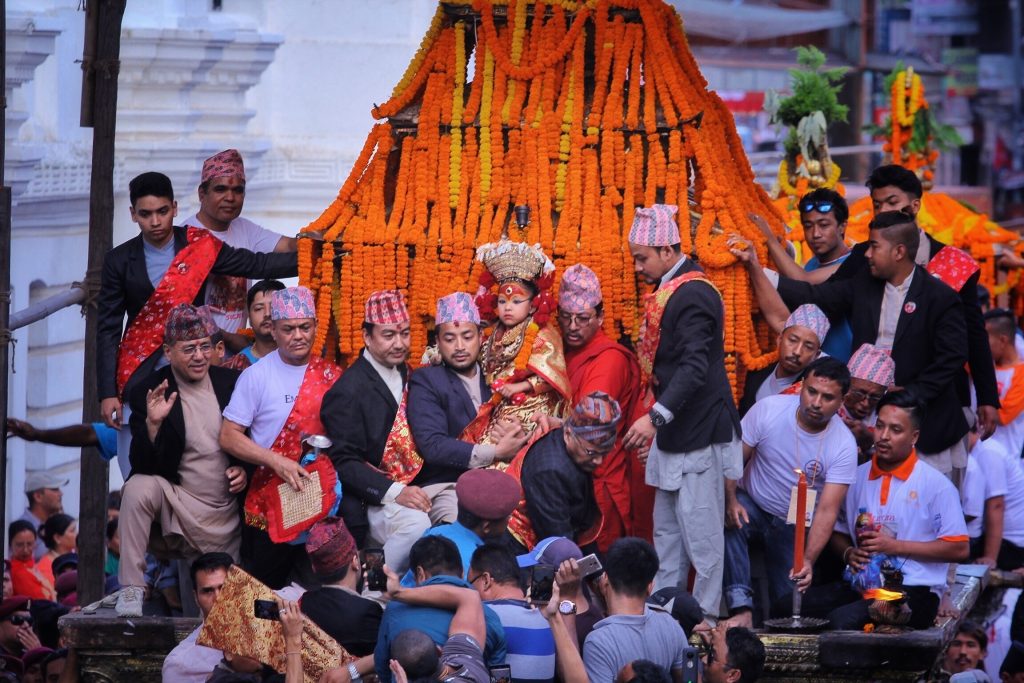
As September draws to a close, attention shifts to what many consider the valley’s most spectacular celebration. Indra Jatra, also known as Yenya among the Newar community, begins around September 25, 2026, and unfolds over roughly eight days.
What Indra Jatra Celebrates
This ancient festival honors Indra, the Hindu god of rain, thanking him for a successful monsoon season and praying for a bountiful harvest ahead. According to tradition, the festival was first started by King Gunakamadeva, making it one of the oldest continuously celebrated festivals in the Kathmandu Valley.
The Kumari Jatra Procession
One of the festival’s most anticipated moments involves the Kumari, Nepal’s revered Living Goddess. During Kumari Jatra, held alongside Indra Jatra, the Kumari is paraded through the streets of Kathmandu on a wooden chariot, drawing enormous crowds hoping for a glimpse of this rare public appearance.
Masked Dances and the Lakhe
Throughout the festival, masked dancers perform ritual routines representing various deities and spirits. The most iconic of these is the Lakhe, a fierce, red-faced demon figure whose dance is one of the most photographed elements of the entire celebration.
Why Travelers Should Plan Around It
For visitors hoping to witness authentic Newar culture, Indra Jatra offers one of the richest experiences available in Nepal. Its combination of chariot processions, sacred masked dances, and centuries-old ritual makes it a genuine highlight for anyone visiting Kathmandu during late September.
Ganesh Visarjan and Anant Chaturdashi: September 25, 2026
Also falling on September 25, Ganesh Visarjan marks the ceremonial conclusion of Ganesh-related observances from earlier in the month, while Anant Chaturdashi honors Lord Vishnu in his infinite form. Devotees tie a sacred thread around their wrist during this observance, symbolizing protection and devotion.
Bhadrapada Purnima and the Start of Pitrupaksha: September 26, 2026
The lunar month closes with Bhadrapada Purnima, the full moon day, falling on September 26. This date also marks the beginning of Pitrupaksha, a period dedicated to honoring deceased ancestors through remembrance rituals and offerings, setting a reflective tone as the calendar transitions toward Ashwin and, eventually, Dashain.
Planning a Trip Around September Festivals
If you’re considering timing a Nepal trip around these celebrations, a few practical notes can help.
Book Accommodations Early
Since Teej and Indra Jatra both draw significant local crowds, popular accommodations in Kathmandu and Patan can fill up quickly during these windows. Booking well in advance, particularly for mid to late September, helps avoid last-minute scrambling.
Expect Some Road Closures
Major processions, especially during Indra Jatra, often mean temporary road closures around Kathmandu Durbar Square and surrounding neighborhoods. Building extra travel time into your schedule on procession days is a smart precaution.
Confirm Dates Closer to Your Trip
Because Nepali festivals follow a lunar calendar, minor date shifts are always possible as the official calendar is finalized. Double-checking dates against a current Nepali calendar shortly before your trip ensures you don’t miss a celebration by a single day.
Combine Festivals With Trekking Season
September also marks the gradual beginning of Nepal’s excellent autumn trekking season, particularly toward its later weeks. Travelers can realistically combine festival viewing in Kathmandu with the early stages of a trek into the Everest or Annapurna regions.
Final Thoughts
The festivals in September 2026 in Nepal offer an extraordinary window into the country’s living cultural traditions. From the red-sari spectacle of Teej to the ancient chariot processions of Indra Jatra, this single month packs in more ritual, color, and community celebration than most countries manage in an entire year. Whether you’re drawn by devotion, photography, or simple curiosity, timing your visit around these September celebrations offers a genuinely unforgettable way to experience Nepal.
Frequently Asked Questions
What are the major festivals in September 2026 in Nepal?
Major festivals include Teej, Ganesh Chaturthi, Vishwakarma Puja, Radha Ashtami, and Indra Jatra, spanning the entire month.
When is Teej celebrated in September 2026?
Teej runs from September 13 through September 15, 2026, including Dar Khane Din, Haritalika Teej, and Rishi Panchami.
When does Indra Jatra begin in 2026?
Indra Jatra begins around September 25, 2026, and continues for approximately eight days across Kathmandu Valley.
What is celebrated during Teej?
Teej celebrates marital devotion and womanhood, with married women fasting and praying for their husbands’ health and long life.
Is Indra Jatra worth visiting as a tourist?
Yes, Indra Jatra offers chariot processions, masked dances, and a rare public appearance by Nepal’s Living Goddess, the Kumari.
Do festival dates in Nepal ever change?
Yes, since most festivals follow the lunar Bikram Sambat calendar, exact dates can shift slightly and should be confirmed closer to your travel dates.


