



Most people assume the good views in Nepal are all crowded around Pokhara and the Annapurna foothills. The truth is that some of the widest, cleanest Himalayan panoramas in the country sit far to the east, above a quiet ridge town that barely shows up on the tourist map. Dhankuta Bazaar is that town, and the hill above it, Dhoje Danda, might just be the most underrated sunrise spot in eastern Nepal.
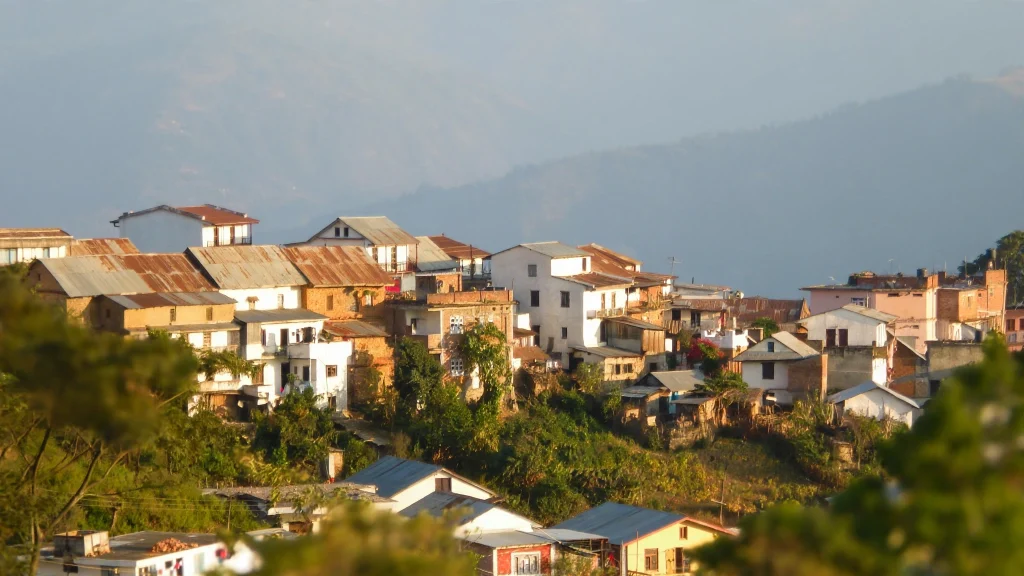
Perched in the green mid-hills of Koshi Province, Dhankuta serves as the administrative heart of the eastern hills. It is old, tidy, and refreshingly unbothered by mass tourism. Whitewashed Newari townhouses climb the ridge in a long line, and on Thursdays the whole place wakes up for a market that pulls in farmers from villages hours away.
Where Dhankuta Bazaar sits, and why it feels different
Dhankuta is a hill town in the truest sense. Steps lead up from the bus park, and the main bazaar climbs north along a narrow ridge at roughly 1,150 to 1,200 meters above sea level. Walk the lower half and you get shops, a police post, and everyday bustle. Keep climbing past that and the town quiets down into something older: carved wooden window frames, tiled roofs, and whitewashed walls that have clearly been repainted by hand for generations.


Here is what most guides won’t tell you. Dhankuta is predominantly a Newari settlement, which is unusual this far from the Kathmandu Valley. That heritage shows in the architecture and the food, while the surrounding hills are home to Rai, Magar, and various Hindu caste communities. Put those groups together on market day and you get one of the more genuine cultural crossroads in the country.
The town has a well-to-do, settled feel that surprises first-time visitors. It was an important administrative center long before the current road network existed, and that history left it with a certain composure. Nobody is hustling you toward a trek here.
Dhoje Danda: the ridge with a 16-district view
About an hour’s drive above Dhankuta Bazaar sits Dhoje Danda, sometimes spelled Dhoje Dada. At around 2,250 meters, it is reportedly the second highest hill in the region after Antu Danda in Ilam. What makes it special is not the height. It is what you can see from the top.
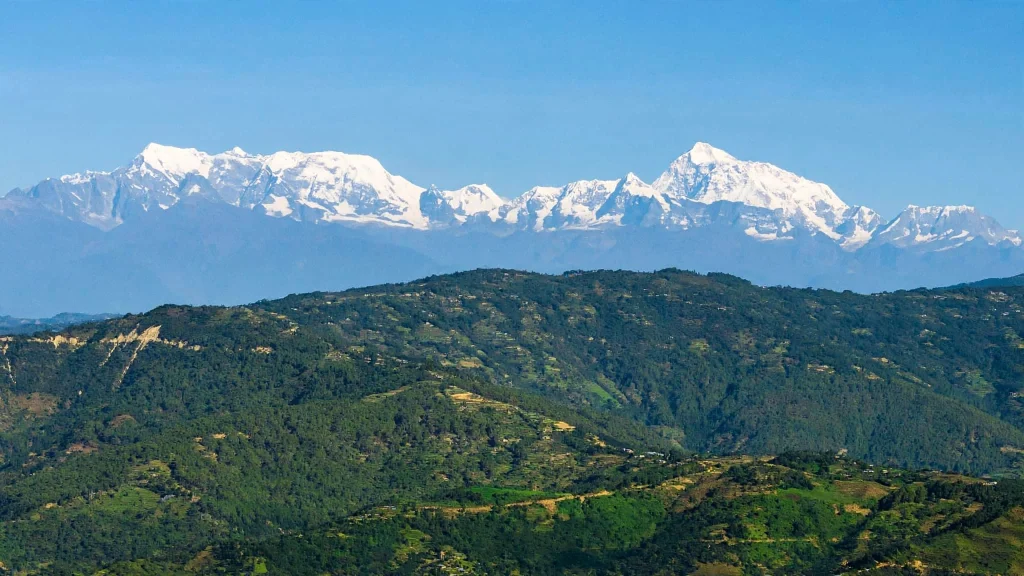
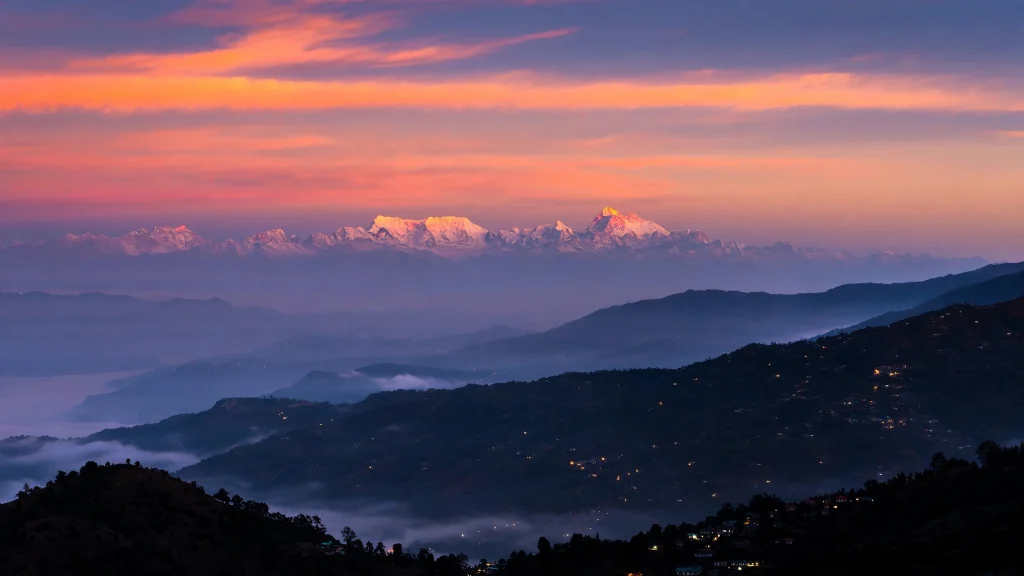
On a clear morning, the sunrise from Dhoje Danda lines up a wall of giants: Kanchenjunga, Makalu, Lhotse, Chamlang, and even Everest peeking over the Makalu range. That is a lot of 8,000-meter real estate in a single sweep. Locals also claim you can pick out 16 different districts across the Terai plains and the hills from this one vantage point, which gives you a sense of how exposed and panoramic the ridge really is.
Dhoje Danda is roughly 29 km from Dharan, and the road up passes through Bhedetar, so most people fold it into a wider loop through the area. You can reach it by jeep, by local bus for part of the way, or on foot if you want the hill hike. Go for sunrise. Wrap up warm, because mornings at this altitude bite even outside winter. For a fuller rundown of what the hill offers, Nepal Traveller has a useful write-up on Dhoje Dada.
Things to do around Dhankuta
Dhankuta works best as a base. The town itself is worth a slow half day, but the real reward is the ring of ridges, waterfalls, and tea country around it.
- Bhedetar: A breezy hill station about 16 km from Dhankuta, famous for its cool climate, misty ridges, and the Bhedetar View Tower skywalk. Sunrise and sunset here draw weekenders up from the hot Terai below.
- Namaste Waterfall (Namaste Jharna): Roughly 8 km from Bhedetar, this fall drops around 80 meters and gets its name from the way the water splits into a shape resembling two hands pressed together in greeting. There is a pool at the base if you are brave about cold water.
- Pakhribas and the tea gardens: The area around Dhankuta grows tea, cardamom, oranges, and the coconut biscuits the region is quietly famous for. Pakhribas Tea Garden is an easy, pretty stop.
- Hile: A lively bazaar town at higher elevation, long a trading post for the eastern hills. It pairs naturally with a Dhankuta trip.
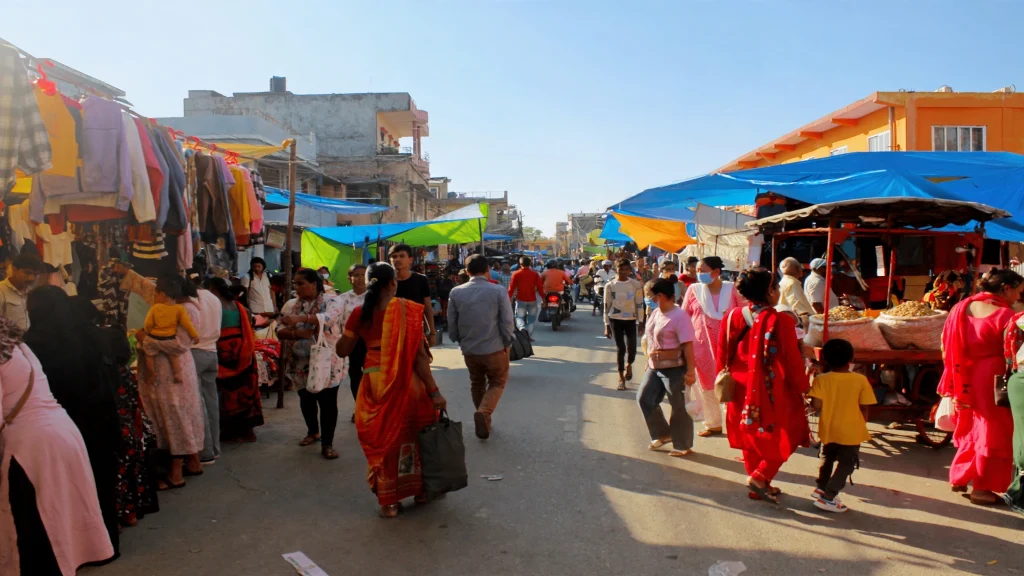
- The Thursday haat bazaar: If your schedule allows, time your visit for Thursday. The weekly market is where the whole district comes to trade, and it is the single most vivid thing you can do in town.
Gentle hikes thread through this whole landscape, past terraced fields, rhododendron groves, and quiet mid-hill villages. None of it demands a permit or a guide, which is part of the appeal. If you enjoy this style of slow, low-altitude travel, our guide to exploring eastern Nepal covers the wider region in detail.
How to get to Dhankuta
Getting here takes some commitment, and that is exactly why the crowds stay away. Dhankuta sits along the Koshi Highway in Koshi Province, connected by road to the eastern Terai cities.
From Biratnagar, the nearest major hub, it is around 54 km and roughly a 1.5 hour drive, though buses take longer with stops. Biratnagar also has the nearest airport, so many travelers fly in from Kathmandu and then continue by road. Dharan is closer still and makes a common overnight stop, especially since the climb toward Bhedetar and Dhoje Danda starts from that side.
Regular buses and shared jeeps run daily from Dharan and Biratnagar. Private vehicles give you the flexibility to chase sunrise on Dhoje Danda and detour to waterfalls, which is worth the extra cost if you can split it with a group. For deeper detail on this route and the towns strung along it, see our Hile and Dhankuta travel guide.
Best time to visit
October through April is the sweet spot. Skies are clearest in autumn and winter, which matters enormously when the entire point of Dhoje Danda is a mountain view. Book a visit under a summer haze and you may see nothing but cloud.
Autumn, roughly October and November, gives you crisp air, post-monsoon greenery, and the best odds of a clean Himalayan sunrise. Winter mornings are colder but often spectacularly clear, so pack layers. Spring brings rhododendron color to the hills. Monsoon, from June to September, turns everything lush but frequently curtains off the peaks, though the tea gardens and waterfalls are at their most dramatic then.
A few honest tips before you go
Accommodation in Dhankuta is simple. Expect small guesthouses and family-run lodges rather than resorts, with a growing number of homestays around Hile and Bhedetar where you eat with the family and get a real feel for hill life. Carry enough cash, because ATMs exist but cannot always be relied on.
Food leans local and hearty. You will find dal bhat everywhere, plus Newari specialties in town and those famous coconut biscuits to take home. Nepal’s eastern hills also sit at the center of the country’s tea and coffee revival, a scene we cover in our look at Ilam’s tea gardens.
One more thing. This is not a checklist destination. Come for the ridge walks, the sunrise, the market, and the rare feeling of being somewhere genuinely off the standard trail. For official regional information, the Nepal Tourism Board maintains a page on things to do around Dhankuta.
Frequently asked questions
Where is Dhankuta located?
Dhankuta lies in the eastern mid-hills of Nepal, in Koshi Province, along the Koshi Highway. It is the administrative center of the eastern hill region and sits at roughly 1,150 to 1,200 meters above sea level, north of the Terai cities of Dharan and Biratnagar.
What is Dhoje Danda known for?
Dhoje Danda is a hill of about 2,250 meters above Dhankuta, famous for panoramic sunrise views of Kanchenjunga, Makalu, Lhotse, Chamlang, and Everest. On a clear day, locals say you can see across 16 districts of the Terai and hills from the top.
How do I get to Dhankuta from Kathmandu?
The most common route is to fly from Kathmandu to Biratnagar, then continue by road for about 54 km, roughly a 1.5 hour drive, to Dhankuta. You can also travel entirely by road, but that is a long overnight journey across the country.
How far is Dhoje Danda from Dhankuta Bazaar?
Dhoje Danda is about an hour’s drive above Dhankuta Bazaar, with the road passing through the hill station of Bhedetar. It sits roughly 29 km from Dharan on the same side.
When is the best time to visit Dhankuta?
October to April offers the clearest skies and the best mountain views. Autumn brings crisp post-monsoon air, winter mornings are cold but often very clear, and spring adds rhododendron color. Monsoon is lush but often hides the peaks behind cloud.
Is Dhankuta good for trekking?
Dhankuta is better suited to gentle hikes and cultural walks than to high-altitude trekking. Trails around Hile, Bhedetar, and nearby villages pass through terraced fields, tea gardens, and rhododendron forest, and most require no permit or guide.
What food is Dhankuta famous for?
The area is known for tea, cardamom, oranges, and distinctive coconut biscuits. Because Dhankuta is a Newari town, you can also find Newari cuisine here alongside the standard Nepali dal bhat.
Do I need a permit to visit Dhankuta and Dhoje Danda?
No special trekking permit is needed to visit Dhankuta town or Dhoje Danda. These are road-accessible destinations in the eastern hills, unlike restricted trekking regions that require official permits.


