



Few festivals demand as much physical devotion as Jitiya. For a full day and night, mothers across Nepal’s Terai region go without a single sip of water, holding a fast so demanding it’s often compared to Chhath Puja in intensity.
The Jitiya Festival in Nepal isn’t about celebration in the usual sense. It’s about sacrifice, offered entirely on behalf of someone else. In this guide, we will explore the festival’s exact date, its rituals, and the mythology that explains why mothers take on such a physically grueling observance.
Understanding Jitiya means understanding a very specific kind of maternal devotion. So, let’s walk through when it falls, how it’s observed, and the stories behind it.


What Is the Jitiya Festival?
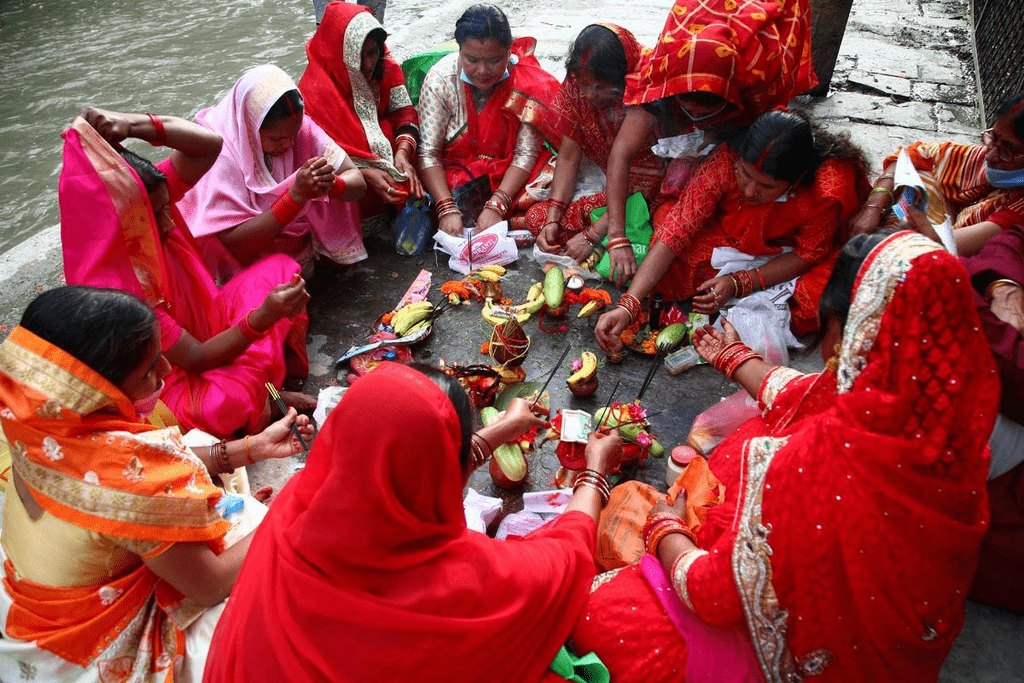
Jitiya, also known as Jiutiya or Jivitputrika Vrat, is a Hindu fasting festival observed primarily by mothers for the long life, health, and wellbeing of their children. The name Jivitputrika roughly translates to “the one who grants a living child,” a phrase that captures the festival’s entire purpose in a single word.
While the fast is most strongly associated with the Indian states of Bihar, Jharkhand, and eastern Uttar Pradesh, it holds major cultural significance in Nepal as well, particularly across the Terai-Madhesh region. In Nepal, it’s often referred to as Jitiya Parva, and it’s treated as a significant national observance rather than a minor regional custom.
When Is Jitiya Celebrated in 2026?
Jitiya falls on Ashtami of the Krishna Paksha, the waning lunar fortnight, during the Hindu month of Ashwin. Based on Nepal’s Vikram Sambat calendar, the main fasting day falls on Sunday, October 4, 2026, corresponding to Ashwin 18. Some Indian panchang calculations place the core Ashtami tithi a day earlier, on October 3, with the fast-breaking ritual following on October 4 or 5, depending on regional timing conventions.
Because exact tithi timings can shift slightly depending on location and calculation method, it’s worth confirming the specific date against a current Nepali calendar close to the observance, particularly if you’re planning travel around it.
The Three-Day Structure of Jitiya
Unlike a single-day fast, Jitiya unfolds across three distinct days, each with its own specific purpose.
Day One: Nahai-Khai
The festival begins with Nahai-Khai, a preparatory day during which women bathe and eat a nourishing meal before the demanding fast ahead. This day essentially allows the body to prepare for the difficult stretch that follows.
Day Two: The Nirjala Fast
The central day of the festival falls on Ashtami itself, when mothers observe a nirjala fast, meaning a complete fast without food or water for a full 24 hours. This isn’t a partial or symbolic fast. Many women avoid even a single sip of water throughout the entire day and night, making it one of the most physically demanding observances in the Hindu calendar.
Day Three: Paran, the Breaking of the Fast
The observance concludes with Paran, typically performed the following morning after sunrise, on Navami tithi. Women offer arghya, a ritual water offering, to the sun god before finally breaking their fast and eating again.
Regional Variations Worth Knowing
While the core structure of Jitiya remains consistent, small regional differences appear across communities.
Mithila’s Othgan Ritual
In the Mithila region, women perform a ritual called Othgan on the night before the main fast, essentially the final intake of water before the waterless observance begins.
Sargahi in Bhojpur
In Bhojpur, some families follow a practice called sargahi, a small pre-dawn meal of fruit eaten just before the fast officially begins. More traditional observers, however, don’t recognize this as an acceptable concession, holding to a stricter interpretation of the fast.
Nepal’s Terai and the Role of Selroti
In Nepal, particularly around the historic city of Janakpur, Jitiya is celebrated as a major cultural festival. A distinctive local element is the offering of selroti, a deep-fried, ring-shaped rice flour bread, presented as prasad alongside a special jiutiya thread ceremony performed for the children.
The Mythology Behind Jitiya
Two central stories explain both the origin of the fast and specific rituals still performed during evening worship.
The Legend of King Jimutavahana
According to the most widely told version, Jimutavahana was a compassionate Gandharva prince from the Shalivahana lineage who chose a life of service over royal comfort. One day, he encountered a grieving Naga mother whose son, Shankhachuda, had been selected as the next sacrificial offering to Garuda, the mythical eagle, under a long-standing arrangement forcing the Naga community to surrender one life at a time.
Moved by her sorrow, Jimutavahana took the boy’s place without revealing his true identity. When Garuda arrived to claim his offering, he attacked Jimutavahana directly. Witnessing such selfless sacrifice made purely to save another mother’s child, Garuda spared his life and ended the practice of demanding further sacrifices from the Naga community entirely. This act of sacrifice for the sake of a child gives the festival its name and its central meaning.
The Fable of the Eagle and the Jackal
A second story explains a curious detail still present in the festival’s evening rituals. According to this parable, an eagle and a jackal both once observed the same fast. The eagle kept it with complete focus and discipline, while the jackal broke the fast partway through. Their next rebirths were shaped directly by how faithfully each had honored the vow. This story explains why small clay figures representing the eagle and jackal are placed during the evening puja performed on the main fasting day.
Understanding the Weight of This Fast
The nirjala fast at the heart of Jitiya is genuinely demanding, and it’s worth understanding both its symbolic weight and the built-in flexibility around it.
A Symbol of Maternal Sacrifice
The fast is widely understood as a profound expression of a mother’s love, patience, and willingness to endure hardship entirely for her child’s sake. Observing it is considered an act of deep devotion rather than mere ritual obligation.
Built-In Exceptions for Health
Importantly, tradition itself recognizes that a full waterless fast isn’t appropriate for everyone. Women who are pregnant, nursing, elderly, or unwell are traditionally permitted to observe a modified phalahar fast instead, consuming fruit and water rather than abstaining entirely. This flexibility exists specifically because the devotion behind the observance, not the physical severity of it, is considered the true measure of the fast.
Jitiya’s Connection to Pitru Paksha
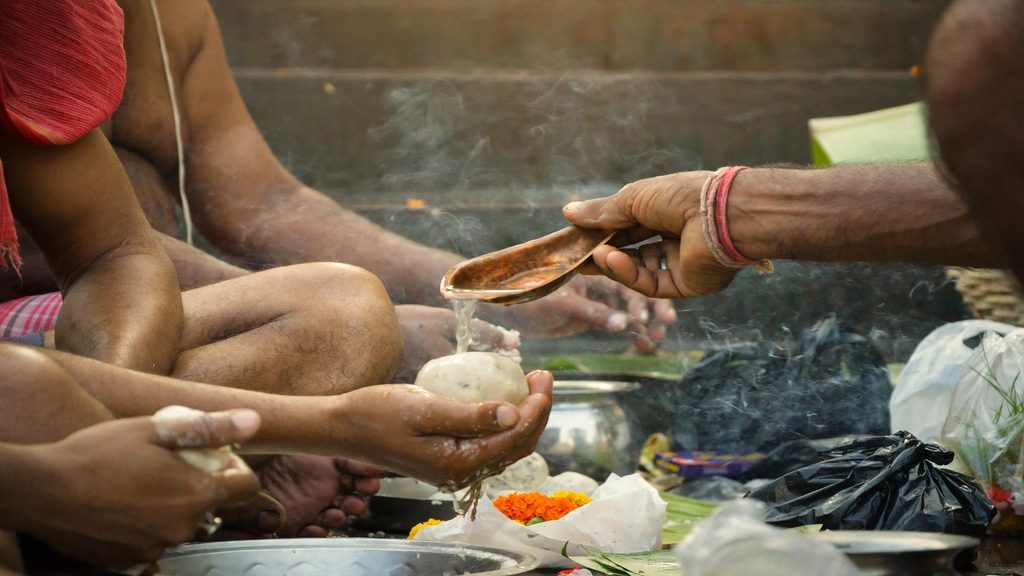
Jitiya typically falls within Pitru Paksha, the two-week period dedicated to honoring deceased ancestors through remembrance rituals and offerings. This timing links the festival’s forward-looking hope for children’s futures with a simultaneous period of looking back toward family lineage and ancestral memory, creating a season that holds both grief and hope side by side.
How Families Prepare and Celebrate
Beyond the fasting itself, Jitiya carries a strong sense of communal and family preparation.
Worship and Offerings
On the main fasting day, after completing a morning bath, women traditionally worship Lord Vasudeva or Surya Narayan, offering incense, lamps, and food items as part of the puja. A mixture involving millet is commonly used as part of the ritual offering during this worship.
The Jiutiya Thread Ceremony
In Nepal specifically, mothers tie a sacred jiutiya thread around their children as part of the observance, symbolizing protection and the blessings sought through the fast. This small, personal gesture often becomes one of the most meaningful moments of the entire festival for families.
A Shared Community Experience
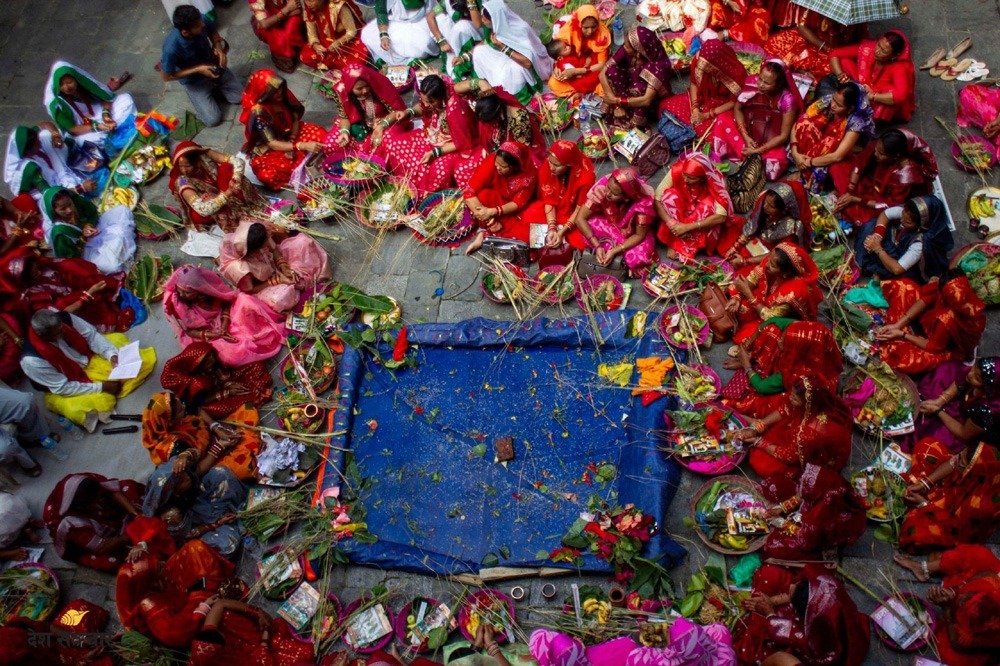
Although the fast itself is deeply personal, Jitiya is rarely observed in isolation. Women frequently gather together during the ritual days, offering each other support throughout the demanding fasting period, turning individual devotion into a shared communal experience.
Why Jitiya Still Matters Today
Jitiya endures not because it’s an easy tradition to maintain, but precisely because it isn’t. In a fast-changing world, the willingness of mothers to undertake such a demanding observance speaks to a form of devotion that transcends convenience. For many families in Nepal’s Terai region, Jitiya remains one of the clearest expressions of maternal love passed down through generations, tying personal sacrifice directly to hope for a child’s future.
Final Thoughts
The Jitiya Festival in Nepal offers a powerful reminder of just how far maternal devotion can stretch. From the ancient sacrifice of King Jimutavahana to the quiet discipline of a modern mother completing her third day without water, every element of this festival centers on one idea: a child’s wellbeing is worth genuine hardship. Whether you encounter Jitiya through its mythology, its rituals, or the mothers who observe it each year in Janakpur and beyond, it remains one of Nepal’s most emotionally resonant festivals.
Frequently Asked Questions
What is the Jitiya Festival in Nepal?
Jitiya is a Hindu fasting festival observed by mothers for the long life and wellbeing of their children, most prominently celebrated in Nepal’s Terai region.
When is Jitiya in 2026?
The main fasting day falls around October 3 to 4, 2026, depending on regional calendar calculations, with the fast breaking the following morning.
Is Jitiya a waterless fast?
Yes, most women observe a nirjala fast, meaning no food or water for a full 24 hours, though pregnant, nursing, or unwell women may observe a lighter fruit-based fast instead.
What is the story behind Jitiya?
The festival is rooted in the legend of King Jimutavahana, who sacrificed himself to save a Naga mother’s son from Garuda, giving the fast its name and meaning.
Where is Jitiya most widely celebrated in Nepal?
Jitiya is celebrated as a major festival across Nepal’s Terai-Madhesh region, particularly around the historic city of Janakpur.
What is the jiutiya thread ceremony?
It’s a Nepali tradition where mothers tie a sacred thread around their children during Jitiya, symbolizing protection and the blessings sought through the fast.