


Most people assume a Himalayan pilgrimage means suffering through weeks of high-altitude trekking. Muktinath breaks that rule completely. You can reach one of the holiest sites in both Hinduism and Buddhism in a single day from Pokhara, and thousands of pilgrims in their 60s and 70s do exactly that every season.
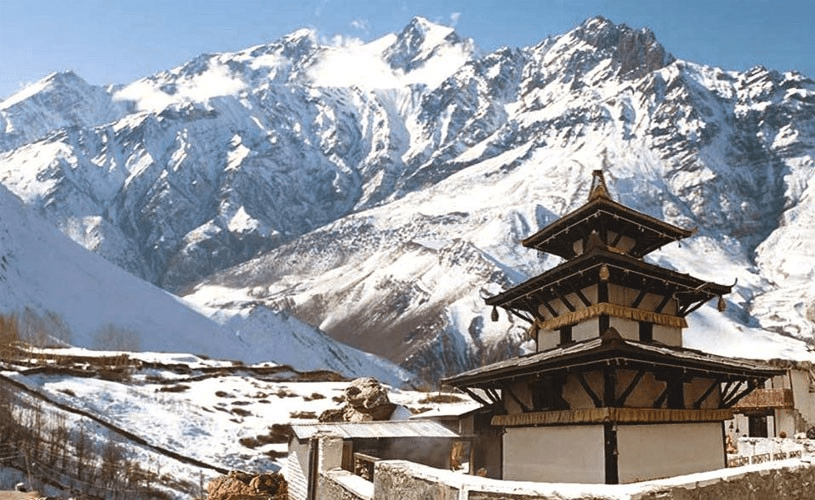
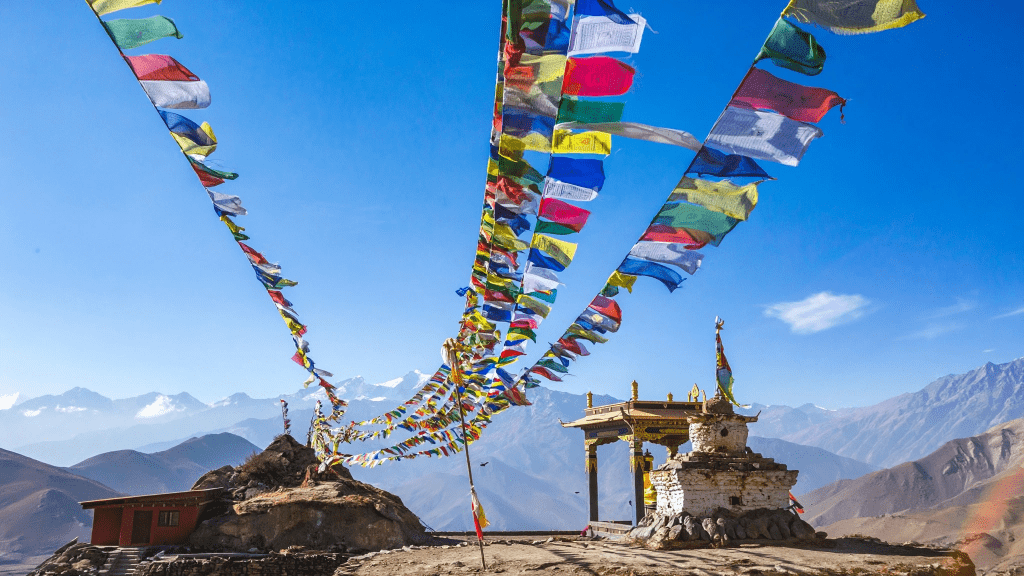
Sitting at roughly 3,710 meters (about 12,170 feet) in the Mustang district, the Muktinath temple occupies a strange and beautiful pocket of Nepal: a wind-scoured desert valley in the rain shadow of the Annapurna and Dhaulagiri ranges, where the green terraces of the lowlands give way to bare ochre cliffs and prayer flags snapping in the cold air. Figures for the exact elevation vary between sources, with some listing it as high as 3,800 meters depending on where the measurement is taken.
Why Muktinath Matters to Two Faiths at Once
Here is what most travel guides gloss over: Muktinath is one of the rare places on earth where Hindus and Buddhists have worshipped the same spot, side by side, for centuries without conflict. That shared reverence is not a marketing line. It is baked into the temple’s very identity.


For Hindus, this is Mukti Kshetra, literally “the place of liberation.” The temple is dedicated to Vishnu and counts as one of the 108 Divya Desams, the sacred Vishnu sites praised in early Tamil devotional poetry. It is the only one located outside India. It also ranks among the eight Swayam Vyakta Kshetras, the self-manifested shrines, and is considered one of the Char Dham of Nepal. Devotees believe a visit here helps release the soul from the cycle of rebirth.
Buddhists know the same place as Chumig Gyatsa, a Tibetan name meaning “Hundred Waters.” To them it is an abode of Avalokiteshvara, the bodhisattva of compassion, and one of the 24 great tantric sites. Tradition holds that Guru Rinpoche, Padmasambhava, meditated here on his way to Tibet. Walk the complex and you will see this dual identity everywhere: Buddhist nuns tend parts of the site, monasteries sit within a short walk, and the nearby Jwala Mai temple is holy to everyone regardless of faith.
The 108 Water Spouts and the Eternal Flame
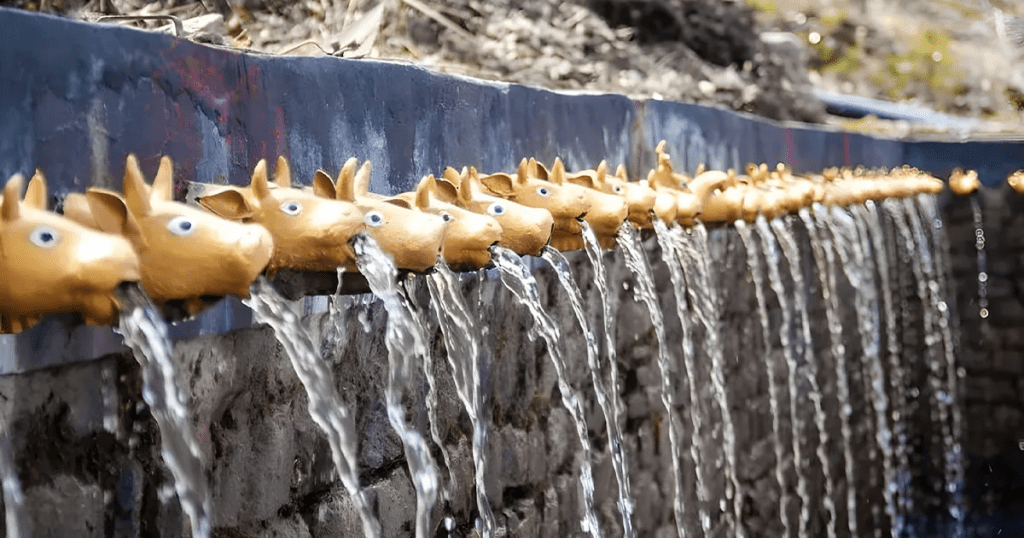
The signature ritual at Muktinath involves 108 water spouts, most shaped like bull or cow heads, arranged along the rear wall of the main courtyard. These are the mukti dharas. The truly devout strip down to a thin layer, walk beneath all 108 freezing streams of Himalayan snowmelt, then bathe in the two sacred ponds. It is bracing, and that is putting it politely. The water comes straight off the mountains and rarely climbs above single digits Celsius.
A short walk away stands the Jwala Mai temple, where a small natural flame burns from a seam of natural gas seeping out of the rock. Water, earth, and fire meet in the same spot, which is why the area is revered as a place hosting all five classical elements. Seeing a flame flicker directly out of stone next to running spring water is genuinely disorienting, in the best way.
How to Get to Muktinath Temple
This is where most first-time visitors get overwhelmed, so let me lay out the real options plainly. Everything starts from Pokhara, Nepal’s lakeside gateway to the Annapurna region. If you have not planned that leg yet, our Pokhara travel guide covers where to stay and how to arrive.
From Pokhara you have three broad routes to the temple.
By Jeep (The Reliable Workhorse)
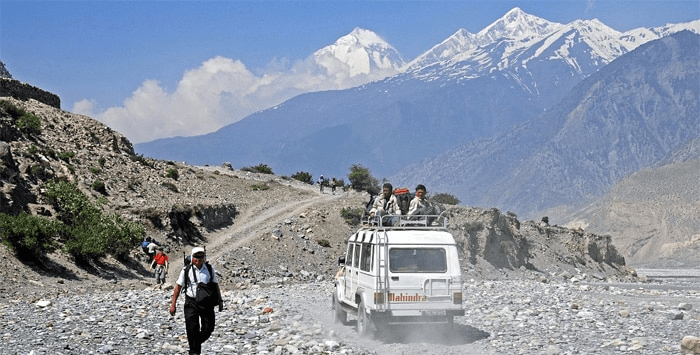
Overland by 4WD jeep is how the majority of pilgrims travel, and it is the most dependable option in almost every season. The road runs from Pokhara through Beni, Tatopani, and Ghasa, up the Kali Gandaki gorge to Jomsom, then on through Kagbeni to Ranipauwa, the settlement just below the temple. A private jeep from Pokhara typically runs around NPR 30,000 to 35,000 for a two or three day round trip as of early 2025, split among however many passengers you fit inside. Shared jeeps cost far less per seat.
Be honest with yourself about the ride. Sections of the road are gravel, rocky, and dusty, with ongoing construction that has dragged on for years. It is scenic and it is a genuine mountain road with drop-offs. People prone to motion sickness should come prepared.
By Air, Then Jeep
You can fly Pokhara to Jomsom in a short 15 to 20 minute flight, then continue by jeep for the last stretch to Ranipauwa. The catch, and it is a big one, is reliability. Jomsom flights are notorious for delays and cancellations because of high afternoon winds funneling through the valley. Morning departures have the best odds. Build slack into your schedule or you may find yourself stranded a day.
By Helicopter
For elderly pilgrims, anyone short on time, or those worried about altitude, a helicopter charter from Pokhara is the fastest route. A round trip runs roughly two hours of flying time, and the helicopter lands just below the shrine, leaving only about a 15 minute walk uphill. It is expensive, but for many families it is the difference between an aging parent completing the yatra or not.
Permits, Fees, and Paperwork
Muktinath sits inside the Annapurna Conservation Area, so you need an ACAP entry permit. As of early 2025, the permit costs NPR 3,000 for foreign nationals and NPR 1,000 for visitors from SAARC countries such as India. Indian pilgrims make up a huge share of visitors here, so the SAARC rate matters to a lot of people. The permit is managed by the National Trust for Nature Conservation, and you can read about the conservation area program on the NTNC’s official ACAP page.
You can arrange the ACAP permit in Pokhara or Kathmandu before you set out. If you are combining Muktinath with a longer trek, it pays to understand the full permit picture first. Our detailed Nepal trekking permits guide breaks down every fee and where to get each document.
When to Go
Timing changes the entire experience. The sweet spots are spring, roughly March to June, and autumn, September to November. Skies are clearer, the passes are open, and the mountain views on the drive up are at their best.
Muktinath has one quirk worth knowing. Because it lies in the Himalayan rain shadow, it stays relatively dry even during the summer monsoon, when the rest of Nepal is drenched. That makes it one of the few destinations you can reasonably visit in July and August. The problem is not rain at Muktinath itself but the approach road, which passes through landslide-prone lowland stretches during monsoon. Winter brings snow and bitter cold, and while the temple stays open, road access can be cut off for stretches. For a broader sense of Nepal’s climate through the year, our month-by-month best time to visit Nepal guide is a useful companion.
Altitude, Comfort, and Staying Well
At over 3,700 meters, altitude is real, even if you arrive by vehicle in a few hours rather than walking for days. Rapid ascent is actually the harder path on your body, because you skip the gradual acclimatization that trekkers get. Drink far more water than feels natural. Take it slow on the steps up to the shrine. If you feel a pounding headache, nausea, or shortness of breath that will not settle, descend. Older visitors and anyone with heart or lung conditions should talk to a doctor before booking.
Ranipauwa, the village below the temple, has a cluster of lodges and teahouses. Rooms are basic and fill up fast during peak pilgrimage months, and prices climb when demand spikes. Bring cash. ATMs are scarce and unreliable this far up, and card payment is rare.
What Else to See Nearby
Do not treat Muktinath as a single stop. Kagbeni, the medieval-feeling village at the mouth of the restricted Upper Mustang region, sits on the route and rewards an overnight stay with its mud-brick alleys and old fortress ruins. Jomsom serves as the district hub and a natural base. Marpha, a whitewashed Thakali village downvalley, is famous across Nepal for its apple orchards, apple brandy, and some of the best mountain hospitality you will find anywhere.
The drive itself, up the deepest gorge on the planet between two 8,000 meter giants, is arguably as memorable as the temple at the top.
Frequently Asked Questions
How high is Muktinath temple?
It sits at roughly 3,710 meters, about 12,170 feet, in the Mustang district. Some sources list the elevation as high as 3,800 meters depending on the exact point measured. Either way, it ranks among the highest active temples in the world.
Do I need a permit to visit Muktinath?
Yes. Because the temple lies inside the Annapurna Conservation Area, you need an ACAP entry permit. As of early 2025 it cost NPR 3,000 for foreign nationals and NPR 1,000 for SAARC nationals including Indians. You can get it in Pokhara or Kathmandu before your trip.
How do I get to Muktinath from Pokhara?
Three main ways: a 4WD jeep overland via Jomsom (the most reliable), a short flight to Jomsom followed by a jeep, or a helicopter charter that lands just below the shrine. Jeep is the workhorse option, while helicopter suits elderly pilgrims and those short on time.
Is Muktinath open during the monsoon?
Yes, and it is one of the few Himalayan destinations that stays relatively dry in summer thanks to its rain-shadow position. The temple itself is fine, but the approach road passes through landslide-prone areas during heavy monsoon, so travel can be disrupted.
How cold is the water at the 108 spouts?
Very. The spouts run with Himalayan snowmelt that rarely rises above single digits Celsius. Pilgrims who bathe beneath all 108 do it fast. Bring a change of dry clothes and a towel.
Is Muktinath suitable for elderly visitors?
It can be, which is part of its appeal. Vehicle and helicopter access mean you do not have to trek. That said, the altitude is significant, so older pilgrims should hydrate well, move slowly, and ideally consult a doctor beforehand.
Why is Muktinath sacred to both Hindus and Buddhists?
Hindus revere it as Mukti Kshetra, a Vishnu shrine that grants liberation, and one of the Char Dham of Nepal. Buddhists know it as Chumig Gyatsa, linked to Avalokiteshvara and to Guru Rinpoche, who is said to have meditated here. Both traditions have worshipped the site together for centuries.
How many days do I need for a Muktinath trip?
A jeep trip from Pokhara typically takes two to three days round trip. A helicopter day trip can be done in a single day. Add extra time if you want to explore Kagbeni, Jomsom, or Marpha along the way, which is well worth it.