



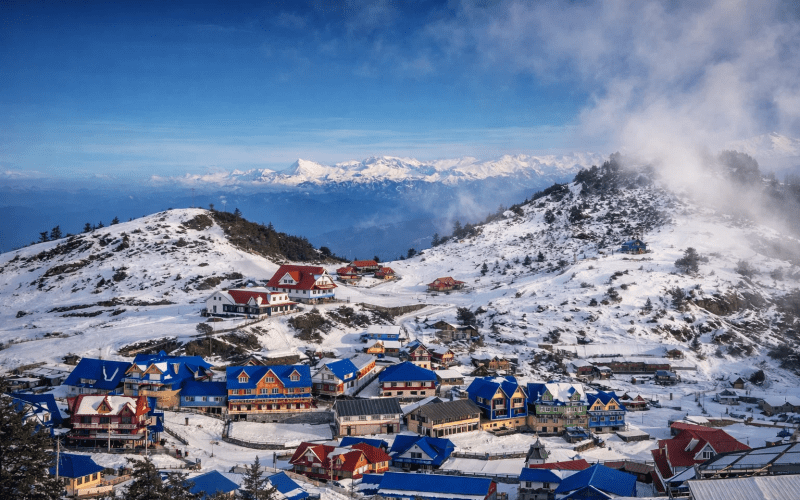
Snowfall in Nepal has returned in spectacular fashion as the Kalinchok region of Dolakha witnessed its first snowfall of the year, drawing pilgrims and tourists into a breathtaking winter landscape. The snowfall began on Wednesday morning, paused briefly, and resumed again in the evening, according to local residents.
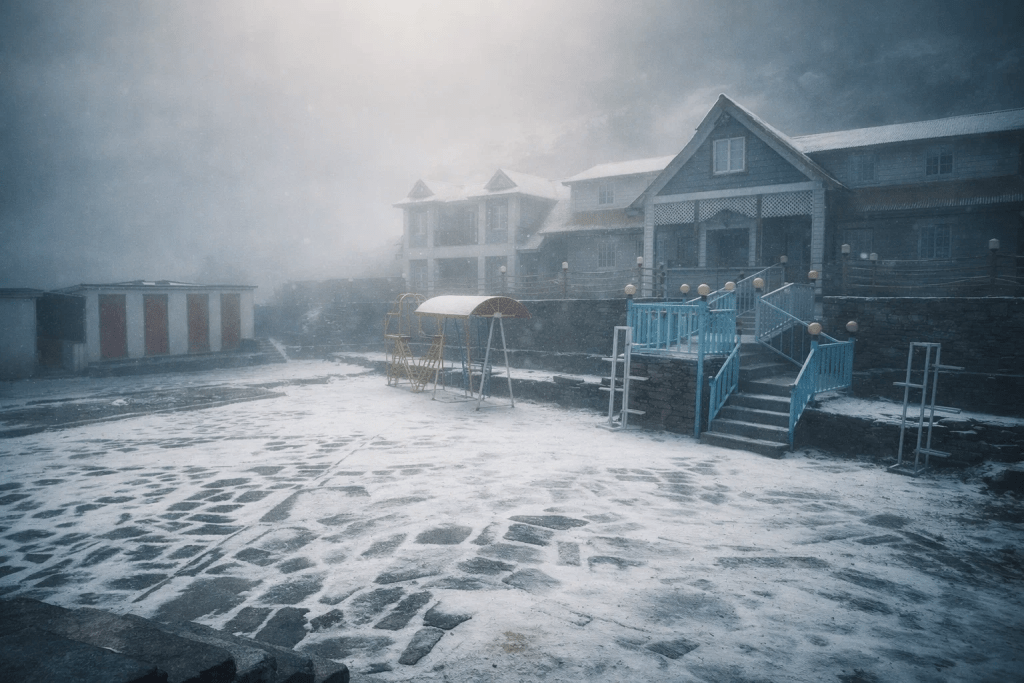
Visitors who reached the sacred Kalinchok Bhagwati Temple were seen celebrating the moment—walking, playing, and capturing memories amid fresh snow. Locals from Kuri, Kalinchok, said the experience became even more special for pilgrims who had come for both religious devotion and natural beauty, as snowfall in Nepal added a magical layer to their journey.
Situated at an altitude of 3,842 meters, Kalinchok received snowfall around 9:00 AM for nearly an hour, followed by another spell starting at 4:45 PM, hotel operators in the area confirmed. This marks one of the season’s earliest and most anticipated snowfall events in Nepal’s mid-Himalayan region.


Devotees expressed joy at witnessing the first snowfall in Nepal this year in Kalinchok. Locals noted a visible shift in snowfall patterns over the years. While the region once received frequent snowfall from Poush–Magh to late Falgun, recent winters have seen snowfall limited to only two to four times annually, making this event even more significant.
Following the snowfall, expectations are rising for increased tourist arrivals in Dolakha’s major destinations, including Kalinchok, Sailung, and Cherdung. These areas traditionally attract large crowds eager to experience snowfall in Nepal, especially during weekends, festivals, and public holidays. The recent lack of snowfall had raised concerns among local farmers and tourism entrepreneurs, which this event has now eased.
Kalinchok remains one of the most accessible Himalayan destinations from Kathmandu, located 18 kilometers from Charikot and known for blending religious heritage with dramatic landscapes. Whether covered in snow during winter or lush greenery during the monsoon, Kalinchok offers a distinct charm in every season—making it a consistent highlight in stories related to snowfall in Nepal.
The destination is also seeing a steady rise in international visitors. Once dominated by domestic pilgrims, Kalinchok now welcomes 80 to 90 Indian tourists daily, especially after fresh snowfall. During peak days, 400 to 500 visitors arrive in Kuri, supported by well-equipped hotels and growing tourism infrastructure.
According to Chandra Lama, Chairperson of the Kalinchok Bhagwati Guthi Management Committee, more than 90 Indian tourists visit Kalinchok on busy days, reflecting the area’s expanding appeal following snowfall in Nepal.
From Kalinchok, visitors are rewarded with sweeping views of Gaurishankar and Ganesh Himal. A key attraction is the sacred Jalkund, a natural water pond that remains filled throughout the year despite having no visible source. Local belief holds that visiting the Jalkund protects devotees from misfortune.
Seasonal contrasts further define Kalinchok’s beauty. From Falgun to Chaitra, snow blankets the hills of Kuri and Thumka, while from Jestha to Shrawan–Bhadra, the landscape bursts into color with blooming wildflowers and rhododendrons. During warmer months, tourists are often mesmerized by yaks and chauris roaming freely across green slopes.
Locals say that when snowfall in Nepal blankets Kalinchok, the destination becomes almost unreal—turning the sacred hilltop into one of Nepal’s most enchanting winter escapes.


