



At 3,440 meters in Namche Bazaar, researchers found that two genes governing the body’s response to low oxygen were running at roughly a quarter and two-fifths of the levels seen in lowlanders in Kathmandu. Not different versions of the genes. Dialed down. That finding, published in 2026, is one piece of a picture that has taken two decades to assemble, and it points somewhere counterintuitive: Sherpa high-altitude adaptation works less by making more blood than by using oxygen better once it arrives. Here is what the evidence actually supports, and where it stops.
The problem the body has to solve
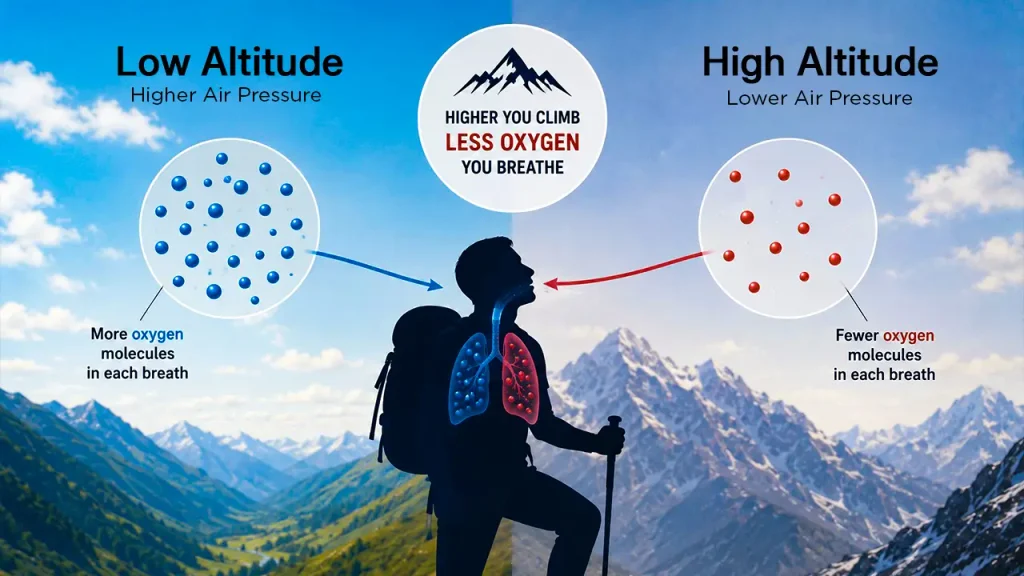
Air at 5,300 meters contains the same 21 percent oxygen as air at sea level. What falls is pressure. Fewer oxygen molecules occupy the same volume, so each breath delivers roughly half the oxygen a sea-level breath does.
Lowlanders respond in a predictable sequence. Breathing rate rises within hours. Over days and weeks, the kidneys release erythropoietin, red blood cell production increases, and hemoglobin concentration climbs. More carriers, same cargo problem partly solved.


That response has a cost. Thicker blood is harder to pump. Pushed far enough over years, it produces chronic mountain sickness, a condition marked by excessive red cell production, and it is well documented in long-resident highland populations elsewhere in the world.
What is different about Tibetan and Sherpa physiology
Here is the result that reoriented the field. Tibetans and Sherpa living permanently at altitude do not show the elevated hemoglobin that the textbook response predicts. Sherpa and Tibetan women at high altitude maintain hemoglobin around 13.8 g/dl, close to sea-level values, while Han Chinese populations at the same altitudes show elevated levels.
Low hemoglobin at altitude should be a disadvantage. It is not, and explaining why has occupied researchers since the early 2000s.
Nitric oxide and blood flow
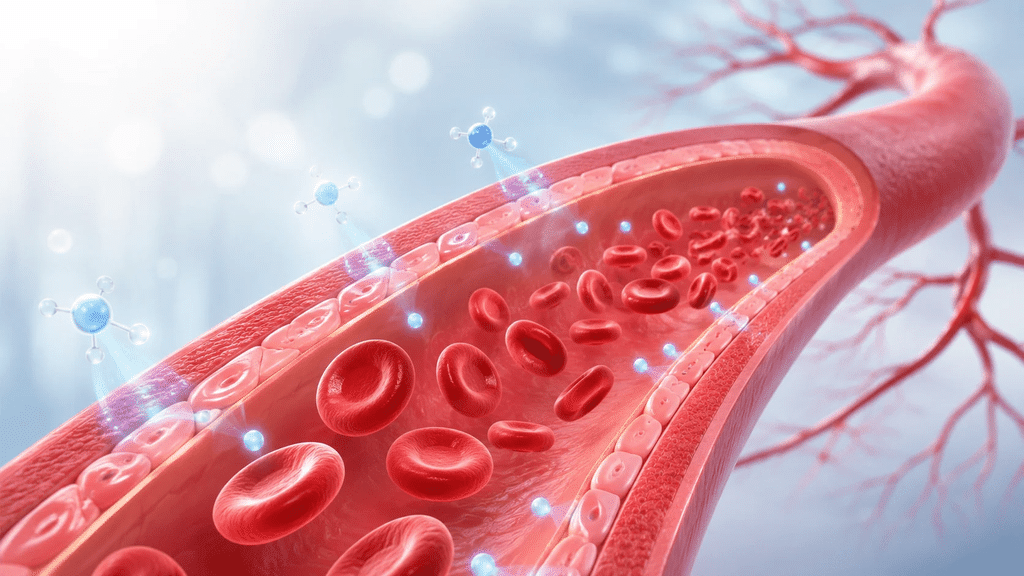
One answer came from a study led by Serpil Erzurum of the Cleveland Clinic with Cynthia Beall of Case Western Reserve University, published in the Proceedings of the National Academy of Sciences in 2007. Working with 88 Tibetan participants at around 4,200 meters and 50 sea-level residents in the United States, the team measured nitric oxide, a signaling molecule that relaxes blood vessel walls.
Circulating nitric oxide products in the Tibetan participants were roughly ten times higher than in the sea-level group. Exhaled nitric oxide was about 25 percent greater. Forearm blood flow was more than double.
Doubling the flow rate through a vessel delivers roughly twice the oxygen per minute even when each unit of blood carries no more than before. Oxygen delivery to the capillary beds in the Tibetan participants’ arms was about double that of the lowlanders.
So the strategy is not more carriers. It is faster circulation through wider vessels.
| Measure | Tibetan highlanders | Sea-level controls | Source |
|---|---|---|---|
| Circulating nitric oxide products | About 10x higher | Baseline | Erzurum et al., PNAS 2007 |
| Exhaled nitric oxide | About 25% greater | Baseline | Erzurum et al., PNAS 2007 |
| Forearm blood flow | More than double | Baseline | Erzurum et al., PNAS 2007 |
| Oxygen delivered to arm capillary beds | About double | Baseline | Erzurum et al., PNAS 2007 |
The genes under selection
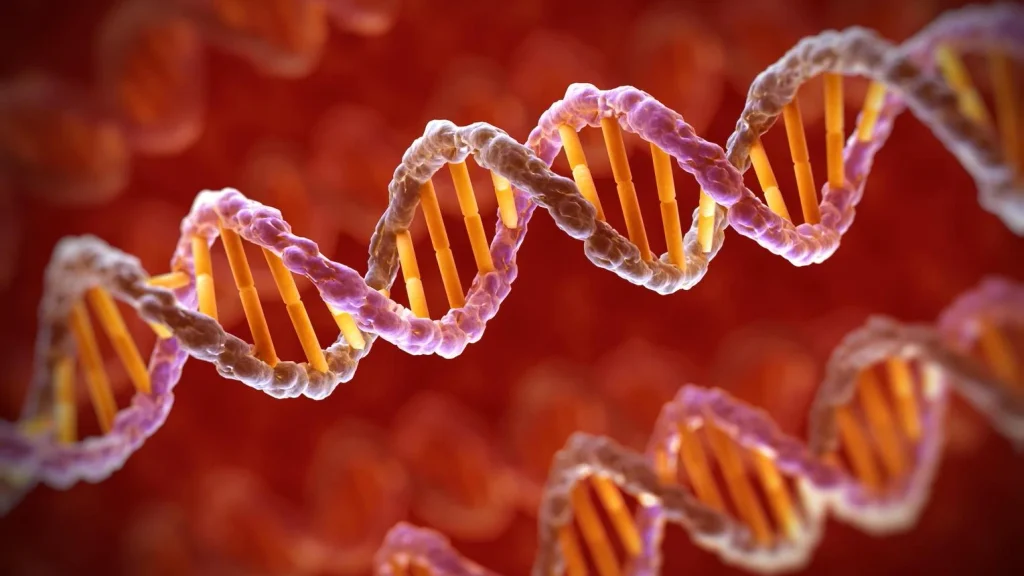
Genome-wide scans have repeatedly flagged the same loci in Tibetan and Sherpa populations: EPAS1, EGLN1 and PPARA. All three sit in the pathway that senses oxygen and decides what the body does about it.
EPAS1 encodes a protein called HIF-2alpha, part of the hypoxia-inducible factor system. When oxygen falls, HIF proteins accumulate and switch on a program that includes erythropoietin production. EGLN1 encodes an enzyme that tags HIF proteins for destruction when oxygen is plentiful. Together they form a thermostat for the oxygen response.
Variants in both genes are associated with hemoglobin levels in highland populations, which connects the genetics directly to the blunted red-cell response described above.
The 2026 Namche study
A study by Yunden Droma and colleagues, published in Annals of Human Genetics in 2026, compared 56 Sherpa at 3,440 meters in Namche Bazaar with 25 non-Sherpa lowlanders at 1,300 meters in Kathmandu, with mean age around 31 in both groups.
Sherpa participants showed significantly reduced frequencies of the ancestral, non-adapted alleles at four variants: two in EPAS1 and two in EGLN1. More striking was the expression result. EPAS1 messenger RNA in the Sherpa group ran at 26.7 percent of lowlander levels, and EGLN1 at 39.2 percent.
Read carefully, that is a measurement of how loudly the genes are being transcribed, not of what the resulting proteins do. The authors themselves list real limitations: messenger RNA was measured in whole blood rather than in purified red-cell precursors, and the samples were frozen, which can degrade RNA. They call for replication with fresh blood and better controls. Treat it as a strong signal in one cohort rather than a settled mechanism.
Where EPAS1 came from
Work published in Nature in 2014 by Emilia Huerta-Sánchez and colleagues found that the adaptive EPAS1 haplotype in Tibetans closely resembles DNA from Denisovans, an archaic human population known mainly from fragments found in Siberia and from genetic traces in living people.
The interpretation is that the variant entered modern human populations through interbreeding and was later favored by selection on the plateau. Subsequent work has examined the haplotype’s history in more detail. Humans are thought to have occupied the Tibetan plateau more or less continuously for roughly 25,000 to 40,000 years, which is the window in which this selection operated.
A caveat belongs here. Sherpa communities are closely related to Tibetan populations and share much of this genetic history, but Sherpa are a distinct community with their own origin accounts and their own history of migration into the Khumbu, Solukhumbu and neighboring valleys. Genetic similarity is not identity, and the research literature does not treat the two as interchangeable.
The efficiency finding
The second major strand is metabolic rather than genetic, and it came from the Xtreme Everest 2 expedition.
Researchers led by Andrew Murray at the University of Cambridge, with the expedition directed by Daniel Martin at University College London, followed two groups to Everest Base Camp at 5,300 meters. Fifteen Sherpa participants, drawn from lower-lying areas rather than from elite climbing ranks, and ten lowland investigators. Measurements were taken at baseline, on arrival at Base Camp, and after two months at altitude. The results appeared in PNAS in May 2017.
Four findings stand out:
- Mitochondrial efficiency. Sherpa mitochondria produced more ATP per unit of oxygen consumed. This was present at baseline, before any altitude exposure in the study.
- Fuel preference. Sherpa participants showed lower fat oxidation, favoring glucose, which yields more energy per unit of oxygen than fat does.
- Phosphocreatine. In lowlanders this energy buffer fell sharply over two months at altitude. In Sherpa participants it rose.
- Free radicals. Sherpa participants maintained very low levels of these damaging molecules, which normally climb quickly in lowlanders at altitude.
Over the two months, lowlander measurements shifted toward the Sherpa pattern. Sherpa measurements stayed where they were. That contrast is the argument for the difference being constitutional rather than simply acquired through exposure.
What this does not explain
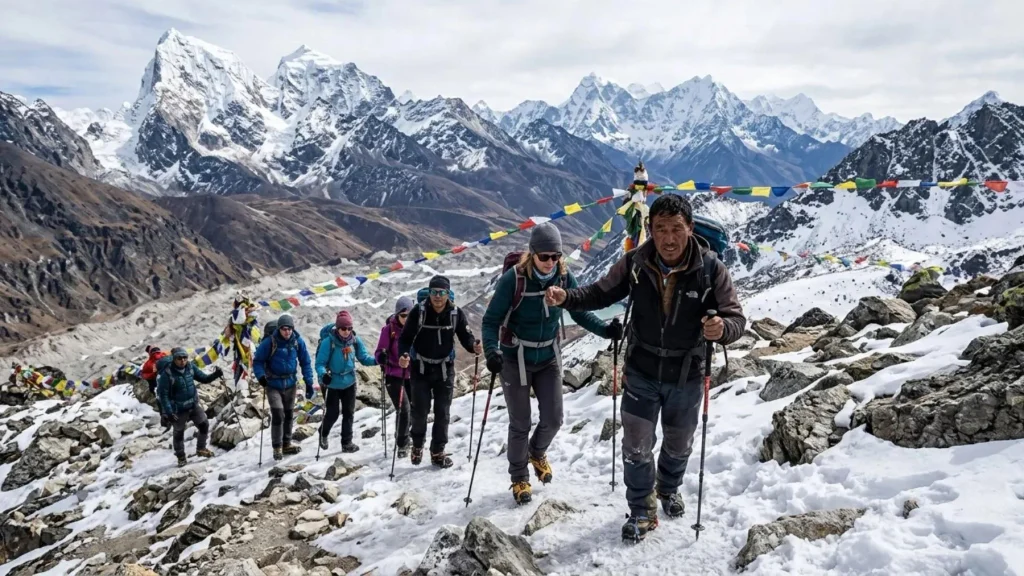
Three things get overclaimed in popular coverage, and they are worth separating out.
First, none of this research measures climbing performance. The Xtreme Everest 2 participants were ordinary Sherpa adults, not high-altitude workers selected for ability. Attributing the achievements of expedition workers to genetics alone ignores lifelong altitude residence, accumulated route knowledge, training, and the simple fact that this is skilled professional work.
Second, no single gene explains the phenotype. EPAS1, EGLN1 and PPARA each show selection signals, the metabolic findings sit partly downstream of them and partly alongside, and how the pieces connect is not resolved.
Third, adaptation is not immunity. Sherpa and Tibetan people develop acute mountain sickness, high-altitude pulmonary edema and cerebral edema. The rates differ from those in lowlanders; the risk does not vanish. Anyone trekking in these valleys should read altitude guidance as written, and our high-altitude snowfall and trekking safety guide covers the practical side, alongside background in our Everest Base Camp piece and our introduction to Sherpa history and community.
Why the research matters beyond the mountains
Critically ill patients in intensive care frequently have tissues starved of oxygen, through sepsis, lung injury or circulatory failure. The clinical problem resembles the physiological one at altitude: cells receiving less oxygen than they need.
Researchers on the Xtreme Everest work have been explicit that this is the motivation. If a population has evolved to maintain cellular energy production under chronic low oxygen, the mechanisms involved may suggest therapeutic targets.
Keep expectations calibrated. Identifying a mechanism in healthy volunteers at Base Camp is a long way from a treatment at a hospital bedside, and no therapy has emerged from this line of work so far.
Frequently asked questions
Do Sherpa have more red blood cells than lowlanders?
No, and that is the surprising part. Sherpa and Tibetan highlanders maintain hemoglobin concentrations close to sea-level values rather than the elevated levels that lowlanders develop at altitude. Sherpa and Tibetan women at altitude have been measured around 13.8 g/dl.
What does nitric oxide do at altitude?
It relaxes blood vessel walls, which widens them and increases flow. Tibetan highlanders in the 2007 PNAS study had circulating nitric oxide products around ten times higher than sea-level residents and more than double the forearm blood flow, delivering roughly twice the oxygen to capillary beds.
Is the adaptation genetic or acquired through growing up at altitude?
Both contribute, and separating them is difficult. Selection signals at EPAS1, EGLN1 and PPARA are genetic. The Xtreme Everest 2 finding that Sherpa mitochondrial efficiency was present at baseline, and that Sherpa measurements stayed stable while lowlander values drifted toward them, supports a constitutional component. Lifelong altitude residence also shapes physiology independently.
What is the Denisovan connection?
Research published in Nature in 2014 found that the adaptive EPAS1 haplotype in Tibetans closely resembles Denisovan DNA, suggesting it entered modern human populations through interbreeding with that archaic group and was later favored by selection on the Tibetan plateau.
Are Sherpa and Tibetan populations the same genetically?
They are closely related and share much of this adaptive genetic history, but they are distinct communities with their own histories, languages and origin accounts. Research treats them as related populations, not as one group.
Does this mean Sherpa cannot get altitude sickness?
No. Sherpa and Tibetan people experience acute mountain sickness and the serious altitude illnesses. Adaptation shifts the risk profile rather than removing it.
Does genetics explain why Sherpa climb so well?
Only partly, and the research does not claim otherwise. The studies measured physiology in ordinary adults, not climbing performance in professionals. Lifelong altitude residence, route knowledge, training and professional experience all matter, and attributing the work to biology alone misrepresents it.
Could this research help hospital patients?
That is the stated motivation behind the Xtreme Everest programme, since critically ill patients often have oxygen-starved tissues. No treatment has come from it yet, and the distance between a mechanism found at Base Camp and a therapy in intensive care is considerable.
Further reading
The primary sources here are the Cleveland Clinic and Case Western nitric oxide study in PNAS (2007) and the Xtreme Everest 2 metabolic study in PNAS (2017).
NepalVue covers the Himalaya as a place people live and work, not only climb. Save this one, pass it to anyone heading high, and follow NepalVue for more on the science and the communities behind it.


