



How much of what you pay for a night in a Nepali village actually stays in that village? It is a fair question, and the honest answer is that it depends almost entirely on how the stay was booked and who organized it. A community homestay nepal booking can send most of your money into the household that feeds you, or it can route a large share through agencies in Kathmandu before anything reaches the hills. Understanding the difference takes about ten minutes. Those ten minutes change what your trip is worth to the people hosting you, and this guide walks through the structures, the numbers, and the questions worth asking.
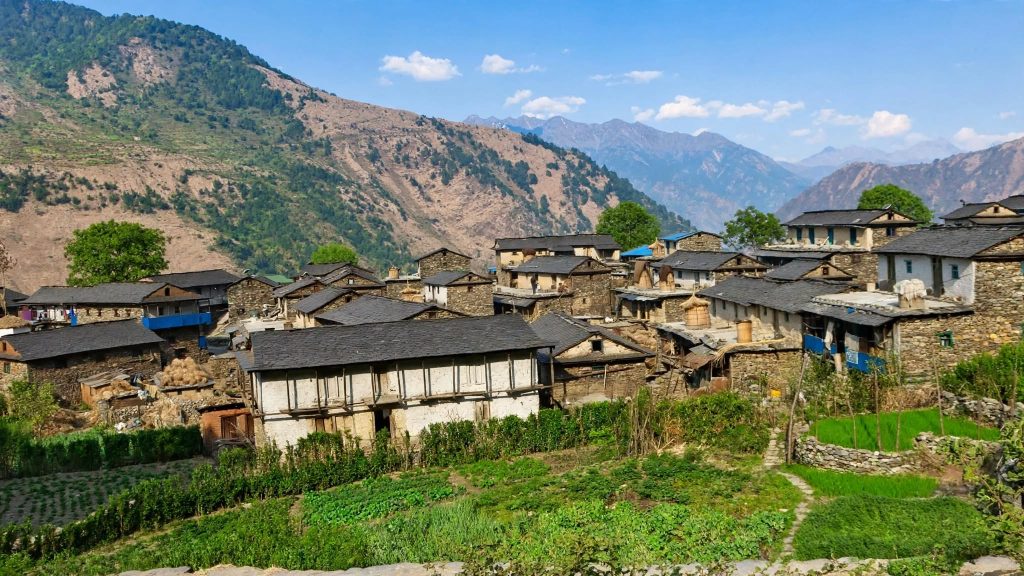
What a Homestay Actually Is in Nepal
In Nepal, “homestay” is a regulated category, not just a marketing word. Registration falls under the tourism authorities, and the widely applied standard keeps a registered homestay small: roughly four guest rooms and eight beds per house. Size limits exist for a reason. A homestay is meant to complement hotels and lodges, not compete with them, and the small scale keeps the guest inside family life rather than in a parallel commercial space.
Two structures dominate.


- Community homestays operate as a group. A minimum of five households register together under a shared management committee, agree on rates, and distribute guests among themselves.
- Private homestays are single families registering on their own. Income goes to that household alone.
Both are legitimate. They simply distribute money very differently, and travelers often assume any village stay is automatically a community enterprise. It is not.
The Money Path: Four Common Routes
Your payment usually travels one of four ways before it reaches a host. Each route has a different level of leakage, which is the industry term for money that leaves the local economy.
| Booking route | Who takes a cut first | Typical local retention | What the traveler gains |
|---|---|---|---|
| Walk in and pay the family directly | Nobody | Highest | Lowest price, no guarantee of quality or language |
| Village committee books you | Committee fund, then host | High | Rotation fairness, a local coordinator, shared facilities |
| Community tourism network or social enterprise | Platform fee, then committee or host | Moderate to high | Booking support, English communication, vetted standards |
| Full tour package including transport and guide | Agency, guide, transport, then host | Lowest per night | Logistics handled end to end |
None of these is wrong. A package trip that employs a licensed Nepali guide and a local driver still creates real income, just spread across a longer chain. But if your goal is to maximize what lands in the village, the chain length matters more than the price you pay.
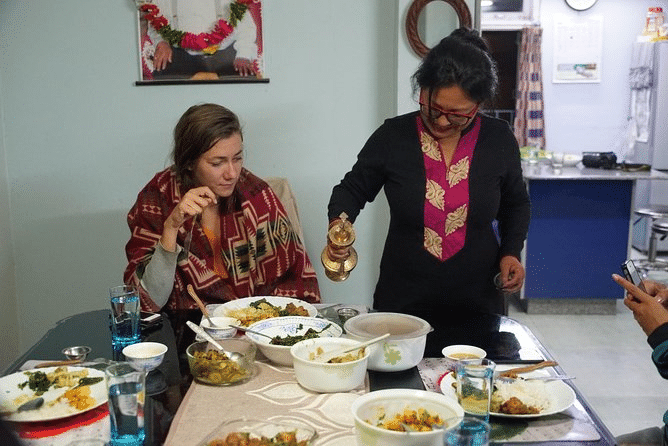
A Real Example: Sirubari and the Split That Started It
Sirubari in Syangja district is usually credited as Nepal’s first organized village tourism project. Early documentation of its arrangement is unusually specific, and it remains useful as a mental model.
Under the contract with the tour operator that supplied guests, the village tourism management committee received about NPR 1,700 per foreign visitor. Of that, roughly NPR 1,000 went to the household providing the guest room. Around NPR 700 stayed with the committee to cover porters, welcome and farewell ceremonies, and shared costs.
Read that again. Close to 60 percent went straight to the host family. The rest funded the machinery that made hosting possible at all.
Other details from the same period are worth knowing. About 25 households were active hosts. Guests did not choose their family: the committee assigned them on rotation, which stopped the best located or best known houses from capturing everything. Converting a room to guest standard cost households somewhere between roughly NPR 20,000 at the bare minimum and NPR 70,000 for a version with an attached bathroom. Researchers at the time judged returns modest against that investment and suggested longer stays and higher tariffs.
That last point is the one travelers should sit with. Two nights instead of one changes a household’s economics far more than a generous tip.
The Community Fund: Where the Other Share Goes
Most organized community homestays hold back a percentage for a shared fund. At Kirtipur Community Homestay, on the edge of the Kathmandu Valley, around 10 percent of tourism income is set aside for a community fund, with the remainder distributed after operating costs.
Percentages vary by village. Some committees take 5 percent, others take considerably more, and a few operate a flat per-guest levy instead. What the fund pays for tends to be practical: water systems, trail repair, school supplies, festival costs, a shared kitchen, loan support for a household upgrading a toilet.
Here is the part that gets missed. In Sirubari surveys, more than 76 percent of households that hosted no guests at all still reported benefits, through exactly this kind of community spending. A village fund is how tourism reaches families who have no spare room, which in most Nepali villages is the majority.
What Hosting Actually Earns a Household
Be realistic about scale. Nepali homestay households are not running businesses. They are running a farm with a guest room attached.
A registered homestay capped near four rooms cannot fill every night. Occupancy in most villages clusters heavily around October and November, then March through May, with long quiet stretches between. Income is seasonal, irregular, and supplementary to agriculture, remittances, or wage work.
Nightly rates vary widely by region and by what is included. Community homestay rates across Nepal commonly sit in a band that covers a bed plus two or three meals, and prices differ between the Kathmandu Valley fringe, the mid hills, and the Terai. Rather than quote a single national number that will be wrong somewhere, ask the committee directly what the rate is and what it covers. Most will tell you plainly.
Meals are the hidden economics. Dal bhat cooked for guests uses rice, oil, vegetables, and often meat bought at market. A rate that looks generous before costs can look thin after them.
Who Earns It Matters as Much as How Much
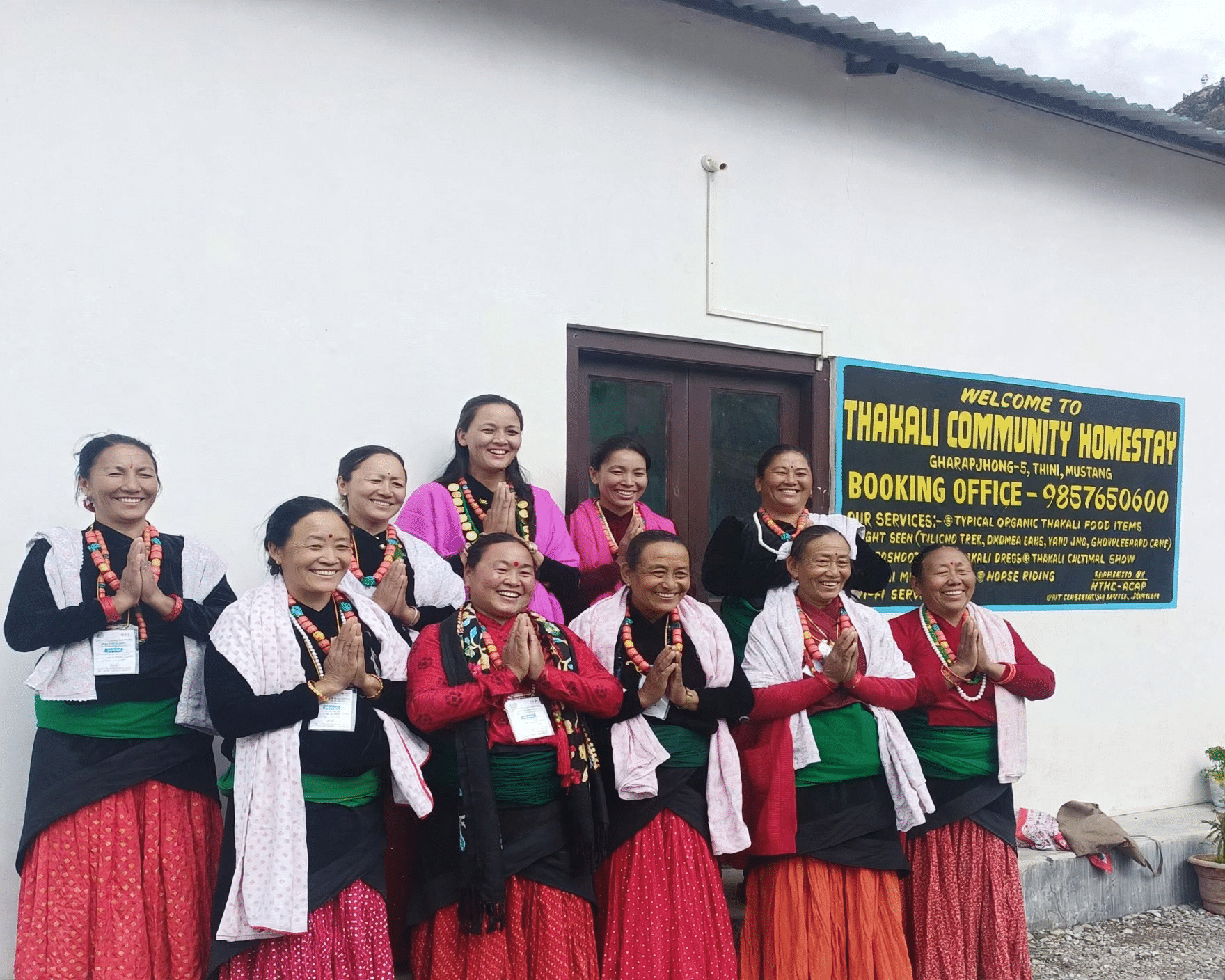
Community homestays in Nepal are disproportionately run by women. Cooking, room preparation, and hosting fall within work women already do, and formalizing it converts unpaid labor into recorded income under a woman’s name.
That shift is significant in households where women rarely control cash. Several networks report household decision making changing once women hold the homestay earnings directly. Traditions vary by community and region, and no single pattern describes every village, but the trend appears consistently across Newar, Tharu, Gurung, and Magar homestay programs.
Ask who signs the receipt. It tells you more than any brochure.
Regional Differences You Should Expect
Nepal is not uniform, and neither is homestay economics.
- Kathmandu Valley fringe: villages such as Kirtipur and Panauti are close to the city and to guests. Shorter stays, higher turnover, more competition from hotels.
- Mid hills: Gurung and Magar villages around Pokhara and along trekking corridors benefit from trekker traffic, though lodges capture much of it. Homestays often serve the day and two-day market.
- Terai: Tharu community homestays near Chitwan and Bardiya sit beside a strong wildlife tourism economy, which raises volume but increases leakage to safari operators and jeep owners.
- Mountains and remote districts: high transport costs, short seasons, and thin booking channels. Guests are fewer but spending per visit can go further locally.
In the Terai, a homestay night may be one line on a package invoice dominated by jungle activities. In a remote hill village, the same night may be nearly the whole transaction.
Ten Questions That Reveal Where Your Money Goes
You do not need an audit. You need a short conversation.
- Is this homestay registered, and is it a community or private homestay?
- How many households are in the group?
- How are guests assigned, by rotation or by choice?
- What percentage goes to the community fund?
- What has the fund paid for in the last year?
- What does the nightly rate include, and what costs extra?
- Who is paid for the guiding, cooking, and cultural program?
- Are the porters and drivers hired locally?
- Can I pay the committee or household directly?
- Is there a second night worth staying for?
Ask these politely and in person where possible. Most committees keep records and are proud to show them.
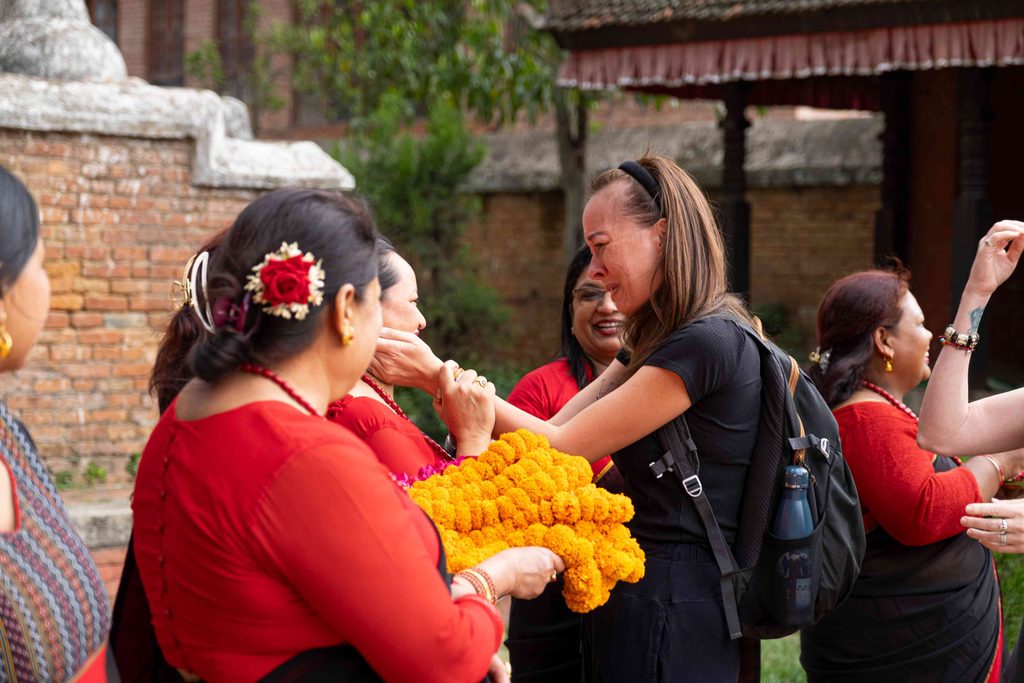
Practical Ways to Increase Local Retention
Small choices compound.
Stay two nights instead of one. Fixed costs of hosting are front loaded, so the second night is disproportionately profitable for the household.
Buy locally on site. Tea, snacks, handicrafts, and a village guide for a morning walk all stay in the village at close to 100 percent.
Book in the shoulder months where the village can handle it. Spreading demand beyond October keeps income steadier and reduces pressure on the peak.
Pay in cash where the committee prefers it, since card and platform fees are real deductions on thin margins. Carry small notes, because change is a genuine problem in villages.
Tip appropriately but do not treat tipping as a substitute for fair rates. Our guide to tipping guides and porters in Nepal covers the norms in detail.
Finally, be an easy guest. Households absorb the cost of difficult ones, and that cost never appears in any ledger.
Where to Start
If you want a first community homestay close to Kathmandu, the Valley rim and nearby hill villages are the easiest entry point, and our roundup of the best village homestays near Kathmandu is a practical starting list. For Terai culture and a very different hosting tradition, read our guide to Tharu culture in Nepal. Trekkers heading toward Annapurna can build a village night into the route through places like Ghandruk, and budget travelers will find the wider cost picture in our Nepal budget travel guide.
For official positioning and listed homestay destinations, the Nepal Tourism Board homestay pages are the reference point. Independent programs such as the Community Homestay Network publish their community and household counts, which as of their 2025 reporting covered 51 communities and 408 households.
Frequently Asked Questions
How much of my payment reaches the host family?
In a well run community homestay booked directly or through a village committee, a majority of the nightly rate typically reaches the household, with a smaller share going to a community fund and shared costs. Long tour packages reduce that share because more parties are paid along the way.
Is a community homestay cheaper than a guesthouse?
Usually yes, especially because meals are normally included. Value differs from price though. You are paying for a family’s time and food, not a hotel service standard.
Can I choose which family I stay with?
Often no, and that is deliberate. Many committees rotate guests so income spreads evenly. Ask before you arrive if you have a specific need, such as accessible ground floor sleeping.
Do homestays have private bathrooms and hot water?
It varies enormously. Some households have invested in attached bathrooms and solar hot water, others offer a shared squat toilet and bucket washing. Ask the committee directly rather than assuming.
Should I bring gifts for the family?
Modest, useful gifts are usually welcome, though cash paid at fair rates helps more. Avoid giving money or sweets directly to children, which encourages begging and undermines the household.
Is it appropriate to photograph the family?
Ask first, every time, and accept no as an answer. Kitchens, prayer spaces, and elders deserve particular care. Never photograph inside a shrine room without explicit permission.
What is the best season for a village homestay?
October to November and March to May are the most comfortable and the busiest. Shoulder months and even parts of the monsoon can work well in the mid hills and Terai, and they help villages earn outside the peak.
Are homestays safe for solo travelers and women?
Registered community homestays are generally considered safe, and many are women led. Use the committee as your point of contact, share your plan with someone, and follow the same precautions you would anywhere.
Traveling through Nepal’s villages rewards the traveler who asks questions. Explore more of Nepal with NepalVue, save this guide for your planning file, and share it with the person you are traveling with. Follow NepalVue for more practical reporting from across the country.


