



Something is shifting in Nepal’s weather patterns. Cities that once stayed cool through spring now bake under relentless sun. In fact, 40-degree days in Nepal have become far more common in recent years, and the data backs it up. This article walks through which cities are hit hardest, why temperatures keep climbing, and what it means for daily life. So, before summer fully sets in, let’s look at what’s actually happening on the ground.
What Counts as a Heatwave in Nepal?
First, it helps to define the term properly. According to Nepal’s Department of Hydrology and Meteorology, a heatwave occurs when maximum and minimum temperatures at a location stay unusually high for three consecutive days. That threshold matters, since a single hot afternoon doesn’t qualify.
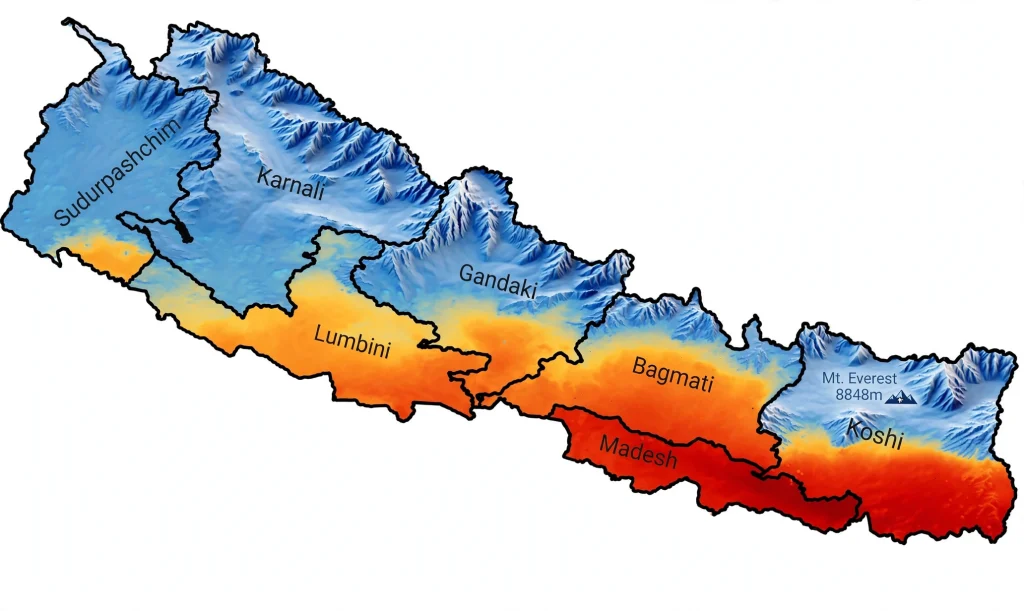
Meanwhile, meteorologists also track a phenomenon locally known as “Loo.” This refers to sustained heat above 40 degrees Celsius, often accompanied by dry, scorching wind. Loo conditions typically strike the Terai lowlands hardest, though hill districts increasingly report similar extremes too.


Which Nepali Cities Are Seeing the Most 40-Degree Days?
Certain cities consistently top the list. Nepalgunj, in Banke district, has repeatedly recorded some of the country’s highest readings. In fact, the city hit its highest-ever 24-hour maximum of 42 degrees Celsius on May 25, 2026. Afterward, temperatures there stayed above 41.5 degrees for an extended stretch.
Bhairahawa tells a similar story. The city recorded 40.8 degrees Celsius on one occasion, with readings frequently touching 38 to 41 degrees throughout the pre-monsoon season. Dhangadhi, in the far west, has also crossed 40 degrees multiple times, sometimes reaching as high as 44 degrees during peak heat events.
Dipayal, meanwhile, stands out for a different reason. Officials described its 40-degree readings as genuinely unusual for the region, since temperatures there historically stayed cooler. Kapilvastu has also crossed 41 degrees, while Simara, Janakpur, and Biratnagar regularly report highs between 36 and 39 degrees during heat spells.
Even Kathmandu Valley, sitting at higher elevation, hasn’t escaped entirely. Although the capital rarely reaches 40 degrees itself, it has recorded readings in the low-to-mid 30s during recent heatwave periods, noticeably warmer than historical norms for the valley.
The Data Behind the Trend
Numbers make the pattern clear. According to meteorological department records, 2024 alone saw 50 days classified as extreme heat days. That figure alone signals a meaningful shift from previous decades.
Furthermore, the frequency of official heat warnings has jumped sharply. In one recent month, the government issued three separate special heat bulletins. By comparison, only two such bulletins went out during the entire previous summer season. That near-doubling reflects how much more frequently dangerous heat now arrives.
Longer-term studies confirm the trend too. Nepal’s average annual maximum temperature rose by 0.056 degrees Celsius per year between 1971 and 2014, based on a 2017 Department of Hydrology and Meteorology study. Separately, research analyzing 33 meteorological stations between 1987 and 2016 found an increasing number of hot days nationwide, especially across the southern plains.
Looking back further, 2023 ranked as Nepal’s second-warmest year since records began in 1962, trailing only 1981. During that year, districts including Kapilvastu, Rupandehi, and Chitwan endured temperatures exceeding 42 degrees Celsius for multiple consecutive days.
Why Are Temperatures Rising So Fast?
Several factors combine to drive this trend. Climate change sits at the center of it all, altering weather systems and pushing average temperatures upward year after year. Consequently, both the intensity and duration of summer heat now exceed historical patterns.
Rapid urbanization also plays a significant role, particularly in and around Kathmandu Valley. As concrete replaces green space, cities trap and radiate more heat, a phenomenon known as the urban heat island effect. Meanwhile, air pollution compounds the problem further, since particulate matter can trap additional heat near the surface.
Additionally, meteorologists have noticed a troubling shift in seasonal timing. Traditionally, monsoon rainfall arrives and cools things down once summer heat peaks. Lately, however, prolonged dry spells continue even after monsoon onset, meaning relief from the heat now takes longer to arrive.
Health Risks Tied to Rising Heat
As temperatures climb, health consequences follow closely behind. Vulnerable groups face the greatest danger, including children, the elderly, and outdoor laborers who can’t easily avoid direct sun exposure.
Common symptoms include fatigue, weakness, headaches, and dizziness. In more severe cases, fainting and muscle cramps can occur. Doctors in affected regions have also warned that the worst health impacts, including heat stroke and kidney complications, often arrive later in the season, once heat stress accumulates over time.
Furthermore, medical experts caution that water-borne and vector-borne illnesses tend to rise once rainfall eventually returns. Standing water combined with lingering heat creates ideal breeding conditions for disease-carrying insects.
Impact Beyond Human Health
Rising heat doesn’t just affect people directly. Agricultural experts warn that excessive heat can severely damage crop production. Heat stress causes crops to dry prematurely, flowers to fall before pollination, and fruit formation to decline. Livestock face similar strain, since sustained heat reduces feeding and productivity.
Meanwhile, everyday life slows considerably during severe heat events. Marketplaces across Terai districts have emptied during peak heatwaves, and several local governments have closed schools when classroom conditions became unsafe. Day laborers, who often can’t afford to skip work, face some of the heaviest exposure risk.
What Experts Predict for the Future
Unfortunately, projections suggest this trend will continue. A joint study by Nepal’s Department of Hydrology and Meteorology and the International Centre for Integrated Mountain Development forecasts further warming ahead. The average annual mean temperature may rise by 0.92 to 1.07 degrees Celsius during the medium term, covering 2016 through 2045.
Looking further out, the long-term period spanning 2036 to 2065 could see temperatures climb by 1.30 to 1.82 degrees Celsius. Alongside rising heat, the same study predicts more warm days and warm nights, paired with fewer cold days overall.
Disaster management officials have already taken note. The National Disaster Risk Reduction and Management Authority has confirmed that heatwave events are likely to keep increasing due to climate change. In response, authorities have prepared new heatwave response guidelines for implementation across government agencies.
How to Stay Safe During Nepal’s Hottest Days
Given this trajectory, preparation matters more than ever. Meteorologists consistently recommend avoiding outdoor activity during peak afternoon hours, typically between noon and 4 p.m. Staying in cool, ventilated spaces during this window significantly reduces health risk.
Additionally, wearing light, loose cotton clothing helps the body regulate temperature more effectively. Covering the head with a hat or cloth also reduces direct sun exposure. Most importantly, drinking water and fluids frequently throughout the day prevents dehydration before symptoms even start.
If you must go outside, plan essential errands for early morning or evening hours instead. Furthermore, checking daily heat bulletins from the Department of Hydrology and Meteorology can help you plan activities around the safest windows.
Final Thoughts on Nepal’s Rising Heat
Ultimately, the evidence around 40-degree days in Nepal points to a clear, ongoing trend. Cities like Nepalgunj, Bhairahawa, and Dhangadhi now regularly cross thresholds that once felt exceptional. Meanwhile, even traditionally cooler areas like Kathmandu Valley and parts of the mid-hills are feeling the shift.
Climate change, urbanization, and shifting monsoon patterns all contribute to this new reality. So, whether your city has already hit 40 degrees or not, the broader pattern suggests it’s only a matter of time before more places join the list. Staying informed, and staying prepared, matters more each passing summer.
Frequently Asked Questions
Which Nepali city has recorded the highest temperature recently?
Nepalgunj recorded its highest-ever 24-hour maximum of 42 degrees Celsius on May 25, 2026, making it one of the hottest cities in the country during recent heatwaves.
Why are Nepal’s cities getting hotter every year?
Climate change, rapid urbanization, and air pollution all contribute to rising temperatures. Urban heat islands and delayed monsoon relief also extend the length of hot spells.
Does Kathmandu experience 40-degree heat?
Kathmandu rarely reaches 40 degrees itself, but it has recorded unusually warm readings in the low-to-mid 30s during recent heatwave periods, higher than historical norms.
What is ‘Loo’ in Nepal’s weather forecasts?
Loo refers to sustained heat above 40 degrees Celsius, often paired with dry, scorching wind. It mainly affects the Terai lowlands during the pre-monsoon season.
How many extreme heat days did Nepal record in 2024?
Nepal’s meteorological department recorded 50 extreme heat days throughout 2024, reflecting the ongoing rise in frequency of dangerously hot days nationwide.
Which regions of Nepal are most at risk from heatwaves?
The Terai regions of Lumbini and Sudurpashchim provinces face the highest heatwave risk, though hill districts and river valleys increasingly report extreme heat too.


