



If you crave adventure, canyoning near Kathmandu deserves a spot on your list. Just a short drive from the city, the hills of Kakani hide waterfalls, hidden pools, and narrow rock gorges. Together, they create one of Nepal’s most exciting outdoor playgrounds. So, whether you are a first-timer or a seasoned thrill seeker, this guide covers everything you need to know before you go.
Canyoning combines rappelling, sliding, jumping, and swimming into one adrenaline-packed activity. Unlike trekking, it takes you through the canyon itself, not around it. As a result, you experience the Himalayan foothills from a completely different angle. Let’s explore why Kakani has become a favorite spot for this sport, and how you can plan your own trip.
What Is Canyoning, Exactly?
Canyoning, sometimes called canyoneering, means descending through a canyon using several different techniques. It is an adventure sport that involves walking, scrambling, climbing, sliding, jumping, abseiling, and swimming through natural canyons. In short, it blends several sports into one continuous adventure.


Unlike a simple hike, canyoning demands technical skill and proper equipment. This sport requires abseiling from the top of a waterfall, sliding on rocks, and finally jumping into pools below. Consequently, most people attempt it only with an experienced guide.
Nepal is relatively new to this sport, but it has grown quickly. Canyoning gained popularity in Nepal around 2002, and it became an official organized activity in 2007 with the founding of the Nepal Canyoning Association. Since then, dozens of canyons across the country have opened up to visitors.
Why Kakani Stands Out for Canyoning Near Kathmandu
Among all the options near the capital, Kakani offers a rare combination of accessibility and beauty. Kakani is a short drive of about 30 minutes from Kathmandu, making it one of the most convenient canyoning destinations near the city. Because of this short distance, it works well even for a single-day trip.
Kakani itself sits in Nuwakot district, north of the Kathmandu Valley. It is a popular hill station known for its scenic landscapes and sweeping views of the Himalayas. Beyond canyoning, travelers often visit for picnics and mountain photography.
The elevation here creates ideal conditions for the sport. The canyoning site sits at roughly 1,325 meters above sea level, which keeps the climate neither too hot nor too cold. Therefore, you can comfortably canyon here across several months of the year.
Identifying the Waterfalls and Canyons of Kakani
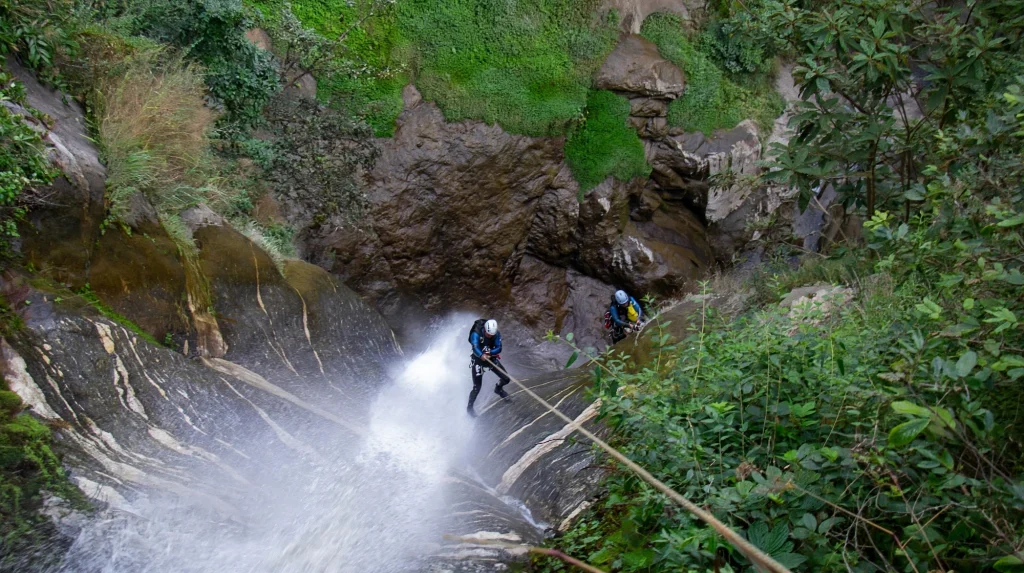
Before you book a trip, it helps to know exactly where you will be headed. Kakani is home to two standout canyons, each with its own character.
Phung Phugye Canyon
This is the most popular canyon in the area. Phung Phugye canyon drops 185 meters and lies near the village of Dhansar in the Kakani district. Because of its height and steady water flow, it offers a genuinely thrilling descent for visitors.
Chhare Canyon
Nearby, a second canyon offers a slightly different experience. Chhare canyon measures 145 meters and is located close to the village of Jurethum. Many operators combine both canyons into a single multi-day itinerary for guests who want more variety.
The Views Along the Way
As you descend, do not forget to look up. Both canyons offer panoramic views of Ganesh Himal, along with glimpses of the Manaslu and Langtang ranges. These snow-capped peaks provide a stunning backdrop for photos between rappels.
A Local Highlight: Trout Farming
Interestingly, Kakani has another claim to fame beyond adventure sports. Local villagers in the area farm the world-famous Japanese Trout Fish, and visitors often stop to see the operation. This makes for a relaxing addition to an otherwise adrenaline-heavy day.
What a Canyoning Trip to Kakani Looks Like
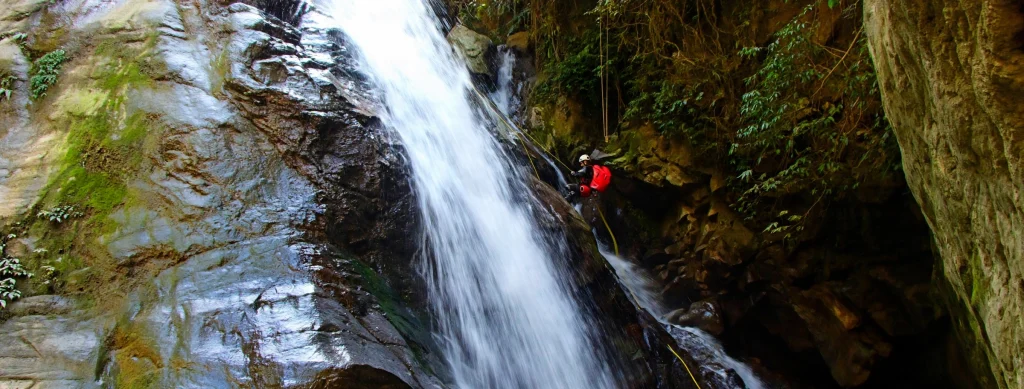
Understanding the flow of a typical trip helps you prepare mentally and physically. Most itineraries follow a similar pattern.
Getting There
First, you will need to reach Kakani from Kathmandu. Visitors can ride to Kakani in a private vehicle within about an hour, or take a public vehicle from the Balaju bypass. Either way, the drive itself offers pleasant views of the surrounding hills.
The Hike to the Canyon
Once you arrive, the adventure does not begin immediately. From Kakani village, reaching the Phung Phugye canyon requires roughly a half-hour hike. This short trek doubles as a warm-up before the technical descent begins.
Safety Briefing and Gear Check
Before entering any canyon, guides walk you through the essentials. Sessions typically start with a safety briefing covering equipment use, rope techniques, hand signals, and emergency procedures. During this time, you will also try on your wetsuit, helmet, and harness to check the fit.
The Descent Itself
Now comes the main event. You will rappel down waterfalls, slide over smooth rocks, and swim through natural pools as you work your way down the canyon. Expect a mix of adrenaline and awe as each section reveals something new.
Duration and Timing
Most trips move at a manageable pace. The canyoning activity itself typically lasts about two to three hours, depending on the group and canyon conditions. Afterward, you either hike back to the road or continue on to your overnight stay.
Overnight Options
If you want to extend the adventure, staying overnight is easy. Some visitors choose to spend the night in Jurethum village rather than driving straight back to Kathmandu. This option also allows time to explore the trout farms the next morning.
Essential Gear for Canyoning
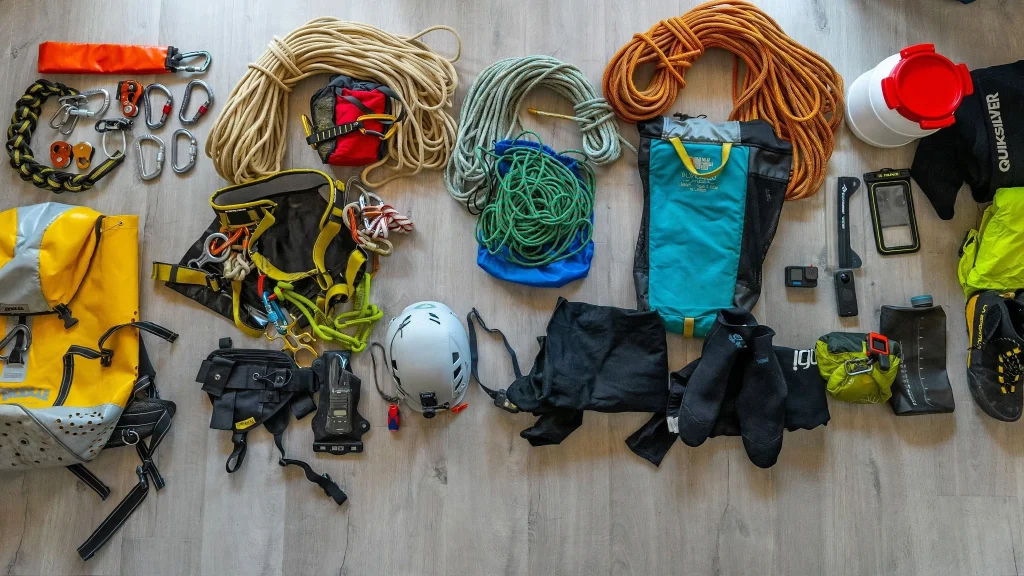
Proper gear is not optional when canyoning. It protects you from cold water, sharp rocks, and rope friction.
Wetsuit
Mountain water in Nepal runs cold, even in warmer months. A full-body wetsuit provides thermal insulation in cold mountain water and also protects your skin from abrasion. Most operators supply wetsuits as part of the package.
Helmet
Never skip this piece of equipment. A helmet guards against falling rocks and accidental head impacts throughout the descent. Given the unpredictable terrain, this single item can prevent serious injury.
Harness
Your harness connects you to the rope system during every rappel. It distributes rope forces safely across your body, keeping you secure during each descent. Guides fit and adjust these before you begin.
Footwear
Standard sneakers will not cut it here. Specialized canyoning shoes offer grip on wet, slippery surfaces, which regular shoes cannot match. Good traction matters most when boulder-hopping near waterfalls.
What Guides Provide
Fortunately, you do not need to buy any of this yourself. Most reputable operators include full safety gear, such as helmets, harnesses, wetsuits, and specialized shoes, in their packages. They also carry ropes, carabiners, and first aid kits on-site.
Safety Tips for Thrill Seekers
Canyoning rewards preparation. A few smart habits go a long way toward keeping your trip safe and enjoyable.
Always Go With a Guide
Never attempt canyoning alone, especially in an unfamiliar canyon. Choosing a qualified, trustworthy guide is the difference between a wild adventure and a tragic accident. Local guides know the water levels, escape routes, and hidden hazards.
Check the Season
Water flow changes dramatically throughout the year. Spring and autumn are considered the best seasons for canyoning in Kakani, thanks to steady, manageable water levels. Monsoon season, by contrast, can make canyons dangerously unpredictable.
Be a Confident Swimmer
This sport is not for those uncomfortable in water. Comfortable swimming in deep water is absolutely essential, since non-swimmers cannot safely participate. If you are unsure of your swimming ability, mention it to your guide beforehand.
Remove Jewelry and Secure Loose Items
Small details matter more than you might expect. Remove all jewelry, including rings, before starting, since loose items can catch on rope or rock. Anything you bring should be fastened securely or left behind entirely.
Listen to Safety Briefings
Finally, take the pre-trip briefing seriously. Following your guide’s instructions and safety protocols throughout the trip significantly reduces your risk of injury. Guides adjust the route based on real-time water conditions, so their instructions matter.
Who Should Try Canyoning Near Kathmandu?
Canyoning suits active travelers who enjoy a physical challenge. Moderate to high fitness levels are necessary, since the activity involves sustained physical exertion over several hours. That said, most operators can adjust the intensity for different experience levels.
Beginners should not feel intimidated. Guides typically start with practice rappels on dry ground, helping first-timers build confidence before entering the canyon itself. This step-by-step approach makes the sport accessible, even for newcomers.
Final Thoughts
Canyoning near Kathmandu offers a rare mix of adrenaline, scenery, and cultural charm. The waterfalls of Kakani give thrill seekers a genuine escape from the city, without requiring a long journey. From rappelling down Phung Phugye to swimming through cool mountain pools, every moment delivers something memorable. So, pack your sense of adventure, book a trustworthy guide, and get ready to see the Himalayan foothills from a whole new angle.
Frequently Asked Questions
How far is Kakani from Kathmandu for canyoning? Kakani is roughly 25 to 30 kilometers from Kathmandu, and the drive typically takes about 30 minutes to an hour by private vehicle.
Do I need prior experience to try canyoning in Kakani?
No, beginners are welcome. Guides provide a safety briefing and practice rappels on dry ground before you enter the canyon.
What is the best season for canyoning near Kathmandu?
Spring and autumn offer the best conditions, since water levels stay steady and manageable during these seasons.
What gear is provided during a Kakani canyoning trip?
Operators typically supply wetsuits, helmets, harnesses, canyoning shoes, ropes, and other safety equipment as part of the package.
How long does a typical canyoning trip in Kakani last?
The canyoning activity itself usually lasts two to three hours, not including the drive and hike to reach the canyon.
Can non-swimmers participate in canyoning?
No, comfortable swimming in deep water is essential, since canyoning routes often pass through pools and submerged sections.


