



Just 35 kilometers from Kathmandu, a hilltop village hides two of Nepal’s most exciting canyons. Canyoning in Kakani has become one of the valley’s favorite outdoor adventures, drawing both first-timers and experienced canyoneers. Between panoramic Himalayan views and waterfalls dropping nearly 200 meters, Kakani offers a genuinely complete adventure package. This guide covers everything you need to plan your trip, from route details to safety tips.
Why Kakani Stands Out for Canyoning
Kakani holds a unique advantage among Kathmandu’s canyoning destinations. Unlike some sites that depend heavily on seasonal rainfall, Kakani’s canyons maintain strong water volume throughout the year. Consequently, you can plan a trip here in any month without worrying about dry conditions ruining the experience.
Beyond the canyons themselves, Kakani rewards visitors with sweeping mountain views. From various points around the village, you can spot Ganesh Himal, Manaslu, and the Langtang range on clear days. Because of this scenery, many travelers extend their visit beyond the canyoning activity itself, exploring the surrounding hills and historic sites nearby.


Easy access adds to the appeal too. Since Kakani sits along a well-maintained route from Kathmandu, reaching it requires far less effort than more remote canyoning destinations elsewhere in Nepal.
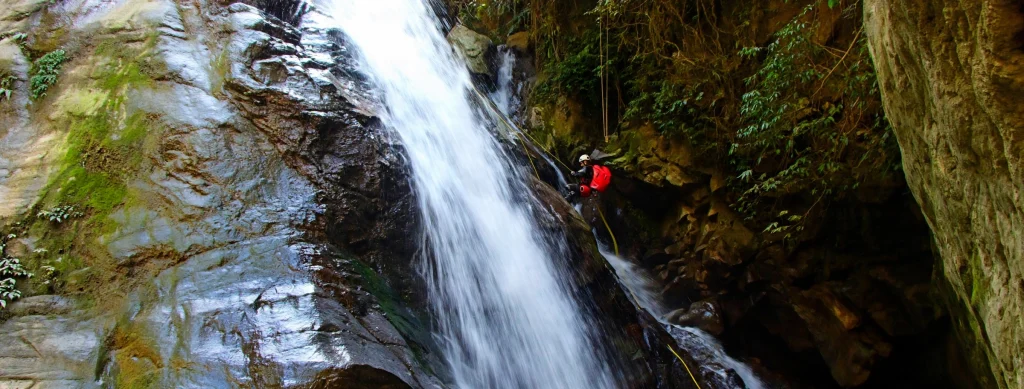
Meet the Two Canyons: Phung Phungye and Chhahare
Kakani’s canyoning scene centers around two distinct sites, each offering a different experience. Understanding the difference helps you choose the right one for your skill level and interests.
Phung Phungye: The Bigger Adventure
Phung Phungye sits in Dhansar village and stands as the taller, more demanding of Kakani’s two canyons. Dropping approximately 185 meters, it delivers a genuinely thrilling descent for those seeking a bigger technical challenge.
Because of its height and the views it offers along the way, Phung Phungye tends to draw more experienced canyoneers. Even so, guided trips remain accessible to fit beginners willing to embrace a steeper learning curve. Along the descent, you’ll also catch glimpses of the surrounding Himalayan panorama, adding a scenic bonus to the technical challenge.
Chhahare: The Beginner-Friendly Option
Chhahare, located in nearby Jurethum village, offers a gentler alternative at roughly 145 meters in height. Its shorter drops and more manageable pacing make it especially popular among first-time canyoneers.
Because Chhahare demands less technical experience, many guided groups start here before considering the more intense Phung Phungye route on a return visit. If you’re canyoning for the very first time, Chhahare represents the more forgiving entry point into the sport.
How to Get to Kakani From Kathmandu
Reaching Kakani is straightforward, with a few transport options depending on your budget and schedule. A private vehicle or jeep covers the roughly 35-kilometer distance in about an hour, making it the fastest and most comfortable choice.
Budget travelers, meanwhile, can catch a public bus from Balaju bypass in Kathmandu. While slower than a private vehicle, this option costs considerably less and still delivers you to Kakani within a reasonable timeframe.
Once you arrive in Kakani village, the adventure isn’t quite finished. From there, the Phung Phungye canyon sits about a 30-minute hike away. The walk itself passes through pleasant countryside, offering an easy warm-up before the technical descent begins.
What Does a Canyoning Day in Kakani Actually Look Like?
Most trips follow a similar rhythm, though exact timing varies by operator. Groups typically depart Kathmandu early in the morning, allowing enough daylight for the full activity plus return travel.
After arriving in Kakani and completing the short hike to the canyon head, guides provide a safety briefing and fit each participant with equipment. This includes a wetsuit, harness, helmet, and the ascender-descender device used for controlled rappelling.
The canyoning activity itself typically lasts two to three hours. During that time, you’ll rappel down waterfalls, navigate natural rock formations, and possibly swim through pools carved by the rushing water. Because each section presents a new obstacle, the pacing stays engaging throughout.
Afterward, most groups return to the road head the same way they came. Lunch usually follows at a local resort or restaurant, giving you a chance to relax and refuel before either exploring Jurethum village or heading back to Kathmandu.
Should You Stay Overnight in Kakani?
While many visitors complete their Kakani canyoning trip in a single day, spending a night locally opens up additional options. Jurethum village offers a relaxed rural atmosphere, and an overnight stay allows time to explore beyond just the canyon itself.
If you choose to stay overnight, the next morning often includes a walk around the village. This is also your chance to visit Kakani’s famous Japanese trout farms, a genuinely unique local attraction. These farms raise trout in the area’s cold, clean mountain water, and many restaurants nearby serve freshly grilled trout as a specialty dish.
For travelers with flexible schedules, combining an overnight stay with canyoning creates a fuller, more relaxed experience compared to a rushed day trip.
Best Time of Year to Visit Kakani
Because Kakani’s canyons hold water year-round, you technically have flexibility no matter when you plan your trip. That said, certain seasons offer more pleasant overall conditions.
Post-monsoon months, roughly October through April, tend to bring clearer skies and better mountain visibility. This period rewards visitors with those signature Himalayan panorama views alongside the canyoning activity itself.
During peak monsoon season, heavy rainfall can increase water volume and current strength within the canyons. While operators generally adjust their approach for safety, some travelers prefer avoiding the heaviest rain periods altogether, both for comfort and visibility reasons.
What Does Canyoning in Kakani Cost?
Pricing depends on your chosen operator, group size, and what’s included in the package. Generally, single-day canyoning trips near Kathmandu, including Kakani, range from roughly $40 to $100 per person.
Most reputable packages include round-trip transportation from Kathmandu, all necessary safety equipment, a trained guide, and lunch. Before booking, it’s worth confirming exactly what’s covered, since some operators charge separately for insurance or additional meals.
If you’re planning an overnight stay in Jurethum village, factor in additional costs for accommodation and any extra meals beyond what your canyoning package includes.
Who Should Try Canyoning in Kakani?
Kakani suits a genuinely wide range of travelers. Adventure-seekers looking for an adrenaline rush will appreciate Phung Phungye’s height and technical demands. Meanwhile, beginners or families with older children often gravitate toward Chhahare’s gentler pacing.
Because reputable operators provide full training and equipment, prior canyoning experience isn’t strictly necessary. Reasonable fitness helps, though, since the activity combines hiking, swimming, and climbing across a few hours. If you’re generally comfortable with heights and moving water, you’ll likely enjoy the experience regardless of your technical background.
Safety Tips for Canyoning in Kakani
Canyoning always carries genuine technical risk, so preparation matters. Always book through a licensed, experienced operator rather than attempting canyons independently, since canyon terrain can make self-rescue difficult if something goes wrong.
Make sure your guide properly fits your safety equipment before starting, including your wetsuit, harness, and helmet. Additionally, disclose any health or fitness concerns beforehand, since canyoning demands sustained physical effort across multiple obstacles.
Pay close attention during your safety briefing, particularly around technique for entering pools and controlling your descent speed. Strong currents within narrow canyon sections can create genuine hazards for anyone who isn’t following proper technique.
What to Pack for Your Kakani Canyoning Trip
Preparation makes a real difference in comfort and enjoyment. Wear fitted, comfortable clothing that works well under a wetsuit, avoiding anything too loose or bulky. Bring a full change of clothes for after the activity, along with a towel.
Additionally, pack water and light snacks for the journey, since amenities directly at the canyon site remain limited. Sturdy footwear for the hike to and from the canyon head also makes the walk considerably more comfortable.
Finally, if you’re staying overnight in Jurethum village, pack accordingly for cooler evening temperatures, since Kakani’s elevation brings noticeably cooler nights compared to central Kathmandu.
Exploring Beyond the Canyons
Since you’ve already made the trip to Kakani, it’s worth exploring what else the area offers. The hilltop location includes a historic fort and small parks, both popular for their panoramic views over the surrounding hills and mountains.
Additionally, Kakani’s Japanese trout farms deserve a visit even if you’re not staying overnight. Freshly grilled trout, paired with the area’s cool mountain air, makes for a memorable meal after a physically demanding canyoning session.
Final Thoughts on Canyoning in Kakani
Ultimately, canyoning in Kakani delivers one of Nepal’s most accessible and rewarding adventure experiences. With two distinct canyons catering to different skill levels, year-round water flow, and genuinely stunning mountain backdrops, it’s easy to see why this hilltop village has become such a popular escape from Kathmandu.
Whether you choose the demanding drops of Phung Phungye or the gentler pace of Chhahare, a day in Kakani promises adrenaline, scenery, and a welcome break from city life. Just book with a trusted operator, pack appropriately, and get ready for one of Nepal’s best outdoor adventures.
Frequently Asked Questions
How far is Kakani from Kathmandu?
Kakani sits approximately 35 kilometers from Kathmandu, reachable in about an hour by private vehicle or a bit longer by public bus from Balaju bypass.
What are the two canyons in Kakani called?
Kakani’s two canyoning sites are Phung Phungye, at about 185 meters in Dhansar village, and Chhahare, at about 145 meters in Jurethum village.
Is canyoning in Kakani suitable for beginners?
Yes, Chhahare offers a gentler, beginner-friendly experience, while Phung Phungye suits those seeking a taller, more technical descent.
Can you go canyoning in Kakani all year round?
Yes, Kakani’s canyons maintain strong water volume throughout the year, making it accessible in any season, though post-monsoon months offer the clearest mountain views.
How much does a canyoning trip to Kakani cost?
Canyoning trips to Kakani typically cost between $40 and $100 per person, usually including transport, equipment, a guide, and lunch.
What else can you do in Kakani besides canyoning?
Visitors can explore Kakani’s historic fort and parks, taste fresh trout from the area’s Japanese trout farms, and enjoy panoramic Himalayan views.


