


Modern beauty salons are on every corner today. We visit them for quick haircuts and trendy manicures. But in Nepal’s historic Newar community, grooming is not a luxury. It is a sacred ritual.
Long before modern spas existed, the Nau and Nauni served as the ultimate guardians of style and spiritual purity. Their tools do not just change your look. They change your spiritual status.
The Kings, Castes, and History of the Nau
The story of these traditional beauticians dates back centuries. King Jayasthiti Malla ruled Nepal from 1382 to 1395. He structured the Newar society into distinct sub-castes based strictly on occupation.


Under this ancient system, the state ranked citizens into high, medium, and low tiers. The law placed the Nau and Nauni into a lower caste tier. Why? Because their sole duty was handling the hair and nails of higher-caste citizens.
- The Roles Defined:
- Nau: The male barber. He masterfully cuts and shaves hair.
- Nauni: The female manicurist. She meticulously trims and decorates feet.
In Newar culture, long or dirty nails signal spiritual impurity. You cannot face the gods with unkempt hands. Therefore, families hire a personal Nauni. She visits every two weeks to restore physical and spiritual cleanliness to the household.
Chalan-cha and Ala: The Art of the Ancient Manicure
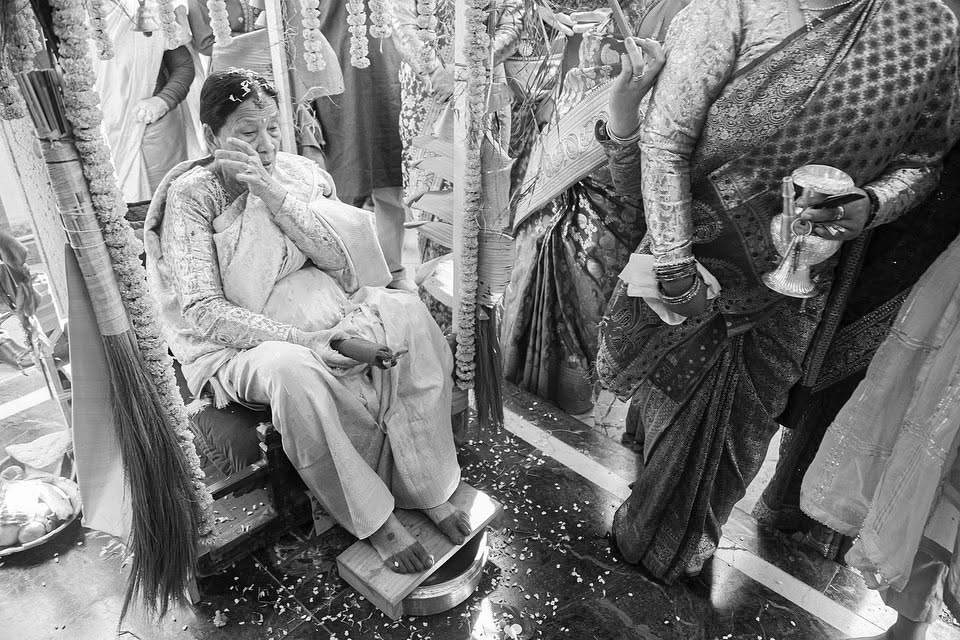
A Nauni does not carry a modern cosmetic case. Her toolkit is a piece of living history.
The Nauni’s Sacred Kit:
1. Chalan-cha: A traditional, razor-sharp iron-blade nail cutter.
2. A Wood Block: A resting platform to keep the client’s foot elevated and relaxed.
3. Ala: A brilliant, sacred red pigment.
4. Handmade Brush: Used to paint the borders of the feet.
5. A small piece of brick: Used to clean the nails after the trim
The Step-by-Step Ritual
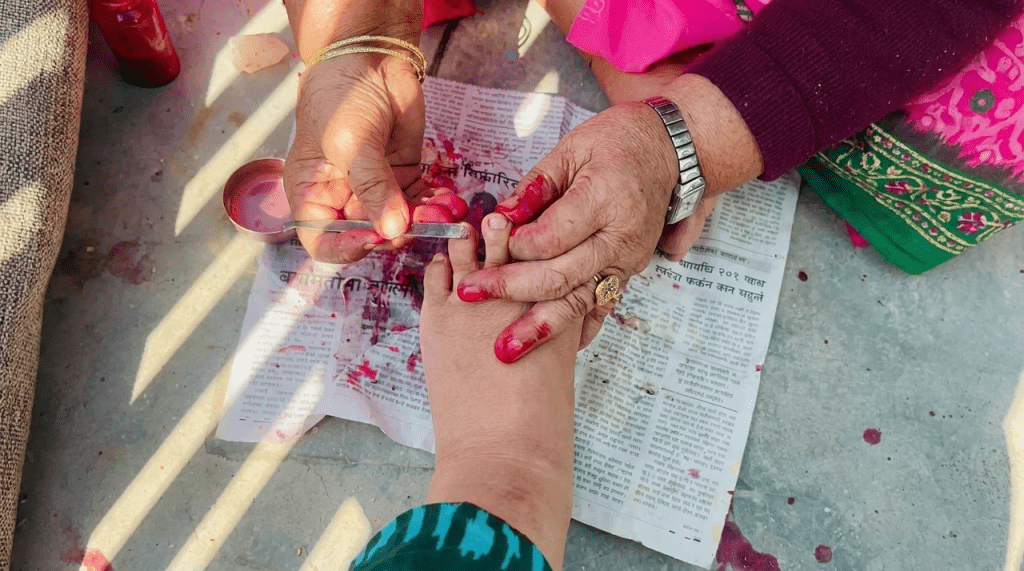
First, the client rests their foot on the wooden block. The Nauni softens the skin with water. Next, she uses the Chalan-cha to deftly trim, clean, and shape the nails.
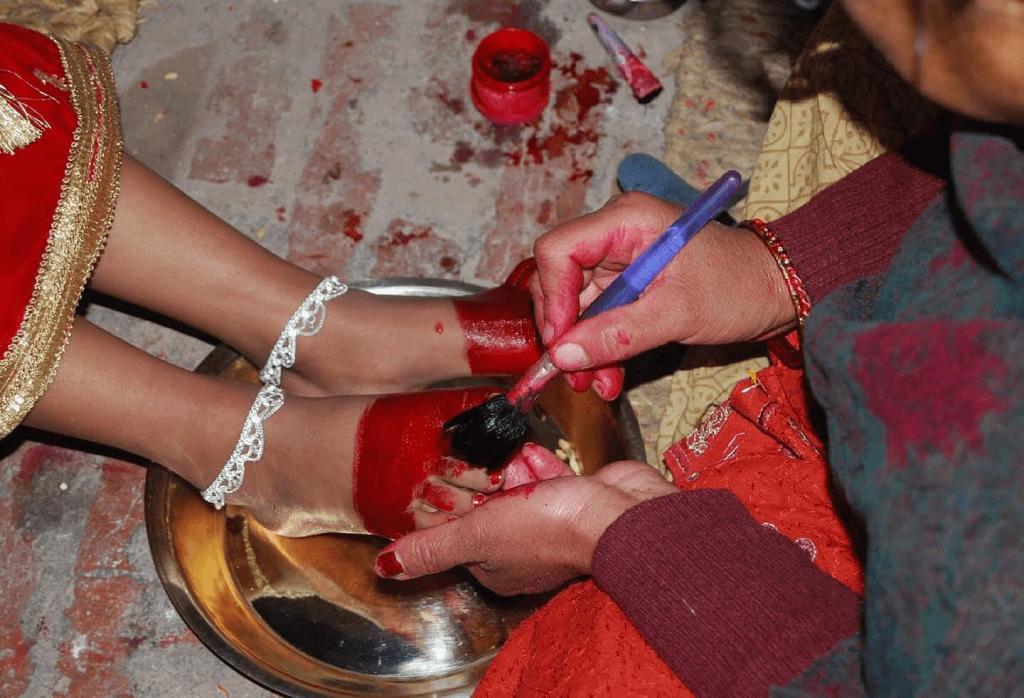
Finally, she dips her handmade brush into Ala. She paints a striking red border around the feet of young girls and married women. This red line is a powerful symbol of beauty, purity, and status. However, tradition forbids widows from wearing this pigment.
The Cashless Custom
Tradition rejects paper money for these routine visits. Instead, the Nauni receives payments of fresh rice, seasonal grains, corn, and wheat straight from the family harvest.
Life, Death, and the Ultimate Purge
While the Nauni handles routine purity, the male Nau steps in during life’s most intense moments.
When a family member passes away, grief takes over. Male relatives must completely shave their heads and eyebrows. The Nau performs this ritual shave to prepare them for the funeral.
Following the shave, the grieving men face a strict rule: no looking in mirrors for seven days. On the final day of mourning, the Nauni returns. She cuts the nails of the entire family. Then, she holds up a mirror to their faces. This symbolic glance breaks the mourning period. It allows the family to leave the ghost of grief behind and step back into the living world.
Beyond grooming, the Nau and Nauni are legendary massage experts. Sprained an ankle? Locals believe a single therapeutic touch from a Nauni’s hands can instantly relieve joint pain.
The Modern Survival of an Ancient Craft
Times are changing fast in Kathmandu Valley. Busy lifestyles and modern unisex salons now dominate the city.
Consequently, families rarely call the Nau and Nauni for regular grooming anymore. Today, communities invite them exclusively for mandatory religious rites.
Furthermore, the younger generation of Nau and Nauni is stepping away from the craft. The profession lacks high financial rewards and carries the historical baggage of caste discrimination.
A Final Thought
The story of the Nau and Nauni is a beautiful testament to Nepal’s rich cultural heritage. However, heritage must evolve. We can celebrate these incredible rituals without keeping ancient caste discrimination alive. True culture thrives only when every participant feels respected, valued, and equal.
Frequently Asked Questions (FAQs)
What is the difference between a Nau and a Nauni?
The Nau is a male barber in the Newar community who primarily shaves and cuts hair. The Nauni is a female practitioner who specializes in cutting toenails, fingernails, and applying traditional foot art.
What is Ala in Newar culture?
Ala is a vibrant red liquid pigment painted onto the borders of women’s feet by the Nauni. It serves as a visual symbol of cleanliness, marital status, and spiritual readiness for religious rituals.
Why do the Nau and Nauni hold deep cultural significance?
In Newar tradition, physical cleanliness directly ties to spiritual purity. A family cannot perform holy rituals, weddings, or funerals unless the Nau and Nauni first cleanse them by cutting their hair and nails.
What tools does a Nauni use?
A traditional Nauni uses a Chalan-cha (a handmade iron-blade nail cutter), a small piece of brick used to clean the nails after the trim, a small wooden block to rest the client’s foot, a handmade brush, and Ala (red foot paint).
Why do mourning Newars avoid looking in the mirror?
During the first seven days of mourning a death, male relatives shave their heads and eyebrows and avoid mirrors to stay detached from vanity. The Nauni officially ends this period on the final day by showing them a mirror, signaling a return to normal life.