


How do you justify US$500 in permit fees before taking a single step? That is the question waiting for anyone drawn to the Upper Dolpo trek, which carries one of the steepest entry costs in all of Nepal, and the answer reveals exactly what kind of place this is. Few foreigners get here. Fewer still understand what they are walking into before the plane touches down. Tucked between the Tibetan plateau and the Dhaulagiri massif in Nepal’s far northwest, Upper Dolpo is a restricted, high-altitude desert of medieval villages, turquoise lakes, and Buddhist monasteries that predate almost anything you will find on the popular trails.
Here is what most guides skip over: this is not a teahouse stroll. It is a full expedition, and the people who love it most are the ones who came prepared for that.
Where Upper Dolpo Actually Is
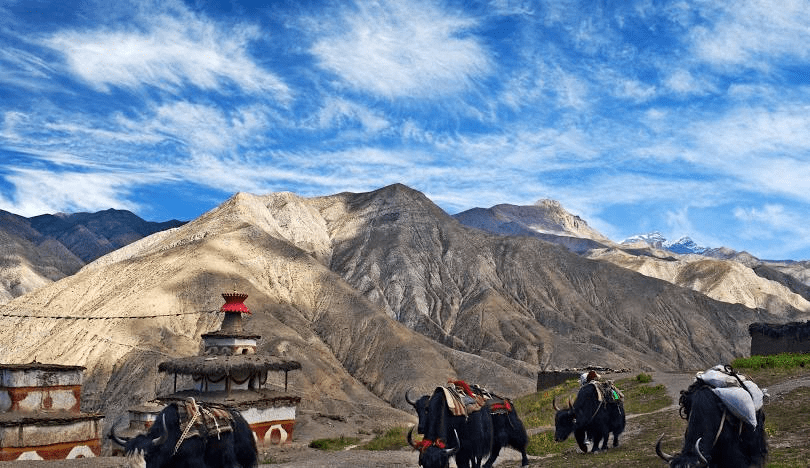
Dolpa district sits in the rain shadow north of the main Himalayan range. That single geographic fact shapes everything. Monsoon clouds dump their rain on the southern slopes and arrive here exhausted, which means Dolpo stays dry and trekkable in July and August when half of Nepal is underwater. Landscapes look closer to Tibet or Ladakh than to the green hills around Pokhara: ochre cliffs, barley terraces clinging to slopes, and villages built from mud and stone.
Getting in takes effort. You fly from Kathmandu to Nepalgunj on the southern plains, overnight there, then catch a small plane to Juphal, the tiny airstrip that serves the region. From Juphal the walking begins, usually with a descent to Dunai, the district headquarters, before the trail climbs north toward the high country. There are no roads into Upper Dolpo. No cell towers for long stretches. What you carry is what you have.
Why the Upper Dolpo Trek Costs So Much
Cost is the first thing people ask about, so let’s be direct. The restricted area permit for Upper Dolpo runs US$500 per person for the first 10 days, then US$50 per person for each additional day, and it cannot be issued for fewer than 10 days. That fee is confirmed by multiple Nepal trekking operators and has held steady through 2025. On top of that you need a Shey Phoksundo National Park entry permit, which costs around NPR 3,000 (roughly US$24) for foreign visitors. As of early 2025, those were the standing rates, though park and permit fees do change, so confirm with your agency before you book.
You cannot do this trek solo. Restricted area rules require you to travel with a government-registered trekking agency and a minimum of two trekkers. Add the cost of two domestic flights, a guide, porters or pack animals, tents, and a cook, and a typical 24 to 27 day package lands somewhere between US$3,500 and US$6,000 per person depending on group size and comfort level. Budget group departures can dip toward US$3,200. Luxury logistics push well past US$7,000.
- Restricted Area Permit: US$500 for 10 days, then US$50 per day after
- Shey Phoksundo National Park entry: about NPR 3,000 (around US$24)
- Domestic flights: Kathmandu to Nepalgunj to Juphal, both ways
- Guide, porters, cook, and full camping kit: bundled into the package price
One more thing worth its own line. Travel insurance that explicitly covers helicopter evacuation above 4,000 meters is not optional out here. Expect to pay somewhere in the US$150 to US$400 range for a policy that actually covers high-altitude rescue, and read the fine print twice.
The Heart of the Trek: Shey Phoksundo Lake
If there is one image that pulls people to Dolpo, it is this lake. Shey Phoksundo is the deepest lake in Nepal, plunging to roughly 145 meters, and it stretches close to 5 kilometers in length at an altitude of about 3,611 meters. Color is the part photos never quite capture. Glacial minerals turn the water an electric blue-green that looks almost artificial against the bare cliffs around it. Ringmo, a small Tibetan-style village of flat-roofed stone houses, sits on its shore and makes a natural rest stop before the harder days ahead.
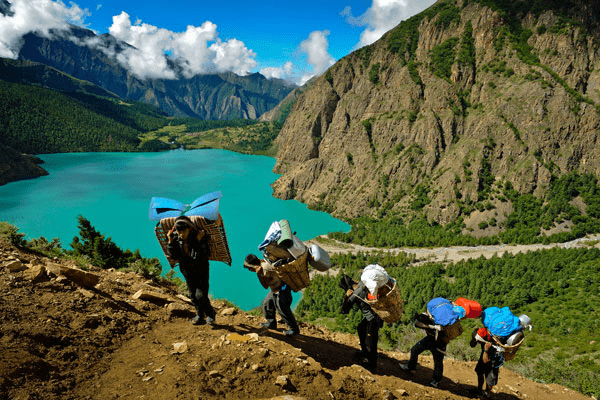
Many people think of the lake as the destination. For the full Upper Dolpo circuit, it is really the gateway. Beyond Ringmo the trail climbs into genuinely remote territory, crossing passes that sit well above 5,000 meters.
The High Passes and the Walking
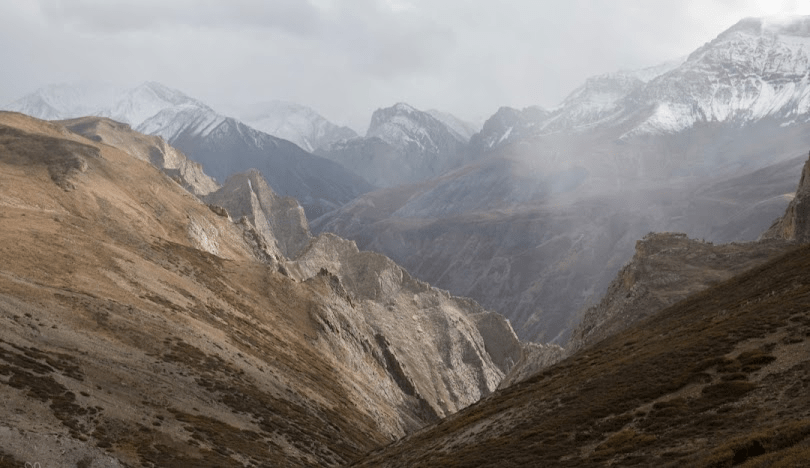
Upper Dolpo is a circuit of passes, and they are not gentle. Kang La, sometimes listed around 5,360 meters, sits between the lake and the Shey Gompa area. Numa La reaches about 5,190 meters and Saldang La hovers near 5,200 meters. Days are long. Eight to nine hours of walking is common, and you do it at altitude where the air holds far less oxygen than your body wants.
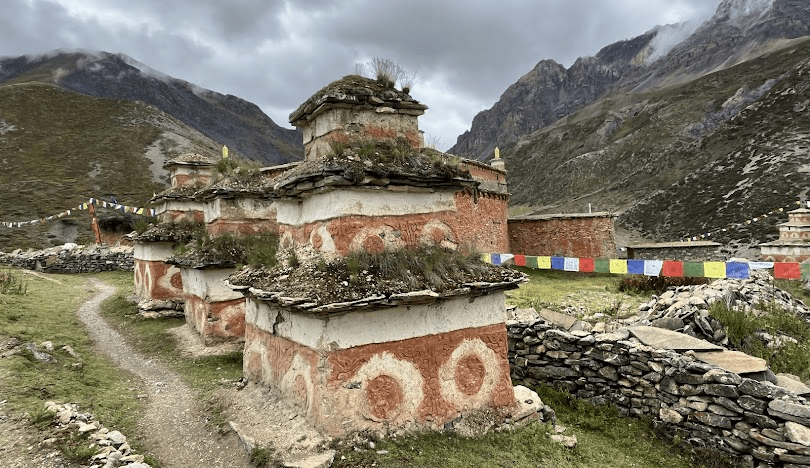
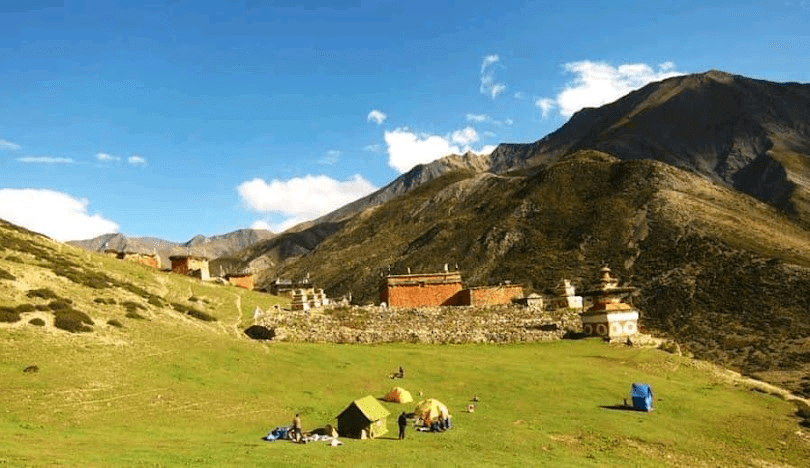
Beyond the lake lies Shey Gompa, an ancient monastery near the foot of Crystal Mountain, a peak local Buddhists circle on pilgrimage. Villages like Saldang, Namgung, and Tinje feel genuinely lost in time. People here practice a blend of Tibetan Buddhism and the older Bon religion, spin prayer wheels worn smooth by centuries of hands, and herd yaks across slopes that seem too steep to support anything. If the region rings a bell, you may have seen it in the 1999 film “Himalaya,” shot among these communities.
When to Go
Timing here is unusual, and it works in your favor. Because Dolpo sits in the rain shadow, the trek is one of the few in Nepal that stays viable through the monsoon. Late spring, roughly May into June, brings stable weather and blooming high-altitude flora. Autumn, from September through November, delivers crisp skies and the clearest mountain views. July and August are doable thanks to the dry climate, though the flight into Juphal can still get delayed when clouds build over Nepalgunj.
Winter is brutal and best avoided. Snow closes the high passes from roughly December through March, and the villages largely shut down as families move to lower ground. For most trekkers, autumn is the safe bet, while spring rewards those who want fewer people on the trail.
How Hard Is It, Really?
Let’s not sugarcoat this. Upper Dolpo is among the most demanding treks Nepal offers, and it is not a place to test whether you like trekking. Multiple 5,000-meter passes, three weeks or more of camping, basic food, and zero quick exits add up to a serious undertaking. You should arrive with solid fitness, real cardio endurance, and ideally at least one prior high-altitude trek behind you.
Acclimatization is non-negotiable. A good itinerary builds in rest days and follows the climb-high-sleep-low principle so your body adapts before the big passes. Altitude sickness out here is dangerous precisely because help is so far away. A helicopter rescue, weather permitting, can take hours to arrive and costs thousands of dollars, which loops right back to why that insurance policy matters. If you are newer to the Himalayas, build up first. Our piece on trekking in Nepal for beginners is a better starting point than throwing yourself at Dolpo cold.
Permits, Paperwork, and Practical Logistics
Because Upper Dolpo is a restricted zone, the permit process runs entirely through your agency. You hand over passport copies and photos, and they file everything with the relevant authorities. You cannot walk into an office and buy an Upper Dolpo permit as an individual the way you can for, say, an Annapurna trek. For the full picture on what is required across different regions, our Nepal trekking permits guide lays out the system clearly.
A few logistics worth planning around:
- Carry enough cash. There are no ATMs once you leave Nepalgunj, and villages rarely take anything but rupees.
- Pack for wide temperature swings. Daytime sun can feel hot at altitude while nights drop below freezing even in summer.
- Budget buffer days. Flights to and from Juphal are weather-dependent and delays are routine, not rare.
- Respect the culture. Many gompas and chortens are active sacred sites, so ask before photographing people or interiors.
For travelers drawn to this kind of dry, Tibetan-influenced landscape, Upper Dolpo is not the only option. The neighboring region covered in our Mustang Nepal travel guide offers a similar high-desert feel with slightly easier access, which makes it a sensible alternative if Dolpo’s logistics feel like too much for a first visit.
Is Upper Dolpo Right for You?
Honesty time. If you want hot showers, menus, and a steady stream of fellow trekkers to chat with at night, this is the wrong trek, and you will be miserable. But if the idea of walking for weeks through a landscape almost untouched by modern tourism sounds like the whole point, few places on earth deliver like Dolpo. You trade comfort for solitude and a window into a way of life that has barely shifted in centuries. That trade is exactly what keeps drawing a certain kind of traveler back, year after year.
Frequently Asked Questions
How many days does the Upper Dolpo trek take?
Most complete itineraries run 24 to 28 days from Kathmandu and back, with roughly 20 to 23 of those days spent actually walking. The length comes from the remote access, the need to acclimatize properly, and the long distances between villages.
How much does the Upper Dolpo trek cost?
A typical organized package costs between US$3,500 and US$6,000 per person, depending on group size and comfort level. The restricted area permit alone is US$500 for the first 10 days plus US$50 per additional day, and domestic flights and full camping logistics make up much of the rest.
Can I trek Upper Dolpo without a guide?
No. As a restricted area, Upper Dolpo requires you to travel through a government-registered agency with a guide and a minimum of two trekkers. Solo independent trekking is not permitted here.
Is Upper Dolpo trekking possible during the monsoon?
Yes, and that is one of its biggest draws. Dolpo sits in the Himalayan rain shadow, so it stays relatively dry through July and August when much of Nepal is rainy. Flight delays into Juphal remain the main monsoon-season risk.
What is the highest point on the Upper Dolpo trek?
Several passes sit above 5,000 meters. Kang La is often cited around 5,360 meters, with Numa La near 5,190 meters and Saldang La around 5,200 meters. Exact figures vary slightly between operators and route choices.
How deep is Shey Phoksundo Lake?
Shey Phoksundo is the deepest lake in Nepal, reaching roughly 145 meters. It stretches close to 5 kilometers long and sits at about 3,611 meters above sea level, with a striking blue-green color from glacial minerals.
Do I need previous trekking experience for Upper Dolpo?
Strongly recommended. A combination of high passes, weeks of camping, and remote conditions makes this a poor choice for a first trek. Ideally you should have completed at least one prior high-altitude trek and arrive with good fitness.
What should I pack for the Upper Dolpo trek?
Plan for big temperature swings: warm layers and a four-season sleeping bag for sub-freezing nights, plus sun protection for hot, exposed days. Bring enough cash in Nepali rupees, since there are no ATMs past Nepalgunj, and a good first-aid kit with altitude medication discussed with your doctor.
Authoritative references: Nepal Tourism Board and the Department of National Parks and Wildlife Conservation, which manages Shey Phoksundo National Park.