



If you ever find yourself wandering through the ancient, sun-drenched alleys of Bhaktapur, Nepal, you will be drawn to a sweet, inviting aroma from traditional storefronts. Follow it. It leads to a culinary treasure that has survived centuries of history and modernization: Juju Dhau.
Literally, Juju Dhau means “King of Curds” in the Newari language, where “Juju” means king and “Dhau” means yogurt or curd. Far beyond a simple sweet delicacy, it stands as a living symbol of Nepalese heritage and remains an essential part of sacred rituals, offering an unforgettable gastronomic experience.
Whether you are a food tourist planning your next culinary adventure or a culture enthusiast exploring traditional cuisine, this guide helps you understand why people consider Juju Dhau supreme, how they traditionally make it, and the deep cultural significance it holds within Newari society.
The Royal Origins: A Brief History of Juju Dhau
To truly appreciate the taste of Juju Dhau, one must understand its royal lineage. Historians trace its story to the Malla Era, a period widely regarded as a golden age of art, architecture, and culinary innovation in the Kathmandu Valley.


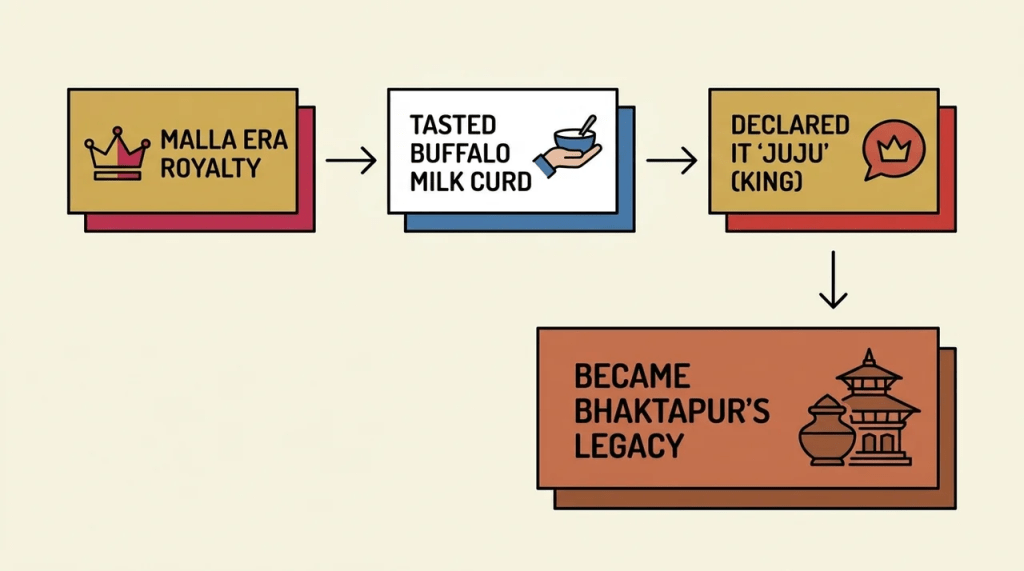
According to local lore, the kings of the Malla dynasty were notoriously competitive regarding the arts and food. During a gathering or competition among the kingdoms of Kathmandu, Patan, and Bhaktapur. The artisans of Bhaktapur presented a unique, thick, sweetened curd made from rich buffalo milk.
The reigning Malla king found the curd so exceptionally delicious, rich, and superior to anything. He had ever tasted that he officially decreed it Juju Dhau—The King of Curds. From that moment on, Bhaktapur became the undisputed epicenter of this delicacy, a title it proudly holds to this day.
Why People Cannot Replicate Bhaktapur’s Juju Dhau?
Many have tried to replicate the exact taste of Bhaktapur’s Juju Dhau in other parts of Nepal. And the world, but connoisseurs agree: nothing matches the original. Why is this? The secret lies in a perfect storm of geography, livestock diet, and traditional craftsmanship.
1. The Unique Vegetation and Soil
The Kathmandu Valley, particularly the outskirts of Bhaktapur, boasts a unique microclimate and specific vegetation. The local water buffalos feed on local grasses and herbs that are unique to this terrain.This specific diet changes the chemical composition, fat content, and subtle flavor notes of buffalo milk and gives it a natural sweetness and richness that producers cannot replicate elsewhere.
2. Buffalo Milk vs. Cow Milk
Producers make authentic Juju Dhau strictly from fresh buffalo milk.
Buffalo milk naturally contains a significantly higher fat and solid content compared to cow’s milk.The high fat content in the milk is one of the key reasons Juju Dhau develops its rich, velvety texture.
It naturally thickens during fermentation, creating a dense, custard-like consistency without the use of artificial thickeners, gelatin, or other additives.
The Art of Making Juju Dhau: A Step-by-Step Culinary Ritual
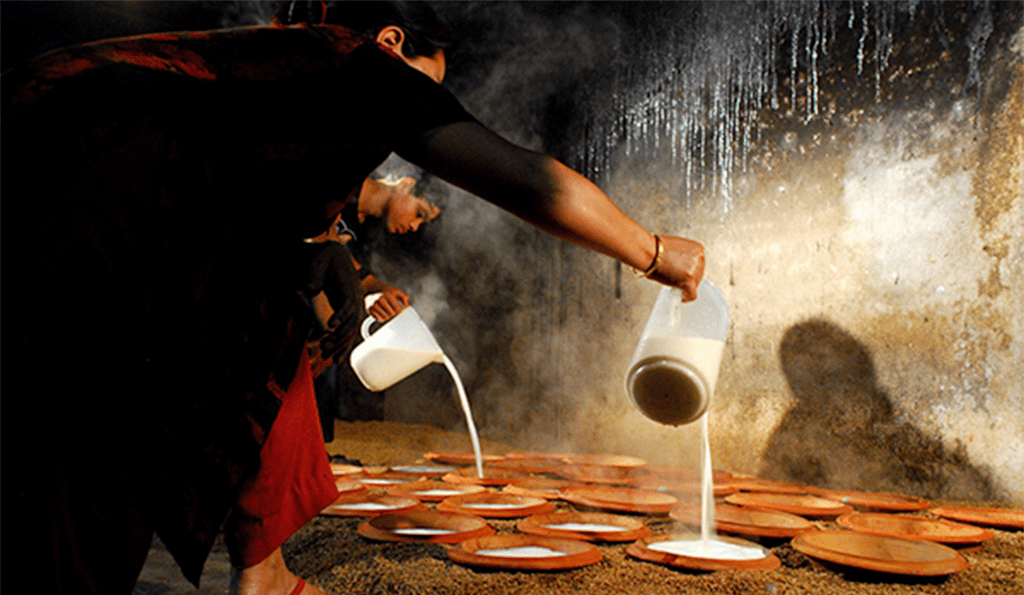
Families in Bhaktapur have passed down the process of making Juju Dhau through generations as an art form. They require patience, maintain precise temperature control, and develop a deep understanding of natural fermentation.
Step 1: Boiling and Reduction
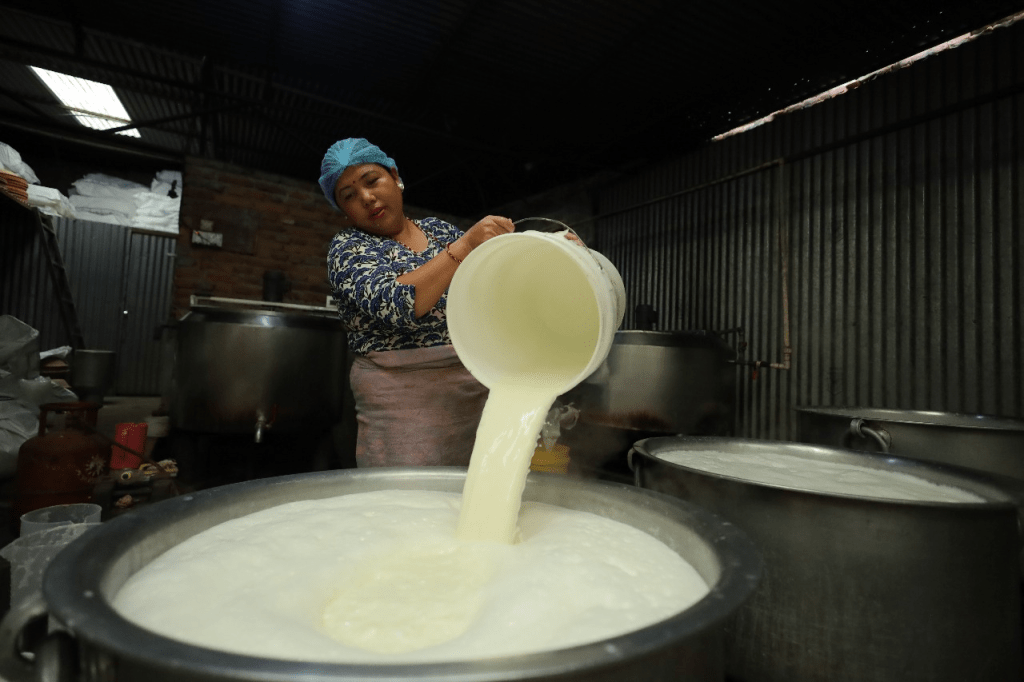
The process begins by boiling fresh buffalo milk in large, traditional iron cauldrons.They don’t just bring the milk to a boil; they simmer it slowly and stir it continuously for hours. This slow reduction evaporates excess water content, concentrating the milk sugars (lactose) and fats.
Step 2: Sweetening and Spicing
As the milk reduces and thickens, local producers add sugar or molasses. For an authentic flavor profile, seasoned makers also infuse the milk with subtle aromatic spices, including:
- Cardamom (Sukmel)
- Cloves (Lwang)
- Coconut shavings
Step 3: The Clay Pot Secret (Katahto)
Once the milk reaches the perfect consistency, producers cool it to a warm, incubation-friendly temperature. They then pour it into Katahto; thick, unglazed clay vessels handmade by the Kumhas (traditional potters) of Bhaktapur’s famous Pottery Square.
Why Clay Pots Matter: The porous nature of unglazed clay is the secret weapon of Juju Dhau. The clay absorbs the remaining excess moisture from the yogurt as it ferments. This concentrates the curd even further, resulting in an incredibly dense texture that doesn’t happen in plastic or glass containers. Furthermore, the clay imparts a distinct, earthy undertone (maati ka khushboo) to the dessert.
Step 4: Incubation and Fermentation
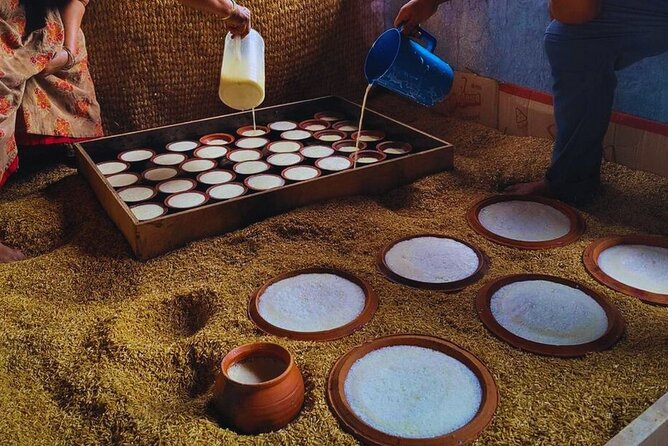
The warm milk is poured into traditional clay pots and then inoculated with a small amount of an older batch of Juju Dhau. This starter culture contains live, beneficial lactic acid bacteria that initiate fermentation and develop its signature taste and texture.
They then place the pots in a warm room and traditionally wrap them in thick rice straw mats or blankets to retain heat. They leave them undisturbed for several hours until fermentation turns the sweetened milk into the legendary King of Curds.
Texture and Taste Profile: What to Expect
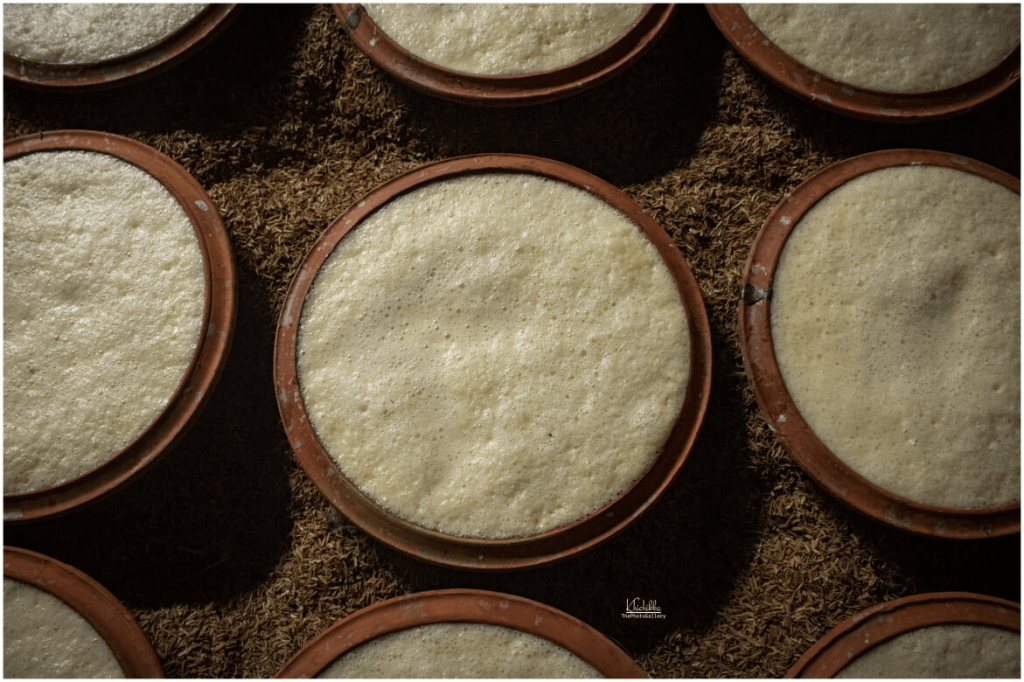
If you have never tasted Juju Dhau, prepare to have your expectations of “yogurt” completely redefined.
| Characteristic | Description |
| Appearance | Pale cream to light golden color, often featuring a glossy, thick layer of cream (malami) on top. |
| Texture | Incredibly thick, smooth, and custard-like. It holds its shape beautifully when scooped. |
| The Gravity Test | Authentic Juju Dhau is so thick that you can literally turn the clay vessel upside down, and the curd will not drop out. |
| Flavor Profile | A harmonious balance of rich creaminess, gentle sweetness, a hint of warm spices, and a clean, subtle tang at the finish. |
Cultural and Religious Significance in Newari Traditions
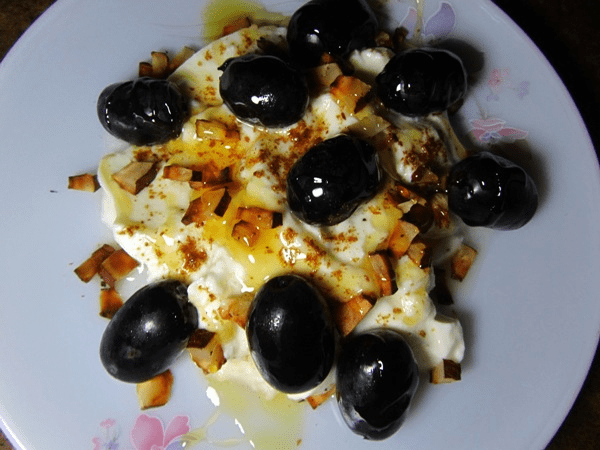
In Bhaktapur and the wider Newar community of Nepal, Juju Dhau is not merely food. It is a sacred element deeply woven into the fabric of life, religion, and spirituality.
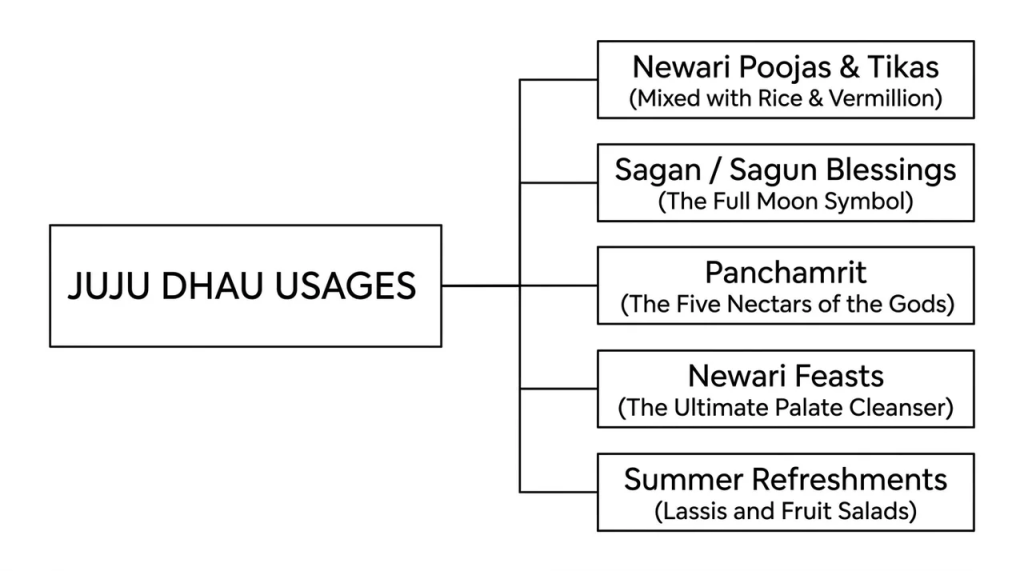
1. The Soul of Newari Poojas
No Newari Pooja (worship ritual) is considered complete without Juju Dhau.It is used to prepare the sacred Tika, a traditional mixture of rich curd, rice grains, and vermillion powder. This is applied to the forehead as a symbol of divine blessing, protection, and good fortune.
2. Sagan (Sagun) Blessings
In Newari culture, Sagan is a ritual offering of auspicious foods. It is given to loved ones during birthdays, weddings, long journeys, and major life events. Juju Dhau is an important centerpiece of the Sagan platter. It is served with beaten rice (Baji), fruits, boiled eggs, fried fish, and sweets.
Because of its pristine white color and perfectly round form in a clay pot, Juju Dhau symbolizes the full moon. Offering it as Sagan is a symbolic gesture of blessing and goodwill. It expresses a wish that the recipient’s life be as full, bright, peaceful, and flawless as the full moon.
3. One of the Panchamrit
In Hindu mythology, Panchamrit is the sacred mixture of five nectars used in worship and later distributed as Prasad (blessed food). These five components are:
- Milk
- Curd (where Juju Dhau steps in)
- Honey
- Sugar
- Ghee
Using Juju Dhau elevates the Panchamrit to a divine standard, fit for the Gods themselves.
4. The Grand Finale of Newari Feasts (Lapate Bhoye)
Newari feasts (Bhoye), served traditionally on leaf plates (Lapate), are legendary for their spicy, robust, and complex flavors featuring buffalo meat, beaten rice, ginger, garlic, and fermented bamboo shoots.
As the fiery culinary journey winds down, Juju Dhau is served as the ultimate dessert. Its cool, creamy nature acts as a soothing balm for the palate, neutralizing the spice, aiding digestion, and leaving a lingering sweet note.
Modern Adaptations: From Rituals to Summer Refreshments
While Juju Dhau is steeped in ancient tradition, it has easily found its place in modern culinary trends. Locals and tourists alike enjoy it in various versatile ways, especially during the sweltering hot summer months:
- Juju Dhau Lassi: By blending this rich curd with ice, water, and a dash of nuts, street vendors create a thick, frothy, heavenly Lassi that puts standard commercial milkshakes to shame.
- Gourmet Fruit Salads: Chopping up fresh tropical fruits like mangoes, bananas, and apples and folding them into a bowl of chilled Juju Dhau creates an instant, healthy, and premium summer dessert.
- The Contemporary Eco-Challenge: In recent times, the rising cost of handcrafted clay pots has led some commercial sellers to transition to cheaper plastic jars. However, purists and foodies fiercely advocate for the traditional clay pots. Not only are the clay pots biodegradable and eco-friendly, but plastic completely fails to absorb excess moisture, leaving the curd watery and stripping away the authentic flavor. When visiting, always ask for the clay pot version—it is worth every single extra rupee.
Frequently Asked Questions (FAQs) About Juju Dhau
Is Juju Dhau good for health?
Yes! Juju Dhau contains live bacterial cultures from naturally fermented boiled buffalo milk, helping support digestion and gut health. It also provides calcium, protein, and healthy fats, making it a nutritious addition to the diet.
Where can I find the best Juju Dhau in Nepal?
While it is distributed throughout Kathmandu and sold across the country, the most authentic, unmatched Juju Dhau is found within the ancient city of Bhaktapur, particularly around Bhaktapur Durbar Square, Nyatapola Temple, and Pottery Square. Look for traditional shops with signs displaying clay pots.
How long does Juju Dhau stay fresh?
Authentic Juju Dhau contains no artificial preservatives, so people should consume it within 24 to 48 hours of preparation when stored at room temperature. Refrigeration helps preserve its flavor and quality for up to 3 to 4 days.
Can vegans eat Juju Dhau?
Traditional producers make authentic Juju Dhau from 100% pure buffalo milk, making it a dairy product.
Conclusion: A Must-Try Culinary Masterpiece
Juju Dhau is more than just yogurt; it is a delicious bridge connecting Nepal’s rich royal past with its vibrant, living present. It represents the meticulous craftsmanship of Bhaktapur’s potters, the unique biodiversity of the valley’s pastures, and the profound spirituality of Newari rituals.
If you ever walk through the ancient, brick-paved alleys of Bhaktapur, do not leave without sitting by a traditional storefront and savoring a clay pot of this kingly treat. Your taste buds will thank you, and you will instantly realize why, after hundreds of years, no other curd in the world can claim the crown from the King of Curds.
Planning a trip to Nepal or writing a culinary travel bucket list? Bookmark this guide, share it with your fellow food travelers, and ensure a stop in Bhaktapur for an authentic taste of Juju Dhau!


