



The Bhote Koshi River delivers some of the steepest, most continuous whitewater in Nepal. For experienced kayakers, that reputation is exactly the draw. Solo kayaking on the Bhote Koshi, however, is a different conversation entirely from paddling it with a group.
Before you even consider going it alone, it’s worth understanding exactly what this river demands, and why almost every credible source in the paddling community advises against truly solo runs here.
This guide walks through the river’s difficulty, honest safety considerations, and what “solo” realistically should mean on a river like this.


Why the Bhote Koshi Draws Kayakers in the First Place
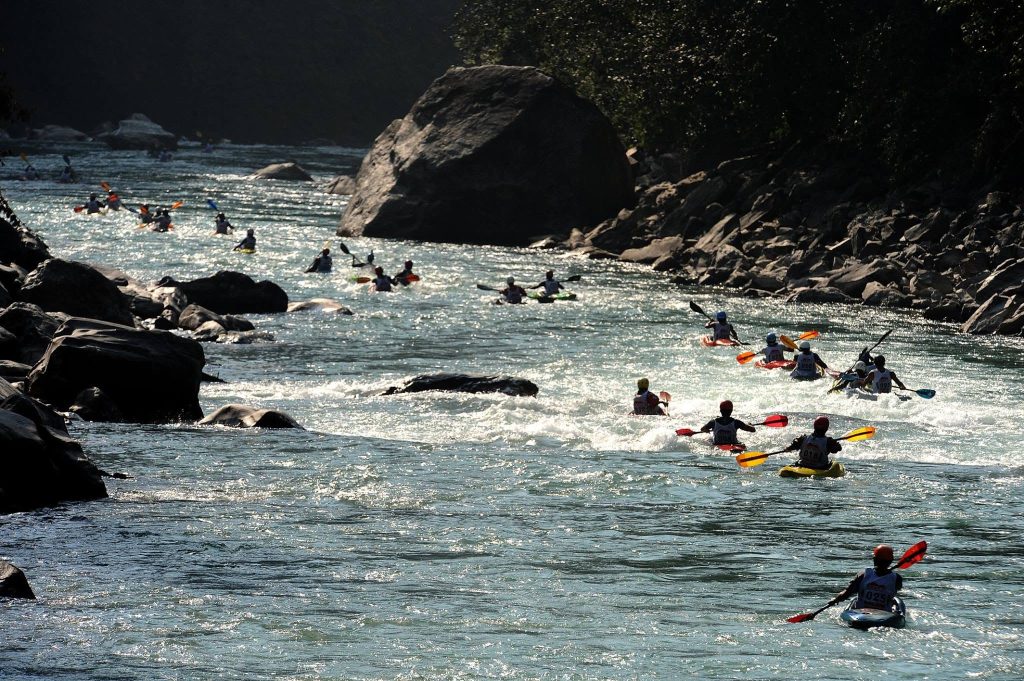
First, let’s establish what makes this river special. The Bhote Koshi originates in Tibet and crashes into Nepal through a narrow, steep-walled gorge. With a gradient of roughly 15 meters per kilometer, it’s the steepest commercially run river in the country, nearly eight times steeper than the Sun Koshi it eventually feeds into.
Because the river runs steep and continuous, one rapid rolls directly into the next, offering almost no flat water to recover between features. That relentless pacing is precisely what draws experienced paddlers here. Meanwhile, the surrounding scenery, narrow canyons, waterfalls, and dense forest, adds a genuinely spectacular backdrop to the technical challenge.
The Araniko Highway runs alongside much of the river, which means access and scouting stay relatively straightforward compared to Nepal’s more remote whitewater runs.
Understanding the River’s Difficulty Rating
Difficulty on the Bhote Koshi shifts dramatically with water level, and this matters enormously for anyone considering a solo run. At lower flows, typically during the dry months, the river runs at a solid Class III, still demanding but far more forgiving.
At higher flows, particularly during and just after monsoon season, the same river jumps to Class IV and V. Named rapids like “Gerbil in the Plumbing,” “Frog in a Blender,” “The Wall,” and “Midnight Express” reflect just how technical and consequential this stretch becomes at higher water.
Because the gap between low-water and high-water difficulty is so extreme, checking current river levels before any run, solo or otherwise, is absolutely essential. A river that feels manageable in April can become a genuinely dangerous proposition in July.
Why “Solo” Kayaking Here Deserves Serious Caution
Here’s the part that matters most. Every reputable rafting and kayaking outfitter operating on the Bhote Koshi runs it with a full support team, safety kayakers, and rescue equipment on standby. That’s not incidental caution. It reflects genuine risk.
Class IV and V rapids carry real consequences: pin hazards, powerful hydraulics, and sections where a swim could carry you a long way before you reach calm water. On a river this continuous, there’s often nowhere to easily self-rescue between rapids. If something goes wrong, whether it’s a pin, a dislocated shoulder, or simple exhaustion, having no one else on the water to assist can turn a manageable incident into a life-threatening one.
Consequently, the near-universal advice from the international paddling community applies with extra force here: never paddle whitewater completely alone, and especially not a steep, continuous Class IV-V run like the Bhote Koshi. If you’re searching for a “solo kayaking guide” to this river, the most important guidance any honest resource can give you is this: solo does not have to mean truly alone.
What Experienced Paddlers Mean by “Solo” in Practice
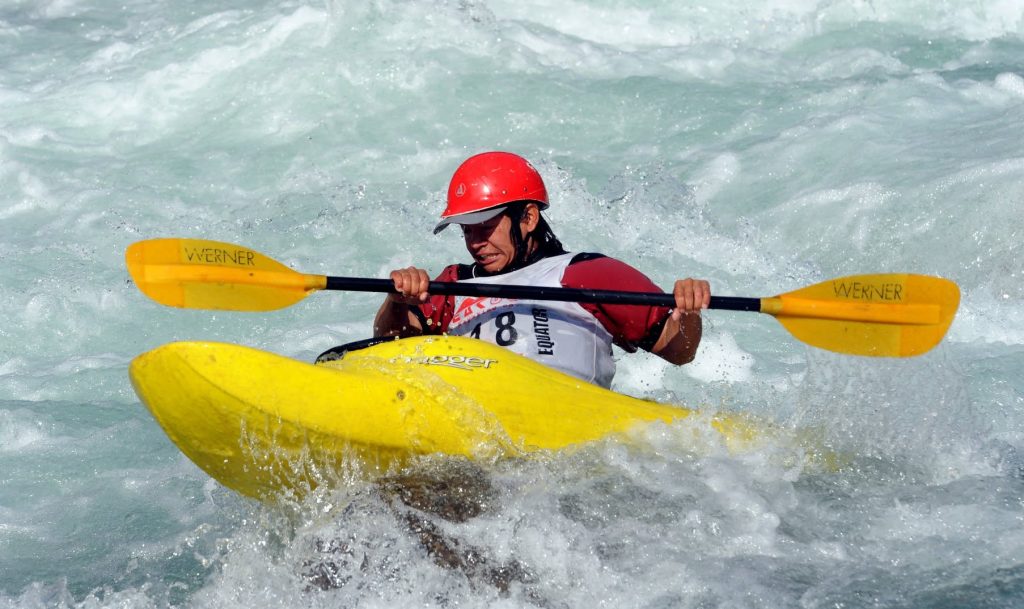
Among skilled kayakers, “solo” usually describes a specific style of trip rather than a literal absence of other people. It typically means running a river without full commercial support, without a support raft carrying gear, and without a formal guided group structure.
Even under this looser definition, experienced solo-style paddlers on demanding rivers almost always travel with at least one other capable kayaker. This buddy system provides a second set of eyes for scouting rapids, a spotter for tricky lines, and immediate help if a swim or pin occurs.
If you’re set on a lower-commitment, independent-feeling experience on the Bhote Koshi, the safest version of that looks like a small group of two or three experienced paddlers, self-supported rather than fully outfitted, rather than one person running the gorge completely alone.
Skill Level You Genuinely Need
Given the river’s difficulty, this isn’t a stretch for anyone without solid whitewater experience. At minimum, paddlers should have confident, reliable Class IV skills, including a dependable combat roll, before attempting the Bhote Koshi even at moderate water levels.
Additionally, experience reading continuous, boulder-choked rapids matters more here than it does on pool-drop rivers, where you get a break between features. Because the Bhote Koshi rarely offers that recovery time, paddlers need the stamina and decision-making speed to handle rapid after rapid without pause.
If you haven’t paddled multiple Class IV-V rivers elsewhere first, this isn’t the place to build that experience. Start on rivers with more forgiving recovery pools, and work up to continuous gorges like this one gradually.
Best Season for a Safer Run
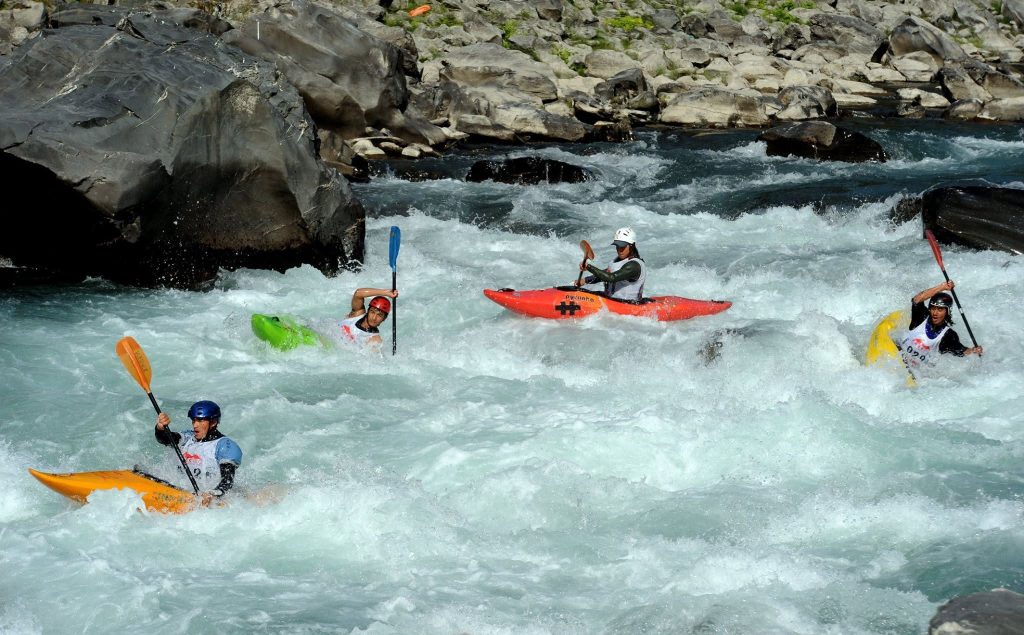
Timing significantly affects your risk profile on this river. The most favorable window generally falls between October and December, and again from March through May, when water levels sit at a more moderate, predictable range.
During monsoon season, roughly June through September, water volume increases dramatically, pushing the river toward its most extreme Class V conditions. Many commercial operators reduce or pause activity entirely during peak monsoon months, and independent paddlers should apply that same caution rather than treating it as overly conservative guidance.
Before any trip, check current flow conditions locally, since even within the recommended season, recent rainfall can shift difficulty considerably day to day.
Access, Logistics, and Getting There
The put-in point for the main Bhote Koshi run typically sits near Lamosangu or Khadichaur, roughly 95 to 100 kilometers east of Kathmandu. By road, this takes about 3 hours via the Araniko Highway, the same route that continues toward the Tibet border.
Take-out points vary depending on which section you’re running, with Dolalghat and Sukute Beach both serving as common endpoints for the lower stretches. Because put-in and take-out locations can shift seasonally, particularly around monsoon, confirming current access points with a local outfitter or paddling contact before you go is worth the extra effort, even if you’re not booking a guided trip.
Essential Safety Gear for This River
Regardless of group size, certain safety equipment isn’t optional on a river like this. A properly fitted helmet, a reliable PFD rated for whitewater use, and a river knife should be considered baseline requirements. Additionally, carrying a throw bag and knowing how to use it effectively can make the difference in a rescue situation.
Because help may not be immediately available on remote stretches, a first aid kit and some form of emergency communication device are worth carrying too. Cell coverage along parts of the Araniko Highway corridor can be inconsistent, so don’t assume you’ll have a signal if something goes wrong.
Finally, dress for immersion, not just for the air temperature. Even during warmer months, sustained contact with glacier-fed water can quickly lead to hypothermia if you find yourself swimming longer than expected.
Permits and Local Regulations
Nepal doesn’t require a specific personal kayaking license for independent paddlers, but commercial rafting and kayaking operators do need to register their trips with local authorities. If you’re paddling independently, it’s still worth checking current regulations with the local tourism office or a nearby outfitter, since rules around river access can change, particularly near the sensitive Tibet border area this river runs close to.
Additionally, registering your planned route and expected return time with someone on land, whether that’s a local lodge, an outfitter, or a trusted contact, adds a critical safety layer that costs nothing but genuinely matters if you don’t return on schedule.
Alternatives Worth Considering
If you’re drawn to the Bhote Koshi’s reputation but want a genuinely lower-risk introduction, consider joining a commercial rafting and kayaking trip first. Several established outfitters run the river with full safety support, letting you experience its rapids while building local knowledge of the lines and hazards.
Once you’ve paddled it with support and gained firsthand familiarity with the gorge, a smaller, self-supported trip with one or two trusted paddling partners becomes a far more informed and considerably safer proposition than attempting it cold, alone, and unfamiliar with the river’s specific hazards.
Final Thoughts on Kayaking the Bhote Koshi Alone
Ultimately, the Bhote Koshi offers some of the most thrilling, technical whitewater in Nepal, and that’s exactly why it deserves genuine respect. Solo kayaking on the Bhote Koshi, in the truest sense of paddling completely alone, isn’t guidance any responsible source can recommend on a river this continuous and consequential.
Instead, the safest path forward involves building serious Class IV-V experience elsewhere, paddling this river first with support, and treating “solo” as a smaller, self-organized group rather than a literal solo mission. That approach lets you experience everything that makes this river legendary, without gambling with the very real risks it presents.
Frequently Asked Questions
What difficulty class is the Bhote Koshi River?
The Bhote Koshi ranges from Class III at lower water levels to Class IV and V during high flow, particularly around monsoon season, making it one of Nepal’s most technical commercial rivers.
Is it safe to kayak the Bhote Koshi alone?
No, paddling truly alone on this continuous Class IV-V river carries significant risk. Experienced kayakers strongly recommend traveling with at least one other capable paddler, even on a self-supported trip.
When is the best time to kayak the Bhote Koshi?
The safest window generally falls between October and December, and March through May, when water levels sit at a moderate, more predictable range compared to monsoon season.
How do you get to the Bhote Koshi put-in point from Kathmandu?
The put-in near Lamosangu or Khadichaur sits roughly 95 to 100 kilometers from Kathmandu, about a 3-hour drive along the Araniko Highway.
What skill level do you need for the Bhote Koshi?
Paddlers should have confident Class IV whitewater skills, including a reliable combat roll, along with experience reading continuous, boulder-choked rapids before attempting this river.
Do you need a permit to kayak in Nepal independently?
Nepal doesn’t require a specific personal kayaking license, though it’s worth confirming current local regulations with a nearby outfitter, especially given the river’s proximity to the Tibet border.


