



Development agencies have spent decades treating Karnali’s traditional grains as a sign of poverty: the crops people eat because they cannot afford rice. Agricultural researchers have been quietly arguing the opposite. Buckwheat and amaranth survive on thin soils, short seasons and unreliable rain at altitudes where almost nothing else finishes a growing cycle, and Nepal holds genetic diversity in these crops that exists nowhere else. This article looks at what is actually known about buckwheat and amaranth in Nepal, where the evidence is solid, and where the enthusiasm has outrun the data.
What these crops are, and what they are not
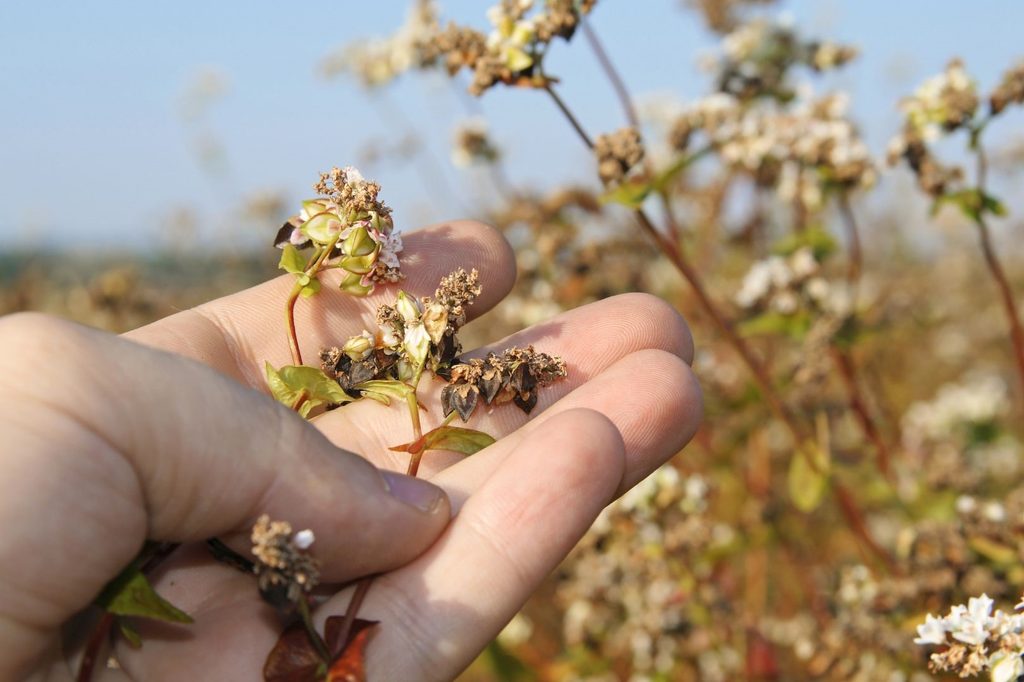
Buckwheat is not a cereal. Despite the name it belongs to the family Polygonaceae, alongside sorrel and rhubarb, which makes it what botanists call a pseudocereal: a plant whose seeds are used like grain but which is not a grass. Amaranth is also a pseudocereal, from a different family again.
That distinction is not pedantry. Pseudocereals do not share the agronomic constraints of wheat, rice and barley, which is exactly why they grow where those crops fail.


Nepal cultivates two buckwheat species. Fagopyrum esculentum is common buckwheat, known locally as mithe phapar, meaning sweet buckwheat. Fagopyrum tataricum is tartary buckwheat, called tite phapar, or bitter buckwheat. Tartary is the hardier of the two and dominates at the highest elevations.
The altitude range is the whole argument
Published Nepali research records buckwheat growing from 60 meters to 4,200 meters above sea level, across all four seasons somewhere in the country. No other crop in Nepal spans that range.
Consider what 4,200 meters means for a plant. Night temperatures drop below freezing for much of the year. Soil is thin, stony and low in organic matter. The frost-free window may be ten or twelve weeks. Buckwheat completes a crop cycle in roughly 70 to 90 days depending on variety and conditions, which is short enough to fit inside that window.
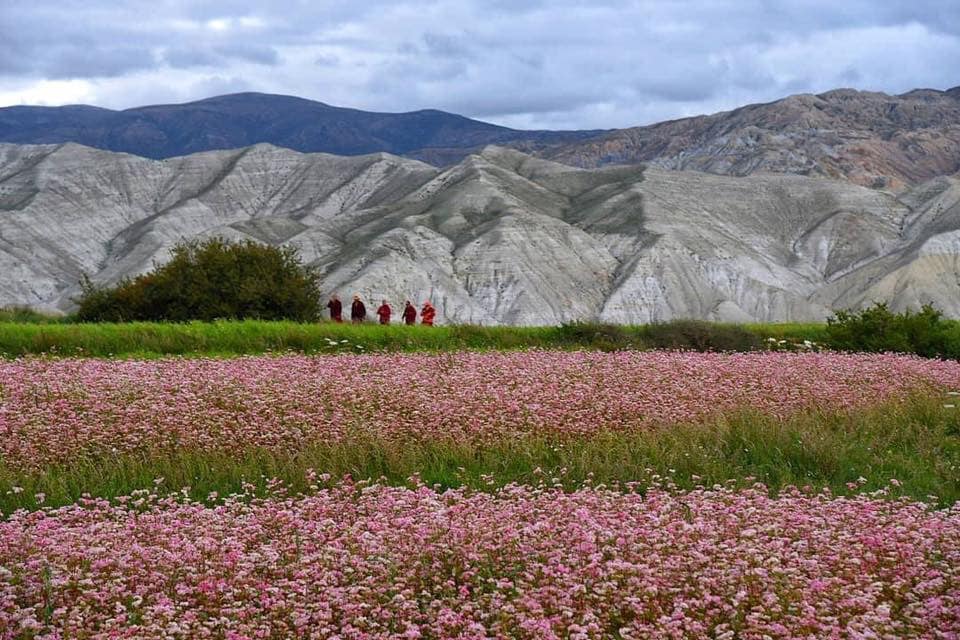
Buckwheat is grown in 61 of Nepal’s 75 districts under the older district framework. Diversity, though, is concentrated. Research on Nepal’s buckwheat genetic resources found the highest diversity in Dolpa, followed by Mustang, Manang, Jumla and Solukhumbu. Four of those five sit in or adjacent to the Karnali highlands and the trans-Himalayan belt.
Production figures, and their limits
Nepali research literature puts buckwheat at roughly 43,000 hectares nationally, producing about 23,100 tonnes, at a productivity of around 540 kilograms per hectare.
| Measure | Nepal | World average |
|---|---|---|
| Buckwheat yield (tonnes per hectare) | 0.55 | 0.89 |
Read that gap honestly. Nepali buckwheat yields sit well below the global average, and that is not primarily a climate problem. It reflects almost no formal breeding investment, seed saved on farm rather than selected for yield, minimal fertility inputs, and cultivation pushed onto the most marginal land available. A crop grown on the worst field on the farm will underperform.
Treat these national figures with some caution. Area and production statistics for minor crops in Nepal are compiled with far less rigor than for rice, maize and wheat, and different sources give noticeably different numbers. Directionally, the finding is reliable. The precision is not.
Why the resilience claim holds up
Four traits do the work, and each is observable rather than theoretical.
- Short cycle. Finishing in under three months lets the crop fit a brief high-altitude season and allows it to be sown late as a recovery crop when a first planting fails.
- Low fertility tolerance. Buckwheat produces an acceptable crop on soils where cereals do not establish, which is the normal condition of newly cleared or long-cultivated mountain terraces.
- Weed suppression. Fast canopy closure reduces weeding labor, which matters in households where labor, not land, is the binding constraint.
- Genetic breadth. The Nepal Agricultural Research Council maintains around 280 buckwheat accessions, a reservoir of locally adapted material that formal breeding has barely begun to use.
Amaranth brings a different set. Grain amaranth is gluten free and a good protein source, and notably it supplies lysine, an essential amino acid that most plant foods provide poorly. For households whose diet leans heavily on cereals and potato, that is a real nutritional contribution rather than a marketing line.
What buckwheat uniquely contains
Two compositional findings recur in the Nepali literature. Buckwheat has the highest iron content among all cereals and legumes. It is also the only field crop containing appreciable amounts of rutin, a flavonoid studied for effects on capillary strength.
A caution belongs here. Rutin content is well established; broad health claims built on it are not, and the clinical evidence for dietary rutin is thinner than wellness marketing implies. Nepali tartary buckwheat is often promoted abroad on exactly this basis. Rutin itself is real. The health claims deserve skepticism.
Stating the climate case carefully
Nepal’s own instrumental record gives this argument its strongest footing. The Department of Hydrology and Meteorology analyzed 1971 to 2014 data from 93 stations and found annual maximum temperature rising by 0.056°C per year across Nepal, significant at the 99.9% confidence level.
Warming is not evenly distributed. It increases with altitude.
| Physiographic region | Annual maximum temperature trend (°C per year, 1971 to 2014) |
|---|---|
| High Himalaya | 0.086 |
| Nepal, all regions | 0.056 |
| Tarai | 0.021 |
Manang district recorded the steepest district-level trend in the dataset, at 0.118°C per year in winter maximum temperature. Annual precipitation showed no statistically significant national trend over the same period, at minus 1.333 millimeters per year. High Mountain precipitation trended down at 3.17 millimeters per year, also without reaching significance.
Here is the nuance that gets lost. A non-significant rainfall trend does not mean rainfall is stable in the way farmers experience it. Totals can hold steady while timing, intensity and dry-spell length all shift, and farmers across the western mountains consistently report exactly that kind of change. Measuring variability in timing requires different analysis than measuring annual totals, and Nepal has less of it.
So the defensible version of the climate argument is this. High-altitude Nepal is warming faster than the lowlands, on a measured record. Rainfall reliability appears to be changing, on farmer testimony that is consistent across studies but harder to quantify. Crops that tolerate a short, uncertain window are therefore a sensible hedge. That is a reasonable inference, not a demonstrated outcome, and anyone telling you buckwheat is proven to outperform under future Karnali climate scenarios is overstating what has been tested.
Why cultivation is falling anyway
Area under traditional grains across Nepal’s mountain districts has been declining for decades. Understanding why matters more than praising the crops.
Subsidized rice reaches Karnali districts through government and donor distribution, and rice carries social status that buckwheat does not. Households that can obtain rice generally prefer it. Processing is another barrier: buckwheat and amaranth need dehulling and milling that mountain settlements often lack, so the labor cost per meal is higher.
Market access compounds it. A crop with no reliable buyer and no price signal loses to one that arrives by truck. Out-migration of working-age adults, which has reshaped rural Karnali as thoroughly as any climate trend, removes the labor that terrace agriculture requires. Apple orchards have expanded in Jumla and surrounding areas, drawing land and attention toward a crop with a functioning market.
None of these is a climate problem. All of them are the actual reason the grains are disappearing, and a resilience argument that ignores them will not change anything.
Communities, not a single tradition
Karnali is not culturally uniform, and the farming systems vary with the communities practicing them. In the mid-hill districts of Karnali Province, cropping patterns and food habits differ from those in the trans-Himalayan belt of Dolpa, where Tibetan-influenced Buddhist communities farm naked barley and buckwheat under a different seasonal calendar. In Jumla and its neighbors, households grow the cold-tolerant marsi rice alongside buckwheat and amaranth at elevations that surprise visiting agronomists.
Dietary roles vary too. In many Nepali households amaranth is associated with ritual purity and is eaten during religious fasting, when common grains are avoided. Doti district exports more than 35 tonnes of amaranth annually to India, largely for that fasting market. Elsewhere in the country, amaranth is grown mainly as an iron-rich leafy vegetable rather than for grain, including in Kaski, Ramechhap and Sindhuli.
Describing these as one Nepali tradition flattens real differences. Practices vary by community, altitude and region, and the households farming them are making current economic decisions rather than preserving a museum.
What would actually change the trajectory
Research literature on Nepal’s neglected and underutilized crop species converges on a short list: varietal improvement drawing on the existing germplasm collections, village-level processing equipment, and a market that pays a premium the farmer actually receives.
The last one is where most initiatives fail. Premium prices for mountain grains do exist in Kathmandu and in export markets, and the share reaching the grower is often small. Value chain studies in Jumla and Bajura have examined this directly, and the pattern is familiar across Nepali specialty products.
There is no reason buckwheat and amaranth cannot have a future in Karnali. That future depends on processing, price and seed quality far more than on the crops’ tolerance for cold.
If you travel in this region, the agricultural landscape is readable from the trail. Our guides to Upper Dolpo and Lower Dolpo and Shey Phoksundo cross exactly these high-altitude farming belts, the Rara Lake route passes through the Jumla farming districts, and food traditions elsewhere in Nepal are covered in our piece on Dashain and Tihar food.
Frequently asked questions
Is buckwheat a grain?
Not botanically. It belongs to the Polygonaceae family rather than to the grasses, which makes it a pseudocereal. Its seeds are used like grain, and it does not share the agronomic requirements of wheat, rice or barley.
How high can buckwheat grow in Nepal?
Nepali research records cultivation from 60 meters up to 4,200 meters. The highest-elevation plantings are generally tartary buckwheat, known as tite phapar, which tolerates cold better than the sweet type.
What is the difference between mithe and tite phapar?
Mithe phapar is Fagopyrum esculentum, common or sweet buckwheat. Tite phapar is Fagopyrum tataricum, tartary or bitter buckwheat. Tartary is hardier, more bitter, and typically carries higher rutin content.
Why are Nepali buckwheat yields low?
National productivity sits around 0.55 tonnes per hectare against a world average near 0.89. Limited formal breeding, farm-saved seed, minimal inputs and cultivation on the most marginal land explain most of the gap. Climate is not the main factor.
Is amaranth actually more nutritious than rice?
For protein quality, yes in one specific respect: amaranth supplies lysine, which cereals including rice provide poorly. Calling it a superfood overstates the case. Its value is in complementing a cereal-heavy diet rather than replacing one.
Are these crops proven to perform better under climate change?
No. Their tolerance of short seasons, poor soils and cold is well documented. Direct trials comparing their performance against alternatives under projected future Karnali conditions are limited, so the resilience case is a reasonable inference rather than a tested result.
Why is cultivation declining if the crops are so well adapted?
Subsidized and socially preferred rice, missing village-level processing, weak markets, out-migration of farm labor, and the expansion of apple orchards all pull against traditional grains. These are economic and social pressures rather than agronomic ones.
Can visitors eat these grains in Karnali?
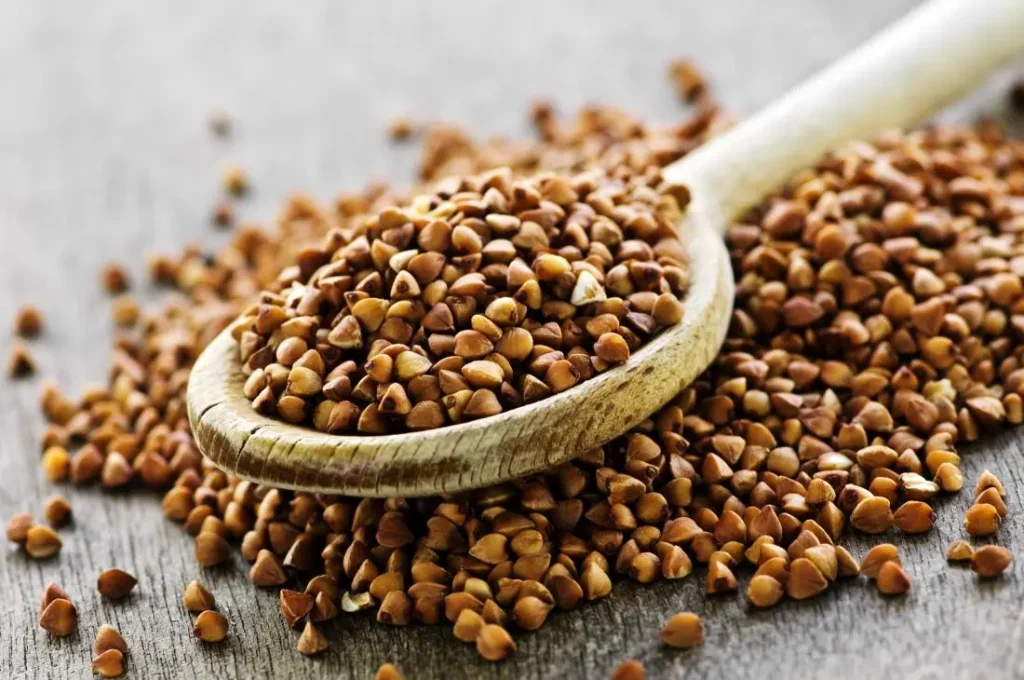
Yes. Buckwheat appears as roti, pancakes and porridge in mountain households and in some trekking lodges, particularly in Dolpa, Mustang and Jumla. Availability varies with season and with the household, and it is not a fixture on every menu.
Further reading
For the underlying data, see Nepal’s review of buckwheat genetic resources and the Department of Hydrology and Meteorology’s Observed Climate Trend Analysis of Nepal.
NepalVue writes about Nepal’s working landscapes and the people who farm them. Save this one if you are heading west, share it with anyone who thinks mountain agriculture is a relic, and follow NepalVue for more from Karnali and beyond.


