


Most people assume a mountain pilgrimage means suffering for your blessings. At Pathibhara, that equation is being rewritten in real time, and not everyone is happy about it. Perched at 3,794 meters on a windswept ridge in Taplejung, far in Nepal’s eastern corner, the Pathibhara Devi Temple has drawn devotees for centuries who climbed for hours, sometimes days, to lay their wishes before the goddess. A new cable car now promises to carry pilgrims up in minutes. Whether that is progress or desecration depends entirely on who you ask.
Here is what most travel guides skip: this is not just another Hindu shrine with a good view. It is one of Nepal’s most revered Shakti Peethas, a place the Limbu people call Mukkumlung and consider sacred to their own indigenous faith, and right now it sits at the center of one of the country’s most heated disputes over land, religion, and who gets to decide what “development” looks like.
Where Pathibhara Devi Temple Sits
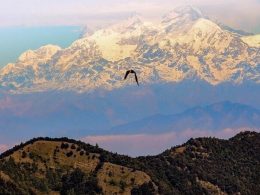
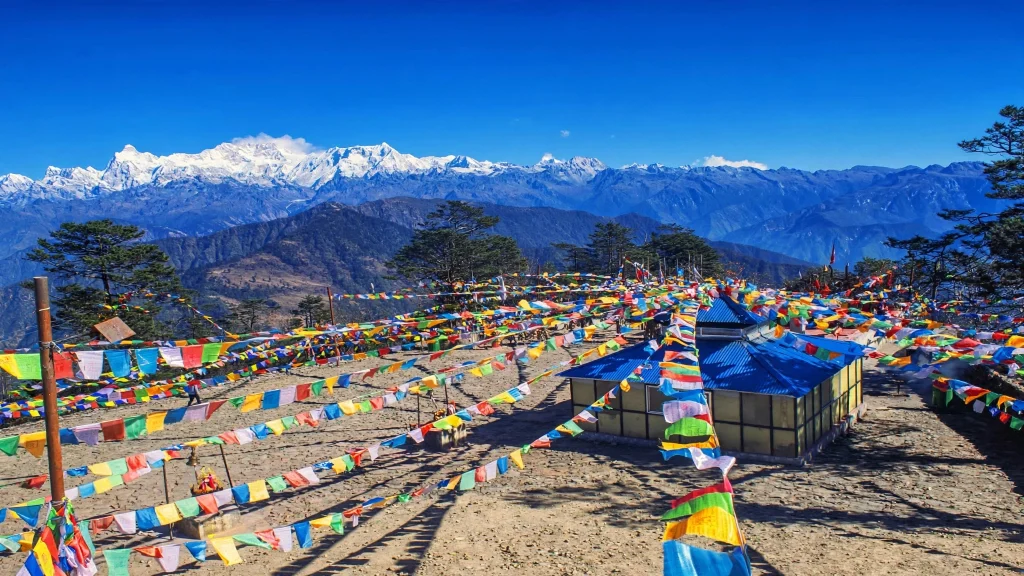
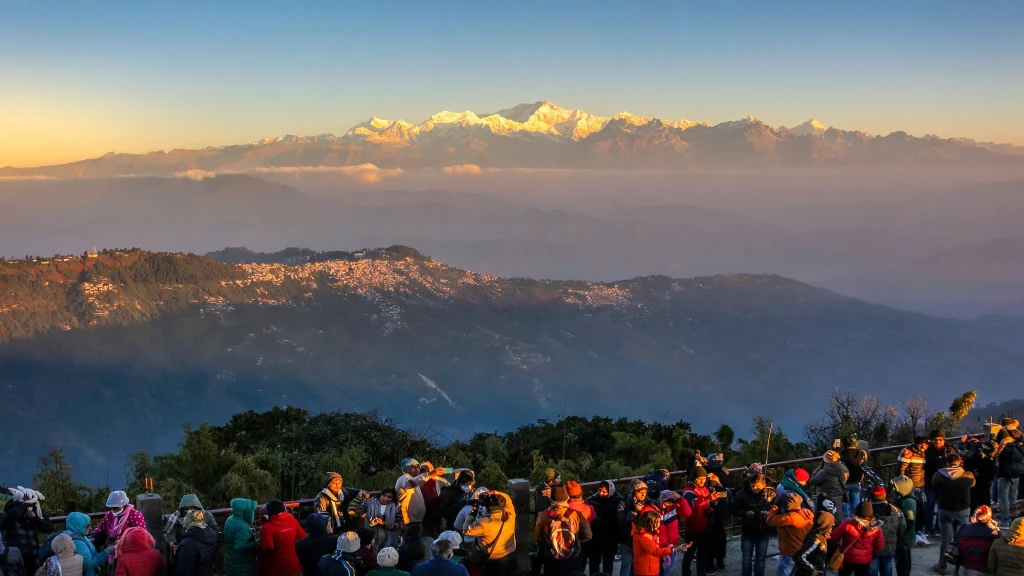
Taplejung is about as far east as you can go in Nepal before you hit the Indian border and, beyond it, Sikkim. Pathibhara crowns a hill roughly 19 km from Phungling, the district headquarters also known as Taplejung Bazaar. On a clear morning the reward is staggering: Kanchenjunga, the third-highest mountain on earth, plus Kumbhakarna and, on the best days, the distant bulk of Makalu.


At nearly 3,800 meters, the air is thin and the weather turns fast. Morning sun can give way to fog and biting wind by early afternoon, which is exactly why pilgrims traditionally start their climb before dawn.
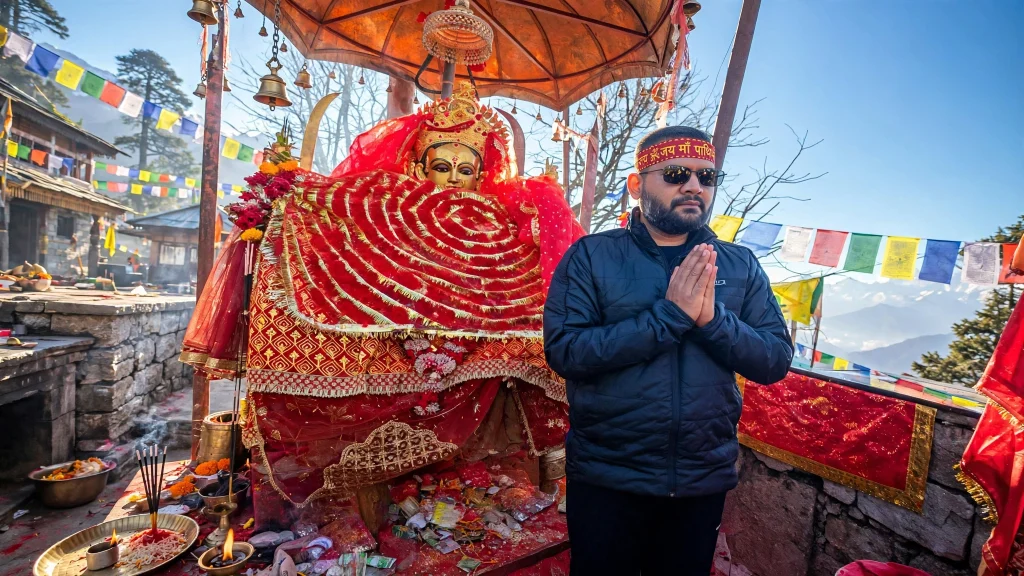
The temple honors Goddess Pathibhara, worshipped as a fierce form of Durga. Devotees believe she grants sincere wishes: a child to the childless, prosperity to the struggling, safe passage to those who ask. That reputation for actually delivering is why the shrine pulls people from across Nepal and northeastern India, not just locals.
The Legend Behind the Goddess
Every sacred site in Nepal comes with a story, and Pathibhara’s is one of the better ones. Long ago, local shepherds grazing their flocks on this ridge lost hundreds of sheep overnight. The animals simply vanished. Distraught and facing ruin, the shepherds are said to have received a dream in which the goddess demanded a ritual sacrifice and a shrine built in her honor. They obeyed. The lost herd returned as suddenly as it had disappeared.
That origin explains the tradition of animal sacrifice that continues at the temple today, a practice that sits uncomfortably with some modern visitors but remains deeply rooted in local faith. As a Shakti Peetha, Pathibhara is also tied to the wider Hindu myth of Sati, whose body parts fell across the subcontinent as Shiva carried her in grief, sanctifying each spot where they landed.
The Cable Car Controversy You Should Know About
You cannot honestly write about Pathibhara in 2026 without addressing the elephant on the mountain. A 2.7 km cable car, developed by Chandra Dhakal’s IME Group after the project passed from the earlier Yeti Group, was built to connect the lower station near Kaflepati to the temple area. It was inaugurated back in November 2024.
Simple convenience, right? Not remotely.
Indigenous Limbu (Yakthung) communities, who revere this land as Mukkumlung, have fought the project hard. To them it is not a tourism upgrade but the industrialization of a living sacred landscape without their consent. Protests through early 2025 shut down transport across nine eastern districts and led to clashes with security forces in towns like Itahari and Damak. A six-point agreement was reached, then broke down when construction continued. The dispute has only escalated since.
By 2026 the matter had climbed all the way up the political and legal ladder. The case remained sub judice as of April 2026, and on June 19, 2026 the government formed a task force to hunt for a lasting solution. International attention followed too: a World Bank accountability watchdog opened a review into the project amid the indigenous rights outcry. As of this writing in mid-2026, the cable car’s day-to-day operational status stays contested and politically fragile, so anyone planning a trip should check current conditions rather than assume smooth sailing.
My honest take? Go in aware of the tension. You are stepping into someone else’s sacred and contested ground, and a little humility goes a long way.
How to Reach Pathibhara
Getting here is half the adventure, and there is more than one way up.
By Air via Suketar
Fastest route by far. Suketar Airport sits at 2,840 meters and is the only STOL airstrip in Taplejung district, with scheduled flights linking it to Kathmandu and Biratnagar. Flight schedules out here are notoriously weather-dependent, so build in buffer days. From Suketar, the classic walking trail to the temple runs roughly 5 to 6 hours, threading through Deurali, Ramitedanda, Chhatedhunga, Bhalugaunda, and Phedi before the final push to the shrine.
Overland from Kathmandu
Cheaper, slower, and genuinely grueling. Expect to cover around 700 km by bus or jeep, usually broken across two days with an overnight around Birtamode or the Jhapa lowlands before grinding up into the hills toward Taplejung. Budget travelers and most Nepali pilgrims take this route. It is long, but the changing landscape from steamy Terai plains to cool eastern hills is a trip in itself. If you want to understand how the seasons shape any journey in this country, our guide to the best time to visit Nepal is worth a read before you book anything.
The Climb and What It Feels Like
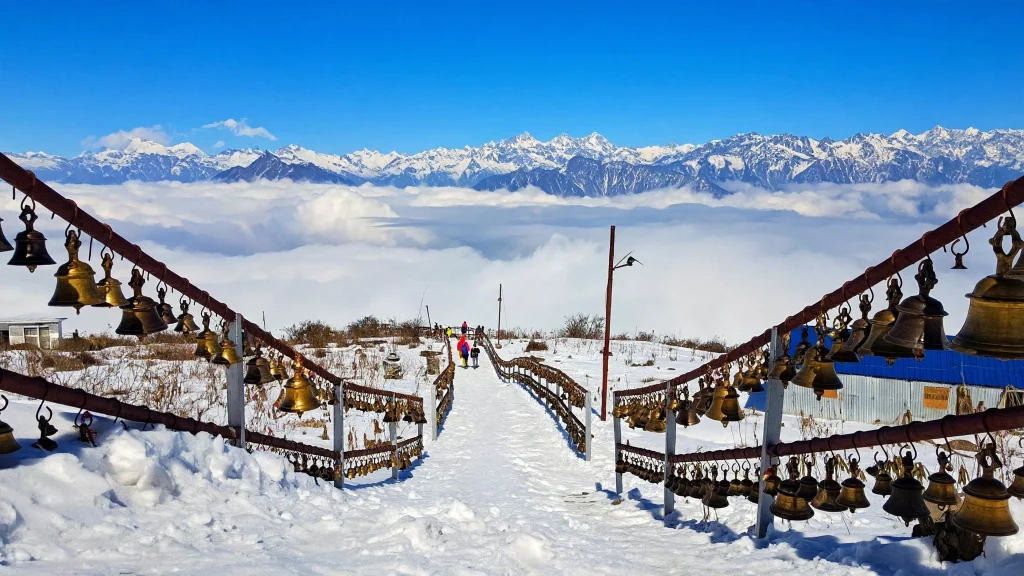
Trekkers who have done both Pathibhara and bigger routes often say the walk here punches above its length. The forest sections are thick with rhododendron and moss, and the ridge walk near the top is pure exposed drama. It is not a technical climb, but the altitude is real, and people who rush it pay for it with headaches and nausea.
Basic teahouses and lodges dot the trail and cluster near the shrine. Do not expect comfort. Rooms are simple, food is dal bhat and noodles, and hot water is a luxury, not a given. That simplicity is part of the point for many pilgrims.
For serious trekkers, Pathibhara pairs beautifully with the region’s marquee routes. If the mountain views here light a fire in you, the full Kanchenjunga trek ventures deep into the same corner of the Himalayas. And if you are drawn to Nepal’s tradition of high sacred sites, the pilgrimage to Muktinath temple in the western mountains makes a fascinating counterpoint to Pathibhara in the east.
Best Time to Visit
Two windows stand out. The pre-monsoon stretch from March to June brings warming days, blooming rhododendrons, and reliable trekking conditions. Post-monsoon, from September to November, delivers the clearest mountain views of the year once the rains have scrubbed the air.
Avoid peak monsoon, July and August, unless you enjoy leeches, landslides, and clouds where the Himalayas should be. Winter is doable but brutally cold at this altitude, with snow possible near the summit. Big Hindu festival dates also bring huge crowds of domestic pilgrims, so plan around them if solitude matters to you.
Practical Tips for First-Time Visitors
- Acclimatize. You are going above 3,700 meters. Do not fly in and sprint up the same day.
- Layer up. Mornings are cold, afternoons windy, and weather flips without warning. Pack a warm jacket even in spring.
- Carry cash. There are no reliable ATMs on the trail. Bring enough Nepali rupees for food, lodging, and offerings.
- Respect the rituals. Ask before photographing sacrifices or private prayer. This is a working shrine, not a photo set.
- Check the political situation. Given the ongoing cable car dispute, verify that roads, transport, and the ropeway are actually operating before you commit to dates.
- Start early. Begin the final climb at dawn for the best views and the calmest weather.
For official travel advisories and tourism information, the Nepal Tourism Board is the authoritative source to check before any trip into remote Nepal. Background on the temple’s religious significance is also well documented on its Wikipedia entry.
Frequently Asked Questions
How high is Pathibhara Devi Temple?
The temple stands at 3,794 meters, roughly 12,448 feet, on a ridge in Taplejung district. At that altitude the air is thin, so mild acclimatization helps, especially if you have flown in from lower elevations.
How do I get to Pathibhara from Kathmandu?
You have two options. Fly to Suketar Airport near Taplejung, then walk 5 to 6 hours to the temple, or travel overland roughly 700 km by bus or jeep, usually spread across two days. Flights are faster but heavily weather-dependent.
Is there really a cable car to the temple?
A 2.7 km cable car built by IME Group was inaugurated in November 2024. Its status has been complicated by sustained protests from indigenous Limbu communities and ongoing legal proceedings, so check whether it is currently operating before relying on it.
Why are people protesting the Pathibhara cable car?
Indigenous Yakthung (Limbu) communities regard the site as Mukkumlung, sacred to their own faith, and argue the project was pushed through without their consent and damages a living cultural landscape. The dispute has reached the courts and drawn international scrutiny.
What is the best time of year to visit?
March to June and September to November are ideal. Post-monsoon autumn generally offers the clearest views of Kanchenjunga. Peak monsoon in July and August brings rain, leeches, and landslide risk, while winter is very cold with possible snow.
Do I need a permit to visit Pathibhara?
Pathibhara is primarily a religious pilgrimage site rather than a restricted trekking zone, so a special trekking permit is not typically required just to visit the temple. Deeper Kanchenjunga-region trekking does require permits, so confirm your exact route in advance.
What accommodation is available near the temple?
Expect basic teahouses and simple lodges along the trail and near the shrine. Rooms are minimal, meals center on dal bhat and noodles, and amenities like hot water and reliable electricity are limited. Carry cash, as card payments are not an option up here.
Is Pathibhara suitable for beginners?
Yes, with sensible preparation. The walk is not technical and can be completed in a few hours from Suketar, but the altitude is genuine. Go slow, stay hydrated, dress warmly, and you do not need to be an experienced trekker to make it.