



If Mount Everest is on your bucket list, Lukla Airport is almost certainly part of the journey. This tiny mountain airstrip serves as the gateway to the Khumbu region, and it has earned a reputation that precedes it. Before you book your flight, this Lukla Airport guide will walk you through everything worth knowing, from its dramatic history to practical tips for a smooth departure.
Understanding Lukla Airport before you fly helps you prepare mentally, pack correctly, and plan around inevitable weather delays. So, let’s break down what makes this airport so famous, and how to navigate it with confidence.
Where Is Lukla Airport Located?
Officially named Tenzing-Hillary Airport, Lukla Airport sits in the Khumbu Pasang Lhamu Rural Municipality, within Solukhumbu District, Koshi Province. It rests at an elevation of roughly 2,846 meters, or about 9,337 feet above sea level.


Lukla is the primary gateway for trekkers heading toward Everest Base Camp and other destinations across the Khumbu Valley. Since no roads connect Kathmandu to Lukla, flying remains the fastest and most practical way to reach the region. The straight-line distance from Kathmandu is only about 140 kilometers, yet the terrain makes any overland alternative a multi-day trek.
The History Behind Lukla Airport
Lukla’s story begins with one of mountaineering’s most famous names. Sir Edmund Hillary initiated construction of the airport in 1964, aiming to improve access to the Everest region for climbers and trekkers alike.
Hillary originally hoped to build the runway on flat farmland, but local farmers were reluctant to give up their land. Eventually, a runway was carved into high, narrow ground between the mountains instead. Local Sherpa communities played an active role in making this project happen, contributing labor and support throughout construction.
For decades, the runway remained unpaved, covered in grass rather than asphalt. It was not until 2001 that the strip finally received a paved, bituminous surface, improving both safety and reliability. Then, in January 2008, the airport was officially renamed Tenzing-Hillary Airport, honoring both Hillary and his climbing partner, Tenzing Norgay, together the first two people to summit Mount Everest.
Why Lukla Airport Has a Fearsome Reputation
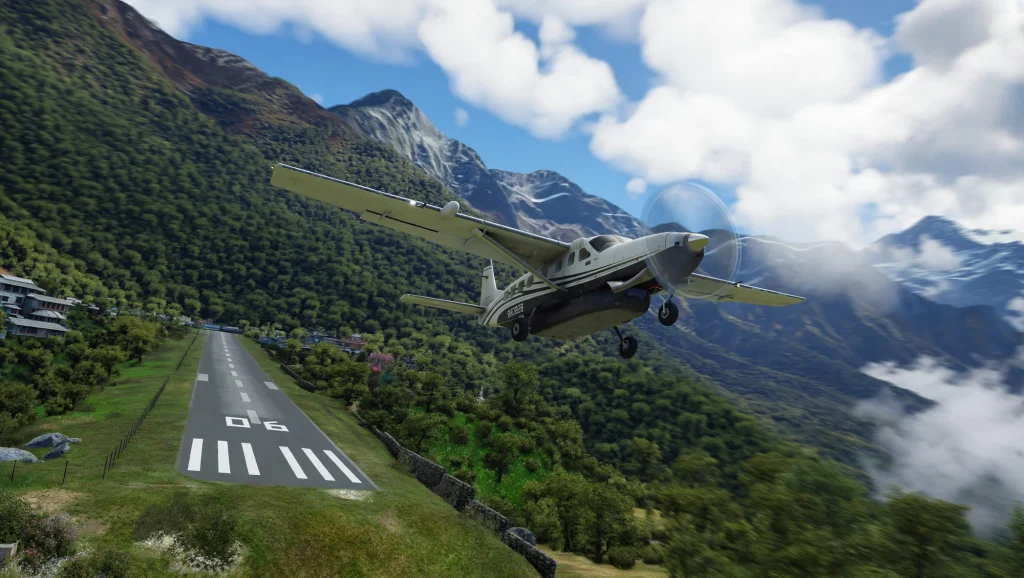
Lukla Airport is frequently described as the world’s most dangerous airport, and its physical characteristics explain why.
An Extremely Short Runway
The runway measures just 527 meters long and around 20 to 30 meters wide. For comparison, many international airport runways stretch beyond 3,000 meters. This limited length leaves virtually no margin for error during landing or takeoff.
A Steep, Sloping Design
Adding to the challenge, the runway sits on an 11.7 percent gradient. At the lower end, the ground drops steeply into a valley, while a rock wall marks the upper boundary. This slope actually helps aircraft slow down during landing and gain speed during takeoff, but it demands precise piloting.
High Altitude and Thin Air
At nearly 2,850 meters, Lukla sits well above the altitude threshold where thin air begins affecting aircraft performance. Reduced air density means engines generate less lift, and it becomes harder to slow the aircraft during descent, both of which increase the operational difficulty.
Surrounding Mountainous Terrain
The airport is boxed in by steep terrain on virtually every side. Pilots approach along a narrow corridor with little room for correction, making Lukla a highly technical airfield rather than a simple mountain airstrip.
Perspective on the Danger
Despite its fearsome reputation, some aviation experts describe Lukla as more accurately a highly technical mountain airport, rather than simply reckless or unsafe. Only specially trained pilots, flying specific short-takeoff-and-landing aircraft, are authorized to operate here at all, which adds a meaningful layer of safety despite the runway’s intimidating specs.
Getting to Lukla: Flights and Alternatives
Most travelers reach Lukla by air, though a few alternative routes exist for those willing to trade time for a slower approach.
The Standard Kathmandu to Lukla Flight
Flight time between Kathmandu and Lukla typically runs between 25 and 40 minutes, depending on conditions. Airlines including Sita Air, Tara Air, and Summit Air operate this route using small aircraft such as the Twin Otter, Dornier 228, and similar short-takeoff-and-landing planes.
The Ramechhap Alternative
During peak trekking seasons, Kathmandu’s main airport becomes congested with both international and domestic traffic. To keep the Lukla schedule reliable, many flights are rerouted through Ramechhap’s Manthali Airport instead. This requires an early morning drive of four to six hours from Kathmandu, so check with your airline or agency about which departure point applies to your dates.
Trekking In Instead of Flying
For travelers who prefer to skip the flight entirely, an overland route from Jiri offers a traditional alternative. This approach typically takes seven to ten days on foot, though a road-and-short-walk route via Salleri can shorten the journey to roughly one to two days of walking after a lengthy drive.
Helicopter Options
When fixed-wing flights are grounded, helicopters occasionally step in as a backup. This option costs significantly more and depends entirely on weather and seat availability, but it can save a trip when flights are stuck for days.
Baggage Rules You Need to Know
Because Lukla’s aircraft are small, baggage restrictions here are stricter than typical domestic flights.
Standard Weight Limits
Most airlines enforce a combined baggage allowance of around 15 kilograms per passenger, typically split into 10 kilograms of checked luggage and 5 kilograms of hand carry. These limits exist because the aircraft simply cannot absorb extra weight the way larger planes can.
Pack Light and Smart
Given the minimal overhead space on these small aircraft, pack only what you truly need for the flight itself. Many trekkers store non-essential belongings in Kathmandu storage facilities and carry a duffel bag rather than a rigid suitcase, since duffels pack more efficiently for mountain travel.
Keep Essentials in Your Carry-On
Since checked bags occasionally get bumped to a later flight during busy periods, pack warm clothing, medication, and important documents in your hand luggage. This way, even a delayed bag won’t leave you without the essentials.
Weather, Delays, and How to Plan Around Them
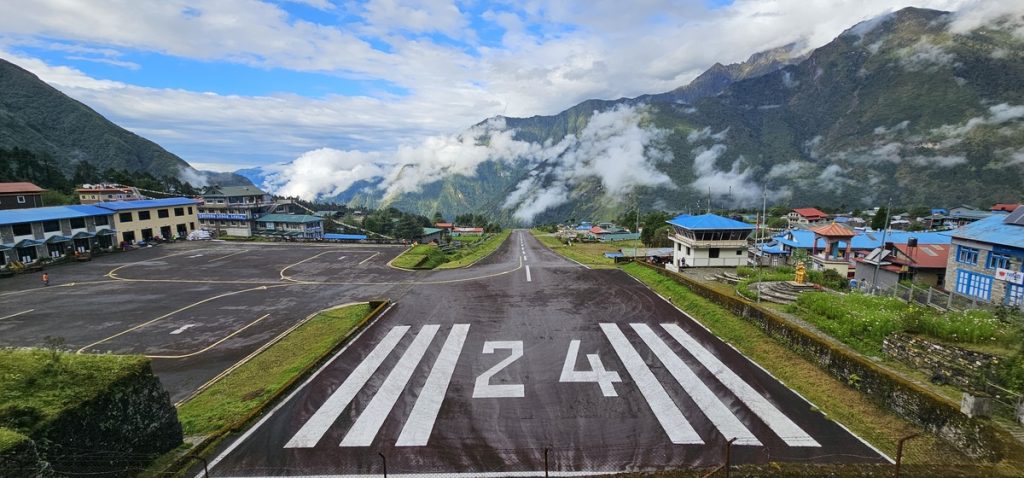
Weather sensitivity is simply part of flying to Lukla, and understanding this upfront saves considerable frustration.
Why Delays Happen So Often
Lukla operates under visual flight rules, meaning pilots need clear visibility to land safely. Flights only operate between roughly 6 AM and noon, and morning departures generally offer the most stable conditions, since afternoon weather tends to deteriorate more frequently.
Build In Buffer Days
Given how common delays are, experienced trekking operators consistently recommend adding at least one to two buffer days around your Lukla flight, both before and after your trek. One weather disruption can easily cascade into several days of delay during a difficult stretch.
Know What Happens During a Cancellation
If your flight is cancelled, airlines typically rebook passengers automatically onto the next available departure, usually the following morning. Staying in touch with your airline or agency, and checking weather forecasts for Kathmandu, Lukla, and Ramechhap, helps you make informed decisions about whether to wait it out or explore alternatives.
Avoid Booking Tight International Connections
One of the most common mistakes trekkers make is booking an international flight home immediately after their scheduled Lukla departure. Given how often delays occur, this leaves little room for error and can result in costly last-minute rebooking.
Practical Tips Before You Fly
A little preparation goes a long way toward a smoother Lukla Airport experience.
Book Early, Especially in Peak Season
Seats on Lukla flights sell out quickly during spring and autumn, Nepal’s busiest trekking seasons. Booking six to eight weeks in advance is a common recommendation for travelers hoping to secure their preferred dates.
Get Weather-Aware Travel Insurance
Since delays are so common, travel insurance covering flight interruptions and rebooking costs is well worth the investment. If you plan to trek at high altitude, confirm your policy also covers emergency helicopter evacuation, since Khumbu-region rescues are often billed directly to insurers.
Choose Morning Flights Whenever Possible
Booking the earliest available slot generally offers the best odds of clear weather and on-time departure. The most reliable trekking windows tend to fall in mid-October to mid-November and mid-March to mid-April.
Stay Flexible and Patient
No matter how well you plan, some flexibility remains essential. Weather in the Himalayas changes quickly, and travelers who build slack into their itinerary generally experience far less stress than those working with a tight schedule.
Final Thoughts
Lukla Airport is not just a gateway to Everest. It is an experience in itself, shaped by dramatic terrain, aviation history, and the enduring legacy of Sir Edmund Hillary and the Sherpa community who helped build it. By understanding its runway, its weather patterns, and its baggage rules before you fly, you set yourself up for a smoother, less stressful journey into the Khumbu region. So, pack light, book early, build in buffer days, and get ready for one of the most unforgettable short flights anywhere in the world.
Frequently Asked Questions
Why is Lukla Airport considered the world’s most dangerous airport?
Its short 527-meter runway, steep gradient, high altitude, and surrounding mountainous terrain combine to make every landing and takeoff highly technical.
How long is the flight from Kathmandu to Lukla? The flight typically takes between 25 and 40 minutes, depending on weather and whether the departure point is Kathmandu or Ramechhap.
What is the baggage limit for Lukla flights?
Most airlines allow around 15 kilograms total per passenger, usually split into 10 kilograms of checked luggage and 5 kilograms of hand carry.
Why do Lukla flights get delayed so often?
Flights depend on clear visibility under visual flight rules, so morning fog or shifting mountain weather frequently pushes back departures.
Is there an alternative to flying into Lukla?
Yes, trekkers can walk in from Jiri over seven to ten days, or drive to Salleri and hike the remaining one to two days.
How many buffer days should I plan around a Lukla flight?
Most trekking operators recommend at least one to two buffer days before and after your scheduled Lukla flight to absorb possible weather delays.


