



Gosaikunda does not offer the slow, casual build-up of traditional trekking routes. Tucked tightly within the rugged verticality of Langtang National Park, this high-altitude glacial lake basin cuts straight to the chase. It demands a relentless, steep vertical climb through dense mossy forests, only to violently break open into a barren, elemental landscape of stone, sky, and pure alpine water at 4,380 meters.
This is a trek stripped of all commercial fluff. It serves as a short, intense bridge connecting Kathmandu’s chaotic urban energy directly to the jagged, frost-bitten edge of the Himalayas. Whether you are driven by absolute spiritual devotion or the raw urge to test your lungs against rapid altitude gains, Gosaikunda delivers a striking, unvarnished encounter with the high mountains.
The Mythological Fire and Ice of the Holy Basin
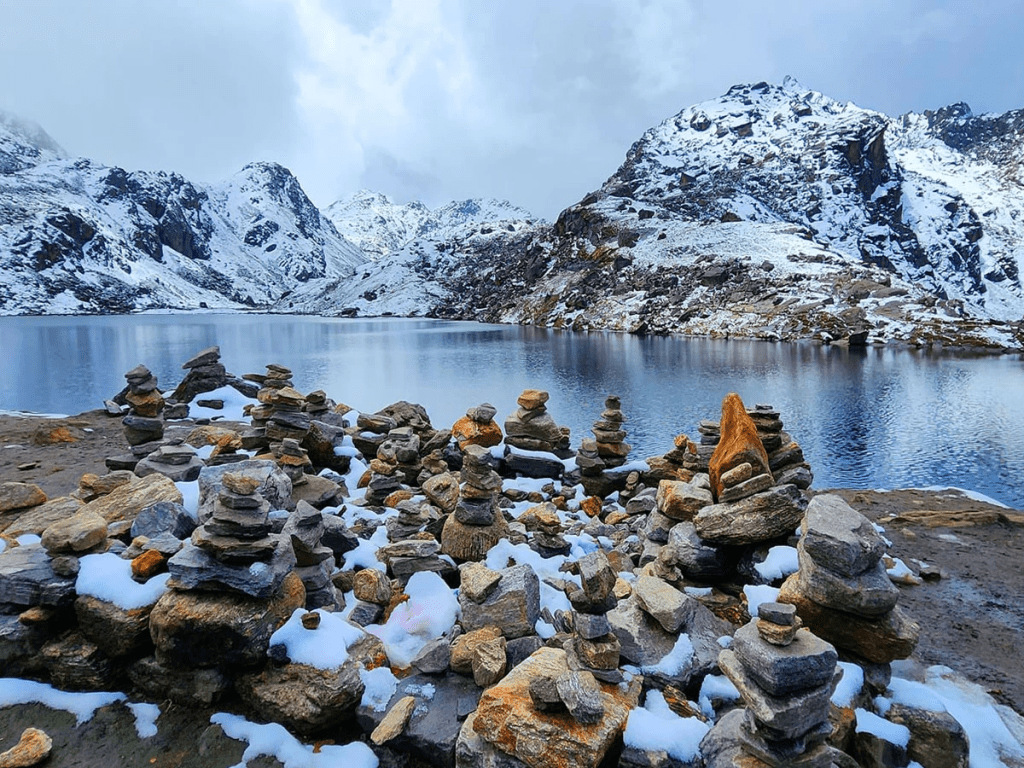
While the physical landscape is defined by freezing alpine water, Gosaikunda’s spiritual heart is rooted deeply in elemental fire. According to the ancient Samudra Manthan (the churning of the cosmic ocean) found in the Hindu Puranas, a lethal poison emerged that threatened to consume all existence. To save the universe, Lord Shiva drank the venom, which instantly turned his throat blue and burned him with an agonizing internal heat.
Seeking relief, Shiva rushed to the freezing Langtang highlands, struck his divine trident (Trishul) into the mountain flank, and watched three pristine streams burst forth to create Gosaikunda Lake. Devotees believe that a giant stone formation resting at the center of the main lake is the resting body of Shiva himself.
Every August, during the full moon festival of Janai Purnima, this silent, rocky wilderness erupts into a sea of human devotion. Thousands of pilgrims, barefoot sadhus, and traditional Dhami-Jhakris (shamanic healers) beat drums and chant ancient mantras, plunging into the freezing waters to wash away a lifetime of karma. Outside this festival window, the basin falls back into a heavy, meditative silence, surrounded by over a dozen sister lakes including Bhairavkunda, Saraswatikunda, and Suryakunda.
Weather and the Best Time to Visit
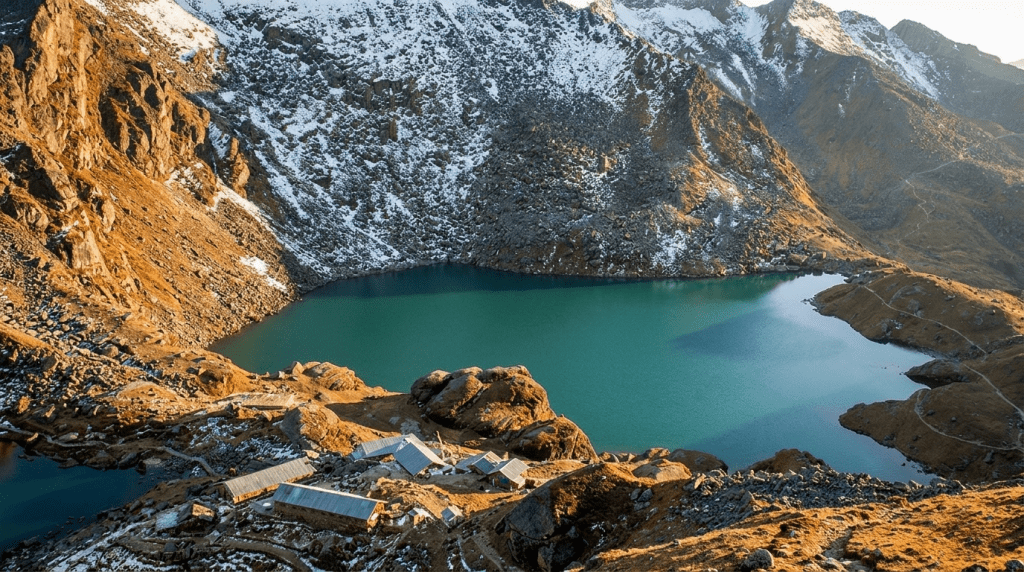
Because of its close proximity to Kathmandu, Gosaikunda can feel deceptively accessible, but its high-altitude alpine weather can turn dangerous in a matter of minutes.
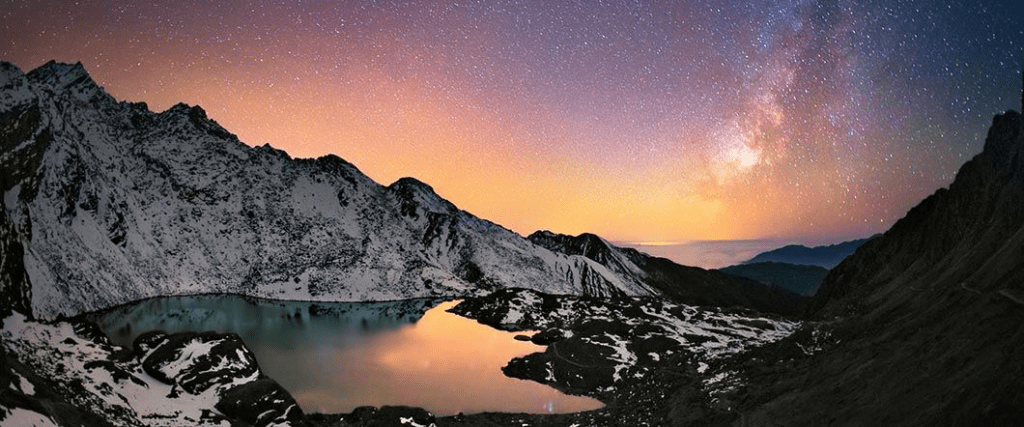
- Autumn (September to November) – Peak Clarity: This is the golden window. The monsoon winds leave behind crystal-clear, blue skies, offering flawless reflections on the lake surfaces and wide panoramic views of the Ganesh and Langtang Himal ranges.
- Spring (March to May) – The Rhododendron Bloom: The steep, lower trails come alive as massive forests of rhododendron burst into deep shades of red and pink. The weather up top is generally pleasant, though afternoon clouds are common.
- Winter (December to February) – The Frozen Mirror: The lake completely freezes over, turning into a solid, striking sheet of ice surrounded by deep snow. While incredibly beautiful, the Lauribina pass frequently closes due to heavy snow drifts, and many tea houses shut down entirely.
- Monsoon (June to August) – Monsoon & Pilgrimage: Trails become slick, muddy, and plagued by leeches at lower elevations. However, if you want to experience the raw energy of the Janai Purnima festival, this is the only time to go.
The Express Footprint: 5-Day Gosaikunda Itinerary

This classic teahouse route uses the direct trailhead from Dhunche. Because the trail climbs incredibly fast, staying strictly disciplined with your pacing is your best defense against acute mountain sickness (AMS).
Day 1: Drive from Kathmandu to Dhunche (1,960m)
Hop into a local bus or private jeep early in the morning from Kathmandu. Prepare yourself for a bumpy, winding 6 to 7-hour mountain road journey that hugs the Trishuli River valley until you enter Dhunche, the administrative head of Rasuwa district.
Day 2: Trek from Dhunche to Sing Gompa / Chandan Bari (3,330m) (5-6 hours).
The trail wastes no time. After crossing the local river, you will face a long, steady uphill climb through dense oak, pine, and bamboo forests. Break for lunch at Deurali, then push on to Sing Gompa to visit its historic monastery and taste fresh yak cheese straight from the local factory.
Day 3: Trek from Sing Gompa to Cholangpaty and Lauribina (3,910m) (6-7 hours)
Leave the tall trees behind as you enter the alpine scrub zone. The ridge trail exposes you to sweeping, massive views of Langtang Lirung, Ganesh Himal, and the distant peaks of Tibet. Pass through Cholangpaty and make a final steep push up to Lauribina to sleep and adjust to the thin air.
Day 4: Summit Gosaikunda (4,380m) and Descend to Sing Gompa (4-5 hours).
Start walking past the iconic Buddha statue on the Lauribina ridge. The trail flattens slightly as you round the mountain bends, revealing Saraswatikunda and Bhairavkunda before arriving at the great Gosaikunda Lake. Spend a few hours exploring the holy shorelines. Afterward, retrace your steps back down the ridge to the thicker air of Sing Gompa for a celebratory meal.
Day 5: Trek back to Dhunche and Return Drive to Kathmandu (4-5 hours)
Descend rapidly through the familiar forest trails back down to Dhunche. Catch a private jeep or afternoon bus to return to Kathmandu by nightfall, completing your alpine journey.
The High-Altitude Borderlands: Tamang and Sherpa Culture
As you move up the steep trails of the Langtang region, the cultural landscape changes just as fast as the ecosystem. The lower valleys are populated by the Tamang community, an ancient indigenous group with deep Tibetan-Buddhist roots. You will walk past hand-carved stone Mani walls, fluttering prayer flags, and small chortens that mark the entrance to every village.
Further up the ridge, the settlements lean into Himalayan Sherpa heritage. Unlike the commercialized Khumbu region, the hospitality here feels intensely local and intimate. Evenings are spent huddled close around iron stoves fueled by dried yak dung, listening to lodge owners share stories of heavy winter snows, high mountain passes, and the ancient trade routes that once connected these remote valleys directly with Tibet.
Essential Logistics & Survival Guide
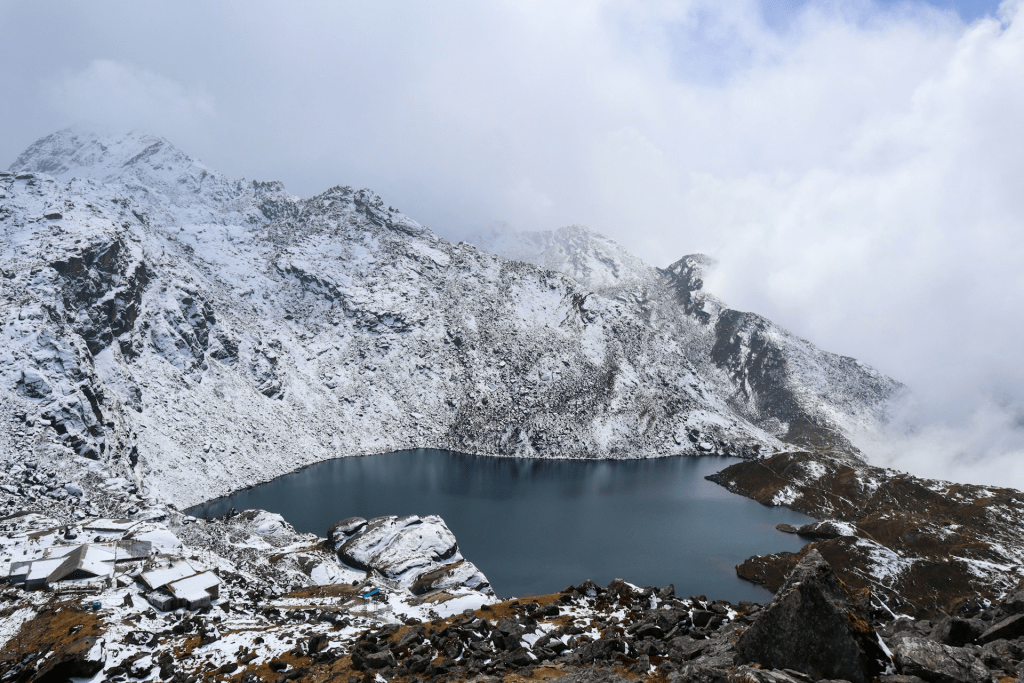
Unlike remote wilderness treks, Gosaikunda is well-equipped with local teahouses, meaning you do not need to carry heavy camping gear. However, the sheer verticality of the route presents its own unique challenges:
The Altitude Threat: You will shoot up over 2,400 vertical meters in less than 48 hours of walking. This is a massive jump for your body. Take slow, measured steps, drink plenty of water, and do not skip acclimatization stops at Sing Gompa or Lauribina.
Permits and Passes: Because the trail sits entirely within protected borders, you must secure two distinct permits: the Langtang National Park Entry Permit and the TIMS (Trekkers’ Information Management Systems) Card. You can purchase these easily at the national park checkpoint in Dhunche.
Power and Connectivity: Electricity is solar-powered and becomes scarce past Sing Gompa. Expect to pay a small fee ($2 to $5) to charge your phone or camera batteries. Nepal Telecom (NTC) provides a decent cellular signal along most parts of the ridge trail, while Ncell coverage fades out completely near the lakes.
Frequently Asked Questions (FAQs)
Can I extend the Gosaikunda trek into a longer journey?
Absolutely. If you want a bigger challenge, you can continue past the lakes, cross the grueling Lauribina La Pass (4,610m), and trek down through the beautiful Helambu valley all the way back to the northern edges of Kathmandu. Alternatively, you can merge this route with the classic Langtang Valley trek.
How cold does it get at the lakes?
Even during the warm autumn and spring months, night temperatures at 4,380 meters regularly plunge below freezing (0°C to -5°C). Always dress in layers and carry a high-quality windcheater and thermal underwear.
Are there hot showers available on the trail?
Hot showers are available in Dhunche and Sing Gompa (usually for an extra fee via gas geysers or boiled buckets). Once you push past Lauribina and reach the lakes, running water is freezing cold, and standard showers are unavailable.


