


Most people assume you need a week of hard trekking and a fistful of permits to stand face to face with the Annapurnas. You don’t. A short drive and a couple of hours of walking from Pokhara drop you into Dhampus village, a Gurung settlement perched at around 1,650 meters where the Fishtail peak fills half the sky and rice terraces spill down the ridge below your teahouse window.
Here’s what most guides won’t tell you: Dhampus is the destination that trekkers on the way to Annapurna Base Camp walk straight past, barely stopping for tea. That is their loss. For anyone short on time, nervous about altitude, or traveling with kids or parents who aren’t up for a two-week expedition, this little village is arguably the best Himalayan reward in Nepal per hour of effort spent.
Where Dhampus Village Sits and Why the Views Are So Good
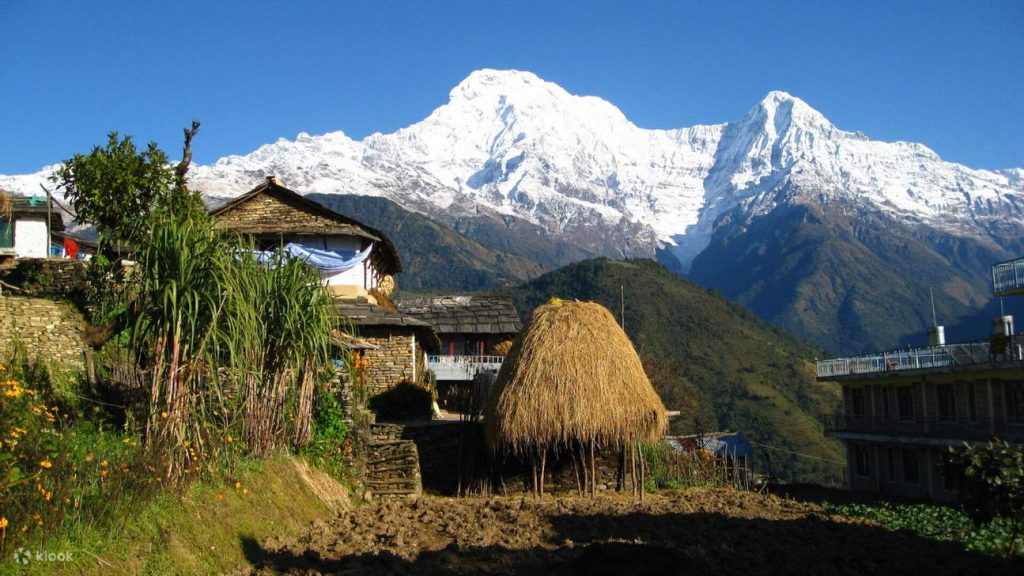
Dhampus lies north of Pokhara in the Kaski district, on a ridge that forms the gateway to the Annapurna Conservation Area. Sitting at roughly 1,650 meters, it is high enough to look the mountains in the eye but low enough that altitude sickness is a non-issue.


What you actually see on a clear morning is the payoff. Machhapuchhre, the sacred “Fishtail” peak that climbers are forbidden to summit, rises almost directly ahead. Annapurna South, Hiunchuli, and on the sharpest days the distant white wall of Dhaulagiri fill out the panorama. Sunrise is the moment everyone gets up for, when the first light turns the snow from grey to pink to blinding white in about fifteen minutes.
Below the peaks, the foreground does its own quiet work. Terraced fields, millet and rice depending on the season, step down the hillside in green and gold ribbons. Gurung stone houses with slate roofs cluster along the trail, and buffalo graze where the ridge flattens out.
How to Get to Dhampus from Pokhara
Getting here is genuinely easy, which is a big part of the appeal. From Pokhara, the standard route runs to a roadhead called Phedi. That drive covers about 22 kilometers and takes roughly 45 minutes to an hour by taxi or local bus along the Baglung Highway.
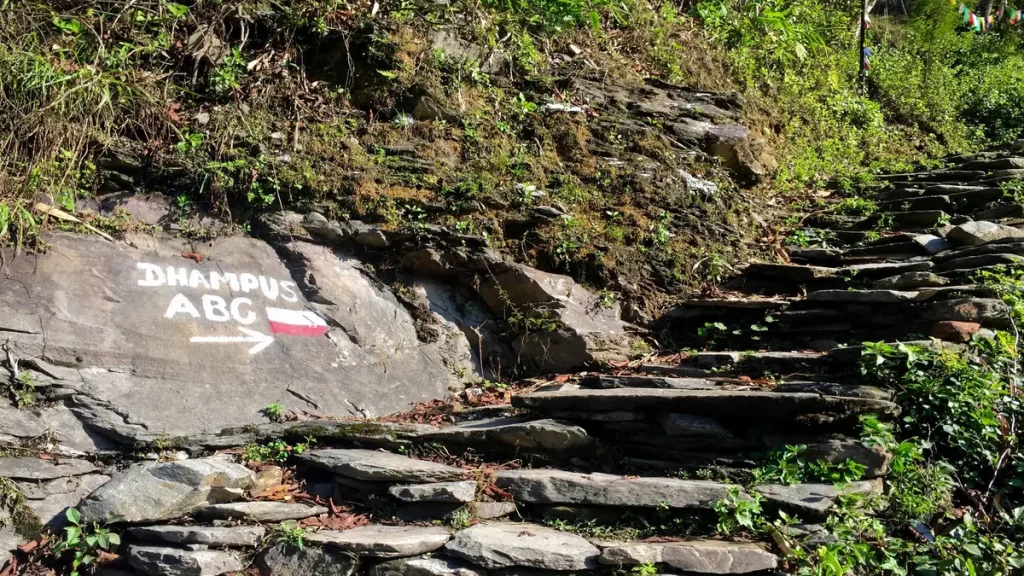
From Phedi, you walk. It is an uphill climb of about 6 to 7 kilometers that most people finish in two to three hours depending on fitness and how many photo stops they take. Stone steps make up a good chunk of the trail, so it is steady rather than technical, but the first hour will make your legs talk to you.
Prefer not to walk at all? A rougher road now reaches Dhampus via Hemja, so you can hire a jeep or drive most of the way to the village. Purists will tell you the walk up from Phedi is the whole point, and they have a case. Arriving on foot makes the reward feel earned.
Permits You Need Before You Go
Dhampus sits inside the Annapurna Conservation Area, so even for a short overnight you technically need the right paperwork. Two documents apply: the ACAP entry permit and, for most organized treks, a TIMS card.
As of early 2025, the ACAP permit cost approximately NPR 3,000 for foreign nationals, with SAARC-country visitors paying a reduced rate and Nepali citizens exempt. Fees change, so confirm the current amount before you travel. You can arrange permits at the Nepal Tourism Board office in Pokhara or Kathmandu, and it takes a passport photo and a few minutes.
Permit money is not a pointless tax. It funds the conservation work run by the National Trust for Nature Conservation’s ACAP program, which manages roughly 7,600 square kilometers of the Annapurna region. If you only do a day hike and turn back, enforcement is loose in practice, but an overnight stay is squarely within permit territory.
What to Do in and Around the Village
Dhampus rewards slowing down more than rushing around, but there is plenty to fill a day or two.
- Watch sunrise over the Annapurnas. Non-negotiable. Set an alarm, grab a blanket, and claim a spot facing north before 6 a.m.
- Hike up to Australian Camp. Sitting at 2,055 meters, this grassy ridge is about a two-hour walk from Dhampus and offers an even wider mountain sweep. Many people combine the two in a single loop.
- Extend to Sarangkot. A popular multi-day route links Dhampus with Sarangkot, Pokhara’s famous sunrise and paragliding hill, for those wanting a longer walk.
- Wander the village itself. Gurung culture is the real texture here. Chat with hosts, watch daily farm life, and if you time it with a homestay evening, you may catch traditional song and dance.
For a fuller picture of what else is within reach, our Pokhara travel guide covers the lakeside city that serves as your base, and if this is your first walk in the hills, the beginner’s trekking guide is worth a read before you lace up.
Where to Stay and What It Costs
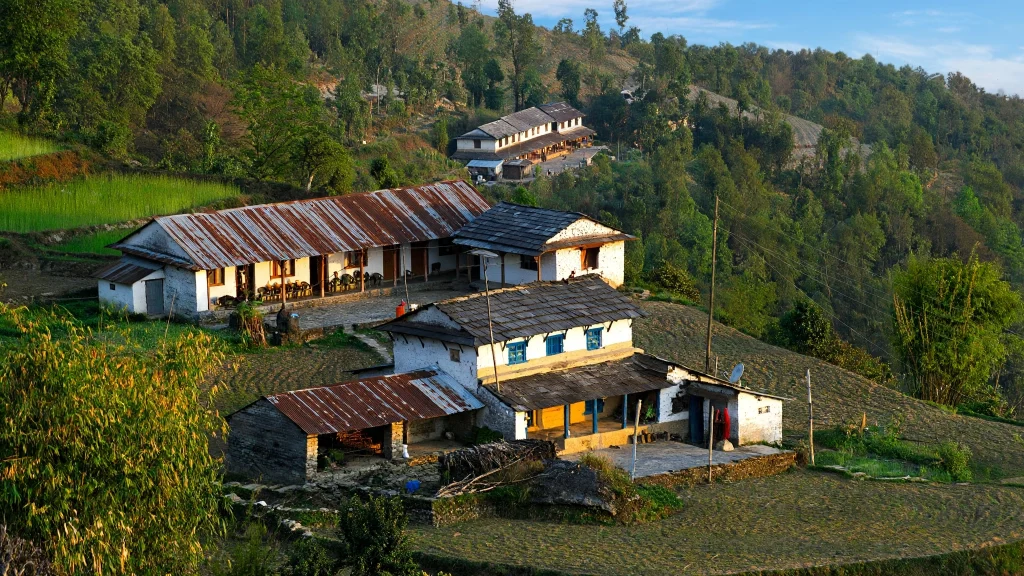
Accommodation runs a surprisingly wide range for such a small place. At the simple end, family-run homestays and teahouses offer a bed, a hot meal, and unbeatable local company for very little money. At the other end, a handful of boutique eco-lodges and mountain resorts charge real money for stone-walled rooms with private balconies aimed straight at the peaks.
Budget travelers can sleep and eat here for a few hundred rupees a night in basic lodges. Comfort seekers will find rooms that climb well into the tens of dollars, and the fanciest resorts more still. Booking ahead matters in peak season, because the good balcony rooms with clean mountain views sell out fast in October and November.
Organized trek packages that bundle transport, guide, permits, and lodging typically run somewhere between about USD 70 and USD 390 for a two or three day trip, depending on group size and how plush the accommodation is. Do it independently and you can cut that cost dramatically.
The Food Is Better Than You Expect
Mountain village food in Nepal usually means dal bhat, the rice, lentils, and vegetable plate that fuels the whole country. Dhampus does it well, but the local twist is worth seeking out.
Ask for dhido, a thick porridge made by whisking buckwheat or millet flour into hot water until it forms a dense, satisfying mass you eat with your hands alongside curry and greens. It is a Gurung staple, filling in a way that white rice never quite manages after a climb. Wash it down with local millet raksi if your host offers, and you have eaten the way this village has eaten for generations.
Best Time to Visit Dhampus
Timing makes or breaks the mountain views, and cloud is the enemy. Two windows stand out clearly.
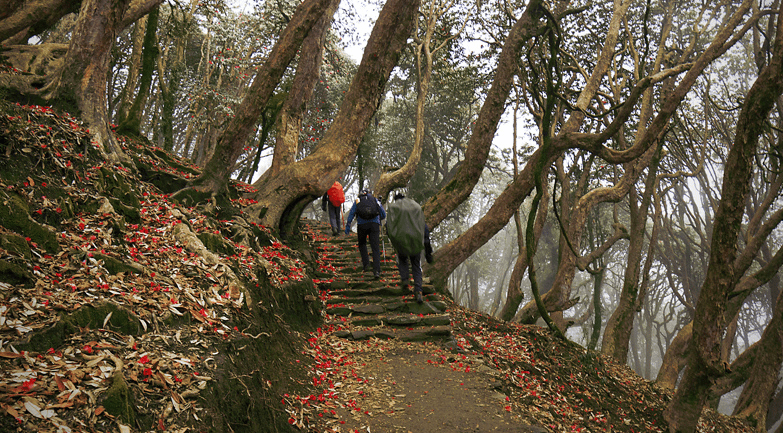
Autumn, from October into November, is the classic choice. Skies are washed clean after the monsoon, temperatures are comfortable, and visibility is at its annual best. Spring, roughly March through May, is the other sweet spot, with the bonus that rhododendron forests along the trails burst into red and pink bloom.
Winter is cold but often crystal clear, and a light dusting of snow on the village is magical if you pack warm layers. Monsoon months from June to September bring lush green terraces but frequent cloud that hides the peaks for days, so it is a gamble. For a month-by-month breakdown across the whole country, see our guide to the best time to visit Nepal. Whatever season you pick, official updates from the Nepal Tourism Board are the safest place to check current conditions and regulations.
Frequently Asked Questions
How long does it take to hike to Dhampus from Pokhara?
After a 45-minute to one-hour drive from Pokhara to Phedi, the uphill hike to Dhampus takes most people two to three hours over about 6 to 7 kilometers of mostly stone-step trail.
Do I need a permit to visit Dhampus?
Yes. Dhampus lies inside the Annapurna Conservation Area, so you need an ACAP entry permit, and organized treks usually require a TIMS card too. Arrange both in Pokhara or Kathmandu before heading up.
How high is Dhampus and will I get altitude sickness?
Dhampus sits at around 1,650 meters. That elevation is low enough that altitude sickness is essentially not a concern, which makes it ideal for families and first-time hikers.
What mountains can you see from Dhampus?
On a clear morning you get Machhapuchhre (Fishtail), Annapurna South, and Hiunchuli front and center, with Dhaulagiri visible in the distance on the sharpest days.
Is Dhampus suitable for beginners and families?
Very much so. Short access, no meaningful altitude, gentle-to-moderate trails, and comfortable lodging make it one of the friendliest Himalayan viewpoints in Nepal for people who are not hardcore trekkers.
When is the best time to visit Dhampus for clear mountain views?
Autumn (October to November) and spring (March to May) offer the clearest skies. Spring adds blooming rhododendrons, while winter can be cold but brilliantly clear.
Can I reach Dhampus by road instead of walking?
Yes. A rough road now reaches the village via Hemja, so you can hire a jeep most of the way. That said, the walk up from Phedi is the traditional and more rewarding approach.
What food should I try in Dhampus?
Order dal bhat with dhido, a hearty buckwheat or millet porridge that is a Gurung specialty. It is more filling and more local than the standard rice plate.