



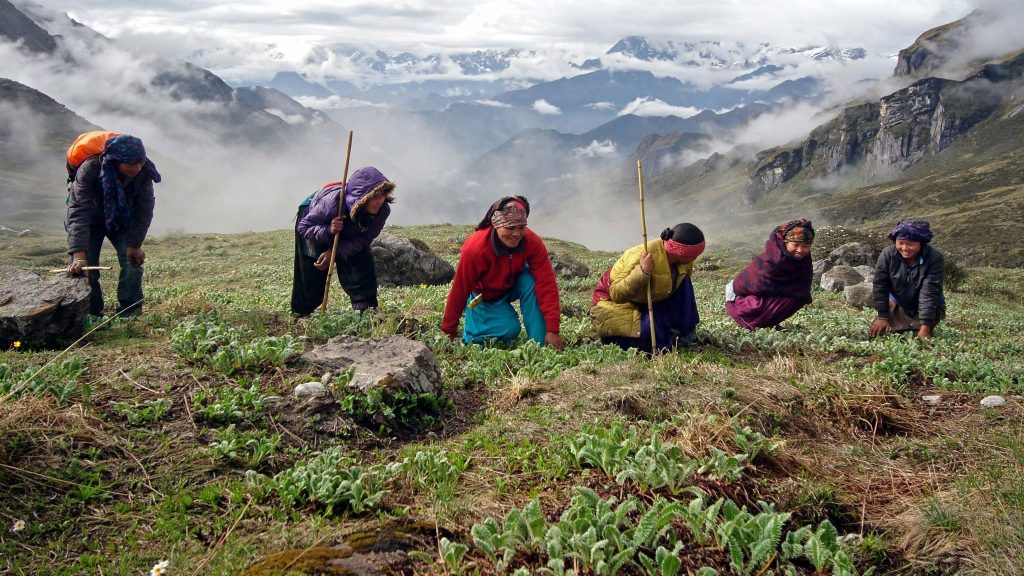
Every May and June, tens of thousands of people from Nepal’s Karnali districts walk up to pastures above 3,500 meters and spend weeks on their hands and knees looking for a fungus the size of a matchstick. For two decades that work underwrote school fees, roofs, medical bills, and migration costs across Mugu, Dolpa, Jumla, and Jajarkot. It is now paying far less. Yarsagumba harvesters in Karnali are reporting smaller finds, lower prices, and shrinking margins at the same time, and the official production data supports them. This article sets out what the numbers show, what is driving the decline, and what remains genuinely uncertain.
What Yarsagumba Is
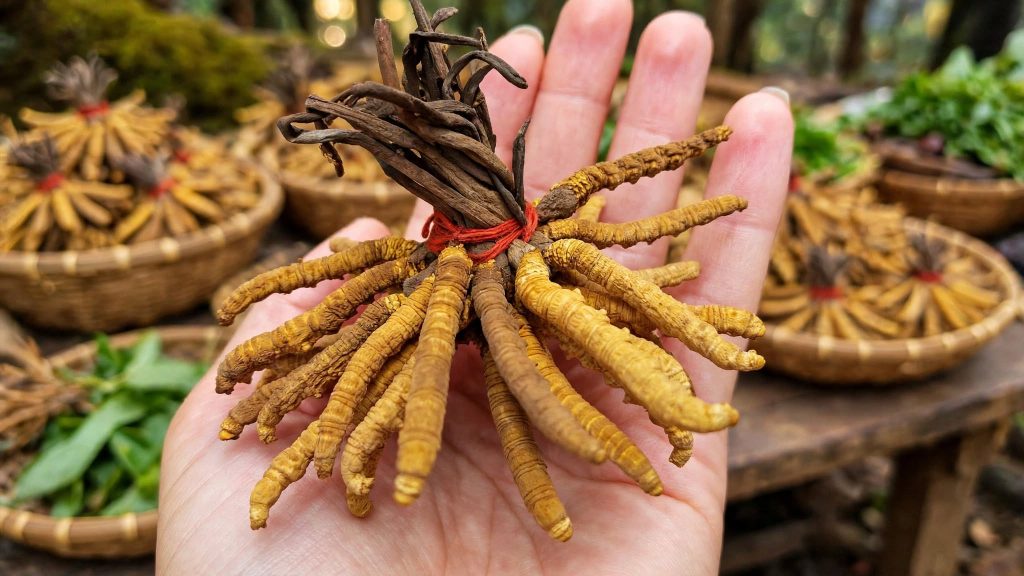
Yarsagumba is the Nepali name for Ophiocordyceps sinensis, a fungus that infects the larvae of ghost moths living in alpine soil. Infection kills the caterpillar from the inside, and in spring a slender fruiting body pushes up through the turf. What collectors extract is the whole unit: mummified larva plus fungal stalk. The Tibetan name, yartsa gunbu, means summer grass, winter worm, which describes the life cycle accurately.
Demand comes overwhelmingly from China, where it is used in traditional medicine and as a high-status gift. Clinical evidence for the health claims made in the retail market is limited and far weaker than the prices imply. That gap between price and proven benefit is worth keeping in mind throughout.


Harvest happens in a narrow window, roughly late May through June, in high pastures across Nepal’s northern districts. Collection is concentrated in Karnali Province.
Production Is Falling, and the Data Is Consistent
Figures compiled by the Provincial Directorate of Forests in Karnali, reported by the Kathmandu Post in September 2026, show a clear downward trajectory.
| Period | Recorded Karnali production (kg) |
|---|---|
| 2018-19 | 1,609 |
| 2019-20 | 1,405 |
| 2023-24 | 807 |
| Most recent full year reported | About 494 |
One caveat applies to every figure above. These are recorded volumes, based on permits and official channels, not total biological harvest. Undeclared trade exists. A fall in recorded production can reflect falling yields, falling participation, or collectors bypassing the permit system. Treat the direction as reliable and the absolute totals as a floor.
Permit data points the same way. Mugu’s division forest office issued permits covering 10 kg in 2026 against 22 kg the previous year. Rara National Park recorded 33 kg the previous year. In Dolpa, the division forest office recorded 112 kg and Shey Phoksundo National Park about 60 kg. Sher Bahadur Shrestha, the provincial director of forests, put total collection at 300 to 450 kg for the season at the time of reporting.
Collection was suspended for roughly three years during the Covid-19 period, which complicates year-on-year comparison across that gap.
What a Season Actually Earns
Aggregate tonnage says little about household economics. Individual accounts reported from Mugu, Dolpa, and Jajarkot make the squeeze concrete.
- Sarwajit Bham, from Chhayanath Rara Rural Municipality in Mugu, earned between Rs500,000 and Rs800,000 a year before the pandemic. He now reports no more than Rs150,000. A trip that used to cost Rs20,000 to Rs25,000 cost him Rs60,000 in 2026.
- Laxman Budha, from Khatyad Rural Municipality in Mugu, earned about Rs150,000 in 2026 against expenses of nearly Rs50,000. Six years earlier he earned up to Rs500,000.
- Netra Bahadur Giri, from Barekot Rural Municipality in Jajarkot, spent Rs60,000 and earned Rs120,000. He said a family of four should be clearing at least Rs300,000 for the season to be worth it.
Run the arithmetic on Giri’s season. Gross Rs120,000 against Rs60,000 of costs leaves Rs60,000 for several weeks of physically punishing work at altitude, shared across a household. Margins that thin do not survive another bad year.
Prices and the Grading System
Price depends heavily on size, since the trade values large specimens disproportionately. Pieces are counted per kilogram: fewer pieces per kilogram means larger individual specimens and a higher price.
| Grade (pieces per kg) | Reported price per kg |
|---|---|
| Up to 4,000 pieces | Rs1 million to Rs1.2 million |
| 3,500 to 4,000 pieces | Rs1.5 million to Rs1.8 million |
| 3,000 to 3,500 pieces | Rs1.8 million to Rs2.4 million |
Grading figures above were given by Shankar Budha, a trader in Tripurasundari Rural Municipality in Dolpa, for the previous season. Peak prices before Covid-19 reached around Rs3.2 million per kg. Mugu reported up to Rs1.8 million per kg last year, Dolpa Rs2 million to Rs2.4 million.
At the collector end, pieces were selling for Rs700 to Rs1,000 each in Dolpa in 2026, according to divisional forest officer Jitendra Mahat. Collectors report that a piece which fetched Rs1,000 now gets Rs700 to Rs800.
Traders are being squeezed too. Pasang Bhote Gurung, from Mukot in Dolpa, bought roughly Rs3.7 million of stock and sold 2 kg for Rs4 million, after paying Rs31,000 per kg in taxes and about Rs50,000 in transport. He previously handled up to 9 kg a year. Of around three dozen herb traders in Mukot, he says nearly half have stopped buying yarsagumba.
Where the Money Goes Besides the Collector
Access is regulated through entry fees and transport royalties, and these amounts are significant for local government revenue.
- Mugum Karmarong Rural Municipality in Mugu charged entry fees of Rs500 to Rs2,500 and raised about Rs2.8 million from roughly 4,200 collectors.
- Shey Phoksundo National Park in Dolpa charged Rs500 for buffer-zone residents, Rs2,000 for other Dolpa residents, and Rs3,000 for people from outside the district, raising about Rs10.7 million.
- Royalty on transport permits in the Shey Phoksundo area was reported at Rs31,000 per kg.
Note the structural problem. Entry fees are charged per person up front, before anyone knows what the season will yield. In a poor year, the fee is a fixed cost against a collapsed return. Collectors carry that risk alone.
The Human Cost
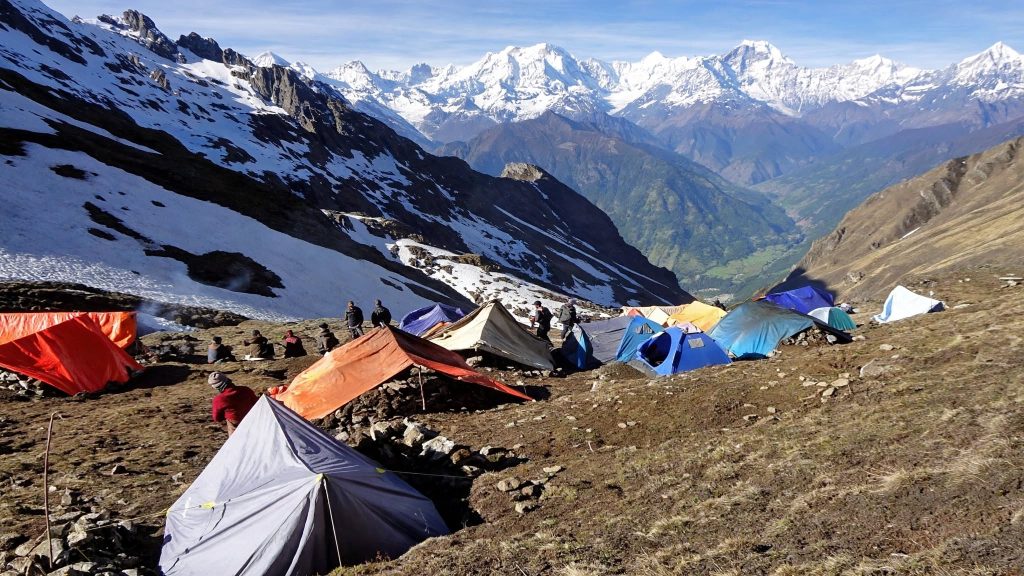
This is dangerous work. Collectors camp for weeks above 4,000 meters, often ascending quickly from much lower villages, in cold and unstable weather with no medical facilities nearby.
Karnali Province Police Office figures record 78 deaths and 106 people injured or taken ill since 2014. Five collectors died in Mugu and Dolpa in the 2026 season. Reporting from the 2026 harvest also recorded four deaths from altitude sickness and nearly 50 people rescued with altitude-related illness in a single season across Dolpa and Mugu.
Altitude illness is the recurring cause. Villagers from 2,000 or 2,500 meters moving to pastures above 4,000 meters within a day or two are ascending faster than standard acclimatization guidance allows, and they do it under economic pressure rather than by choice.
Why the Harvest Is Shrinking
Several explanations are in circulation. They are not mutually exclusive, and the evidence behind them varies in strength.
Overharvesting
This is the explanation with the strongest institutional backing. The IUCN Red List assessed Ophiocordyceps sinensis as Vulnerable in 2020, identifying largely unregulated, large-scale and increasing harvest as the primary threat. Collecting the fruiting body before spores disperse removes the organism’s reproductive output from the pasture.
Climate change
The IUCN assessment lists climate change among secondary threats, alongside overgrazing, firewood harvesting, nitrogen pollution, and the spread of dwarf rhododendron. Warming that shifts suitable habitat upslope is plausible and widely discussed. Attributing a specific share of Nepal’s production decline to climate rather than harvest pressure is not currently possible with the available data, and anyone who gives you a percentage is estimating.
Demand-side change in China
Basanti Budha, a forest officer in Mugu, estimates that around 90 percent of local output goes to China. Chinese domestic collection has expanded, and temporary cross-border markets at Marimla on the Dolpa border and Hyajimar on the Mugu border run for about 15 days each. Supply from other sources and shifting Chinese consumption patterns both affect the price Nepali collectors receive, independently of how much they find.
Important distinction: a falling price and a falling yield are different problems with different solutions, and in Karnali both are happening at once.
What the IUCN Assessment Actually Says
Precision matters here, because the figure gets misquoted. The 2020 assessment lists the species as Vulnerable and suspects a reduction of more than 30 percent over the past 15 years, with a projected future reduction of up to about 50 percent over the next 15 years.
Those are suspected and projected figures, not measured ones. No systematic range-wide population monitoring of this fungus exists. The assessment is a careful expert judgment built from harvest data and local reports, which is the best available evidence and still not the same thing as a census.
What Could Change the Trajectory
Interventions discussed by researchers and Nepali forest officials include rotational closure of pastures, enforced minimum collection dates to allow spore release, stronger community forest management of access, and support for alternative income so that a poor yarsagumba year is not a household crisis. Each has been tried somewhere in the Himalaya with mixed results.
Cultivation is sometimes proposed as the answer. Laboratory production of related Cordyceps species is established, but reproducing the wild Ophiocordyceps sinensis product at commercial scale has proven difficult, and the premium the market pays is partly for wild origin.
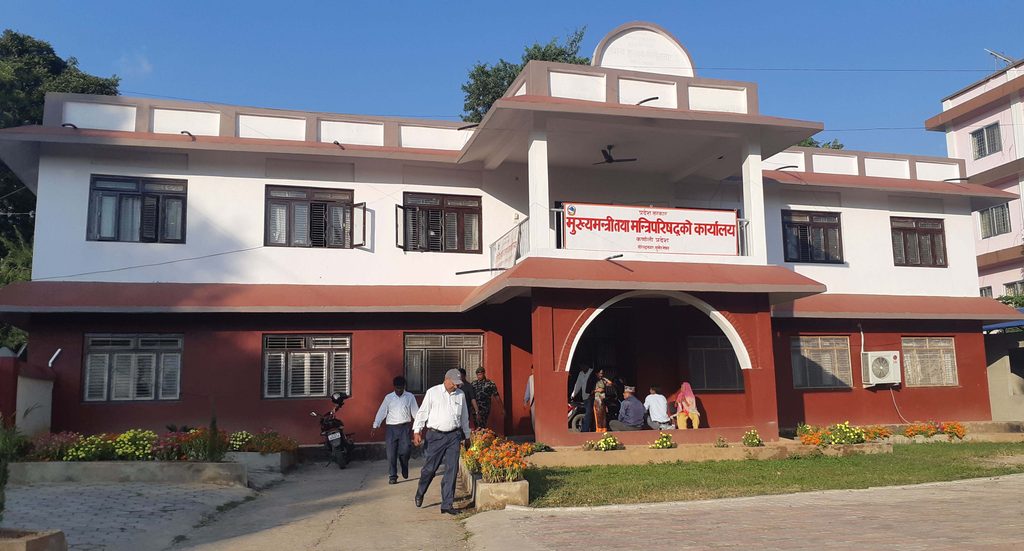
Governance remains the harder problem. Pasture access, fee setting, and enforcement are split between rural municipalities, division forest offices, national park authorities, and community forest user groups. Fragmented responsibility makes any single rule hard to apply consistently.
How to Think About This as a Visitor
Yarsagumba is sold to tourists in Kathmandu and Pokhara, often with confident health claims and no clear provenance. A few points worth holding onto.
- The health claims attached to retail yarsagumba are not well supported by clinical evidence. Price reflects cultural status and scarcity more than demonstrated effect.
- The species is assessed as Vulnerable by the IUCN, so retail purchase feeds demand on a declining wild resource.
- Export rules apply. Nepal regulates the collection and transport of this species, and other countries have their own import restrictions. Check before buying anything you intend to carry home.
- Adulteration is common in the retail trade, and visual authentication is unreliable for non-specialists.
If you are traveling in Karnali during the season, understand that the high pastures become temporary settlements with their own rules and tensions. Our guide to Rara Lake covers the region’s best-known destination, and our piece on the Raute and forest rights deals with a related question: who is entitled to harvest from Nepal’s forests and pastures, and on what terms. For general planning, see our Nepal travel safety guide.
Frequently Asked Questions
What is yarsagumba?
It is the fruiting body of the fungus Ophiocordyceps sinensis together with the mummified ghost moth larva it has consumed. Collectors harvest the whole unit from alpine pastures, mostly above 3,500 meters, in late spring.
How much is yarsagumba worth?
Prices reported in Karnali for recent seasons ranged from roughly Rs1 million to Rs2.4 million per kilogram depending on grade, down from peaks around Rs3.2 million per kilogram before the Covid-19 period. Individual pieces were selling at Rs700 to Rs1,000 in Dolpa in 2026.
Is yarsagumba collection legal in Nepal?
Yes, within a regulated system. Collectors require permits, pay entry fees set by rural municipalities or park authorities, and transport is subject to royalty. Rules and rates vary between districts and between national park and community forest areas.
Is the species endangered?
The IUCN Red List assessed it as Vulnerable in 2020, a category below Endangered. The assessment suspects a decline of more than 30 percent over 15 years and projects further decline, while noting that these figures are inferred rather than measured.
Why are collectors earning less if it is getting rarer?
Scarcity has not translated into higher collector prices, because per-kilogram prices have also fallen from their pre-pandemic peak. Collectors are therefore finding less and receiving less for what they find, while trip costs have risen.
How dangerous is the work?
Karnali Province Police Office records 78 deaths and 106 injuries or illnesses since 2014. Altitude sickness is the most commonly reported cause, since collectors ascend rapidly from much lower villages and stay for weeks without nearby medical care.
Does the money stay in local communities?
Partly. Entry fees generate meaningful revenue for rural municipalities and park authorities, and collection income has been significant for households across Mugu, Dolpa, Jumla, and Jajarkot. Most of the value added, however, is captured further along the chain, largely in China.
Can yarsagumba be farmed instead?
Related Cordyceps species are grown commercially in laboratories. Reproducing wild Ophiocordyceps sinensis at scale has proved much harder, and the market pays a premium specifically for the wild-collected product, which limits the commercial incentive to substitute.
Where This Leaves Karnali
A commodity boom that lasted roughly two decades is tapering, and the communities carrying the risk are the ones with the fewest alternatives. Whether the cause is primarily overharvest, climate, or shifting demand across the border matters for policy, but to a household in Mugu that cleared Rs100,000 for six weeks above 4,000 meters, the distinction is academic.
If this was useful, save it and share it with anyone interested in how Nepal’s mountain economies actually work. NepalVue reports on the regions behind the trekking routes, and there is more to explore.
Sources: IUCN Red List assessment of Ophiocordyceps sinensis (2020); Kathmandu Post reporting on Karnali’s 2026 yarsagumba season.


