


The grass moves before you see anything. A wall of green elephant grass, taller than a person, shivers about thirty meters off the jeep track, and your guide cuts the engine. You catch the smell of river mud and crushed vegetation on the warm morning air. Then a gray flank the size of a small car eases into the open, and you are looking at your first wild rhino. Nepal wildlife at close range happens right here, in the hot southern lowlands, nowhere near the snow peaks most people picture when they think of the country.
Here is the thing most travel guides skip. Nepal squeezes nearly every climate zone on earth into a strip of land you can drive across in a day. That vertical drama, from 60 meters in the southern plains to the roof of the world, is exactly why the animal list reads like a wildlife documentary table of contents.
Why Nepal Wildlife Is So Diverse
Altitude does the heavy lifting. In the space of roughly 150 to 250 kilometers from south to north, the land rises from subtropical jungle to alpine desert above the snow line. Each band of elevation grows its own forests, and each forest feeds its own animals.
The numbers back it up. According to the Nepal Tourism Board, more than 185 species of mammals live within the country’s borders, alongside over 850 recorded bird species and roughly 123 species of reptiles. Tuck that into a territory smaller than the U.S. state of Florida and you start to see why biologists keep coming back. A four-hour drive can move you from rhino country to leopard country to the edge of snow leopard range.
Conservation is the quieter part of the story, and it deserves more credit than it gets. Nepal now protects close to a quarter of its land through national parks, wildlife reserves, and conservation areas. That network is the backbone of nearly everything described below.
The Big Animals of the Southern Plains
If you only have time for one wildlife region, make it the Terai. These flat, hot lowlands along the Indian border hold the megafauna everyone hopes to see.
The One-Horned Rhino
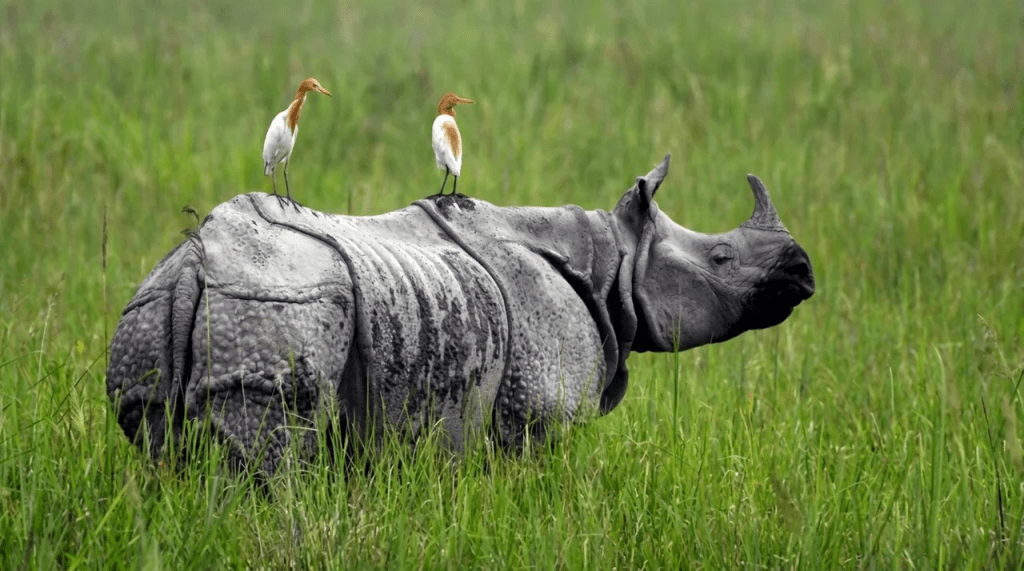
Nepal’s great conservation comeback wears armor. The greater one-horned rhinoceros was hammered by poaching through the late twentieth century, dropping to a few hundred animals. A full count conducted in 2021 recorded 752 rhinos across the country, with 694 of them in Chitwan National Park alone. Watching one of these two-ton tanks chew through morning grass with a snowy egret perched on its back is the single most reliable wildlife thrill in Nepal.
The Bengal Tiger
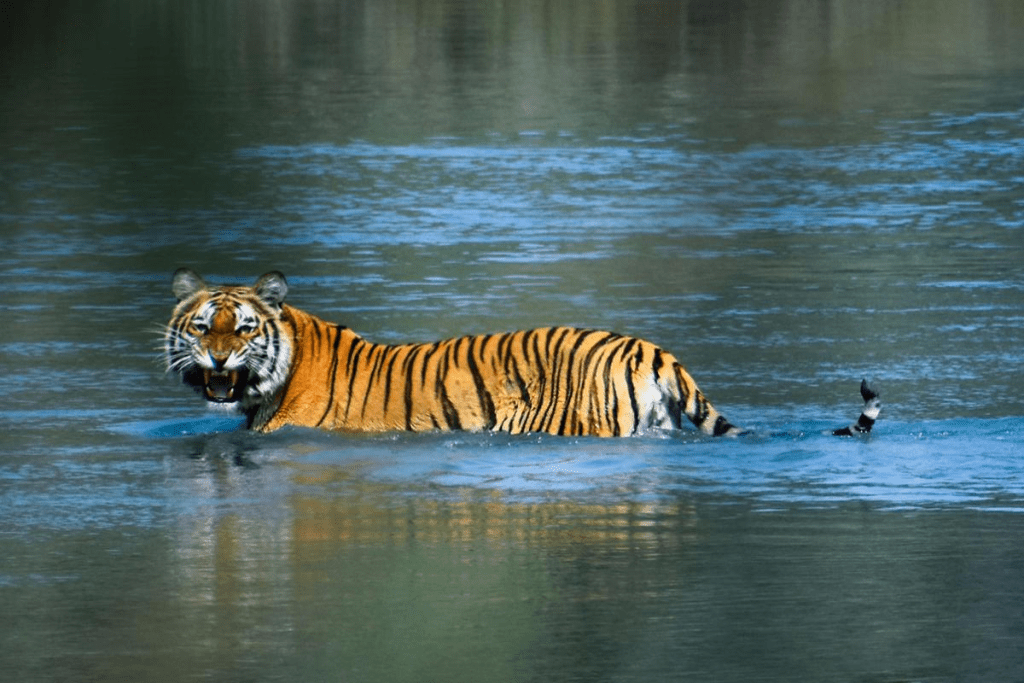
Tigers are the headline act. Nepal began scientific tiger counts in 2009 with just 121 of them. By the 2022 national census the figure had climbed to 355, a near tripling that made Nepal one of the few countries on earth to grow its wild tiger population rather than lose it. A fifth nationwide census launched in December 2025, so newer numbers are on the way. Most of these cats live in Chitwan and Bardia, and while sightings are never guaranteed, the odds in Bardia in particular have become surprisingly good.
Asian Elephants, Sloth Bears, and Gharials
Wild Asian elephants roam the eastern and western Terai, sometimes crossing back and forth from India in herds. Sloth bears shuffle through the same forests, snuffling out termites and fruit. And in the rivers you might spot a gharial, the fish-eating crocodile with the absurdly thin snout that was nearly extinct before a long-running breeding program pulled it back. The Narayani and Karnali rivers also hide Gangetic dolphins, one of the few freshwater dolphin species left on the planet.
High-Altitude Wildlife: Ghosts of the Himalayas
Climb into the mountains and the cast changes completely. This is where Nepal’s rarest and most secretive animals live.
The snow leopard is the obvious dream. These pale, smoke-gray cats haunt the high ranges above the tree line, and they are so elusive that most researchers go years between sightings. Nepal’s population is estimated in the low hundreds, scattered across protected areas like Annapurna, Kanchenjunga, Manaslu, Langtang, and Shey Phoksundo. Spotting one in the wild is a matter of patience, altitude, and a great deal of luck.
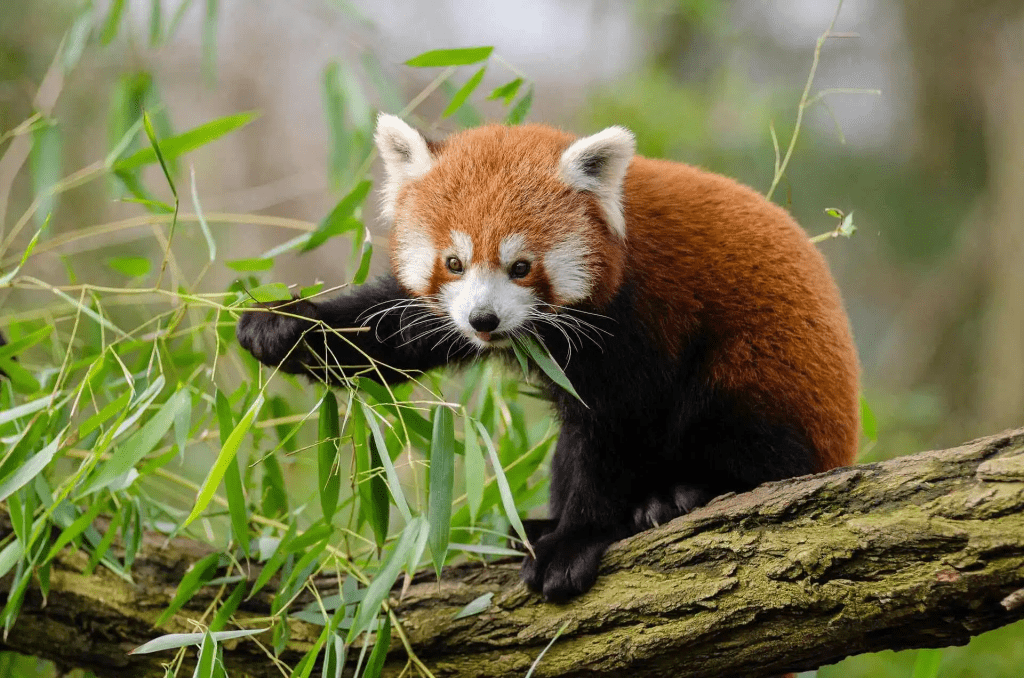
The red panda is the high country’s other celebrity, and it could not be more different from the cat. About the size of a large house cat, russet-colored, and famously shy, it lives in the temperate bamboo forests of the eastern and central hills, mostly between 2,200 and 3,600 meters. Population estimates range widely, from a few hundred up to roughly a thousand, which tells you how hard the species is to count. The forests stretching from Langtang east toward Kanchenjunga hold the densest groups.
Higher still you find the hardy specialists: blue sheep clinging to scree slopes, shaggy Himalayan tahr, the Himalayan musk deer, and the yak, which is less wild than essential to mountain life. Above them all circles the Himalayan griffon vulture and, if you are extraordinarily lucky, the lammergeier, a bone-eating raptor with a three-meter wingspan.
A Birder’s Paradise
Even travelers who never warm to mammals tend to fall hard for the birds. With more than 850 recorded species, Nepal packs in a tenth of the planet’s bird diversity. Roughly half of them can be seen in and around the Kathmandu Valley, which makes the country absurdly convenient for birders short on time.
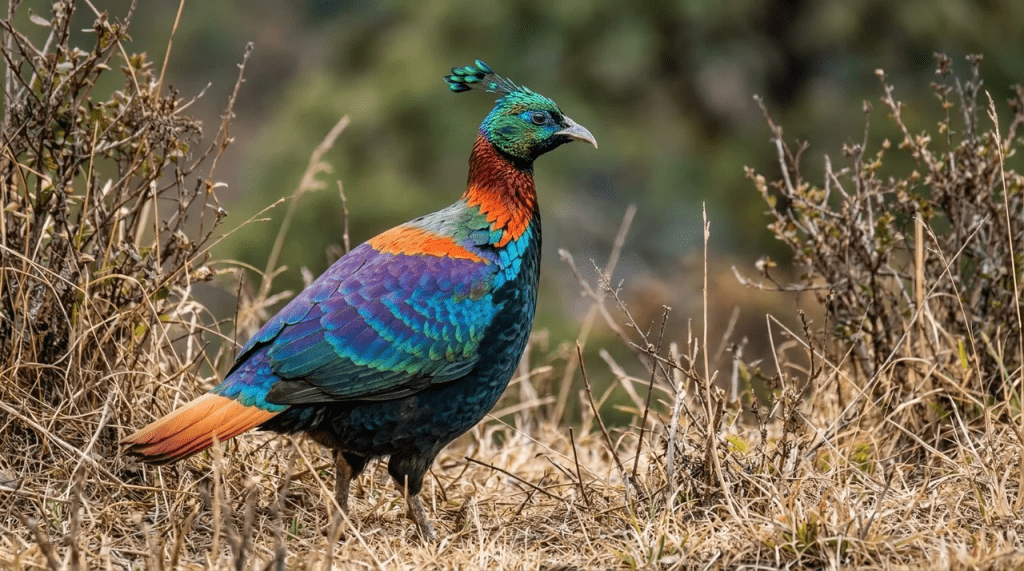
- Danphe (Himalayan monal): Nepal’s iridescent national bird, a pheasant that glitters like spilled oil in the high forests.
- Spiny babbler: the country’s only endemic bird, once thought extinct, now reliably found on the hills ringing Kathmandu.
- Sarus crane: the world’s tallest flying bird, with conservation efforts focused around Lumbini.
- Migratory waterfowl: ducks, storks, ibises, and waders that flood Koshi Tappu Wildlife Reserve each winter.
Koshi Tappu, in the far east, is the standout. Around 485 species have been recorded there, including roughly 26 kinds of duck alone. If you want big numbers in a short window, that wetland is hard to beat.
Where to See Nepal Wildlife
Picking the right park matters more than picking the right season, though both help. Here is the honest breakdown.
Chitwan National Park
The classic. A UNESCO World Heritage Site in the central Terai, Chitwan offers the most developed safari infrastructure in the country, the highest rhino density anywhere, and lodges staffed by experienced naturalist guides. It is busy, and that is the trade-off. The foreigner park entry fee runs NRs 2,000 per person per entry, as listed by the Nepal Tourism Board. For a full breakdown of activities and lodging, our Chitwan safari guide covers it in detail.
Bardia National Park
The wilder, quieter alternative out west. Bardia gets a fraction of Chitwan’s crowds, and many guides quietly rate it as the better bet for actually seeing a tiger on foot. Wild elephants and the rare swamp deer round out the cast. The foreigner entry fee is lower too, at NRs 1,500 per person per entry. Its one catch is distance: getting there eats more of your itinerary.
Koshi Tappu and the High Parks
For birds, head to Koshi Tappu in the southeast. For red panda and snow leopard country, the high conservation areas of the east and the Annapurna region are your ground, usually combined with a trek rather than a dedicated safari. These are slow-reward destinations, not point-and-shoot ones.
When to Go and How to Plan
Timing is straightforward in the lowlands. The dry months from October to early April are prime safari season: vegetation thins out, animals gather near water, and the heat is bearable. That pre-monsoon stretch of March and April brings brutal heat but excellent sightings as waterholes shrink and draw everything in. Monsoon, from June through September, floods trails and pushes grass head-high, which makes spotting animals tough.
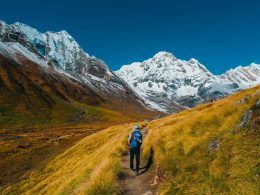
High-altitude wildlife follows a different clock. Spring and autumn are kindest for trekking into red panda and snow leopard terrain, when the passes are open and the views hold. For a fuller seasonal picture, see our guide to the best time to visit Nepal.
One practical note that trips up newcomers. Park entry fees are charged per person per day of entry, and they sit on top of guide fees, jeep hire, and accommodation. Budget accordingly, and if Nepal is new to you, our first-time visitor’s guide will save you a few rookie mistakes. You can confirm current rates directly on the Nepal Tourism Board park fees page, since tariffs do change.
Conservation: The Story Behind the Sightings
None of this happened by accident. Nepal’s wildlife recovery is built on community forestry, anti-poaching patrols that include the army, and a network of buffer zones where local people share in tourism revenue. The country has recorded multiple years of zero rhino poaching, a near-impossible feat elsewhere. When you pay a park fee, a real chunk of it funds the people and patrols keeping these animals alive. That is worth remembering the next time the entry booth feels like a tourist tax.
Frequently Asked Questions
What animals is Nepal famous for?
Nepal is best known for its “big five”: the Bengal tiger, one-horned rhinoceros, Asian elephant, snow leopard, and red panda. The rhino and tiger are the easiest to see, both in the southern lowland parks of Chitwan and Bardia.
Can you see tigers in Nepal?
Yes, though sightings are never guaranteed. Chitwan and Bardia hold most of Nepal’s roughly 355 tigers recorded in the 2022 census. Bardia is often considered the better park for a genuine wild encounter because it is less crowded and parts of it are explored on foot.
Where can I see the one-horned rhino?
Chitwan National Park is the place. The 2021 census counted 694 rhinos there, by far the largest population in the country. Sightings on a morning jeep or canoe safari are highly likely during the dry season.
Is it possible to see a snow leopard in Nepal?
It is possible but very rare. Snow leopards live in remote high-altitude protected areas such as Annapurna, Manaslu, and Kanchenjunga. Dedicated tracking expeditions in winter offer the best, though still slim, chances.
How much does it cost to enter Nepal’s national parks?
As of early 2025, foreigners pay NRs 2,000 per person per entry for Chitwan and NRs 1,500 for Bardia, according to the Nepal Tourism Board. Fees are charged per day of entry and are separate from guide and jeep costs.
When is the best time for a wildlife safari in Nepal?
October to April is ideal for the lowland parks, with thinner vegetation and animals clustering near water. March and April bring intense heat but excellent sightings. Avoid the monsoon months of June to September for jungle safaris.
How many bird species does Nepal have?
Nepal has more than 850 recorded bird species, with some sources putting the figure closer to 900. Roughly half can be spotted in and around the Kathmandu Valley, and Koshi Tappu Wildlife Reserve is the premier site with around 485 species.
Is wildlife tourism in Nepal ethical?
Largely yes, when done through licensed parks and reputable operators. Park fees fund anti-poaching work and community conservation, and Nepal has achieved several years of zero rhino poaching. Choose ground-based safaris with trained naturalist guides over any operation that promises guaranteed close contact with animals.
For an official overview of the country’s protected species and habitats, the Nepal Tourism Board wildlife page is a solid starting point before you plan a trip.