


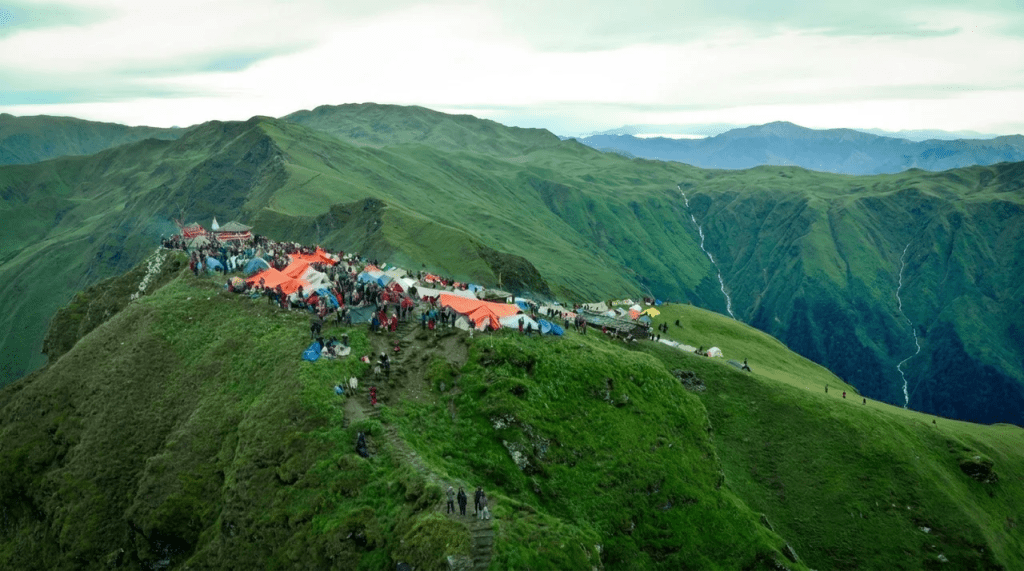
Badimalika does not care about tourist maps or conventional travel checklists. Sitting at 4,216 meters in the remote folds of Bajura District, this ancient highland sanctuary remains untouched by commercial tourism.
It is not a place for a quick visit or a passport stamp. It demands physical effort and endurance.
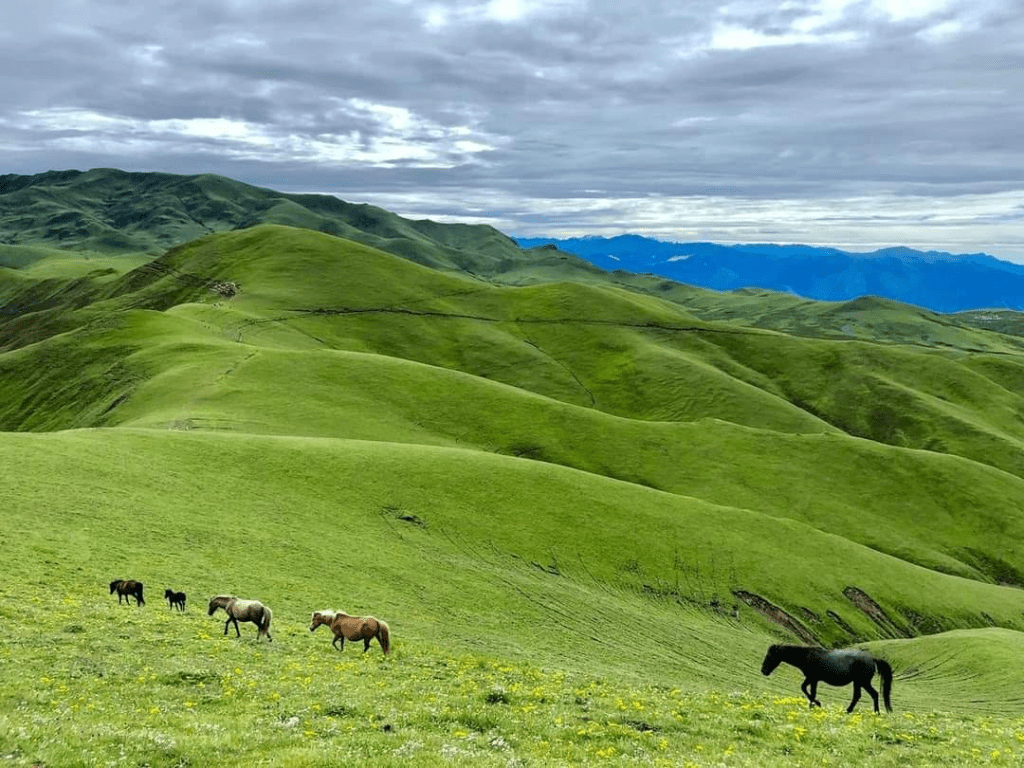
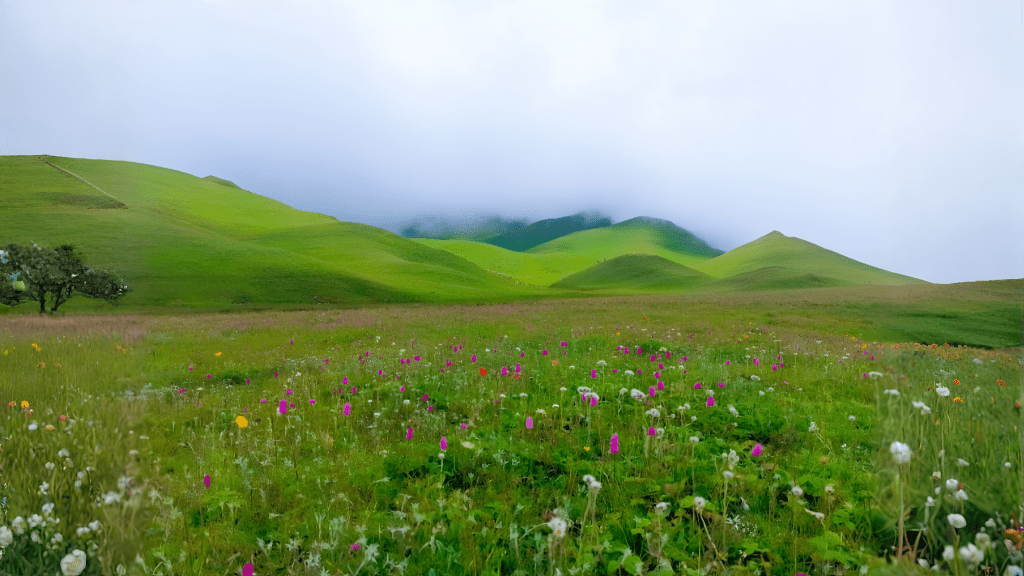
In return, it offers complete solitude. Vast and unbroken. Here, alpine meadows stretch endlessly across the landscape. They ripple like a green ocean beneath shifting mountain fog.


The sacred Badimalika Temple stands quietly in this vastness.
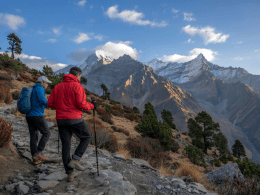
In the distance, the sharp snow-capped peaks of Api and Saipal rise above the horizon. It is raw, green, and fiercely beautiful.
The Origin: Why is it Called Badimalika?
The name Badimalika carries a dual identity. One rooted in ancient Sanskrit lore and the other in the local family dynamics of the gods.
1. The Divine Shoulder of Sati Devi
According to the Sri Swasthani Brata Katha and the Skanda Purana, the story begins with tragedy. After Sati Devi immolated herself in her father’s sacrificial fire, a grief-stricken Lord Shiva wandered the universe carrying her lifeless body.
To end Shiva’s deep mourning, Lord Vishnu used his Sudarshan Chakra to divide Sati’s body into sacred fragments.
These pieces are believed to have fallen across the earth.
Wherever they landed, sacred sites known as Shakti Peethas were formed, each becoming a powerful center of devotion.
Her left shoulder (Kum) fell precisely on a towering, misty ridge in Bajura known then as Mallagiri Mountain. Over time, the sacred hill where the goddess’s shoulder is believed to have fallen came to be known as Malika Temple.
It is regarded as one of the highest and most powerful centers of goddess worship in the entire Indian subcontinent.
For devotees, it represents not just a remote shrine, but a deeply sacred link to the Shakti tradition.
2. The Eldest Sister of the Far-West
Beyond the classic text, local Sudurpaschim folklore gives the name a much warmer, familial meaning. In the cultural traditions of Nepal’s far-west, the region is believed to be protected by seven divine sister goddesses.
These are Ugratara, Shaileshwari, Melauli, Nigalasaini, Dilasaini, Tripurasundari, and Malika.
Together, they are seen as spiritual protectors of the land and its people.
In the local dialect, “Badi” means “elder.” So, “Badimalika” refers to the elder Malika.
Malika is revered as the eldest among the seven sister goddesses. Because of this, she holds a special place in devotion. She is respectfully called Badimalika Temple in local tradition.
Devotees honor her with deep reverence. She is seen as the supreme matriarch of the mountains. This title reflects her spiritual authority.
The Raw Beauty and Mythological Soul of Badimalika
Badimalika is famous for its 22 expansive Patans (alpine meadows).During the summer monsoon, the hills turn into a vibrant green carpet. The grass grows thick and lush. Hundreds of wildflower species bloom across the slopes.
The landscape forms smooth, curved mounds that ripple into the distance. These shapes create a striking rhythm across the horizon.
In the background, sharp snow-capped peaks rise above the greenery. The contrast makes the entire scene even more dramatic.
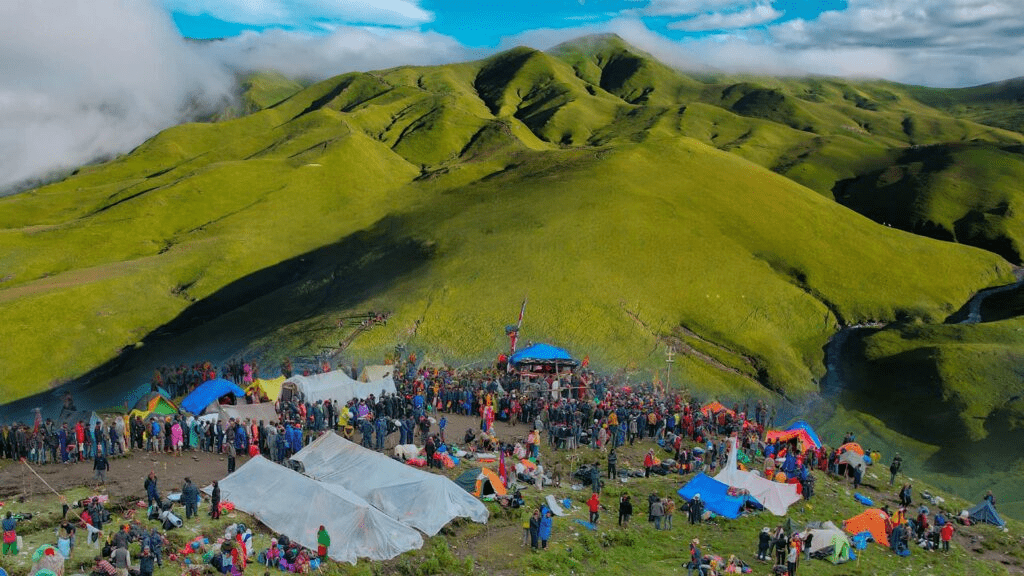
Beyond its visual appeal, Badimalika holds a deep spiritual presence. Devotees believe that visiting the temple brings salvation. It is especially powerful during Janai Purnima in August. They also believe it can fulfill deep wishes.
Before reaching the main shrine, pilgrims stop at Tribeni Dham (3,870m). It is a sacred confluence of three rivers.
These rivers are Kshir, Benurudra, and the underground Mandakini. The water here is crystal clear. It flows across a high-altitude plateau.
The Nomad Shepherds and the Sea of Livestock
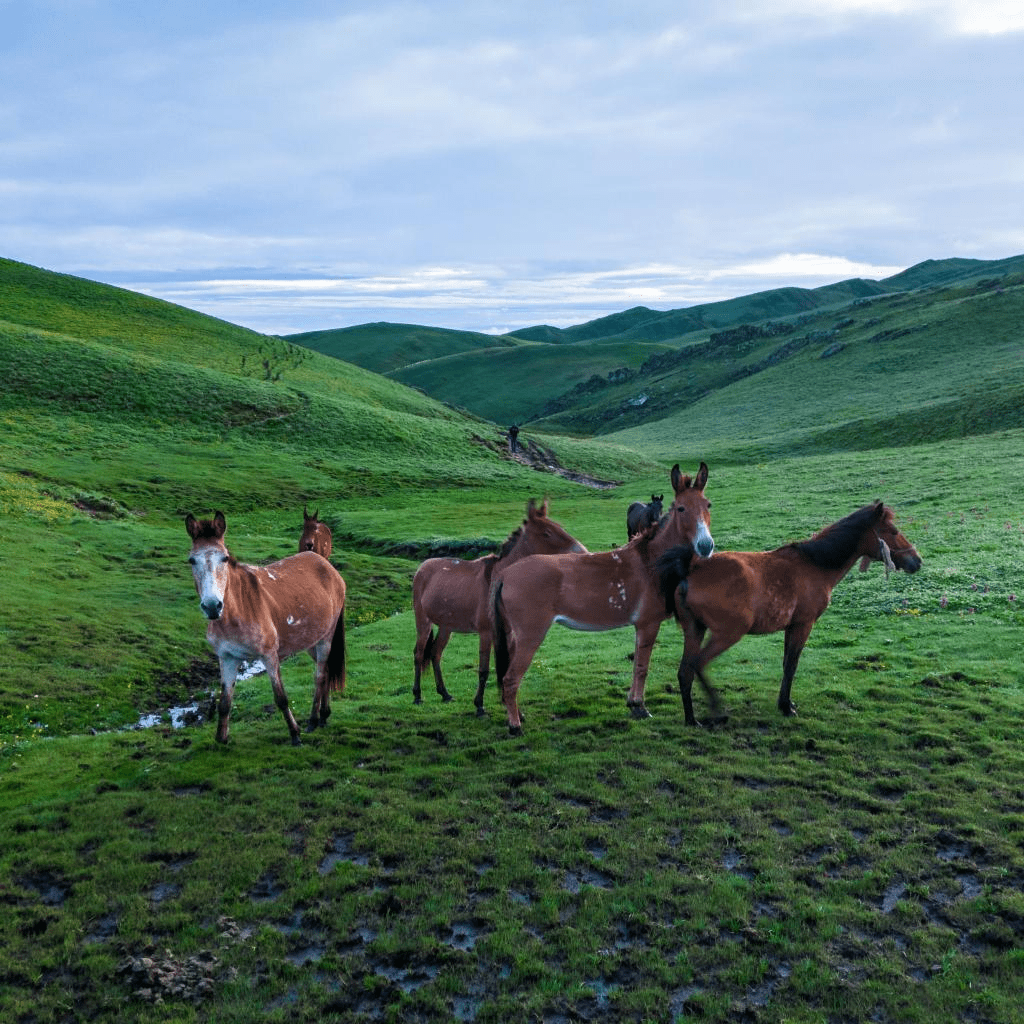
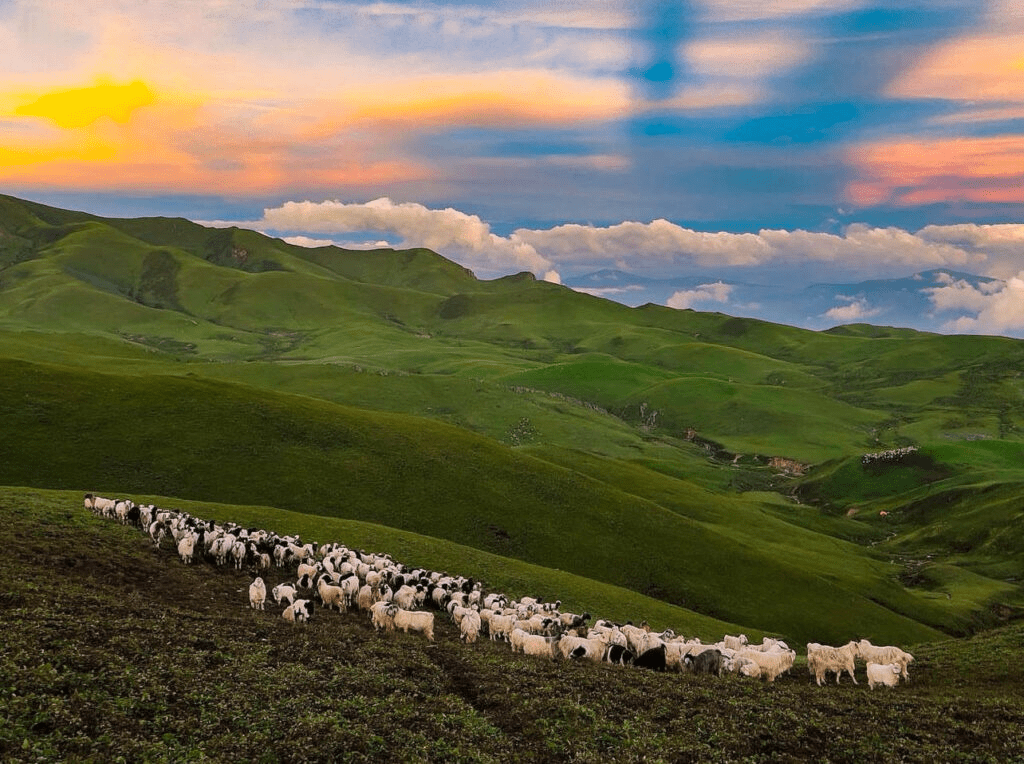
During the summer months, the endless Patans of Badimalika become a seasonal home to local shepherds who migrate up from the valleys of Bajura, Achham, and Kalikot. Watching hundreds of white sheep, mountain goats, and wild horses grazing freely against the backdrop of the sharp Himalayas feels like stepping onto a living canvas.
The shepherds live a rugged, nomadic life, sleeping in temporary stone huts or under heavy tarpaulins. Interacting with them offers a grounding perspective on human resilience. They are incredibly hospitable, often sharing fresh buttermilk (Mahi) or pointing out hidden water springs that you would otherwise pass right by.
A Wildlife Sanctuary Untouched by the Modern World
Because the high plateau has stayed protected through religious reverence and geographic isolation, Badimalika serves as a pristine sanctuary for Himalayan biodiversity. The dense rhododendron, oak, and hemlock forests surrounding the base of the mountains are teeming with life.
If you keep your eyes peeled and move quietly, you may spot rare Himalayan wildlife.
These include the elusive Musk Deer, the sturdy Himalayan Tahr, and the powerful Asiatic Black Bear.
Above the tree line, the skies open up. Here you might see the brightly colored Himalayan Monal, along with majestic Himalayan Griffon riding the mountain thermals.
Weather and the Best Time to Visit Bajura
Because Badimalika sits high in the mountains without permanent settlements, choosing the right season determines the kind of experience you will have.
- Autumn (September to November) – Best for Mountain Views: The monsoon rains clear the air, revealing incredibly sharp views of the Himalayas. The weather remains crisp and stable, though nights get freezing cold.
- Monsoon/Summer (July to August) – Best for Lush Greenery: If you want to see the famous endless green carpet and wildflowers, this is the time. However, you must prepare for heavy rain on the lower trails, slippery paths, and leeches. This window also aligns with the vibrant Janai Purnima festival.
- Winter & Spring (December to June): Heavy snowfall completely blocks the trails from December to March, making it highly dangerous. By late spring, the snow melts, but the meadows lack their signature vibrant summer colors.
The Ultimate Badimalika Itinerary (9-Day Teahouse & Camping Route)
Reaching this remote sanctuary requires effort. Because the upper segments lack commercial hotels, you need to combine local homestays with self-sufficient camping. Here is a classic route starting from Dhangadhi or Nepalgunj.
Day 1: Fly to Dhangadhi/Nepalgunj and Drive to Dadeldhura
Take a scenic flight from Kathmandu to either Dhangadhi or Nepalgunj. From there, catch a local bus or hire a private jeep to climb into the hill town of Dadeldhura. Rest here for the night.
Day 2: Drive to Sanfe-Bagar (Achham) and onward to Jadanga (Bajura)
Drive along the winding mountain roads via the beautiful river valleys of Achham. You will cross the Budhiganga River and reach Jadanga, the official starting point of your foot trek.
Day 3: Trek from Jadanga to Budhamai (4-5 hours).
Start walking early. The trail climbs steadily through local villages, terraced fields, and dense forests of oak and rhododendron. You will stay overnight at a basic local settlement or camp at Budhamai.
Day 4: Trek from Budhamai to Tribeni Dham (6-7 hours).
Leave the tree line behind as you push past 3,000 meters. The landscape dramatically opens up into massive alpine pastures. Arrive at Tribeni Dham (3,870m), a deeply spiritual plateau where you will pitch your tents.
Day 5: Acclimatization and Exploration around Tribeni
Use this day to let your body adjust to the thin air. Explore the holy river confluences, watch local shepherds tending their flocks, and prepare your gear for the final steep ascent tomorrow.
Day 6: Summit Badimalika Temple and Descend to Dhawalpur Lake (5-6 hours)
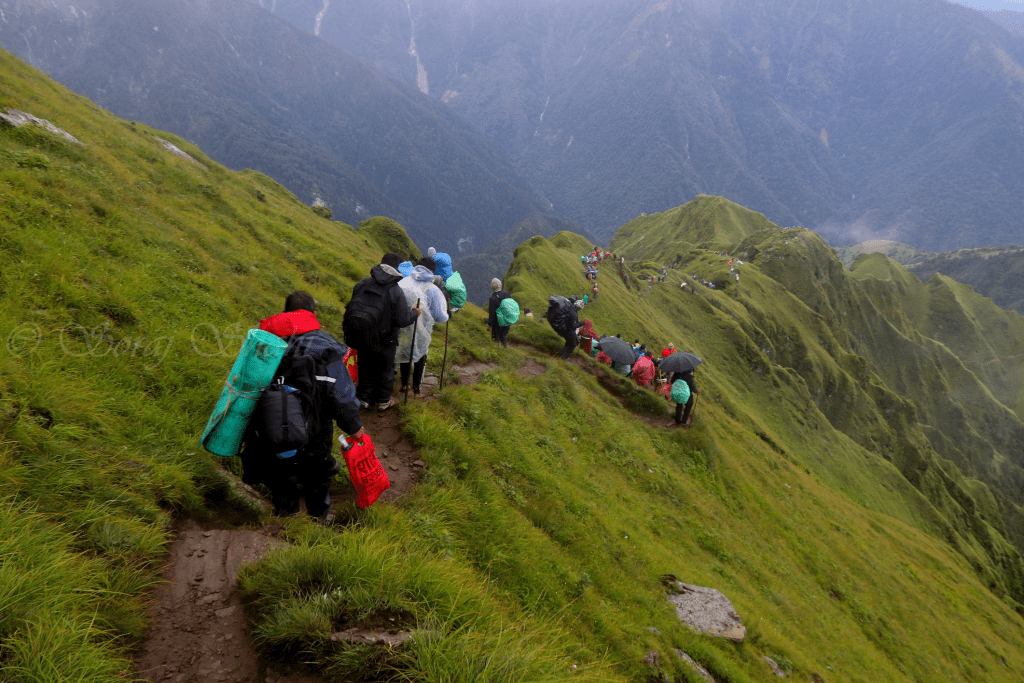
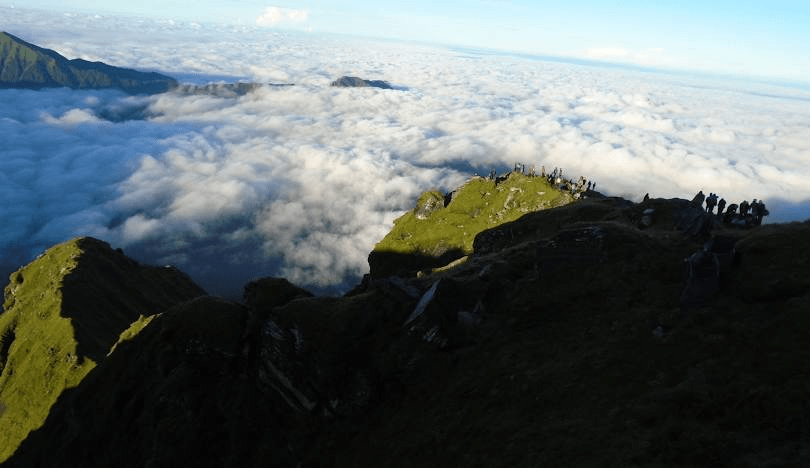
Wake up before dawn to climb the steep, rocky ridge to the Badimalika Temple (4,216m). As the sun rises, you will witness an unforgettable view of Api and Saipal peaks rising above a sea of clouds. After paying your respects, trek down to camp near the beautiful Dhawalpur Lake.
Day 7: Trek from Dhawalpur Lake to Natshwori (5-6 hours).
Follow the descending trail through pristine forests and scenic ridges until you reach the beautiful temple village of Natshwori. Celebrate the completion of the wilderness section with a hearty local meal.
Day 8: Trek to Bramhatola and Drive to Sanfe-Bagar
Walk a short distance down to the nearest road head at Bramhatola, then hop on a jeep back to Sanfe-Bagar or Dadeldhura to rest your sore muscles.
Day 9: Return Drive to Dhangadhi and Fly to Kathmandu
Drive back down to the plains of Dhangadhi and catch your return flight to Kathmandu, carrying memories of an untouched paradise.
Immersive Folklore: The Echoes of Deuda and Hudkeuli
The culture of Sudurpaschim Province is completely distinct from the rest of Nepal, and the trails of Bajura showcase this vividly. In the lower settlements like Jadanga and Natshwori, you will cross paths with communities preserving ancient Khas traditions.
If your trek coincides with local festivals or the great August pilgrimage, you will witness the enchanting performance of Deuda; a traditional circle dance where people link arms and sing improvised, poetic verses back and forth. You will also hear the resonant beats of the Hudko (a small hourglass drum) as local Hudkeuli artists recount epic tales of ancient kings and deities. It is an oral history that has survived centuries, and hearing it echo in the mountains is unforgettable.
Essential Travel Tips & Logistics
Traveling to the far-west requires a mindset shift compared to commercial routes like the Everest Base Camp trek. Keep these critical points in mind:
Accommodation & Food: Do not expect luxury tea houses with hot showers and Wi-Fi. The lower sections offer basic homestays serving traditional Dal Bhat. On the high-altitude meadows, you are entirely on your own. You must carry your own tents, sleeping bags, cooking fuel, and dried food items.
Guide & Logistics: Hiring a local guide from Dhangadhi or Bajura is highly recommended. The high meadows frequently experience heavy fog, which can completely obscure the trails within minutes.
Permits: You do not need expensive peak permits, but you must carry standard local government entry passes and your national identity card/passport.
Frequently Asked Questions (FAQs)
How difficult is the Badimalika trek?
It is classified as a strenuous wilderness trek.While it does not involve technical mountaineering, the trek still demands respect.
Steep altitude gains make it physically challenging. Weather can change without warning. Standard lodge infrastructure is limited or absent in many stretches.
Because of this, a good level of fitness is essential. Prior trekking experience is strongly recommended.
Can I do this trek solo?
Going entirely solo is highly discouraged due to the remote nature of the trail and how easily you can lose your way in the thick fog on the high-altitude meadows. Always travel with at least one partner or hire a local guide.
Is there mobile network coverage on the trail?
Coverage is highly inconsistent. You will get a decent Nepal Telecom (NTC) or Ncell signal in the lower villages, but expect complete radio silence once you reach Tribeni Dham and the main Badimalika ridge.
What should I pack for the camping sections?
You need a sturdy four-season tent, a high-quality sleeping bag rated down to at least -10°C, a portable gas stove, water purification tablets, warm layered clothing (windcheaters, thermals), a reliable raincoat, and a comprehensive first-aid kit containing altitude sickness medication (Acetazolamide).