



Planning a road trip to the land of the Himalayas? Traveling to Nepal by land is an unforgettable adventure, offering scenic mountain passes, rich cultural landscapes, and deep spiritual journeys. Whether you are driving your own vehicle, backpacking across the border, or undertaking a religious pilgrimage, traveling to Nepal by land through its border crossings requires proper preparation.
To ensure a smooth, respectful, and hassle-free journey, the Nepal Tourism Board has outlined essential guidelines for overland travelers. Here is your comprehensive breakdown of the official DOs and DON’Ts for tourists traveling to Nepal by land.
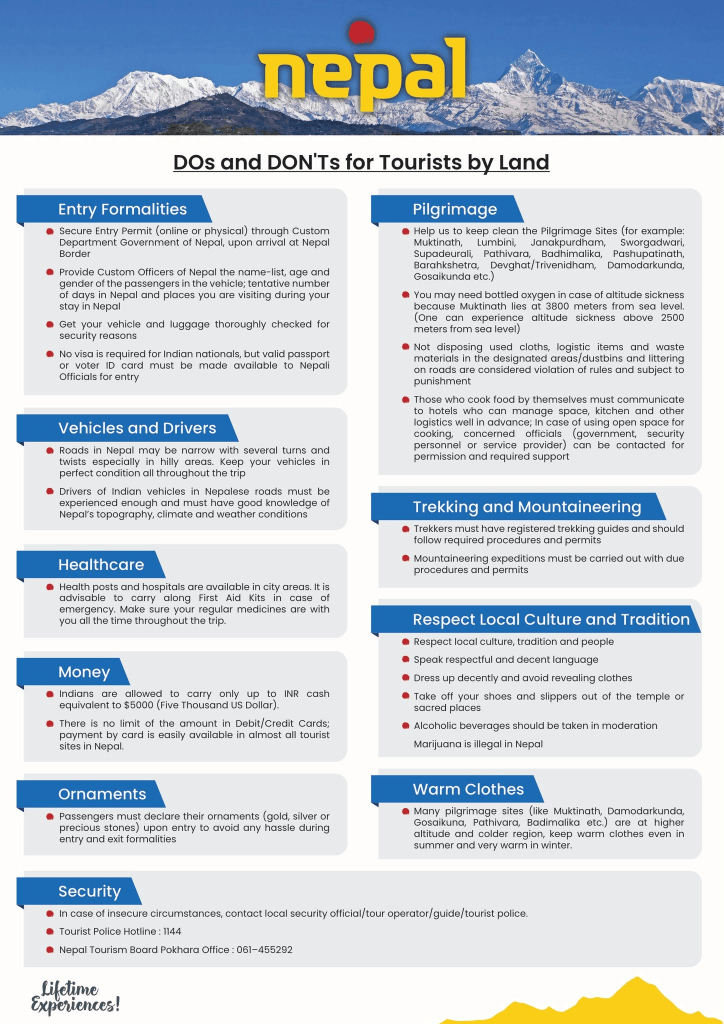
1. Border Crossing & Entry Formalities for Traveling to Nepal by Land
Crossing an international border by land involves specific customs and immigration protocols that must be strictly followed.


- Secure Entry Permits: You must obtain an Entry Permit (either online or physically) through the Customs Department of the Government of Nepal immediately upon arrival at the Nepal border.
- Provide Passenger Manifests: Be prepared to provide Custom Officers with a complete list of names, ages, and genders of all passengers in your vehicle. You will also need to declare your tentative number of days in Nepal and your planned itinerary.
- Expect Security Screenings: For safety reasons, ensure your vehicle and luggage are completely ready to be thoroughly checked by border security.
- Indian Nationals: While Indian citizens do not require a visa to enter Nepal, you must present a valid passport or a Voter ID card to Nepali officials at the entry point.
2. Vehicle & Driver Rules for Traveling to Nepal by Land
Driving in the Himalayas is breathtaking, but it demands peak vehicle performance and sharp driving skills.
- Vehicle Maintenance: Roads in Nepal can be narrow, winding, and steep, particularly in hilly and mountainous regions. Ensure your vehicle is in perfect mechanical condition before and during the trip.
- Driver Experience: If you are operating an Indian vehicle on Nepalese roads, the driver must be highly experienced. Navigating Nepal’s unique topography, unpredictable weather patterns, and shifting climate conditions requires a seasoned hand at the wheel.
3. Financial Guidelines: Cash, Cards, and Valuables
Nepal has strict regulations regarding currency and precious metals brought across land borders.
Currency Restrictions
- Indian Currency (INR) Limits: Indian nationals are legally allowed to carry a maximum of INR cash equivalent to $5,000 USD.
- Card Payments: Good news for digital travelers—there is no limit on the amount you can carry on Debit or Credit Cards. Card payments are widely accepted across almost all major tourist hubs in Nepal.
Ornaments & Jewelry
- Declare Your Valuables: To avoid severe legal hurdles and hassle during your entry and exit formalities, passengers must declare all ornaments (including gold, silver, or precious stones) upon entering the country.
4. Health, Safety & High-Altitude Travel Preparation
Your well-being is paramount while traversing Nepal’s rugged terrains.
- Altitude Sickness Protocol: Many popular land-accessible pilgrimage and trekking sites sit at high elevations. For instance, Muktinath lies at 3,800 meters above sea level, and altitude sickness can trigger at just 2,500 meters.
Pro-Tip: It is highly recommended to carry bottled oxygen if you are ascending rapidly to high-altitude sites like Muktinath, Damodarkunda, Gosaikunda, Pathivara, or Badimalika. - Pack Warm Clothes: Due to the extreme altitudes, these regions remain cold even during the summer and get exceptionally cold in the winter. Pack high-quality thermal layers.
- Medical Kit: While health posts and hospitals are available in major city areas, they can be scarce on remote highways. Always carry a comprehensive First Aid Kit and an uninterrupted supply of your regular personal medications.
5. Trekking, Pilgrimage & Cultural Travel Etiquette
Nepal is a sacred land for adventure seekers and spiritual pilgrims alike. Preserving its natural beauty and holiness is a shared responsibility.
- Trekking Rules: All trekkers must hire registered trekking guides and strictly adhere to official procedural permits. Similarly, mountaineering expeditions must be conducted via authorized agencies with valid permits.
- Keep Pilgrimage Sites Clean: Sacred sites like Lumbini, Janakpurdham, Pashupatinath, and Devghat must be kept pristine. Disposing of used clothes, logistical items, or general waste outside designated dustbins is a punishable offense. Littering on roads will result in strict penalties.
- Self-Cooking Guidelines: If you are traveling in a group and prefer to cook your own food, you must coordinate with local hotels well in advance to manage space, kitchen logistics, and waste management. You can contact local government or security personnel for permission and support.
6. Laws, Culture & Responsible Tourism in Nepal
Nepali culture is rooted in hospitality, respect, and modesty. Aligning with local customs ensures a warm welcome wherever you go.
- Dress Modestly: Dress decently and avoid revealing clothes, especially when visiting rural areas, villages, and religious landmarks.
- Temple Protocol: Always take off your shoes and slippers before entering any temple or sacred space.
- Language and Conduct: Speak respectfully and use decent language with locals, guides, and authorities.
- Substance Laws: While alcoholic beverages should be consumed in strict moderation, marijuana is completely illegal in Nepal. Possession or consumption can lead to severe legal consequences.
7. Emergency Contacts & Traveler Safety in Nepal
In case of any unforeseen circumstances, safety concerns, or security issues on the road, keep these vital contacts saved on your phone:
- Tourist Police Hotline: 1144
- Nepal Tourism Board (Pokhara Office): 061-455292
- Local Resources: Do not hesitate to contact local security officials, your tour operator, or registered guides for immediate assistance.
By respecting these official guidelines, your overland journey to Nepal will not only be safe and compliant but will also open the doors to a genuinely enriching, once-in-a-lifetime experience. Safe travels!
Frequently Asked Questions (FAQs)
Q1: Do Indian citizens need a visa to enter Nepal by land?
A: No. Under the Indo-Nepal treaty, Indian nationals do not require a visa. However, you cannot just walk or drive across without identification. You must present either a valid Passport or a Voter ID card to Nepalese immigration officials at the border checkpoint.
Q2: Can I drive my own vehicle into Nepal? What are the rules?
A: Yes, you can. However, you must obtain a temporary import permit (known locally as a Bhansar) at the border customs desk. You will need to declare your route, passenger manifest, and pay a daily customs fee based on your vehicle type.
Important Limit: Indian-registered vehicles are allowed to stay in Nepal for a maximum of 30 days total per calendar year. Your vehicle must leave the country before your permit expires.
Q3: What is the exact cash limit for tourists crossing the land border?
A: For Indian nationals, you are legally allowed to carry physical Indian Currency (INR) up to the equivalent of $5,000 USD. There is no limit on what you can hold on your Debit or Credit cards, which are widely accepted in major cities like Kathmandu, Pokhara, and tourist hubs.
Q4: Why do I need to declare my personal jewelry or ornaments at the border?
A: Nepal has incredibly strict laws regarding the import and export of precious metals. Declaring your gold, silver, or precious stones upon entry ensures that customs officials know you brought them with you and are not attempting to illegally smuggle or sell bullion across the border. It guarantees a hassle-free exit when you leave.
Q5: Is marijuana legal in Nepal for tourists or spiritual pilgrims?
A: No, marijuana is strictly illegal in Nepal. Despite its historical and cultural association with certain festivals or sadhus at pilgrimage sites, the possession, sale, or consumption of cannabis carries severe legal penalties and potential jail time for tourists.
Q6: Can I trek or visit high-altitude pilgrimage sites on my own?
A: While you can visit lower-altitude land destinations independently, the rules are strict for high altitudes and trekking circuits. Under the updated regulations, guides are mandatory for treks in restricted and high-altitude areas to ensure safety, handle emergency evacuations, and monitor altitude sickness. Furthermore, single-use plastic water bottles are banned on almost all major trails; always carry a reusable filtration bottle.


