



Ghandruk is one of those villages in Nepal that you don’t ever want to miss when you visit the country. It is not just about its popularity or its place on the Annapurna trekking map. But about the way it quietly captures the true spirit of the Himalayas in a single frame of culture, nature, and everyday life.
What makes Ghandruk truly special is the feeling it leaves behind. Life here moves slowly, shaped by tradition and community. From sunrise lighting up snow peaks to villagers going about their daily routines, everything feels deeply connected to the land.
For many travelers, it is a stop on the way to Annapurna Base Camp or Poon Hill. But for those who stay longer, Ghandruk becomes something more; a quiet, unforgettable experience of Nepal’s heart and soul, wrapped in mountains, culture, and warm hospitality.


Where is Ghandruk?
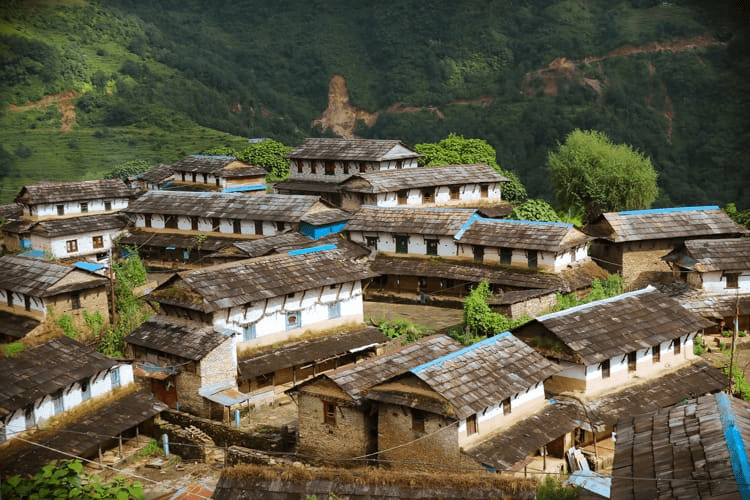
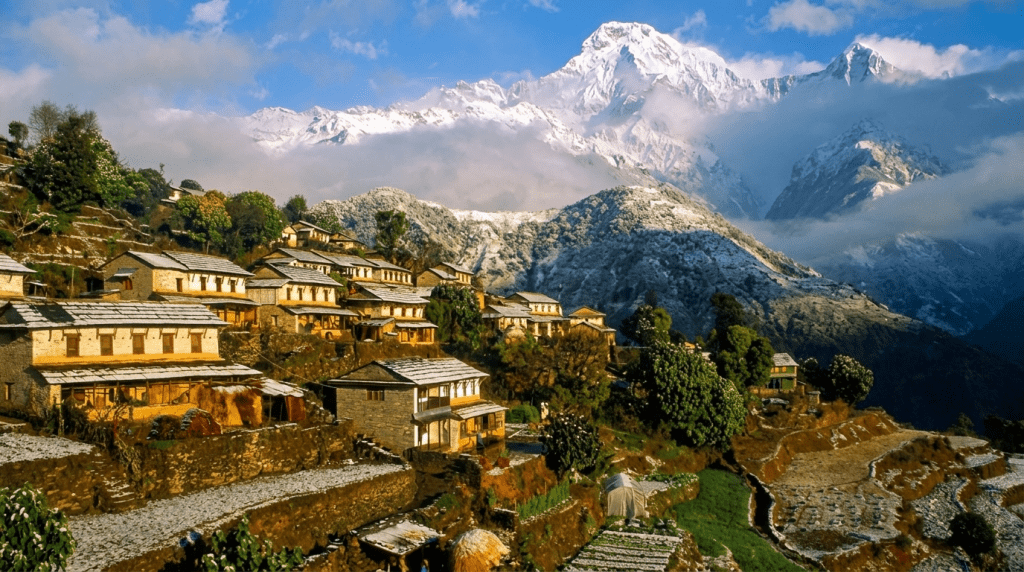
It is situated northwest of Pokhara, nestled at an altitude of approximately 2,010 meters (6,594 feet) within the Annapurna Conservation Area.It is one of the most popular destinations for trekking and cultural tourism in Nepal. It offers stunning panoramic views of the Annapurna mountain range.
You can see Annapurna South, Gangapurna, and Machapuchare (Fishtail). Stone-paved alleys run through the traditional settlement. Gurung houses reflect centuries-old mountain architecture. Prayer flags move with the strong Himalayan wind.
The entire scene feels timeless yet alive.
History of Ghandruk
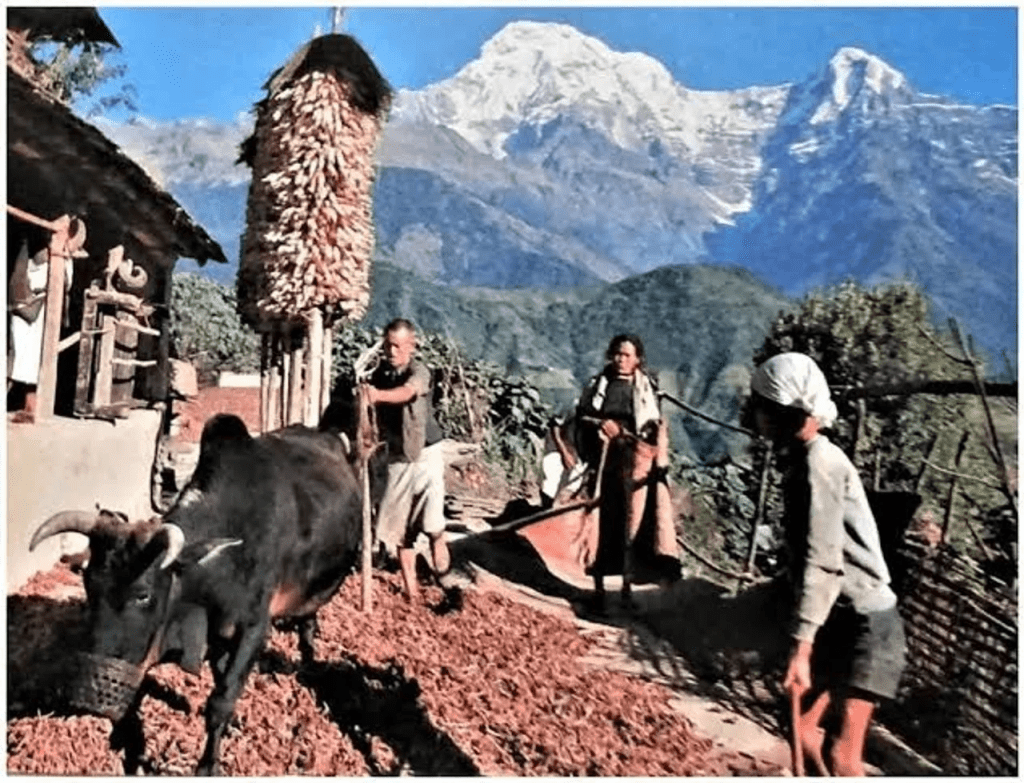
Ghandruk’s story goes back more than two centuries, when Gurung (Tamu) communities began settling in the mid-hills of western Nepal. These early settlers were primarily agrarian families who chose this region for its fertile land, water sources, and strategic hillside location overlooking the Modi Khola valley.
The name Ghandruk is commonly believed to come from local words meaning “dense forest” and “tree,”. Which reflects its past when the entire hillside was covered in thick woodland before settlement and farming gradually shaped the landscape.
Before tourism ever reached the region, Ghandruk sat quietly along ancient Himalayan trade routes. Traders moving between Nepal’s lowlands and the high mountain regions of Tibet passed through these trails, exchanging salt, wool, grains, and everyday goods. This gave the village early exposure to cultural exchange and regional connectivity.
Another defining chapter in its history is its deep connection to the Gurkha military tradition. Many men from Ghandruk served in the British and Indian Gurkha regiments. The income they sent home played a major role in improving local education, stone housing infrastructure, and overall living standards in the village.
From the late 1970s onward, Ghandruk slowly transformed into a trekking hub as routes like the Annapurna Base Camp and Ghorepani–Poon Hill became globally popular. Unlike many destinations, it evolved into a community-based tourism model where locals run teahouses and lodges.
A Village That Preserves Gurung Heritage
Culture in Ghandruk is not something you simply observe; it is something you experience as part of daily life.
The village is predominantly inhabited by the Gurung community, one of Nepal’s most culturally rich indigenous groups. Their language, Tamu Kyi, is still actively spoken at home and in everyday conversations, especially among elders, keeping oral traditions alive across generations.
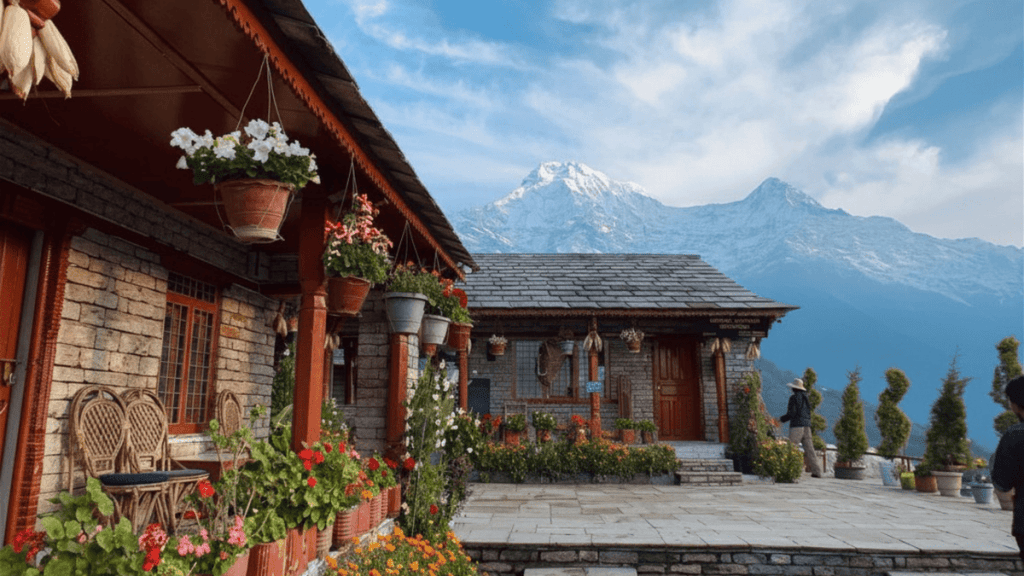
Ghandruk’s landscape is defined by traditional stone houses with slate roofs. These houses are built using local stone and natural materials. They blend naturally into the mountain environment. But they are more than just architectural structures. They are living cultural spaces. Multiple generations often live under the same roof. Families share daily life, work, and traditions together. This creates a strong sense of continuity. It also preserves deep-rooted family values across generations.
Spiritual Life, Festivals, and Everyday Village Living
Religion and spirituality in the village reflect a unique blend of Tibetan Buddhism and ancient animistic beliefs. Local lamas conduct Buddhist rituals and ceremonies, while traditional Dhami and Jhankri shamans are still consulted for healing practices and spiritual guidance, showing how faith systems coexist in everyday life.
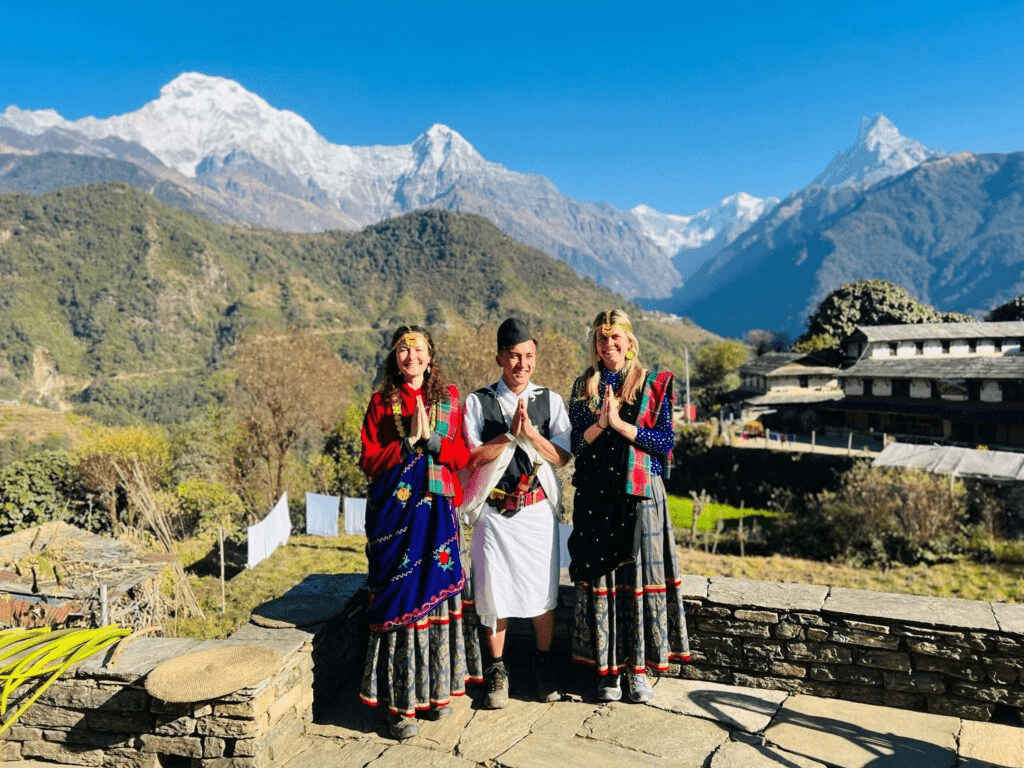
Festivals bring the entire village to life, especially Tamu Lhosar, the Gurung New Year. Celebrated with music, dance, traditional attire, and communal feasts, it transforms Ghandruk into a vibrant cultural stage where tradition is openly shared and celebrated.
The people of Ghandruk are widely known for their warmth and hospitality. Most families are engaged in a mix of farming, tourism, and remittance-based livelihoods. The surrounding terraced fields are used to grow maize, millet, potatoes, and seasonal vegetables, reflecting a close connection with the land.
Many households also have family members who have served or are currently serving in foreign military regiments or working abroad, which has significantly contributed to the village’s development and living standards.
Despite the growth of tourism, life in Ghandruk remains deeply community-oriented. Visitors are often welcomed into homestays where they share meals, stories, and daily routines with local families, turning a simple visit into an intimate cultural exchange.
Regulations, Travel Flow & What to Expect on the Ground
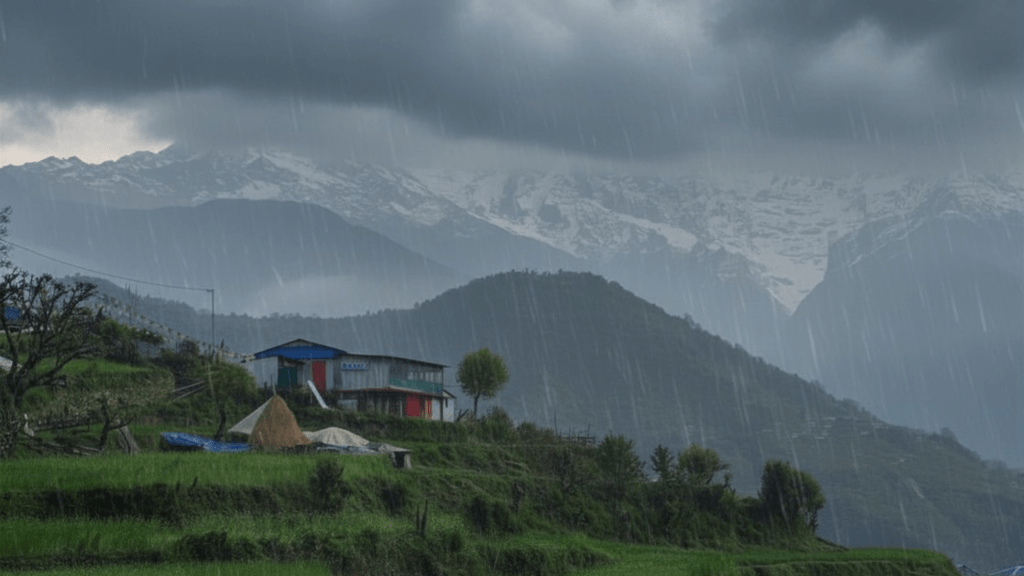
Ghandruk sits inside the protected boundaries of the Annapurna Conservation Area, which means every visitor enters under basic conservation rules designed to protect both the environment and local culture. The most important requirement is the ACAP (Annapurna Conservation Area Permit), which is checked at entry points and along trekking routes.
For most trekking routes in the Annapurna region, foreign travelers are also encouraged; and in many cases required, to travel with a licensed guide through a registered trekking agency. This system is part of Nepal’s updated trekking management approach, aimed at improving safety and tracking in mountain regions. Depending on current regulations, solo trekking permissions may vary, so it’s always best to confirm before starting your journey.
Inside the village and surrounding trails, responsible travel is taken seriously. Waste management rules are enforced, and the use of single-use plastics is discouraged. Visitors are expected to stay on marked trails and be mindful of the fragile mountain environment. Cultural respect is equally important, asking before photographing locals, homes, or religious spaces is a simple but essential courtesy here.
What to Do in Ghandruk
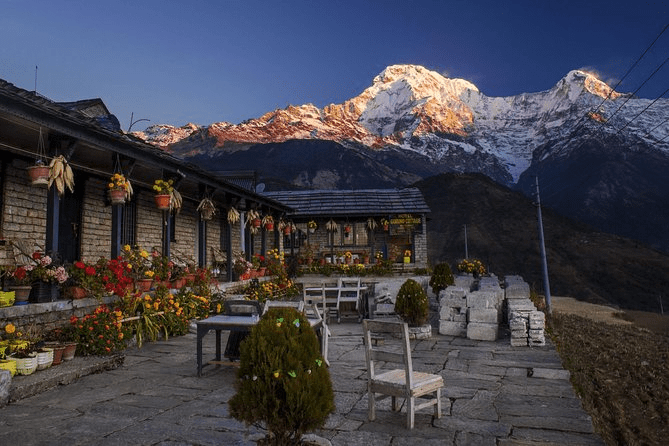
Ghandruk is not a place you just pass through, it is a place you experience slowly.
The village itself is the first attraction. Walking through its narrow stone lanes feels like stepping into a living museum, where every turn opens up to distant Himalayan peaks or quiet courtyards filled with daily life. Sunrise is especially unforgettable, as golden light slowly touches Machhapuchhre and Annapurna South.
One of the key cultural stops is the Gurung Museum, where traditional clothing, farming tools, household items, and Gurkha military history are preserved in a way that connects past and present.
Beyond the village, short hikes lead to ridge viewpoints, terraced farmlands, and connecting trails toward Tadapani or down to Jhinu Danda, known for its natural hot springs along the Modi River. These walks are easy but incredibly rewarding, offering constant mountain views along the way.
For trekkers, Ghandruk also acts as an important gateway to two of Nepal’s most iconic routes:
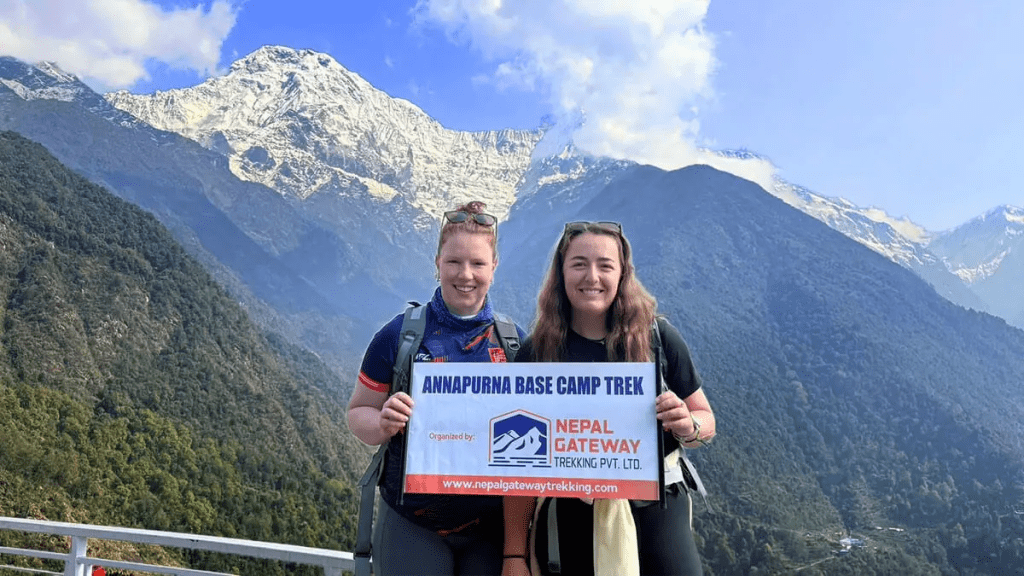
- Annapurna Base Camp Trek
- Ghorepani–Poon Hill Trek
For a more immersive experience, many visitors choose homestays, where daily life becomes part of the journey, helping in kitchens, sharing traditional meals, or simply sitting with families and listening to stories from the mountains.
Budget & Travel Costs in Ghandruk
Traveling to Ghandruk is relatively affordable compared to many Himalayan destinations, though costs vary depending on comfort and travel style.
Permits (Approximate):
The ACAP permit for foreign visitors costs around NPR 3,000 plus VAT. SAARC nationals benefit from reduced fees, while Nepali citizens usually pay a minimal or local entry charge depending on the specific area.
Getting There from Pokhara:
Reaching Ghandruk typically starts from Pokhara. Local buses cost around NPR 400–600 per person, while shared jeeps range from NPR 800–1,500. For more comfort and flexibility, private jeeps usually cost between NPR 6,000–12,000 per vehicle.
Daily Travel Budget:
Accommodation in Ghandruk ranges from basic teahouses at NPR 700–2,000 per night to more comfortable lodges reaching NPR 3,000–5,000. Food expenses usually fall between NPR 1,500–3,000 per day depending on menu choices.
Overall, a realistic daily budget for most travelers ranges from NPR 4,000 to 10,000+, depending on whether you are trekking, staying in homestays, or opting for more comfortable lodging.
Frequently Asked Questions (FAQ)
Can you reach Ghandruk without trekking?
Yes. A road connects Pokhara to the Kimche/Ghandruk area, allowing jeep or bus access followed by a short walk into the village.
Is Ghandruk suitable for beginners or families?
Yes. Its moderate altitude and road accessibility make it one of the most beginner-friendly Himalayan villages.
Is altitude sickness a concern?
Not usually. At around 2,000 meters, the risk of Acute Mountain Sickness is very low.
Is Wi-Fi and mobile network available?
Yes. Most lodges offer Wi-Fi and mobile coverage, although speed may vary.
How many days should you stay?
1–2 nights is ideal for village exploration. Trekkers usually stay overnight before continuing deeper into the Annapurna region.
Best Time to Visit Ghandruk
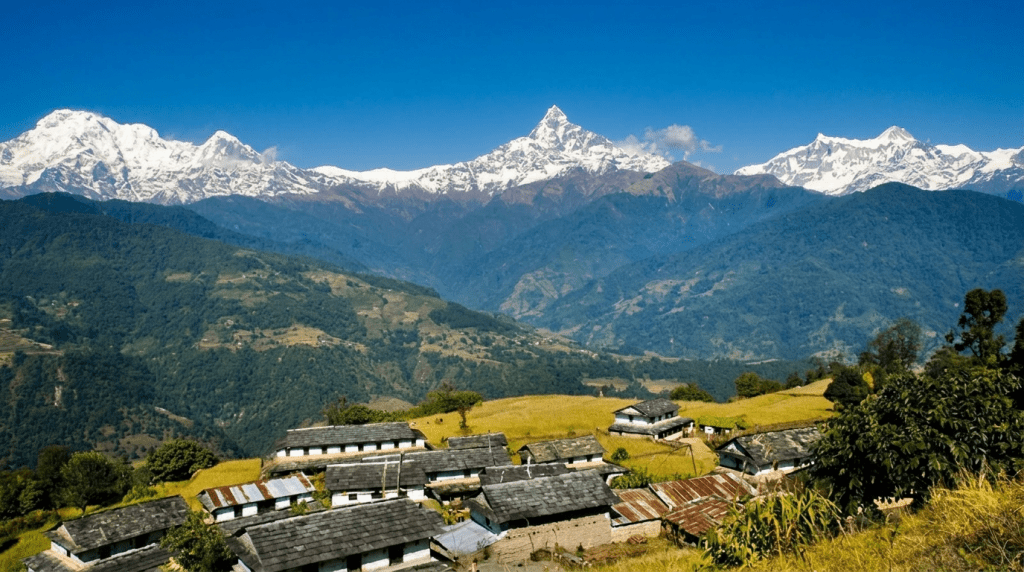
Autumn (September–November) – Best Season
Clear skies, best mountain visibility, and ideal trekking conditions.
Spring (March–May)
Rhododendrons bloom across the hills, making the landscape vibrant and colorful.
Winter (December–February)
Cold but peaceful, with crystal-clear mountain views on good days.
Monsoon (June–August)
Heavy rainfall, slippery trails, and limited visibility make this the least favorable season.
Final Note
Ghandruk is not just a destination on a map; it is one of those rare places where Nepal feels alive in its purest form. The mountains feel closer, the culture feels real, and the experience stays with you long after you leave.


