


Everyone assumes Mustang is reserved for hardcore expedition types with deep pockets and months to spare. The reality? You can now reach the walled city of Lo Manthang in a comfortable jeep, sleeping in lodges the whole way, and the permit that used to cost $500 was slashed to a pay-as-you-go rate in late 2025. If there was ever a moment to use a proper Mustang Nepal guide and actually plan this trip, it is right now.
Why Mustang Feels Like Another Country
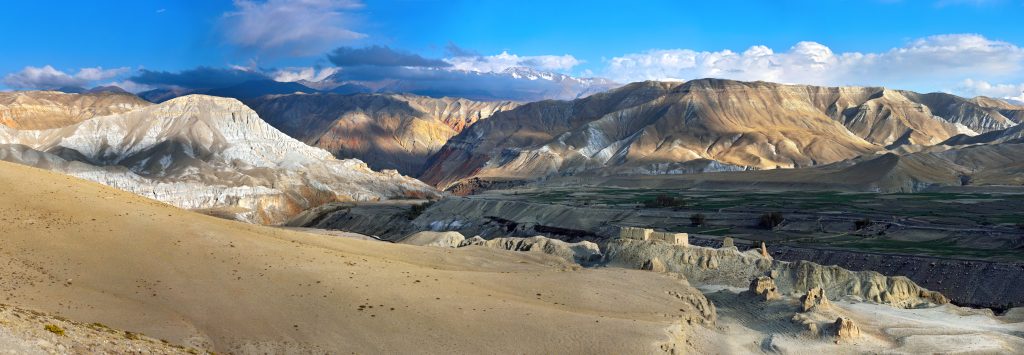
Mustang sits in the rain shadow of the Annapurna and Dhaulagiri ranges, tucked against the Tibetan plateau in Nepal’s Gandaki Province. Geographically and culturally, it has more in common with Tibet than with the green hills most travelers picture when they think of Nepal. Expect wind-carved canyons, ochre cliffs, and a high desert that gets a fraction of the rain the rest of the country receives.
Until 1992, foreigners were not allowed in at all.
That isolation preserved something remarkable. The former Kingdom of Lo kept its Tibetan Buddhist culture, its language, and its medieval architecture largely intact while the outside world changed around it. Lo Manthang, the old capital, is still a functioning walled city where the five-story Tashi Gephel Palace, built in 1442, anchors the main square. Here’s what most guides won’t tell you: even today, with road access improving every year, you can walk Lo Manthang’s alleys at dawn and see almost no other travelers.
Upper vs Lower Mustang: Know the Difference
This distinction trips up more first-time visitors than anything else, so get it clear before you book anything.
- Lower Mustang covers Jomsom, Marpha, Kagbeni, and the sacred temple complex of Muktinath at 3,710 meters. No restricted area permit is needed. You pay for an Annapurna Conservation Area Permit (about $30) plus a TIMS card (about $20), and you can visit independently.
- Upper Mustang begins north of Kagbeni and includes Lo Manthang, the sky caves, and the most dramatic desert landscapes. It is a restricted area. You need a Restricted Area Permit, a licensed guide, and a registered Nepali trekking agency to process the paperwork.
Plenty of travelers visit only Lower Mustang and leave happy. The truth is, though, the landscapes that earn Mustang its “forbidden kingdom” reputation almost all sit north of that Kagbeni checkpoint.
Permits Explained: A Mustang Nepal Guide to the New Rules
This is where most people go wrong, because the rules changed recently and a lot of older blog posts are now flat out incorrect.
For years, the Upper Mustang Restricted Area Permit cost a flat $500 per person for the first 10 days. In late 2025, Nepal’s government officially gazetted a new structure: $50 per person per day, charged only for the days you actually spend inside the restricted area. A 5-day loop now costs $250 in permit fees instead of $500. The old two-person minimum group requirement was also removed, so solo travelers can go with just a licensed guide.
What you still need for Upper Mustang:
- Restricted Area Permit: $50 per day, arranged through a registered trekking agency at the Department of Immigration in Kathmandu
- Annapurna Conservation Area Permit (ACAP): NPR 3,000, roughly $30
- A government-licensed guide for the entire time you are inside the restricted zone
One caveat. Fee structures in Nepal change more often than you would expect, and some agencies were still quoting the old rates well into 2026. Confirm the current figure with your agency before paying anything, and read our full Nepal trekking permits guide for the complete paperwork picture.
Getting There: Flights, Jeeps, and One Spectacular Road
Every Mustang trip funnels through Jomsom, the district headquarters. You have three realistic ways to get there.
Fly via Pokhara
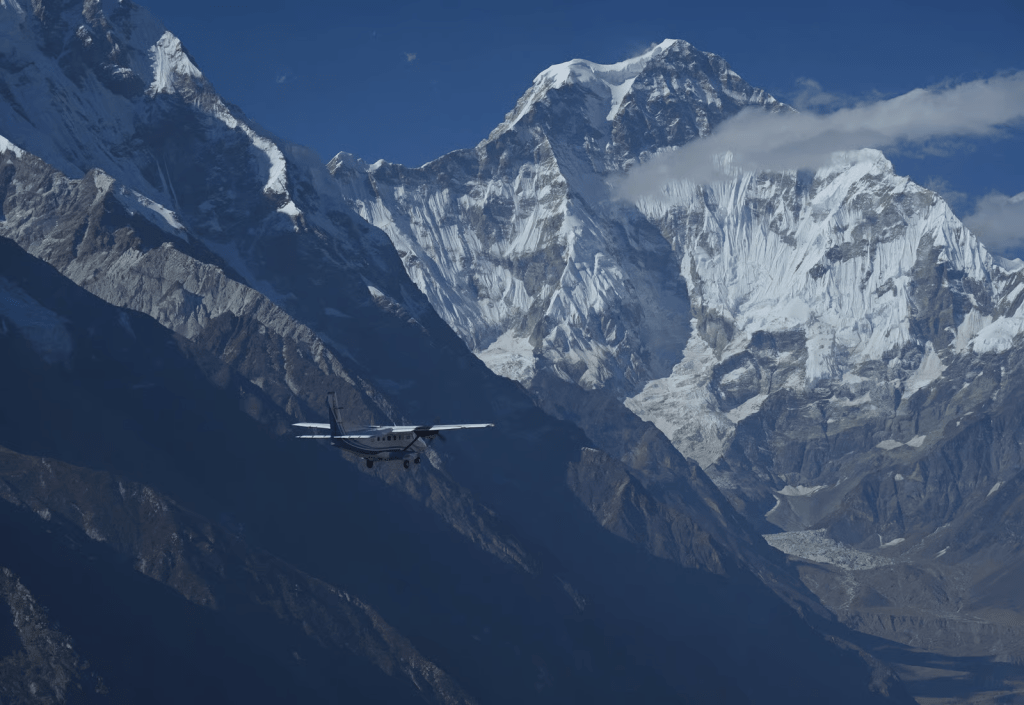
Fly Kathmandu to Pokhara (about 25 minutes, roughly $120), then catch the early morning hop from Pokhara to Jomsom. That second flight takes 15 to 20 minutes, costs around $110 to $125 one way, and threads between Annapurna and Dhaulagiri through the deepest gorge on Earth. Flights leave at dawn because the valley wind picks up by mid-morning and grounds everything after about 9am.
Drive the whole way
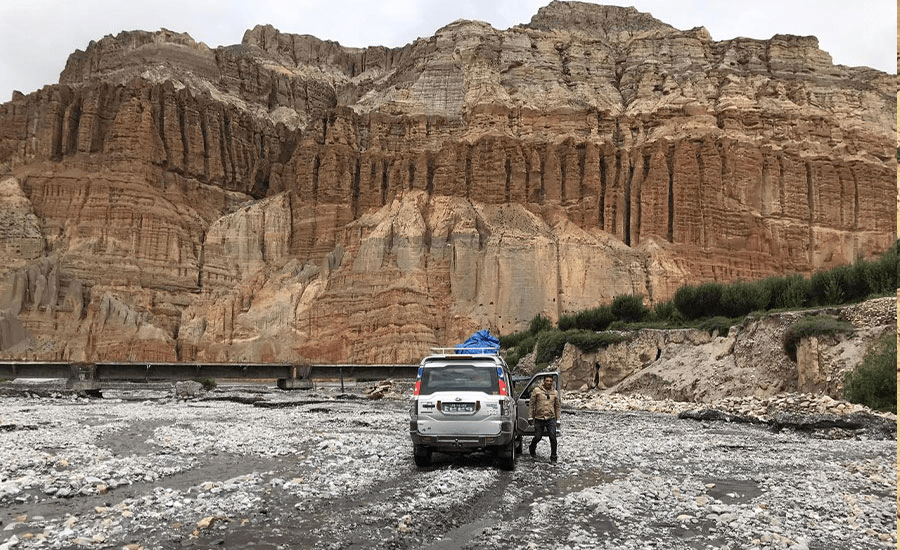
The road from Pokhara to Jomsom is now drivable year-round in a 4WD, taking 8 to 10 hours depending on conditions. From Jomsom, jeeps continue north to Lo Manthang. Full overland jeep tours from Kathmandu or Pokhara typically run $1,300 to $1,900 per person for a 8 to 12 day itinerary, with premium operators charging more.
Trek it
The classic Upper Mustang trek takes 10 to 14 days round trip from Jomsom, walking 5 to 7 hours a day through villages like Chele, Syangboche, and Ghami. It is moderate by Nepal standards. The altitude tops out around 4,000 meters at the passes, well below the extremes of the Annapurna and Everest Base Camp routes, but the relentless afternoon wind and dry air are their own kind of challenge.
Lo Manthang and the Sky Caves
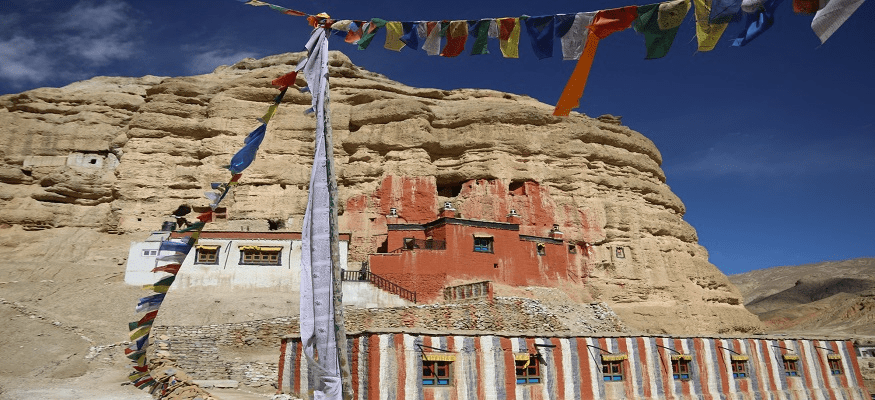
The walled city sits at about 3,840 meters, a compact maze of whitewashed houses, chortens, and monasteries that has barely grown beyond its 15th century footprint. Give yourself at least two full days here. Thubchen and Jampa monasteries hold some of the finest surviving Tibetan Buddhist murals anywhere, and local guides unlock rooms that casual visitors walk straight past.
Then there are the caves.
An estimated 10,000 man-made caves honeycomb the cliffs of Upper Mustang, some dating back 2,000 to 3,000 years. Archaeologists are still arguing about who dug them and why. The most accessible is the Shija Jhong cave complex at Chhoser, about two hours from Lo Manthang: five stories carved into a cliff face with roughly 40 rooms connected by ladders and tunnels. You can climb through it yourself for a small entrance fee.
Best Time to Visit Mustang
Mustang breaks Nepal’s usual seasonal rules. Because the region sits in the rain shadow, the summer monsoon that drenches the rest of the country barely touches it, which makes June through August a legitimate option here when most other treks are miserable.
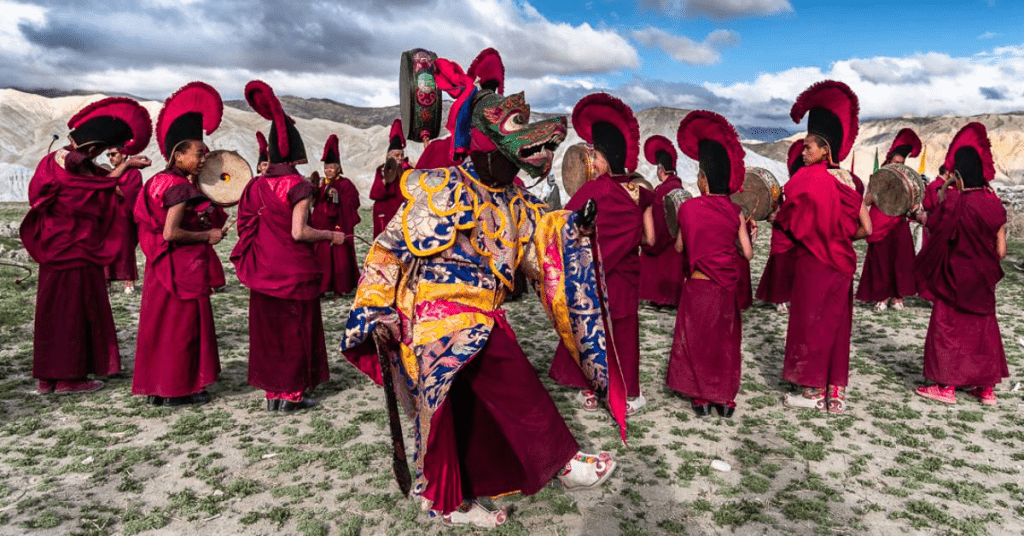
The sweet spots are still spring (March to May) and autumn (September to November) for stable weather and clear mountain views. May brings the Tiji Festival, a three-day masked dance ritual in front of the old palace in Lo Manthang that celebrates the victory of good over evil. Dates shift each year with the lunar calendar, so check before locking in flights. Winter is brutal: many residents of Lo Manthang migrate to lower elevations, and lodges shut down. For a broader seasonal picture, see our month-by-month guide to visiting Nepal.
What a Mustang Trip Actually Costs
Here is a realistic budget for a 10-day Upper Mustang jeep tour or trek, per person, as of mid-2026:
- Restricted Area Permit (7 days inside the zone): $350
- ACAP permit: $30
- Flights (Kathmandu to Jomsom return via Pokhara): $450 to $500
- Guide, lodging, and meals through an agency: $800 to $1,200
Budget $1,700 to $2,200 all-in for a comfortable trip. Going overland instead of flying cuts a few hundred dollars but adds two long road days. Carry cash for everything beyond Jomsom. ATMs are unreliable at best, and most lodges in the restricted area take Nepali rupees only.
Frequently Asked Questions
Do I need a permit for Lower Mustang?
No restricted area permit is required. You only need the ACAP permit (about $30) and a TIMS card (about $20) to visit Jomsom, Kagbeni, and Muktinath independently.
How much is the Upper Mustang permit in 2026?
The Restricted Area Permit now costs $50 per person per day under the system gazetted in late 2025, replacing the old $500 flat fee for 10 days. ACAP adds roughly $30 on top.
Can I visit Upper Mustang without trekking?
Yes. The road now reaches Lo Manthang, and jeep tours of 8 to 12 days are the most popular way to visit. You still need the same permits and a licensed guide.
Is Upper Mustang trekking difficult?
It rates moderate. Daily walks of 5 to 7 hours, altitudes between 2,800 and 4,000 meters, and good lodge infrastructure. Wind and dust are bigger daily annoyances than the climbing itself.
Can solo travelers go to Upper Mustang?
Yes, as of the recent rule change. The old two-person minimum was removed, though you must still hire a licensed guide and book through a registered agency.
What is the Tiji Festival?
A three-day Buddhist festival held in Lo Manthang each May, featuring masked dances that reenact the defeat of a demon. It is the single busiest and most atmospheric time to visit Upper Mustang.
Is there phone signal and Wi-Fi in Upper Mustang?
Coverage is patchy. An NTC SIM card gets the best signal, and some lodges in Lo Manthang offer slow Wi-Fi for a fee. Treat the region as mostly offline and tell people at home not to expect daily messages.
How high is Lo Manthang?
The walled city sits at about 3,840 meters (12,600 feet). Most itineraries build in gradual gains from Jomsom at 2,720 meters, so altitude sickness is less common here than on higher treks, but acclimatization still matters.