


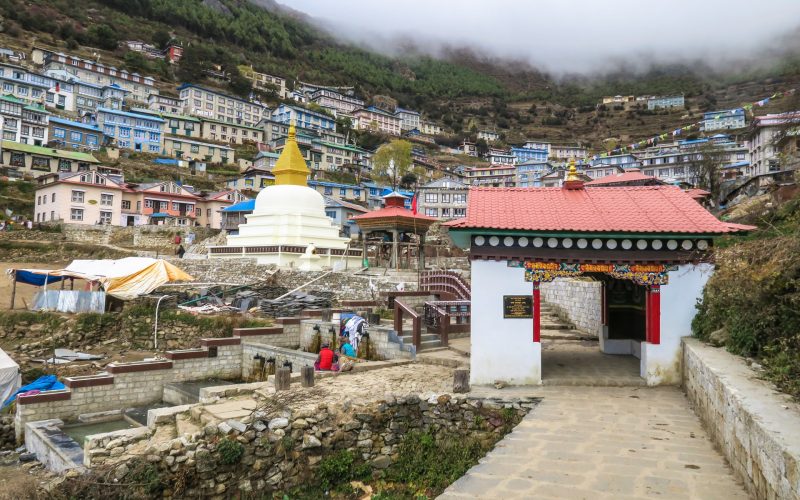
Namche Bazaar at an altitude of 3500 m is also known as the gateway to Everest. It is the staging point for expeditions to Everest and other peaks in the same Himalayan range.
The town has now developed into a small colorful market, dedicated to tourists and mountaineers, selling everything including gears and equipment to climb mountains or go on a Himalayan trek.
Situation and landmarks

The town is situated on the slope of an arch-shaped mountain, with Himalayan landscapes surrounding it.


The place offers a complete, uninterrupted majestic view of the Himalayan mountains including Mt. Everest.
Despite its development into a modern town, the place still retains its unique culture, traditions, and heartwarming hospitality.
How to get to Namche Bazaar from Kathmandu?
There is no direct road access to the Namche Bazaar making the journey an exciting one.
You can reach Namche in two ways:
1. First By air to Lukla and then walk to Namche Bazaar

Most travelers fly from Kathmandu to Lukla and then trek into Namche Bazaar from there. You can also take a helicopter from Kathmandu to Lukla.
The flight takes about 30 minutes from Kathmandu, Tribhuwan International Airport to Tenzing Hillary Airport in Lukla.
Then you need to take two days to walk along the Himalayas till Namche Bazaar. The first night of the trek is often spent in Phakding.
2. By Road to Jiri or Phalpu and then trek
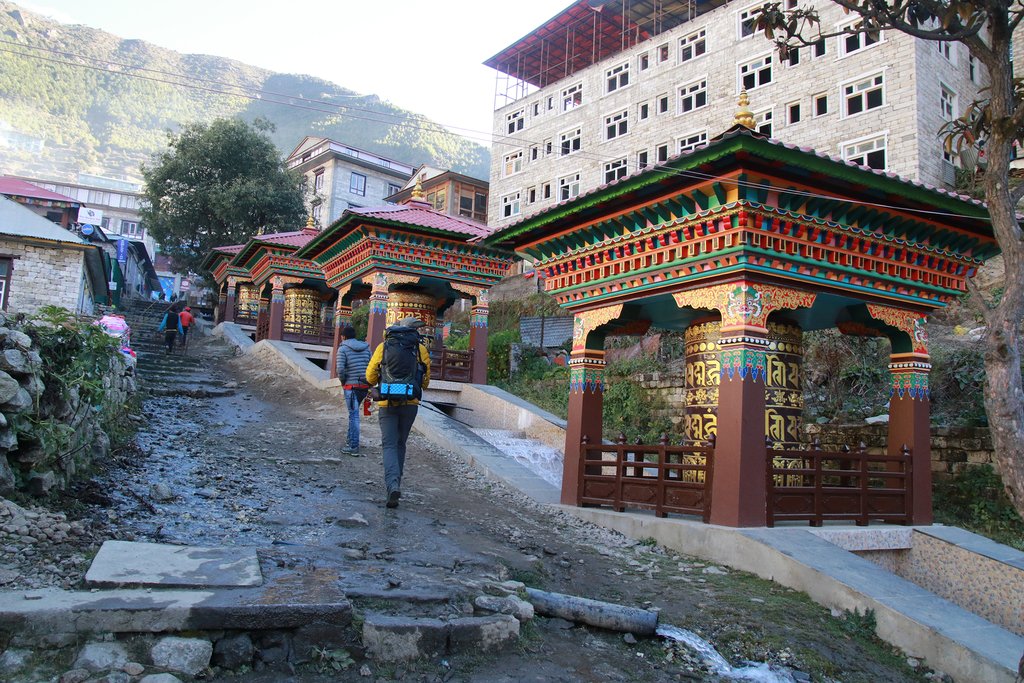
If you want to avoid the flight and enjoy trekking in the Himalayas, you can take a jeep to Jiri or Phalpu from Kathmandu (about a day’s journey) and then trek to Lukla and then to Namche Bazaar.
The trek from Phalpu to Lukla takes 3 days and from Jiri to Lukla takes 5 days.
Things to do in Namche Bazaar

Once you reach Namche Bazaar, the first thing you could do is enjoy the majestic view of the Himalayas right in front of your eyes. The 2 days trek should be definitely worth it.
And read this excellent article in the link below to see what things you should do at Namche Bazaar.
Visit our Travel section for more travel and trek pieces of information.
- 5 Top Things to Do in Chitwan!
- Places you should never miss while visiting Kathmandu even on a tight schedule
- Top holiday destinations in eastern Nepal