


Quick Facts About Gai Tihar 2026
- Date: Monday, November 9, 2026 (Kartik 23, 2083 BS)
- Meaning: ‘Gai’ means cow. Gai Tihar is the traditional day of cow worship.
- Main rituals: Washing cows, applying tika, offering flower garlands, and feeding them grass and traditional treats.
- Religious significance: The cow represents prosperity, nourishment, and wealth. Many Hindus also associate it with Goddess Laxmi.
- Newar name: Sa Puja
- Not to be confused with: Gai Jatra, a separate festival celebrated in August or September.
During Tihar, Nepal’s streets and homes fill with flowers, lights, and celebrations. But one day is dedicated to an animal that has supported households for generations.
On Gai Tihar, cows receive flower garlands, red tika, and special food offerings. Families worship them as symbols of prosperity, nourishment, and good fortune.


For many Hindus, the cow also represents Goddess Laxmi, making the celebration closely connected to the festival’s worship of wealth and abundance.
Celebrated on the third day of Tihar, Gai Tihar is more than a religious ritual. It reflects the longstanding relationship between people, animals, agriculture, and everyday life in Nepal.
Here’s everything you need to know about Gai Tihar 2026, including its date, religious significance, traditional rituals, and how visitors can experience the celebration respectfully.
What Is Gai Tihar?
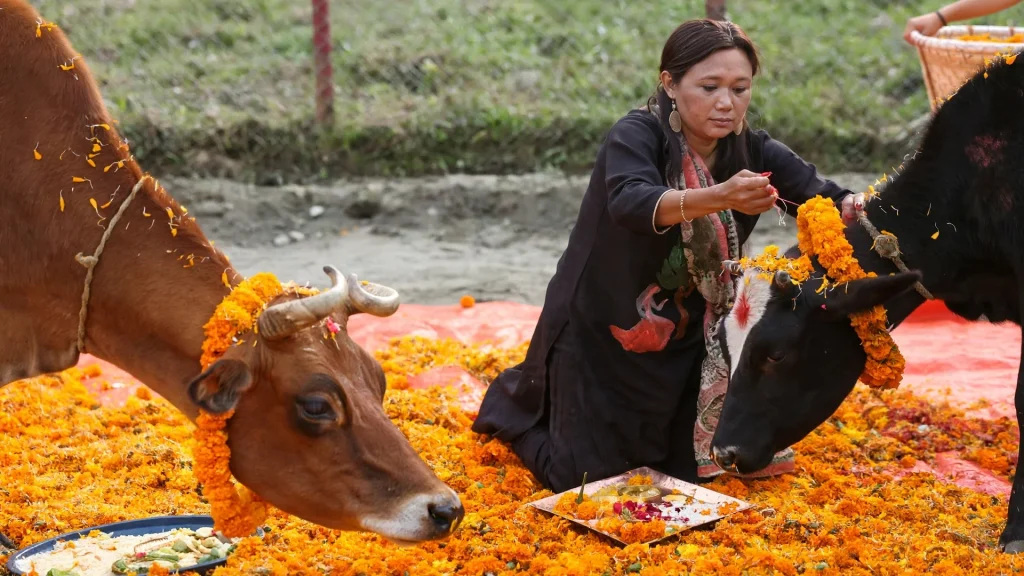
Gai Tihar is a traditional Hindu festival dedicated to worshipping cows. It forms part of Tihar, Nepal’s five-day festival of lights, also known as Yama Panchak.
On this day, families honour cows by washing them, applying tika, placing flower garlands around their necks, and offering food.
The tradition reflects gratitude towards an animal that has played an important role in Nepali households and agriculture for centuries.
Cows provide milk and contribute to farming through their dung, which has traditionally been used as fertiliser and fuel. Their importance extends beyond agriculture, however.
In Hindu belief, the cow represents prosperity, purity, and nourishment. Many devotees also consider it a manifestation of Goddess Laxmi.
Through Gai Tihar, families express respect for the animal and acknowledge its contribution to human life.
When Is Gai Tihar in 2026?
Gai Tihar falls on Monday, November 9, 2026 (Kartik 23, 2083 BS), according to Nepal’s official festival calendar.
The 2026 Tihar schedule has a slightly different arrangement from some previous years. Laxmi Puja falls on November 8, the evening before the designated day of cow worship.
Here is the complete Tihar schedule for 2026:
- November 6, Friday: Dhanteras and Yamadeepdan
- November 7, Saturday: Kaag Tihar
- November 8, Sunday: Kukur Tihar and Laxmi Puja
- November 9, Monday: Gai Tihar (Gai Puja)
- November 10, Tuesday: Govardhan Puja, Goru Puja, and Mha Puja
- November 11, Wednesday: Bhai Tika
The dates can differ across regional traditions and local calendars. Visitors should check local announcements when planning their celebrations.
Why Do Hindus Worship the Cow?
The cow has a special place in Hindu religion and mythology. Its importance comes from several beliefs and traditions that connect it with prosperity, nourishment, and divine protection.
The Cow as a Symbol of Goddess Laxmi
One of the strongest connections is between the cow and Goddess Laxmi, the Hindu goddess of wealth and prosperity.
Many Hindu traditions regard the cow as a manifestation of Laxmi. Its association with nourishment and abundance reflects the goddess’s blessings.
The timing of Gai Tihar also strengthens this connection. Cow worship and Laxmi Puja are closely associated within the wider Tihar celebrations.
Kamadhenu: The Wish-Fulfilling Cow
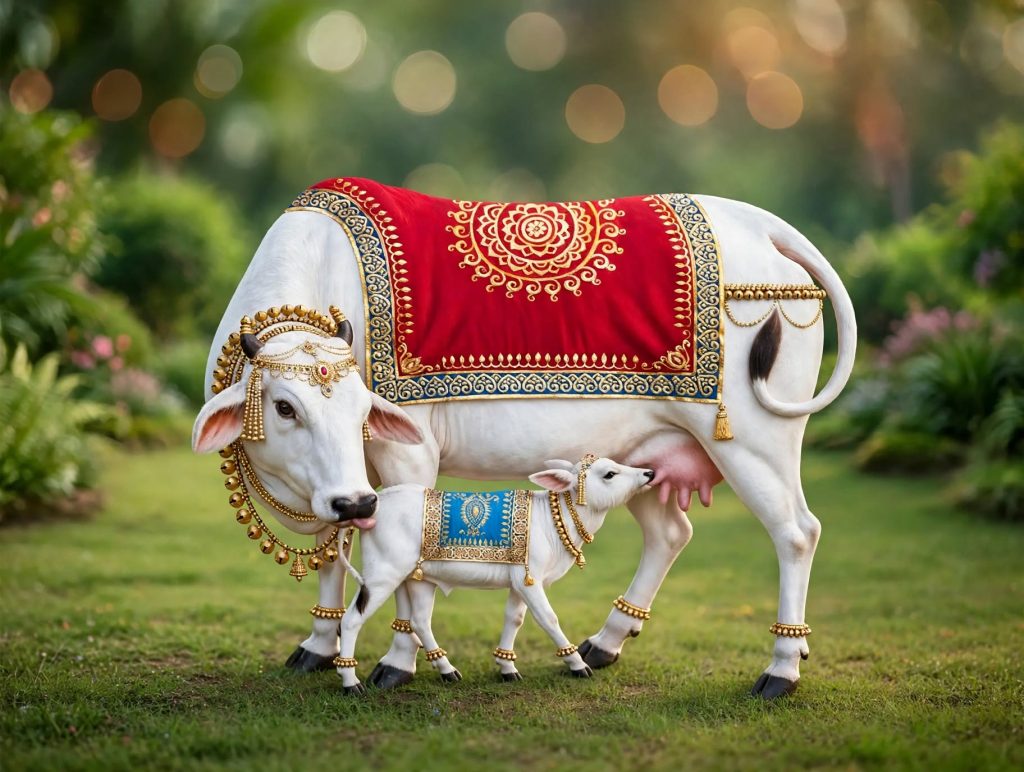
Hindu mythology tells the story of Kamadhenu, a divine cow believed to fulfil wishes and provide everything needed for life.
She represents abundance, nourishment, and generosity. This belief contributes to the sacred status of cows in Hindu traditions.
A Source of Everyday Nourishment
The cow’s importance is not limited to religious beliefs.
For generations, rural Nepali households have depended on cattle for everyday needs. Milk provides nourishment, while cow dung has traditionally supported farming and household activities.
In agricultural communities, cattle were also an important measure of household wealth.
Gai Tihar recognises this relationship by setting aside a day to honour an animal that has contributed so much to everyday life.
The Cow and Nepal’s National Identity
The cow is also Nepal’s national animal.
Its religious and cultural significance has influenced its place in Nepali society and national identity. Nepal’s legal framework also prohibits cow slaughter.
Together, these traditions reflect the importance of the cow in Nepal’s cultural and religious landscape.
How Is Gai Tihar Celebrated?
Gai Tihar is marked by a series of simple but meaningful rituals. Although practices differ between families and communities, the central idea remains the same: honouring the cow and expressing gratitude.
1. Cleaning the Surroundings
Preparations often begin with cleaning the cowshed and surrounding areas.
In traditional rural households, people may use a mixture of cow dung and red mud to clean floors. Homes and doorways are also decorated as part of the wider Tihar celebrations.
2. Washing and Decorating the Cow
Families wash their cows before the worship begins.
They then decorate them with colourful flower garlands, particularly sayapatri (marigold) and makhamali (globe amaranth).
Some households also use colourful cloth and other traditional decorations.
The sight of decorated cows is one of the most recognisable features of Gai Tihar.
3. Applying Tika
A red tika is placed on the cow’s forehead as a mark of respect and religious devotion.
Families offer prayers and seek blessings for prosperity and well-being.
4. Offering Food
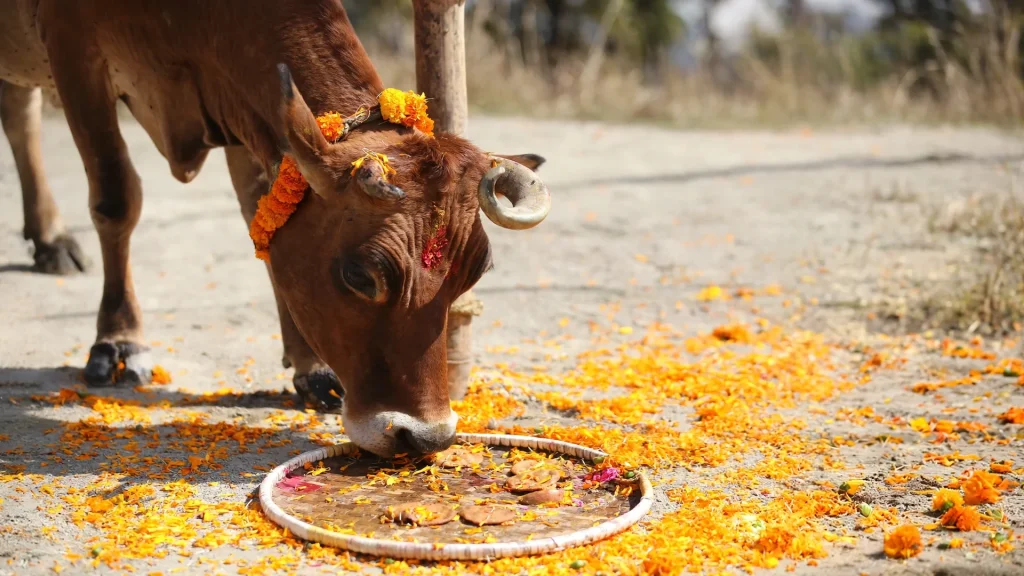
Feeding the cow is an important part of the celebration.
Families offer fresh grass, grains, and traditional treats. The food represents gratitude towards an animal that has long supported household life.
5. Performing the Puja
The family performs a traditional worship ceremony using flowers, incense, lamps, and other religious offerings.
They pray for the cow’s well-being and seek prosperity and happiness for their household.
6. The Connection With Laxmi Puja
Gai Tihar and Laxmi Puja share a close cultural and religious connection.
The cow represents nourishment and abundance, while Goddess Laxmi represents wealth and prosperity.
Families traditionally light oil lamps, decorate entrances with rangoli, and welcome Goddess Laxmi into their homes during the evening worship.
In 2026, Laxmi Puja takes place on November 8, while the designated Gai Puja falls on November 9.
What Foods Are Associated With Tihar?
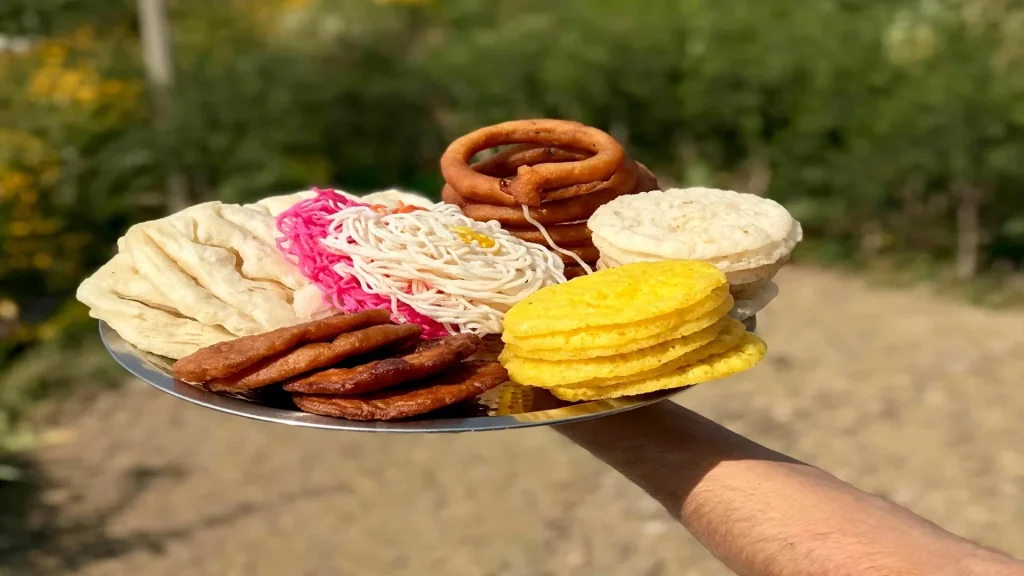
Tihar is also a time for preparing traditional Nepali sweets and festive dishes.
Families prepare special foods to share with relatives, neighbours, and visitors.
Some popular Tihar treats include:
- Sel Roti: A traditional ring-shaped rice flour bread, usually prepared by deep-frying a rice-based batter.
- Anarsa: A sweet made from rice flour and jaggery.
- Lakhamari: A traditional Newar sweet often prepared during festivals and special occasions.
- Laddu: Round sweets made with different ingredients, including flour, sugar, and nuts.
- Kheer: A sweet rice pudding prepared with milk, rice, and sugar.
Milk-based dishes also fit naturally into a celebration that honours the cow and its contribution to nourishment.
Sa Puja: The Newar Tradition
Among Newar communities, Tihar is known as Swanti. The festival follows its own cultural traditions while sharing many similarities with the wider Tihar celebrations.
Cow worship is known as Sa Puja in Newar tradition.
Newar households honour cows through traditional offerings and worship. The celebration may also include alpana designs, devotional songs, and traditional music.
Swanti continues with Mha Puja on the following day, when families worship themselves and welcome Nepal Sambat’s New Year.
This makes the period particularly important in Newar cultural life.
Read our complete guide to Mha Puja 2026 to understand the meaning and rituals behind this unique Newar celebration.
What Comes After Gai Tihar?
The celebrations continue on the following day with Govardhan Puja, Goru Puja, and Mha Puja.
Govardhan Puja
Govardhan Puja is associated with the Hindu legend of Lord Krishna lifting Govardhan Hill to protect villagers from heavy rain.
In some Nepali communities, people create a symbolic representation of Govardhan Hill using cow dung and decorate it with flowers before performing the worship.
The tradition reflects devotion to nature and the importance of the natural resources that sustain life.
Goru Puja
Goru Puja honours oxen for their contribution to agriculture.
In traditional farming communities, oxen have played an important role in ploughing fields and supporting agricultural activities.
The worship acknowledges their contribution and expresses gratitude towards working animals.
Mha Puja
Newar communities celebrate Mha Puja on the same day.
Unlike Gai Puja, which honours the cow, Mha Puja focuses on worshipping the self. It also marks the beginning of Nepal Sambat 1147 in 2026.
Gai Tihar vs. Gai Jatra: What’s the Difference?
Despite having similar names, Gai Tihar and Gai Jatra are two completely different festivals.
Both have important places in Nepali culture, but their origins, timing, and purposes are different.
| Feature | Gai Tihar | Gai Jatra |
|---|---|---|
| When | Third day of Tihar, in autumn | During August or September |
| Main purpose | Worshipping the cow | Remembering deceased family members |
| Cultural significance | Prosperity, nourishment, and gratitude | Remembrance, mourning, humour, and satire |
| Main communities | Celebrated across Nepal | Particularly associated with Newar communities |
| Main activities | Cow worship, tika, garlands, and food offerings | Processions, traditional costumes, performances, and satire |
Gai Tihar focuses on honouring the cow as a symbol of prosperity and nourishment. Gai Jatra, meanwhile, is a remembrance festival that helps families cope with the loss of loved ones.
Read our complete guide to Gai Jatra to explore the history and traditions behind the festival.
The Deeper Meaning of Gai Tihar
Beyond its religious rituals, Gai Tihar reflects values that remain relevant in everyday life.
Gratitude towards nature: The festival recognises the contribution of animals to human survival, particularly in traditional agricultural communities.
Respect for animals: Tihar dedicates different days to crows, dogs, cows, and oxen. These celebrations highlight the relationship between people and the animals around them.
Cultural continuity: Families pass down rituals and beliefs through generations, keeping traditional practices alive.
The connection between prosperity and nourishment: The cow represents the resources and nourishment that support household life. Its worship reflects the belief that prosperity is closely connected to the natural world.
How Can Visitors Experience Gai Tihar Respectfully?
If you are visiting Nepal during Tihar, Gai Tihar offers an opportunity to experience an important part of Nepali religious and cultural life.
You may see decorated cows in residential neighbourhoods, villages, and farming communities.
However, remember that the worship is a religious practice. Visitors should observe it with respect rather than treating it simply as a tourist attraction.
Here are a few things to keep in mind:
- Look for decorated cows: Explore neighbourhoods in Kathmandu, Patan, and Bhaktapur, where you may encounter families preparing for the celebration.
- Ask before taking photographs: Always seek permission from the cow’s owner before taking close-up photographs of the animal or its surroundings.
- Maintain a safe distance: Avoid sudden movements or loud noises that might frighten the animal.
- Do not interfere with the rituals: Never apply tika, place garlands, or join the worship without permission.
- Offer food responsibly: If the owner allows you to feed a cow, choose suitable fresh food and avoid plastic packaging.
- Dress appropriately: Wear modest clothing if you receive an invitation to join a household celebration.
- Respect local customs: Different families may follow different practices. Follow your host’s guidance.
For travellers interested in Nepal’s traditions, Gai Tihar offers a closer look at the country’s relationship with animals, agriculture, and religious beliefs.
Caring for Cattle Beyond Gai Tihar
Gai Tihar also provides an opportunity to think about animal welfare beyond a single day of celebration.
Showing respect to cows should extend throughout the year, not just during festivals.
A few simple practices can make a difference:
- Keep plastic away: Plastic bags and wrappers can harm cows if swallowed.
- Use safe decorations: Garlands and decorative materials should not restrict movement or cause discomfort.
- Provide clean water: Access to fresh drinking water is essential for animal health.
- Ensure proper shelter: Cows need protection from extreme weather and suitable resting spaces.
- Support animal welfare efforts: Local organisations and shelters that care for abandoned or stray cattle can benefit from community support.
The spirit of Gai Tihar becomes more meaningful when respect for animals continues beyond the festival.
Gai Tihar in the Bigger Picture of Tihar
Tihar is often described as Nepal’s festival of lights. But its celebrations also highlight the relationship between humans, animals, and nature.
Different days of the festival honour different animals, each with its own cultural significance.
- Kaag Tihar: Crows are worshipped as traditional messengers of Yama.
- Kukur Tihar: Dogs are honoured for their loyalty and their association with Yama.
- Gai Tihar: Cows are worshipped as symbols of prosperity and nourishment.
- Goru Tihar: Oxen are honoured for their contribution to agriculture.
Each celebration carries a reminder to appreciate the living world around us.
Explore our guides to Kaag Tihar and Kukur Tihar to discover more about the traditions behind these celebrations.
Final Thoughts: Why Gai Tihar Matters
Gai Tihar is more than a day of decorating and worshipping cows. It reflects a relationship built over generations between people, animals, and the natural resources that sustain everyday life.
For many Nepalis, the cow represents motherhood, nourishment, prosperity, and the blessings of Goddess Laxmi.
On November 9, 2026, families across Nepal will continue this tradition with flower garlands, tika, prayers, and special food offerings.
For visitors, witnessing Gai Tihar offers a chance to understand a side of Nepal that goes beyond its mountains and popular tourist destinations.
At its heart, the festival carries a simple message: prosperity begins with gratitude, and respect for life should never be limited to a single day.
Frequently Asked Questions About Gai Tihar
1. What is Gai Tihar?
Gai Tihar is the traditional cow worship day celebrated during Tihar in Nepal. Families decorate cows with flower garlands, apply tika, offer food, and perform religious rituals.
2. When is Gai Tihar in 2026?
Gai Tihar falls on Monday, November 9, 2026 (Kartik 23, 2083 BS).
3. Why do Nepalis worship cows during Gai Tihar?
Cows represent prosperity, nourishment, and wealth in Hindu belief. Many devotees also associate them with Goddess Laxmi. Their contribution to traditional farming and household life adds to their cultural importance.
4. What do people offer cows during Gai Tihar?
Families traditionally offer fresh grass, grains, and sweets. They also decorate cows with marigold garlands and apply red tika to their foreheads.
5. Is Gai Tihar the same as Laxmi Puja?
No. Gai Tihar is dedicated to cow worship, while Laxmi Puja honours Goddess Laxmi. In 2026, Laxmi Puja falls on November 8, and Gai Tihar on November 9.
6. What is Sa Puja?
Sa Puja is the Newar name for cow worship during Swanti, the Newar version of Tihar.
7. Is Gai Tihar the same as Gai Jatra?
No. Gai Tihar is a day of cow worship during Tihar. Gai Jatra is a separate Newar festival dedicated to remembering deceased family members.
8. Is the cow Nepal’s national animal?
Yes. The cow is Nepal’s national animal. Nepal’s legal framework also prohibits cow slaughter.
9. What comes after Gai Tihar?
Govardhan Puja, Goru Puja, and Mha Puja follow on November 10, 2026. Bhai Tika is celebrated on November 11.
10. Can tourists participate in Gai Tihar?
Visitors can experience the celebrations by observing public festivities or accepting invitations from local families. Always ask permission before photographing or interacting with cows.