



Nepal has paused trekking in its highest and riskiest regions. The Department of Immigration has suspended the issuance of trekking permits for high-risk Himalayan and high-altitude areas from October 29 to 31. The reason is the forecast of heavy snowfall, snowstorms, and avalanches linked to Cyclone Arnab. This report explains what the notice says, who it affects, and what trekkers should do now.
This is a developing story. Conditions may change quickly. So, follow official updates before making any decision about the mountains.
What the Department of Immigration Announced
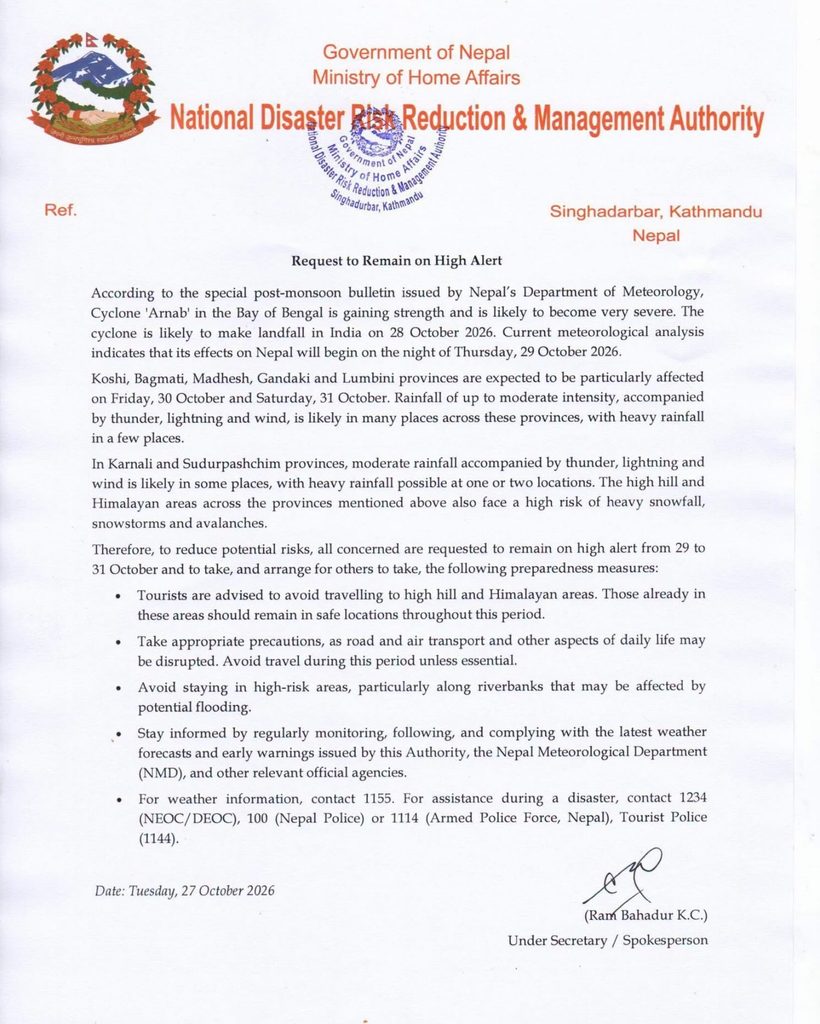
The notice was issued on Tuesday, October 27. The department will suspend permits for high-risk areas for three days, from October 29 to 31. The suspension took effect immediately.


The notice also goes beyond new permits. It urges tourists and trekkers to avoid high-risk areas during this period. Those already in the affected regions are advised to stay in safe locations until the weather improves.
A Call to Stop, Not Just to Wait
Department Director Surya Prasad Chapagain said all tourists and trekkers should not begin trekking, or should stop at safe places. This applies even to people who already hold permits for restricted areas. In other words, a valid permit does not make a trek safe.
Based on Disaster Authority Data
According to Himalayan Tribune, the department acted on information from the National Disaster Risk Reduction and Management Authority (NDRRMA). The notice covers possible heavy rainfall, snowfall, snowstorms, and avalanches on October 29 to 31.
Agencies and Guides Must Follow the Advisory
Trekking agencies and guides have been asked to follow the safety advisory. This matters because most foreign trekkers now travel with licensed guides. Agencies are the link between the notice and the people on the trail.
Which Permits Are Suspended?
It helps to be precise here. The Department of Immigration issues permits for restricted areas in high-hill and Himalayan regions. IANS reports that the suspension covers these restricted-area permits. Regions such as Upper Mustang and Dolpo fall into this category, and permits cannot be self-applied for. They must go through a registered trekking agency.
Other trekking regions use different permits. Conservation area and national park permits come from other bodies. However, the department’s public appeal is broader than its own permits. It urges all trekkers to avoid high-risk areas. So, even where a different permit applies, the safest choice is to follow the advisory.
Why Now? The Weather Behind the Suspension
The decision follows warnings about Cyclone Arnab, which has been strengthening over the Bay of Bengal. The Department of Hydrology and Meteorology (DHM) says the system is expected to begin affecting Nepal from Thursday night, October 29. Friday and Saturday are expected to be the most active days.
DHM has warned of a risk of heavy snowfall, snowstorms, and avalanches in high-hill and Himalayan areas. It advised tourists to avoid high-altitude destinations. It also marked several Himalayan districts red to show higher risk.
Reports on Wednesday, October 28, said Arnab had made landfall on India’s Andhra Pradesh coast. Its moisture and wind effects are now expected to move toward Nepal.
Wider Warnings From the Disaster Authority
The disaster authority issued a separate advisory warning that road and air transport, along with daily activities, could face disruptions. It urged people to avoid non-essential travel during this period and stay away from high-risk areas, especially riverbanks vulnerable to flooding.
What Trekkers Already on the Trail Should Do
If you are already in the mountains, act early. Weather can worsen faster than a trek can adjust.
- Stay in a safe place. Remain in a lodge or teahouse in a lower, sheltered village.
- Do not cross high passes. Wait until conditions clear and officials say it is safe.
- Contact your guide and agency. Agree on a plan before the weather arrives.
- Conserve supplies. Keep food, warm clothing, and phone battery in reserve.
- Share your location. Tell someone at home where you are and what you plan to do.
- Do not push on to keep a schedule. A delay is far safer than a rescue.
What Trekkers Who Have Not Started Should Do
Postpone. The suspension is short. Three days is a small price compared with the risk of being stranded or caught in an avalanche.
- Ask your agency how it plans to adjust your itinerary.
- Check whether your flights or road transfers might be disrupted.
- Review your travel insurance for weather delays and rebooking costs.
- Build buffer days into your plan, since weather delays often run longer than expected.
- Keep checking DHM and NDRRMA updates, since dates could shift.
What Agencies, Guides, and Lodge Owners Should Do
The department has asked agencies and guides to follow the advisory. In practice, that means:
- Not sending groups into high-risk areas during the three-day window.
- Contacting clients already on trek and moving them to safer locations.
- Passing on official warnings quickly, since mobile coverage in remote areas can be poor.
- Preparing contingency plans for food, shelter, and communication if groups are delayed.
Why Caution Makes Sense in Nepal
Nepal has painful experience with sudden storms. In October 2014, a snowstorm in central Nepal killed at least 43 people, including at least 21 trekkers. At the time, no system existed to warn trekkers about weather along their route.
More recently, Cyclone Montha affected Nepal in October 2025. Hundreds of trekkers heading toward Tilicho Lake had to turn back when snow blocked the trails, and reports link the cyclone to a disastrous avalanche in November 2025. Some coverage of the current suspension also recalls the devastating floods of August 26 this year.
These events explain why officials now act early. A pause before a storm is far less costly than a rescue during one.
Disruption Beyond the Mountains
The effects may not stay in the Himalayas. DHM warned that rain and snow could cause floods, landslides, road blockages, and air service disruptions. Travelers heading to or from mountain regions should expect possible delays. This includes domestic flights to places like Lukla and Jomsom, which already depend on clear weather.
If you are traveling by road, avoid night driving during heavy rain. Check road conditions with local authorities before you leave.
What to Watch Next
- DHM bulletins: These will show whether the storm weakens, strengthens, or shifts.
- Department of Immigration notices: The three-day window could be lifted early or extended.
- NDRRMA alerts: These will flag flood and landslide risk by district.
- Your agency or guide: They often receive local updates first.
Final Thoughts
The Department of Immigration’s decision is clear and cautious. Permits for high-risk Himalayan and high-altitude areas are suspended from October 29 to 31. Trekkers are urged to stay out of danger zones or stop in safe places. Agencies and guides are expected to follow. For most people, the right response is simple: postpone, stay flexible, and listen to official updates. The mountains will still be there next week. Staying safe now keeps that choice open.
Frequently Asked Questions
Which dates are trekking permits suspended in Nepal?
The Department of Immigration has suspended permits for high-risk Himalayan and high-altitude areas from October 29 to 31, 2026.
Why were trekking permits suspended?
Forecasts warn of heavy snowfall, snowstorms, and avalanches in high-hill and Himalayan regions as Cyclone Arnab’s effects reach Nepal.
Can I still trek if I already have a restricted-area permit?
The department urges even permit holders not to start trekking, or to stop at safe places, during the three-day window.
What should trekkers already in the mountains do?
Stay in a safe location, avoid crossing high passes, stay in contact with your guide and agency, and wait until the weather improves.
Does this affect all trekking routes in Nepal?
The suspension covers restricted-area permits issued by the department. However, officials urge everyone to avoid high-risk areas, so postponing is the safest choice on any high-altitude route.
Where can I find official updates?
Check the Department of Hydrology and Meteorology, the National Disaster Risk Reduction and Management Authority, the Department of Immigration, and your trekking agency.


