



Most travelers blow straight through Palpa without stopping. They see it as a road sign on the long haul between Pokhara and the Indian border, a place to grab tea while the bus refuels. That is the mistake, because Tansen Palpa is one of the few towns in Nepal where medieval streets, Himalayan views, and living craft traditions all sit within a fifteen-minute walk of each other, and almost nobody is there to crowd the view.
Tansen is the administrative center of Palpa District in Lumbini Province, perched at roughly 1,350 meters (about 4,430 feet) on the crest of the Mahabharat Range. Below it, the Kali Gandaki River carves its way north toward Mustang. Locals will tell you time moves slower here, and they are not wrong.
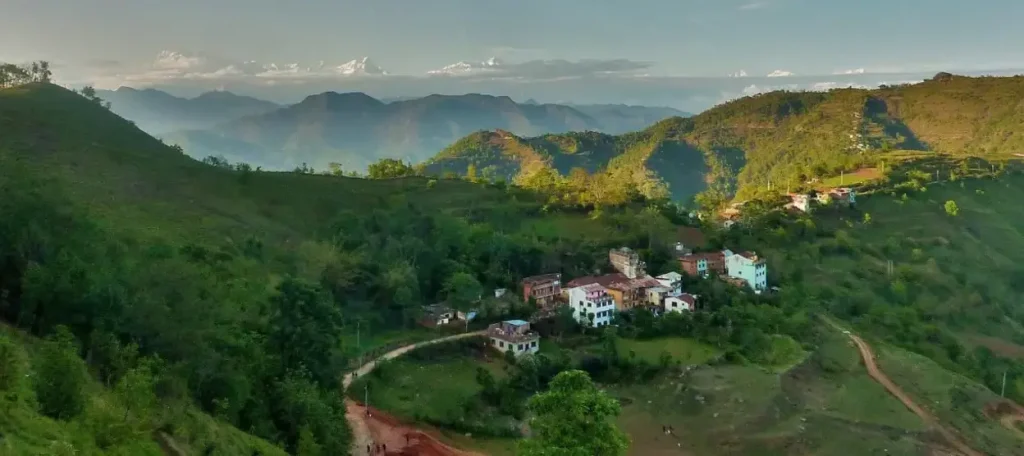
Why Tansen Palpa deserves more than a coffee stop
Here is what most guides won’t tell you: Tansen was once a serious power. It served as the capital of the Magar kingdom of Barha Magarat, and in the 16th century, under King Mukunda Sen, its armies came close to overrunning Kathmandu. The name itself comes from the Magar language and means “northern settlement.”


After the Magar kings faded in the 1700s, Newar traders from Kathmandu moved in and turned Tansen into a busy bazaar on the trade route linking India and Tibet through the Kali Gandaki gorge. That heritage is stamped into the town. Narrow cobbled alleys, tightly packed Newari shophouses, brass workshops, and temples all cluster around a market square where the pace feels a century removed from Nepal’s traffic-choked cities.
Roughly 31,000 people live here, and the town wears its history casually. You can wander the old quarter for an afternoon and pass metalworkers hammering water jugs by hand, weavers threading looms with cotton, and shopkeepers who have run the same stall for generations.
The landmarks worth your time
Rani Mahal, the “Taj Mahal of Nepal”
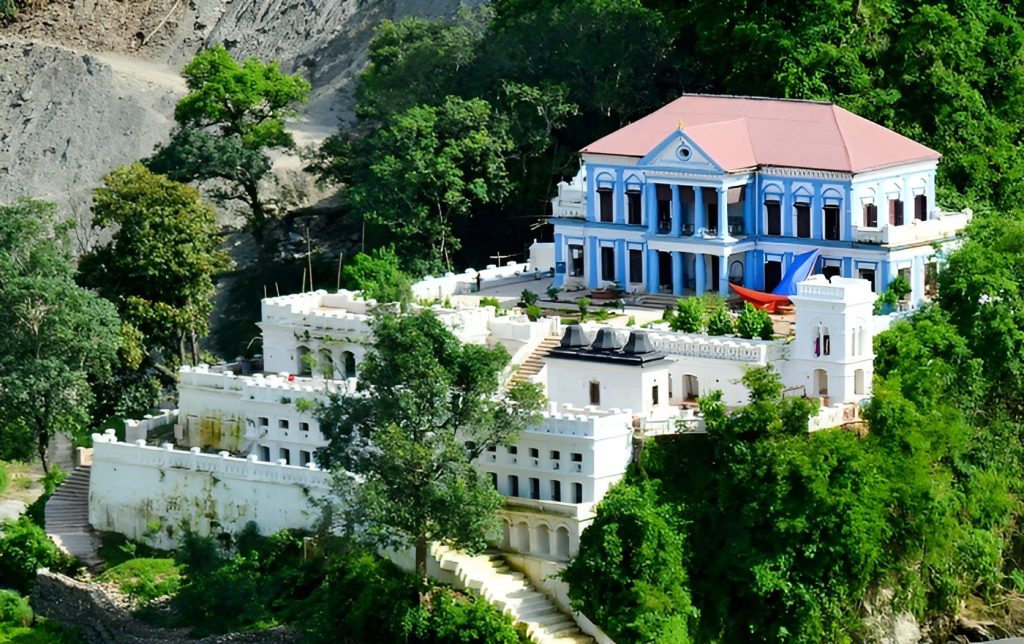
Down at the edge of the Kali Gandaki sits Rani Mahal, often called Nepal’s Taj Mahal. General Khadga Shamsher Rana built it in the late 19th century in memory of his late wife, Tej Kumari. Its faded European-style facade rising above the riverbank is genuinely striking, especially in soft morning light.
Getting there is half the experience. The walk down from Tansen takes around two hours through cornfields, small hamlets, and forest, and the climb back up runs closer to four. If your legs vote no, shared jeeps leave from near the Amar Narayan Temple. As of early 2025, the jeep fare was roughly 140 rupees each way, though departures are limited and worth confirming locally before you commit to a walk-out.
Srinagar Danda for the Himalaya
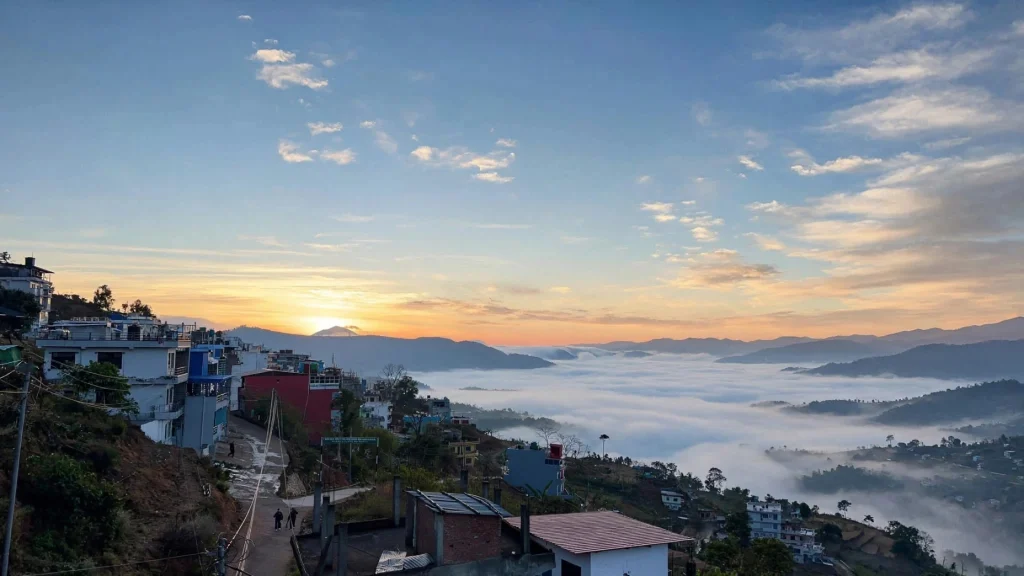
Just north of town, Srinagar Danda (also spelled Shreenagar) rises to about 1,600 meters. A gentle thirty-minute walk through pine and rhododendron gets you to the top. On a clear morning the payoff is a wall of white peaks stretching across the horizon: Kanjiroba, Dhaulagiri, Annapurna, Machhapuchhre, Ganesh, and the Langtang groups, all visible from a single grassy ridge. Sunrise is the move here. Bring a jacket, because the ridge catches the wind.
Amar Narayan Temple
Built in the late 18th century, Amar Narayan is a three-tiered pagoda widely considered one of the most beautiful temples outside the Kathmandu Valley. Its wooden struts are carved with deities and, in the older Nepali tradition, a few frank erotic figures. Late afternoon, when the gold-plated roof catches the sun and the surrounding courtyard fills with the smell of incense, is when it feels most alive.
Bhagwati Temple and the town square
Rana Ujeshwori Bhagwati Temple carries real historical weight. Governor Ujir Singh Thapa rebuilt it in 1815 to mark a Nepali victory over British-Indian forces in a battle near Butwal. Every August, the town stages a chariot procession, Bhagwati Jatra, that turns the streets into a moving festival. Nearby, at the Sitalpati square, stands the Golghar, an octagonal white pavilion that functions as the symbolic heart of Tansen.
The crafts: dhaka cloth and karuwa
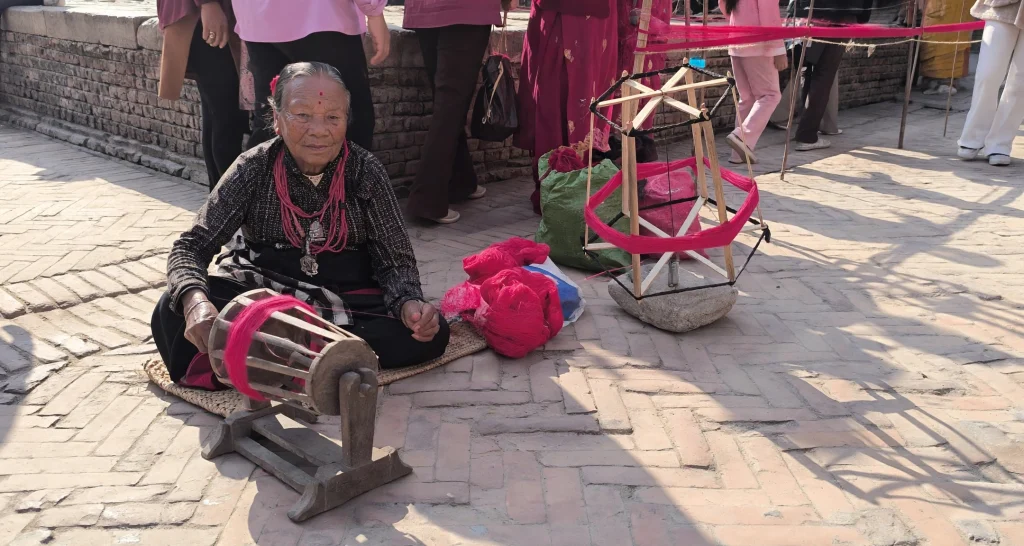
Two things put Palpa on Nepal’s cultural map. First is dhaka fabric, the intricately patterned cotton cloth used to make the dhaka topi, the traditional Nepali hat you have seen in every formal photograph of a Nepali man. Second is the karuwa, a spouted brass water jug that local metalworkers still shape by hand.
You can buy both directly from the workshops in the old bazaar, and prices are a fraction of what you would pay in a Thamel tourist shop. Watching a craftsman finish a karuwa is worth an hour on its own. These are not souvenirs churned out for tourists. They are everyday objects made the way they have been made for generations.
Getting to Tansen
Tansen sits on the Siddhartha Highway, which links Butwal in the south with Pokhara in the north, so it is genuinely easy to fold into a wider western Nepal loop.
- From Pokhara: The distance is around 122 kilometers, and the drive takes roughly four to six hours depending on road conditions. A tourist bus typically leaves Pokhara’s Tourist Bus Park once a day, around 8:30 am. As of early 2025, the fare was approximately 800 rupees, but check the current price at the counter.
- From Kathmandu: Expect about 300 kilometers and a long day on the road. There is often no convenient direct service, so the reliable route is a bus to Butwal followed by a shared jeep or local bus up to Tansen, a final leg of about ninety minutes.
- By air: The nearest airport is at Bhairahawa (Gautam Buddha Airport), near Lumbini, roughly 62 kilometers away. From there it is about two hours to Tansen by bus or jeep.
If you are already planning a stop in Buddha’s birthplace, Tansen pairs naturally with a visit described in our Lumbini travel guide, since they share the same corner of the country.
When to go
Autumn wins, hands down. From late September through November you get mild days, crisp air, and the clearest mountain views of the year. Spring, from March to May, is the runner-up, warmer but hazier. Tansen enjoys a moderate climate where temperatures rarely push past 30 degrees Celsius or drop below freezing, which makes it a comfortable escape from the Terai heat below.
Monsoon, from June through August, drenches the hills. Roads get slippery and views vanish behind cloud, though the terraced landscape turns an almost unreal green. For a fuller month-by-month breakdown, our guide to the best time to visit Nepal lays out the tradeoffs.
Where Tansen fits in your trip
Think of Tansen as the antidote to the tourist circuit. It is not trying to sell you anything. A visit rewards slow travelers, culture nerds, photographers, and anyone who wants to see a working Nepali hill town rather than a curated version of one. Two nights is enough to hit the highlights without rushing. Pair it with the lakeside energy of Pokhara, covered in our Pokhara travel guide, and you get a satisfying contrast: one town built for visitors, the other largely indifferent to them, and better for it.
For official destination information, the Nepal Tourism Board’s Palpa page is a solid starting point, and the town’s deeper history is well documented on its Wikipedia entry.
Frequently asked questions about Tansen Palpa
How high is Tansen and will I feel the altitude?
Tansen sits at about 1,350 meters, with Srinagar Danda just above at around 1,600 meters. That is high enough for cool, pleasant air but far too low for altitude sickness to be a concern. Anyone in normal health can walk the town and the nearby ridges comfortably.
How many days do I need in Tansen?
Two nights is the sweet spot. That gives you one full day for the old bazaar, temples, and craft workshops, plus a morning at Srinagar Danda and the Rani Mahal hike. Add a third night if you want to slow right down or explore surrounding villages.
Is Tansen safe for solo and female travelers?
Yes. Tansen is a quiet, community-oriented town with very low crime, and it is increasingly popular with solo and couple travelers. Normal common sense applies, especially on longer walks like the Rani Mahal trail, where it helps to start early and let your guesthouse know your plan.
What is the best way to reach Rani Mahal?
You can walk down in roughly two hours and climb back in about four, or take a shared jeep from near the Amar Narayan Temple. Many people walk one way and ride the other. Whichever you choose, carry water and start early, as afternoon heat and limited transport can catch people out.
What should I buy in Palpa?
Two things stand out: dhaka cloth, the patterned cotton used for the traditional dhaka topi, and the handmade brass karuwa water jug. Both come straight from local workshops in the bazaar and cost far less than in the big-city tourist markets.
Is Tansen worth visiting during the monsoon?
It can be, if you accept the tradeoffs. Mountain views mostly disappear behind cloud and the roads get rough, but the hills turn a vivid green and the town is even quieter than usual. If clear Himalayan panoramas are your goal, wait for autumn instead.
Can I visit Tansen as a day trip?
Realistically, no. The distances from both Pokhara and Kathmandu are too long to make a same-day return worthwhile, and the whole appeal of Tansen is its unhurried pace. Plan to stay at least one night to actually experience the place.
Are there good places to stay in Tansen?
Yes. Tansen has a decent spread of guesthouses, small hotels, and a few heritage-style properties, several with ridge or valley views. Standards are simple rather than luxurious, which fits the town, and booking ahead is wise during the autumn peak and major festivals.


