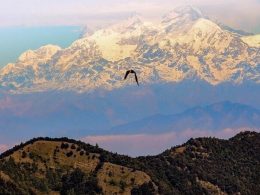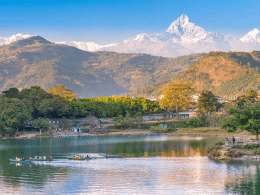



Picture this: you’re sitting on a wooden boat in the middle of a glassy lake, and the entire Annapurna massif is reflected in the water beneath you. No traffic noise, no honking, just the soft splash of your oar and a fish hawk circling overhead. That’s a Tuesday morning in Pokhara. If Kathmandu is Nepal’s beating heart, then Pokhara travel guide searches exist because this lakeside city is the country’s soul. It’s where travelers come to exhale. And once you arrive, you’ll understand why so many people extend their stay by a week or more.
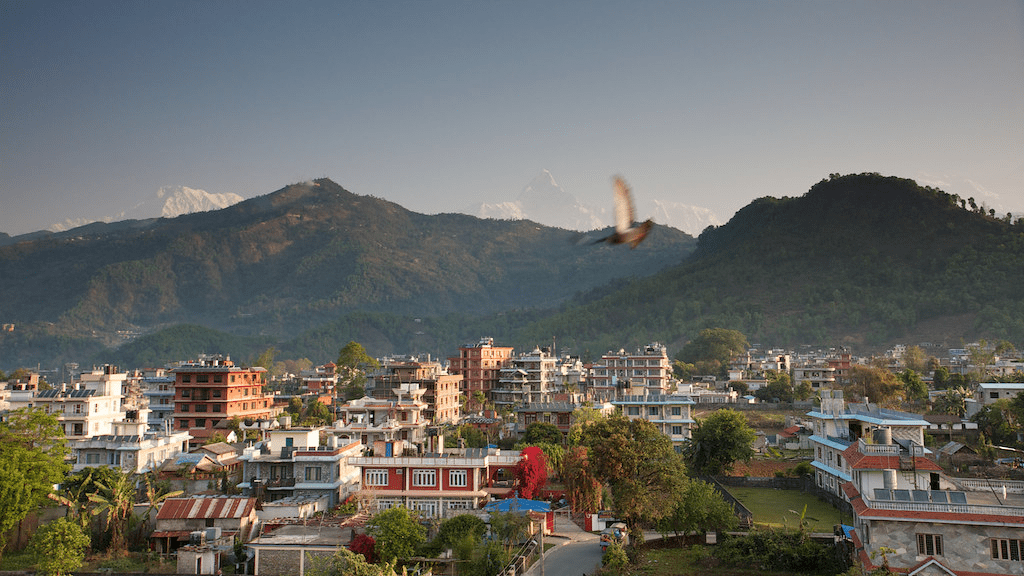
Pokhara sits roughly 200 kilometers west of Kathmandu in the Gandaki Province. At an elevation of about 827 meters, it stays warm and pleasant when the capital feels chaotic and dusty. The city is Nepal’s second-largest, but it doesn’t feel like it. Wide streets, relaxed lakeside cafes, and mountain views that hit you from random corners make it feel more like a large village with great restaurants. Most visitors use it as a base for trekking the Annapurna region, but here’s what most guides won’t tell you: Pokhara deserves more than a stopover. It’s a destination in itself.
How to Get to Pokhara
You have three main options for getting to Pokhara from Kathmandu, and the one you pick says a lot about your travel style.
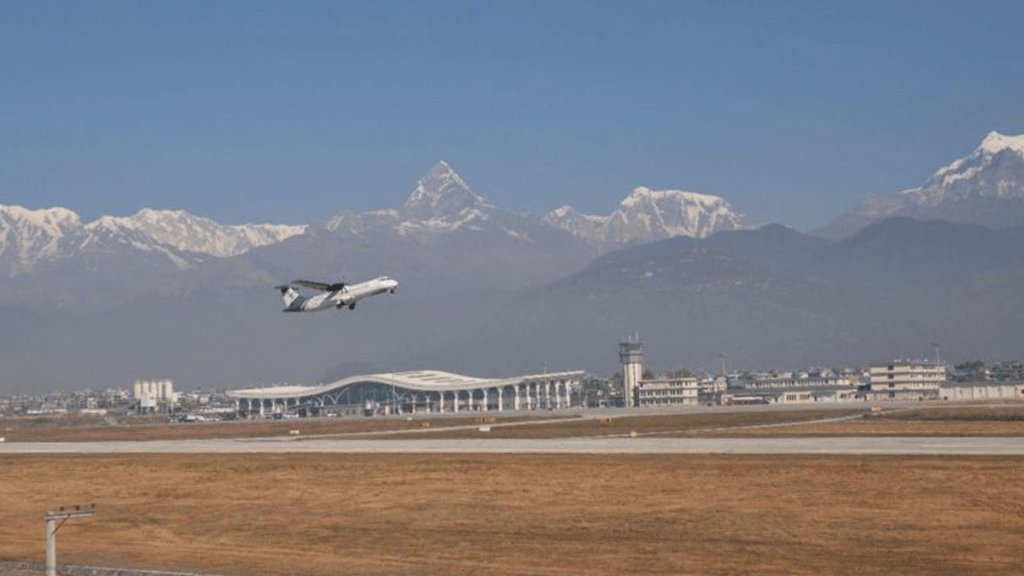
Flying is the fastest route. Flights from Tribhuvan International Airport to the new Pokhara International Airport take about 25 minutes and cost between $80 and $130 depending on the season and airline. The aerial views of the Himalayan peaks along the way are worth every rupee. Buddha Air and Yeti Airlines operate multiple daily flights.
Tourist buses are the most popular option for budget travelers. They leave from Kathmandu’s Sorakhutte bus park every morning around 7 AM and take about 6 to 7 hours. A ticket costs between $12 and $20 depending on the operator. Greenline and Mountain Overland are two reliable companies. You’ll get air conditioning, a lunch stop in Kurintar or Riverside Springs, and decent legroom.
Local buses are the cheapest option at around $5, but they’re also the slowest, often taking 8 hours or more with frequent stops. Unless you’re on a very tight budget or enjoy an authentic Nepali experience with goats potentially sharing your seat, stick with a tourist bus or flight.
Where to Stay in Pokhara
Almost every tourist ends up in the Lakeside area, and for good reason. It stretches along the eastern shore of Phewa Lake and packs in hotels, restaurants, travel agencies, and shops within easy walking distance. You won’t need a taxi for most things if you stay here.
Budget travelers can find clean guesthouses and hostels starting at $5 to $10 per night. For that price, expect a private room with a fan, hot shower, and Wi-Fi. Mid-range hotels in the $25 to $50 range offer lake views, rooftop terraces, and breakfast included. If you want something upscale, places like Waterfront Resort and Temple Tree Resort go for $80 to $200 per night with swimming pools and spa facilities.
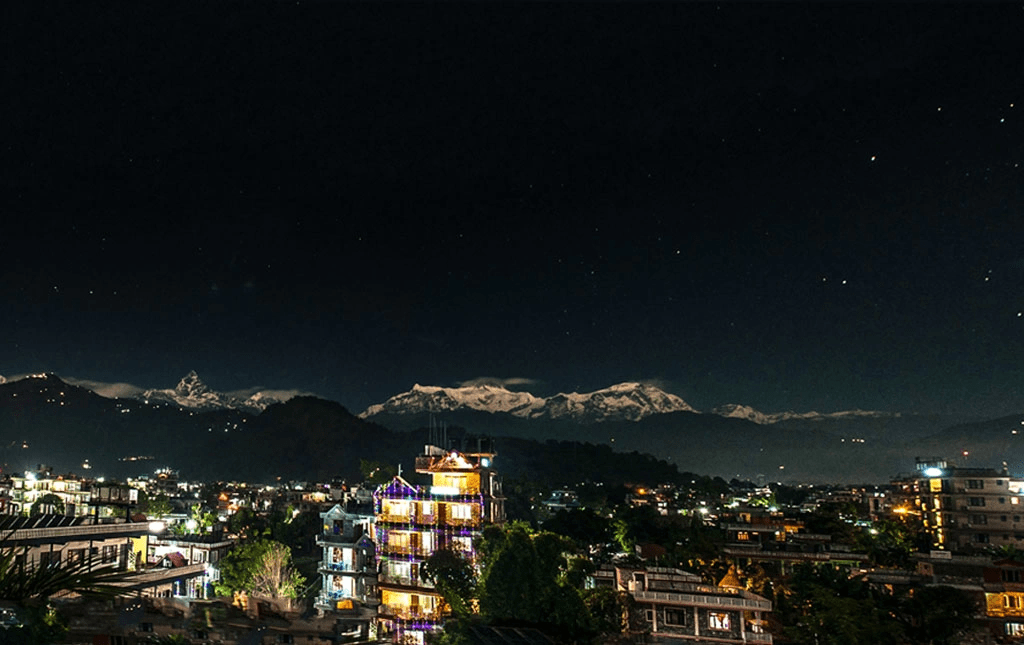
A quick tip: the northern end of Lakeside (around Baidam) tends to be quieter and slightly cheaper. The southern stretch near Hallanchowk is busier with more nightlife options. Pick your vibe accordingly.
Top Things to Do in Pokhara
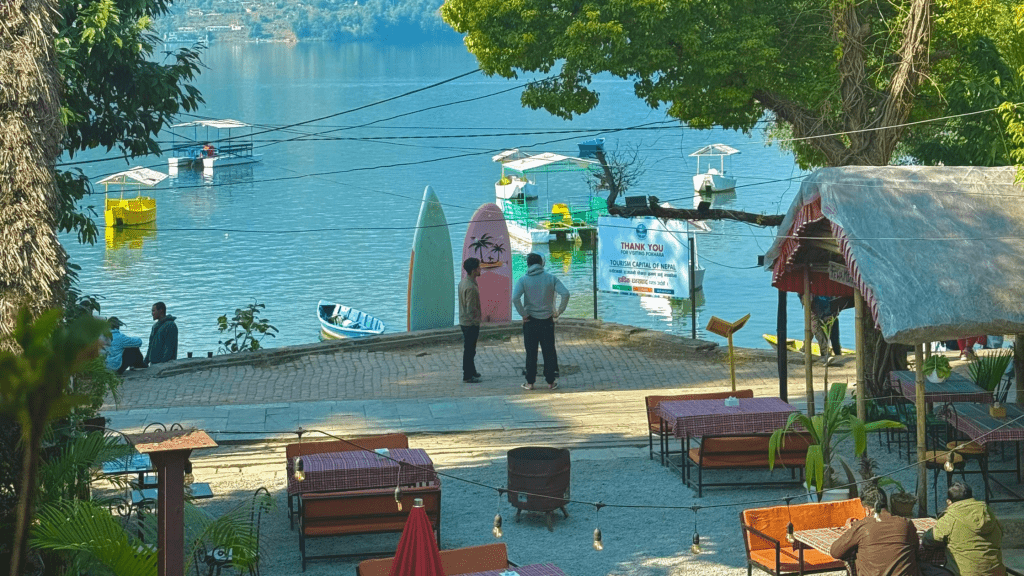
Boat on Phewa Lake
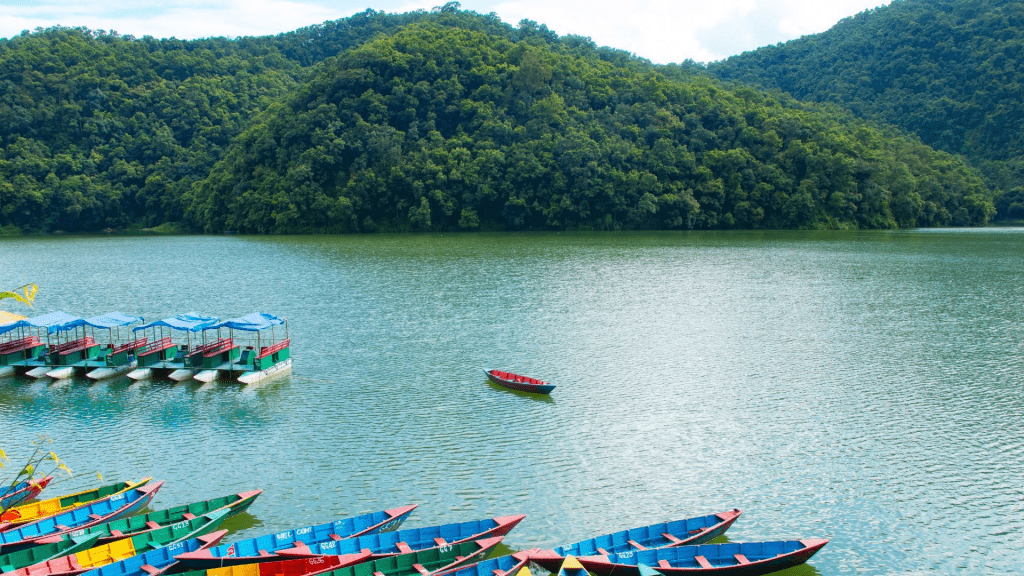
It would be almost criminal to visit Pokhara and skip a boat ride on Phewa Lake. It’s the second-largest lake in Nepal, and on a clear morning, the Annapurna range and Machapuchare (Fishtail Peak) reflect perfectly on its surface. You can rent a colorful rowboat for about NPR 400 to 600 per hour and paddle at your own pace. Head to the Tal Barahi Temple, a small two-story pagoda sitting on an island in the middle of the lake. It’s dedicated to the Hindu goddess Barahi, and the short boat ride there is one of those simple pleasures that stays with you.
Watch Sunrise from Sarangkot
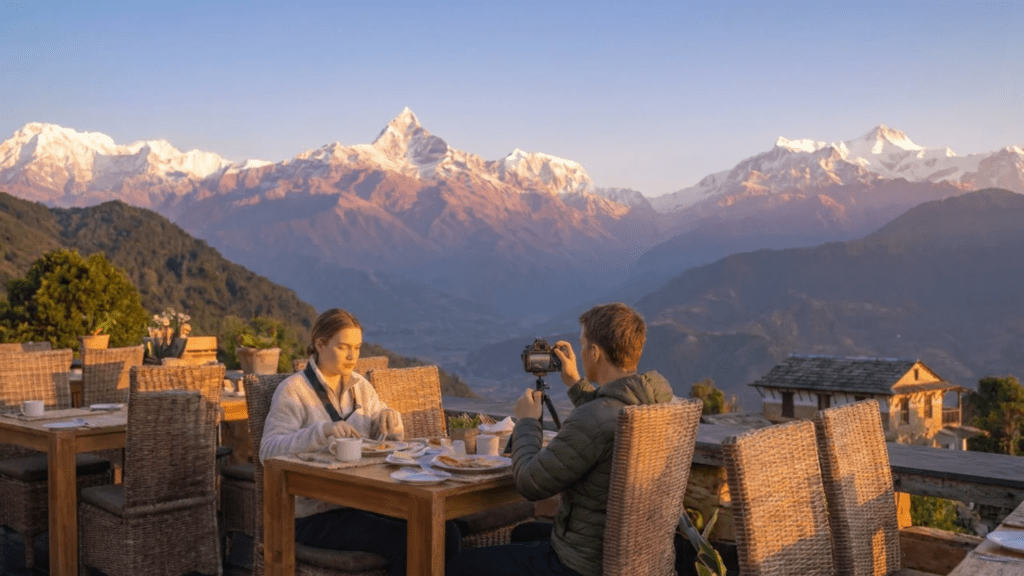
Set your alarm for 4:30 AM. Yes, it’s painful. No, you won’t regret it. Sarangkot sits at 1,592 meters above sea level and offers one of the most jaw-dropping sunrise views in all of Nepal. As the first light hits the snow-capped peaks of Dhaulagiri, Annapurna I, Annapurna III, and Machapuchare, the mountains turn from grey to gold to blazing orange in minutes. A taxi from Lakeside costs about NPR 1,000 to 1,500 each way, or you can hike up in about 45 minutes if you start early enough.
Go Paragliding Over the Valley
Pokhara is one of the best places on Earth for tandem paragliding. Flights launch from Sarangkot and glide over the valley for 20 to 30 minutes before landing near the lake. You’ll see Phewa Lake, terraced farmland, and the Himalayan skyline all at once.
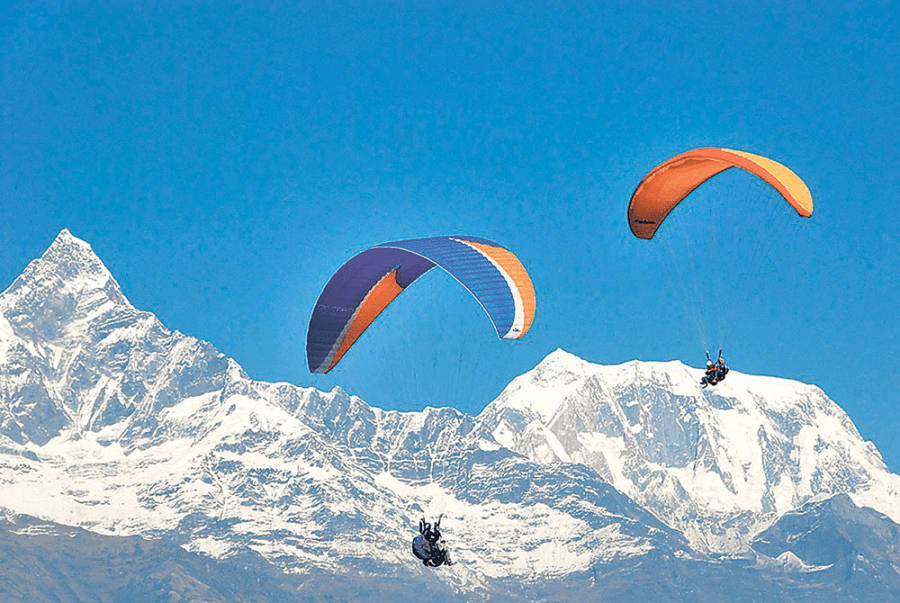
Standard tandem flights cost between NPR 8,500 and NPR 13,000 for foreigners, and a GoPro photo-video package runs an additional NPR 2,000. Companies like Sunrise Paragliding and Blue Sky Paragliding have solid safety records. Book a morning flight for the smoothest thermals and clearest views.
Explore the Caves and Waterfalls
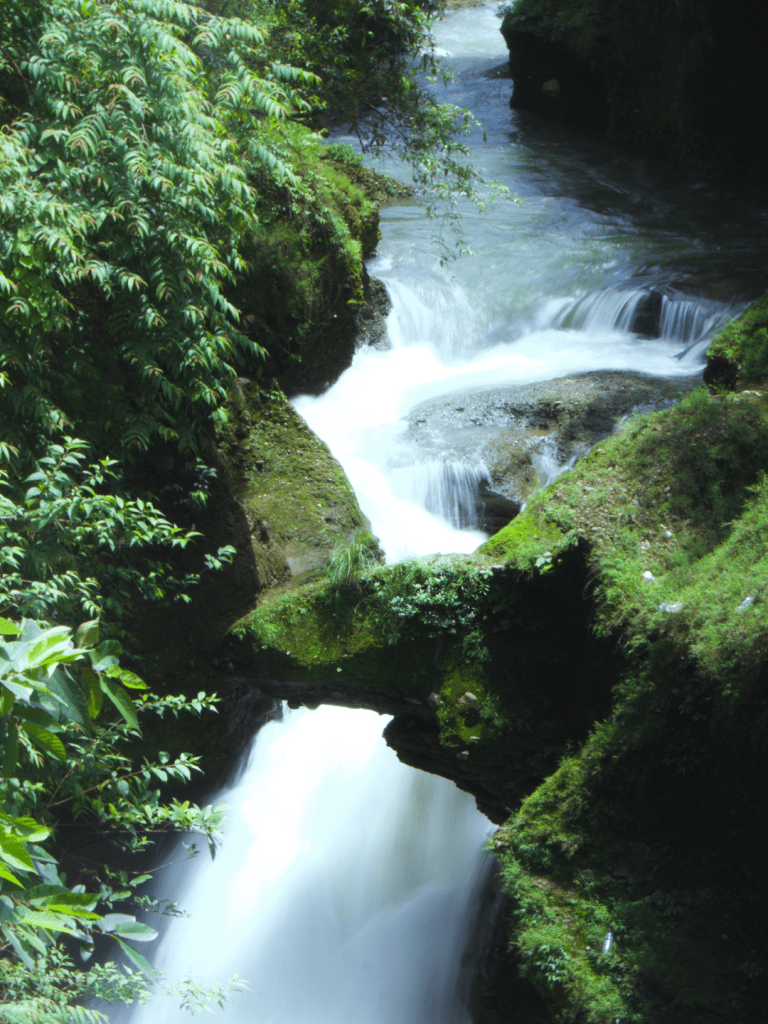
Devi’s Fall (also called Patale Chhango) is a waterfall that literally disappears into an underground tunnel beneath the road. During monsoon season, the force of the water is genuinely impressive. Right across the street sits Gupteshwor Mahadev Cave, a limestone cavern filled with stalactites and a sacred Shiva shrine. Entry to each costs about NPR 100 for foreigners. They’re touristy, sure, but seeing a waterfall plunge into the earth from inside a cave is something you don’t experience every day.
Hike to the World Peace Pagoda
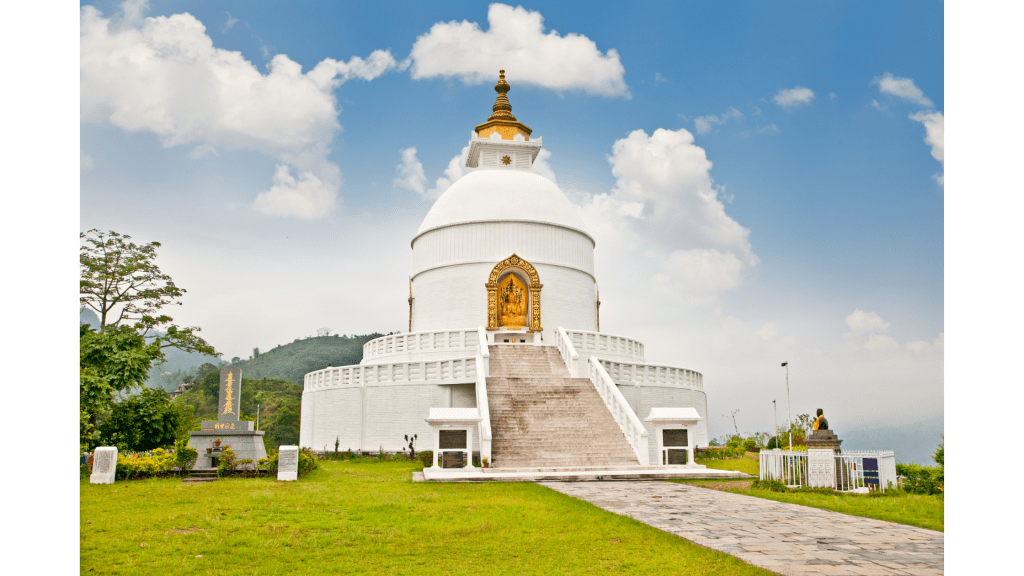
The Shanti Stupa (World Peace Pagoda) sits on a ridge south of Phewa Lake and offers some of the best panoramic views in the city. You can get there by boat across the lake and then hiking uphill for about 30 to 40 minutes, or by driving around. The pagoda itself is a white Buddhist stupa built by Japanese monks, and it’s a peaceful spot to sit and take in the 360-degree views of the lake, the city, and the mountains all at once. Early morning visits are quietest.
Visit the International Mountain Museum
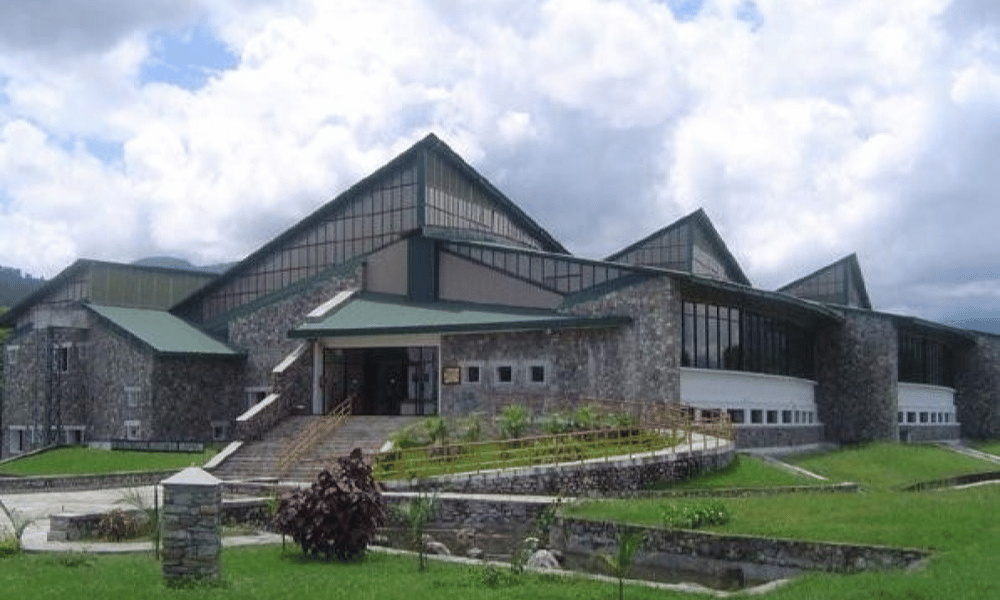
If you’re curious about the history of Himalayan mountaineering, this museum on the southern edge of the city covers everything from the geology of the Himalayas to the stories of legendary climbers. There are exhibits on all fourteen 8,000-meter peaks, the cultures of mountain communities, and even the gear used on early Everest expeditions. Entry is NPR 500 for foreigners. It’s an easy way to spend a couple of hours, especially on a cloudy day when the mountain views are hiding.
Try a Tibetan Cooking Class
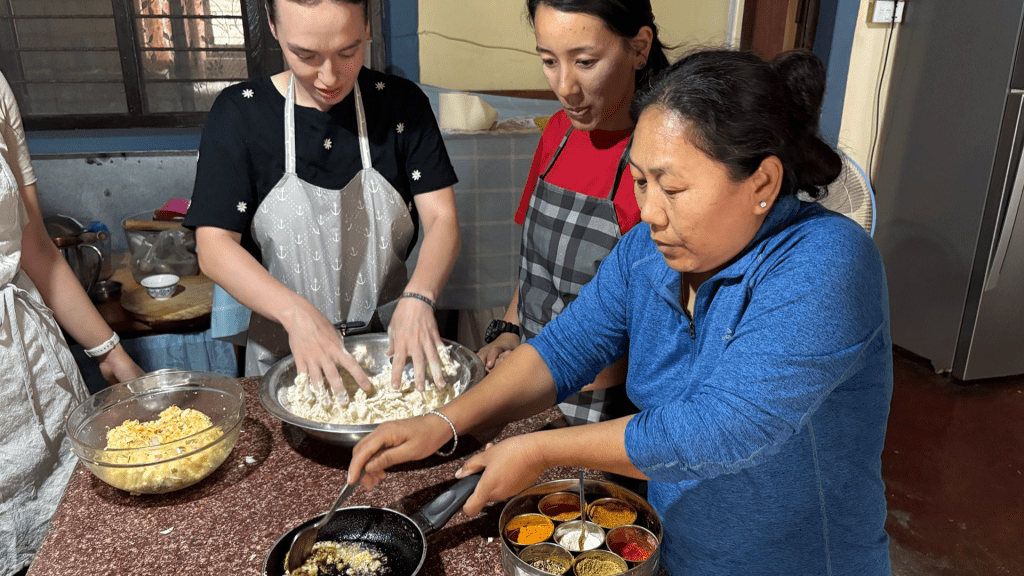
Several places in Pokhara offer cooking classes where you learn to make momos (Nepali-Tibetan dumplings) from scratch. The Tibetan refugee camp near Tashiling has classes run by local women who’ve been folding dumplings for decades. You’ll learn to mix the filling, shape each momo by hand, and steam them. Classes usually last 2 to 3 hours and cost around NPR 2,000 to 3,000. You eat everything you make, which is honestly the best part.
Where to Eat in Pokhara
Lakeside is packed with restaurants ranging from budget Nepali joints to international kitchens. Here’s the thing: you can eat incredibly well in Pokhara without spending much at all.
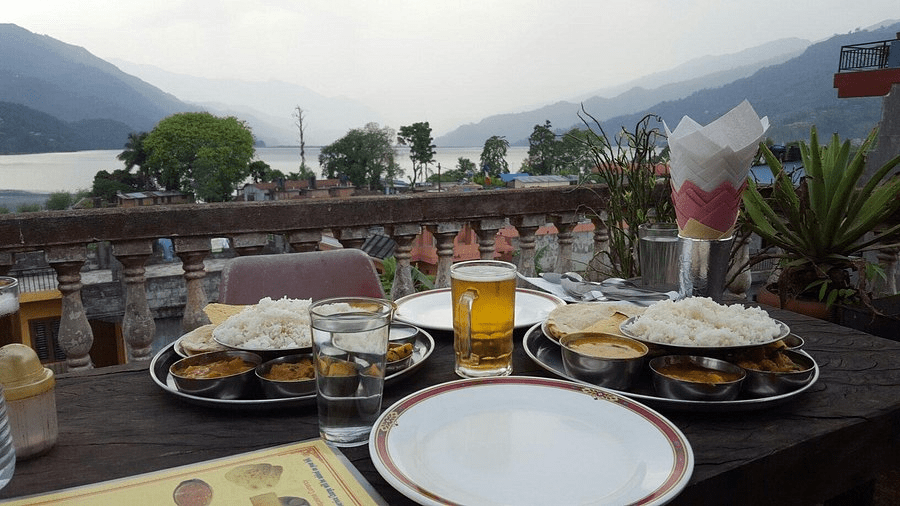
For momos, head to TashiLing Tibetan Restaurant for hand-folded dumplings that are soft, juicy, and ridiculously good. MoM’s Cafe on Baidam Road serves creative momo variations including their famous chilli chicken momos. A plate of steamed momos starts at just NPR 150 on the street, or around NPR 350 to 500 at sit-down restaurants.
Dal bhat (lentil soup with rice, vegetables, and pickles) is the national meal, and Thakali Kitchen does a version that will make you understand why Nepalis eat it twice a day. Expect to pay NPR 400 to 600 for a generous thali set.
For breakfast and healthy bowls, the Juicery Cafe at the northern end of Lakeside has great acai bowls and shakshuka in a garden overlooking the lake. Movie Garden is the spot for pizza and a unique experience: they screen a film in the garden every evening at 7 PM. Caffe Concerto, open since 1987, serves solid Italian-Nepali fusion using their own organic produce.
Day Trips and Nearby Treks
Pokhara is the gateway to the Annapurna region, and even if you’re not planning a full two-week circuit, several shorter options let you taste the trekking life.
The Australian Camp trek is a one or two-day hike that rewards you with panoramic Himalayan views without requiring serious fitness. Poon Hill, a three to four-day trek starting from Nayapul (about 40 km from Pokhara), is one of Nepal’s most popular short treks. You’ll pass through rhododendron forests, Gurung villages, and reach a viewpoint at 3,210 meters with staggering sunrise views over the Annapurna and Dhaulagiri ranges.
For a non-trekking day trip, visit Begnas Lake. It’s about 15 km east of Pokhara, far less touristy than Phewa, and perfect for a quiet afternoon of kayaking or just sitting by the water. A taxi there costs around NPR 1,500 each way.
Practical Tips for Visiting Pokhara
Money and ATMs
ATMs are scattered throughout Lakeside, but they sometimes run out of cash during peak season. Carry some backup Nepali rupees. Most mid-range and upscale restaurants accept cards, but budget places and street vendors are cash only. Money exchange counters along Lakeside offer decent rates.
Best Time to Visit
October and November are the sweet spot: clear skies, comfortable temperatures around 20 to 25 degrees Celsius, and the best mountain visibility. March and April are also excellent, with rhododendrons in bloom along the trekking routes. December through February is cooler (around 8 to 15 degrees during the day) but brings fewer crowds and crisp views. Avoid June through September when monsoon rains cloud the mountains and make trails slippery.
Getting Around Town
Most of Lakeside is walkable. For longer distances, taxis are plentiful but don’t use meters, so negotiate before getting in. A ride within Lakeside should cost NPR 200 to 400. Renting a scooter is popular with travelers and costs about NPR 800 to 1,200 per day. Local buses connect different parts of the city for NPR 20 to 50.
Internet and SIM Cards
Pick up a Nepali SIM card (Ncell is the most popular for tourists) at the airport or in Lakeside. A data package with 10 GB costs around NPR 500 and is well worth it for maps and translations. Most hotels and cafes have free Wi-Fi, though speeds can be inconsistent.
How Many Days Do You Need in Pokhara?
Three days is enough to cover the highlights: a day for the lake and caves, a day for Sarangkot sunrise and paragliding, and a day for the Peace Pagoda and museum. But if you want to add a short trek like Poon Hill, plan for five to seven days total. Many travelers end up staying longer than expected. Pokhara has that pull. The combination of natural beauty, affordable living, and a pace that feels like someone turned the clock to half speed makes it hard to leave.
Frequently Asked Questions About Pokhara
Is Pokhara safe for solo travelers?
Yes, Pokhara is considered one of the safest cities in Nepal for solo travelers, including women traveling alone. The Lakeside area is well-lit and heavily touristed. Standard travel precautions apply: don’t leave valuables unattended and be aware of your surroundings at night. The local community is genuinely welcoming.
How far is Pokhara from Kathmandu?
Pokhara is about 200 kilometers west of Kathmandu. By tourist bus, the journey takes 6 to 7 hours. By flight, it takes just 25 minutes. The new Pokhara International Airport, which opened in 2023, has improved air connectivity significantly.
What is the best month to visit Pokhara?
October and November offer the clearest skies and most comfortable temperatures. These are the peak months for both trekking and sightseeing. If you prefer fewer crowds, late February through early April is another excellent window with wildflowers in bloom along the trails.
Can I do the Annapurna Base Camp trek from Pokhara?
Absolutely. Pokhara is the starting point for most Annapurna region treks, including the Annapurna Base Camp trek (7 to 12 days), the Annapurna Circuit (12 to 21 days), and shorter options like Poon Hill (3 to 4 days). You’ll need a TIMS card and an Annapurna Conservation Area Permit, both available at the Nepal Tourism Board office in Pokhara.
Is Pokhara expensive?
Not at all. Budget travelers can get by on $20 to $30 per day covering accommodation, food, and local transport. A nice meal at a Lakeside restaurant costs $3 to $8, a boat ride is under $5, and even paragliding runs only about $65 to $100. Compared to most popular travel destinations globally, Pokhara is extremely affordable.
Do I need a guide to explore Pokhara?
For the city itself, no. Lakeside is easy to navigate on foot, and taxis can get you to further attractions. For trekking in the Annapurna region, a guide is not legally required on most routes, but hiring one supports the local economy and adds safety and cultural context to your experience.
What should I pack for a trip to Pokhara?
Layers are key. Bring lightweight clothes for warm days, a fleece or jacket for cooler evenings, comfortable walking shoes, sunscreen, and a rain jacket if visiting during shoulder seasons. If you’re planning to trek, you can rent or buy gear cheaply in Lakeside. Shops along the main strip sell everything from trekking poles to down jackets, and prices are very negotiable.
Is there nightlife in Pokhara?
Pokhara’s nightlife is laid-back compared to Kathmandu’s Thamel district. Lakeside has a handful of bars and live music venues that stay open until midnight or so. Busy Bee Cafe and Club Amsterdam are popular spots. Don’t expect wild clubbing, though. Most evenings in Pokhara revolve around lakeside dinners, rooftop drinks, and swapping travel stories with other backpackers.