



Rudraksha beads hold deep spiritual, cultural, and medicinal significance in Hindu and Buddhist traditions. In Nepal, especially around Kathmandu and pilgrimage sites like Pashupatinath, Rudraksha is widely sold; but not all of it is authentic.
The market includes everything from naturally harvested Himalayan beads to plastic moulds and chemically treated imitations. For buyers, especially first-timers, knowing how to identify authentic Rudraksha in Nepal is essential to avoid scams and ensure spiritual value.
Below are 7 practical tests you can perform immediately before making a purchase.


Test 1: The Water Test
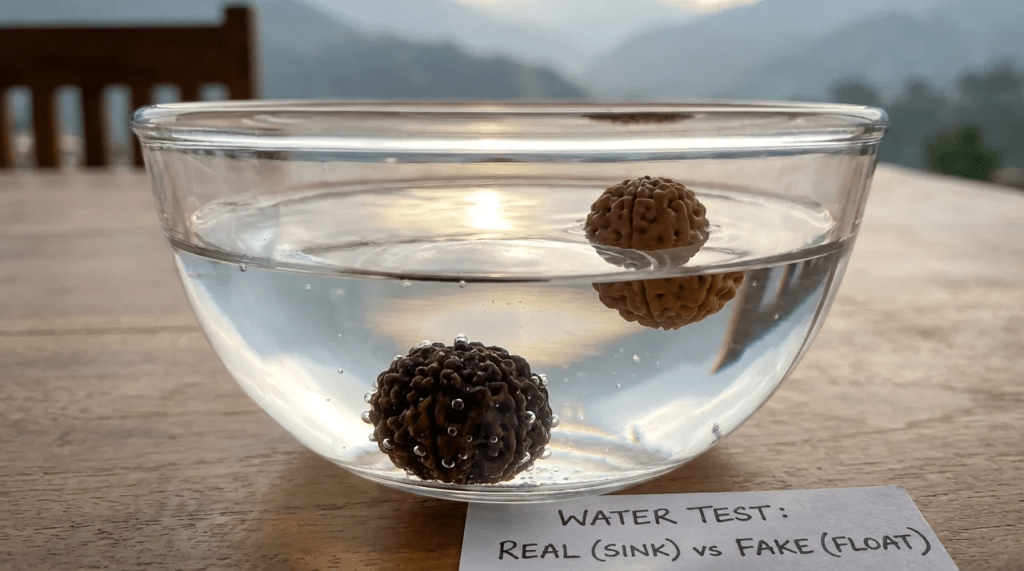
One of the most popular methods is the water test.
Simply drop the bead into a glass of clean water:
- Authentic Rudraksha: Usually sinks to the bottom
- Fake beads: Often float due to being hollow or made from lightweight materials like plastic or wood
Note: Some sellers coat beads with wax or resin, which may temporarily affect results. So, this test should not be used alone.
Test 2: The Copper Coin Test
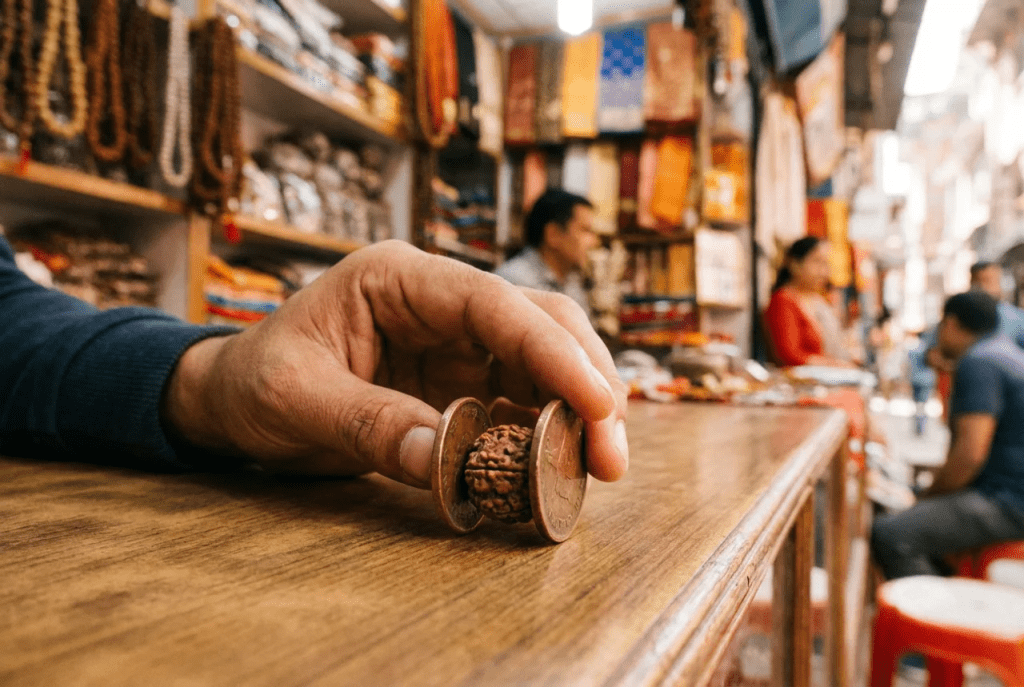
Place the Rudraksha between two copper coins and gently roll it.
- A genuine bead tends to rotate slowly and steadily in a natural direction.
- Fake beads often feel unstable or do not rotate smoothly.
This traditional method is widely used but requires practice to interpret correctly.
Test 3: Visual Mukhi Inspection
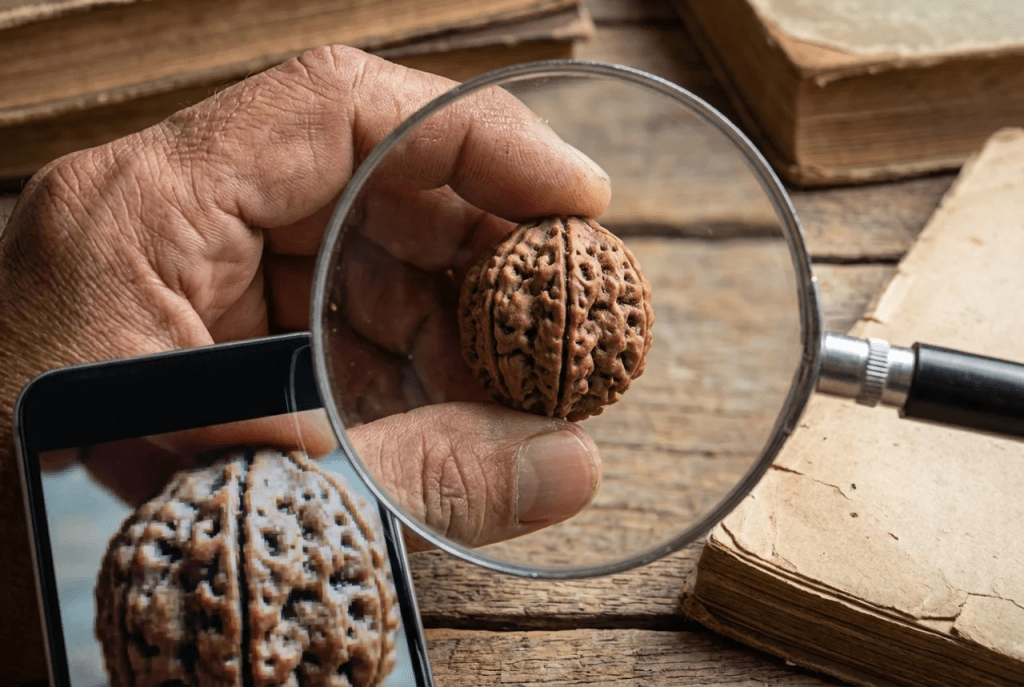
“Mukhi” refers to the natural lines running along the bead.
Use a magnifying glass or smartphone zoom:
- Genuine Rudraksha mukhis are irregular and naturally formed
- Fake beads often have perfectly symmetrical, machine-carved grooves
Authenticity lies in imperfection; nature never produces perfect symmetry.
Test 4: Surface Texture Test
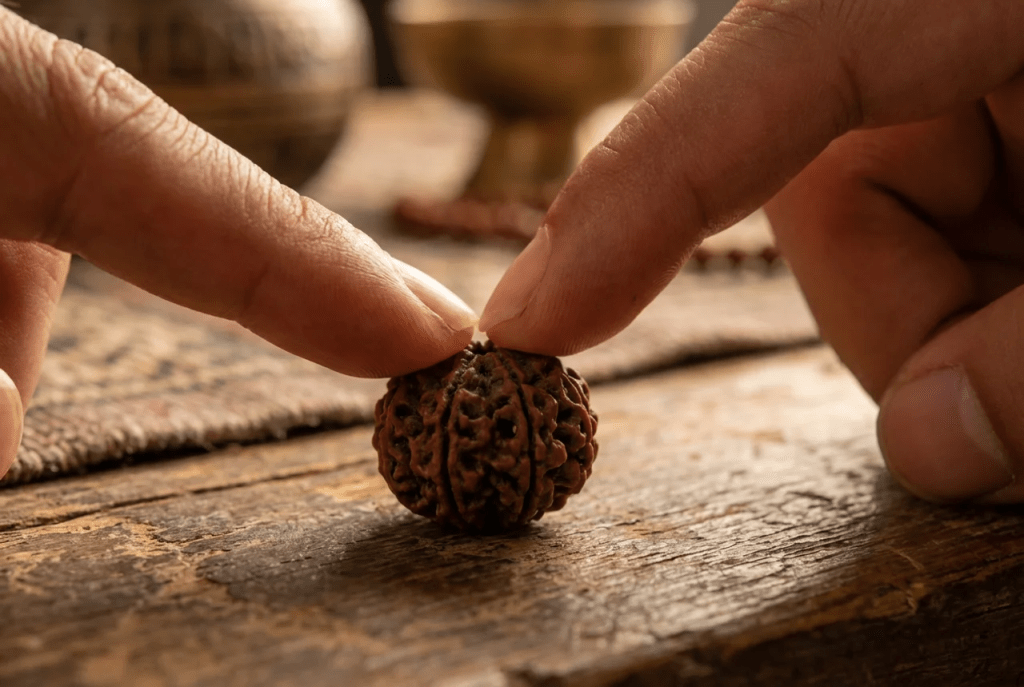
Gently run your fingernail across the bead surface.
- Real Rudraksha: Feels rough, uneven, and organic
- Fake Rudraksha: Feels overly smooth or artificially polished
Natural beads carry small bumps and irregular textures formed during growth.
Test 5: Check the Drilled Holes
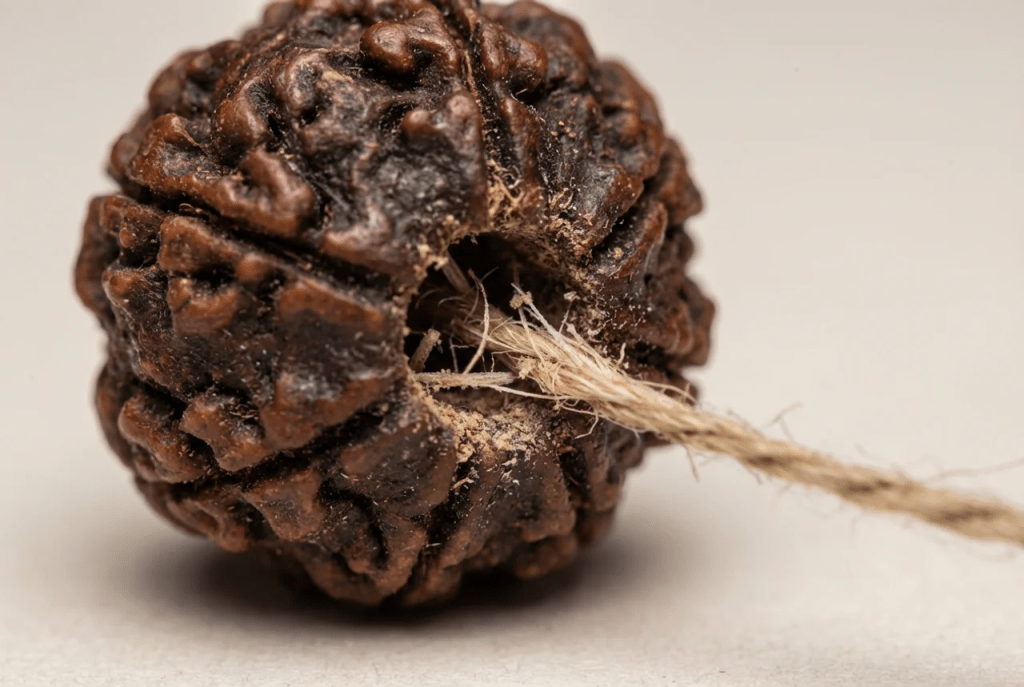
Inspect the holes used for stringing.
- Authentic Rudraksha shows natural seed structure inside the hole
- Fake beads often have clean, plastic-like drilled interiors
This is one of the most reliable visual indicators when checked carefully.
Test 6: Certificate & Origin Verification
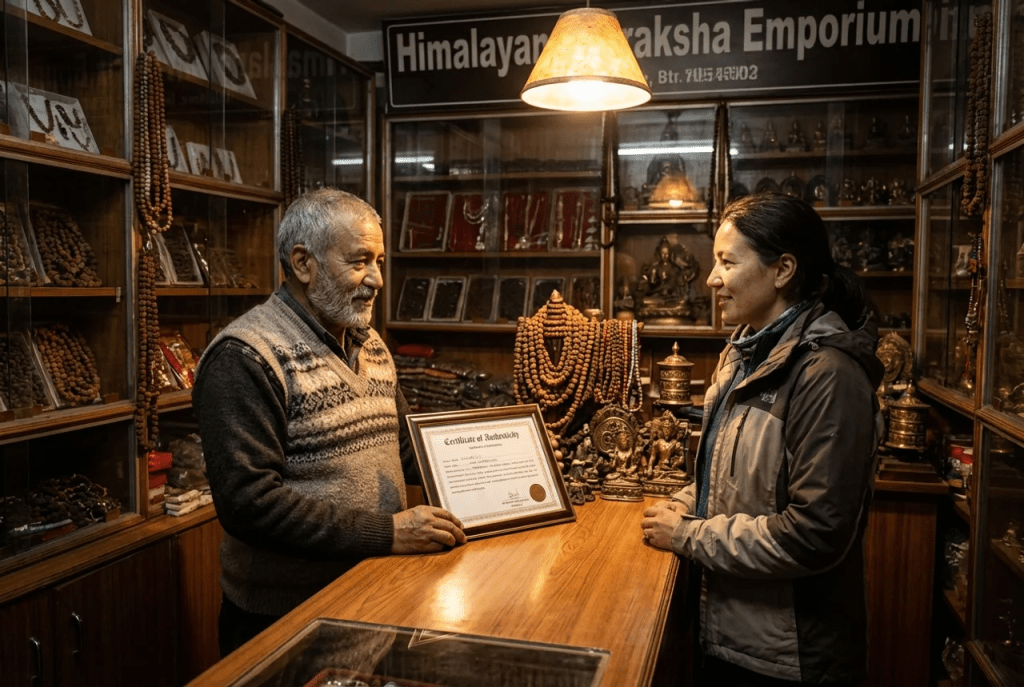
For higher-value beads, documentation matters.
- Trusted sellers in Nepal provide origin knowledge or certification
- For rare beads like 1 Mukhi, 14 Mukhi, or Gauri Shankar, always ask for certification from a recognized testing lab
A genuine seller will never hesitate to explain origin and sourcing.
Test 7: The Price Reality Test
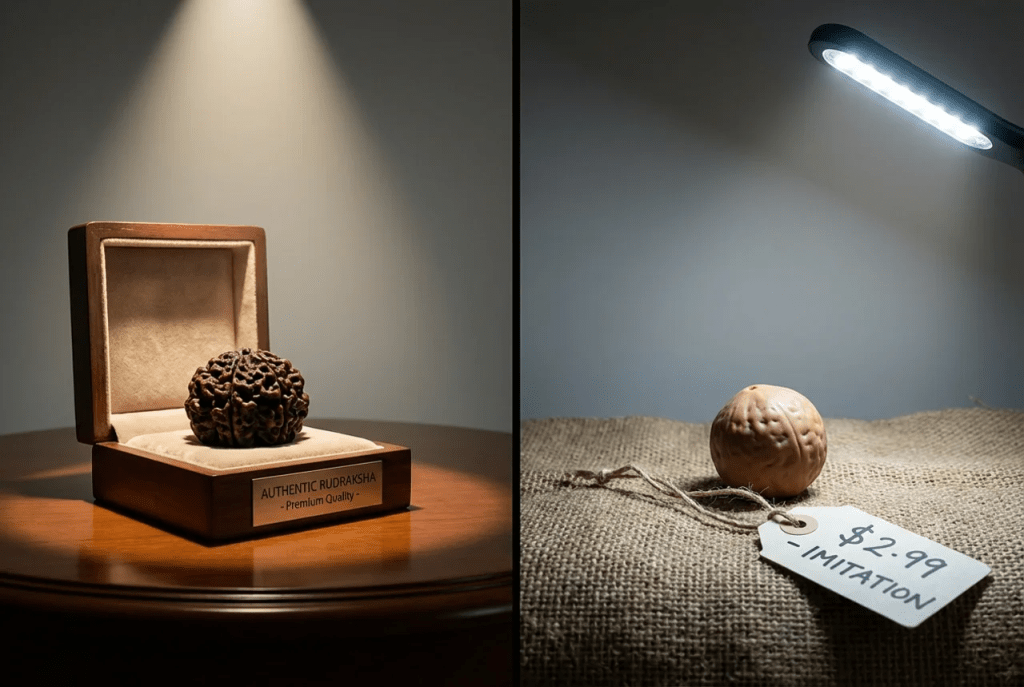
Price is often the biggest red flag.
- Rare Rudraksha beads have significant market value
- Example:
- 1 Mukhi Rudraksha: Starts around NPR 50,000 and can exceed NPR 5,00,000+
- If someone offers it for NPR 500, it is almost certainly fake
If the price feels unrealistically low, trust your instinct; it usually is.
Important Warning for Buyers in Nepal
Be cautious when buying near tourist-heavy areas like Pashupatinath Temple. Some sellers may approach visitors with “rare” or “special” beads.
✔ Trusted sellers usually operate from established shops
✖ Genuine high-value Rudraksha is not aggressively sold on the street
Always take your time before purchasing.
Conclusion
Identifying authentic Rudraksha is a mix of observation, experience, and awareness. While no single test is 100% perfect, combining all seven methods significantly reduces the risk of buying fake beads.
Whether you are a spiritual seeker or a collector, understanding these tests helps you protect both your money and the sacred value of Rudraksha.
Frequently Asked Questions (FAQs)
1. What is the most reliable test for Rudraksha authenticity?
The combination of mukhi inspection and origin certification is the most reliable method.
2. Does real Rudraksha always sink in water?
Most genuine beads sink, but coatings or air pockets can sometimes affect results.
3. Can fake Rudraksha look very real?
Yes. Modern imitations can look extremely convincing, which is why multiple tests are necessary.
4. Is buying Rudraksha from Nepal safer?
Yes, especially from trusted dealers—but even in Nepal, caution is necessary.
5. What is the safest way to buy Rudraksha?
Buy from established sellers who provide transparency, origin details, and certification.


